 By The Rio Times | Created at 2026-10-19 06:11:23 | Updated at 2026-10-19 06:57:25
1 hour ago
BRAZIL · AGRIBUSINESS
Key Facts
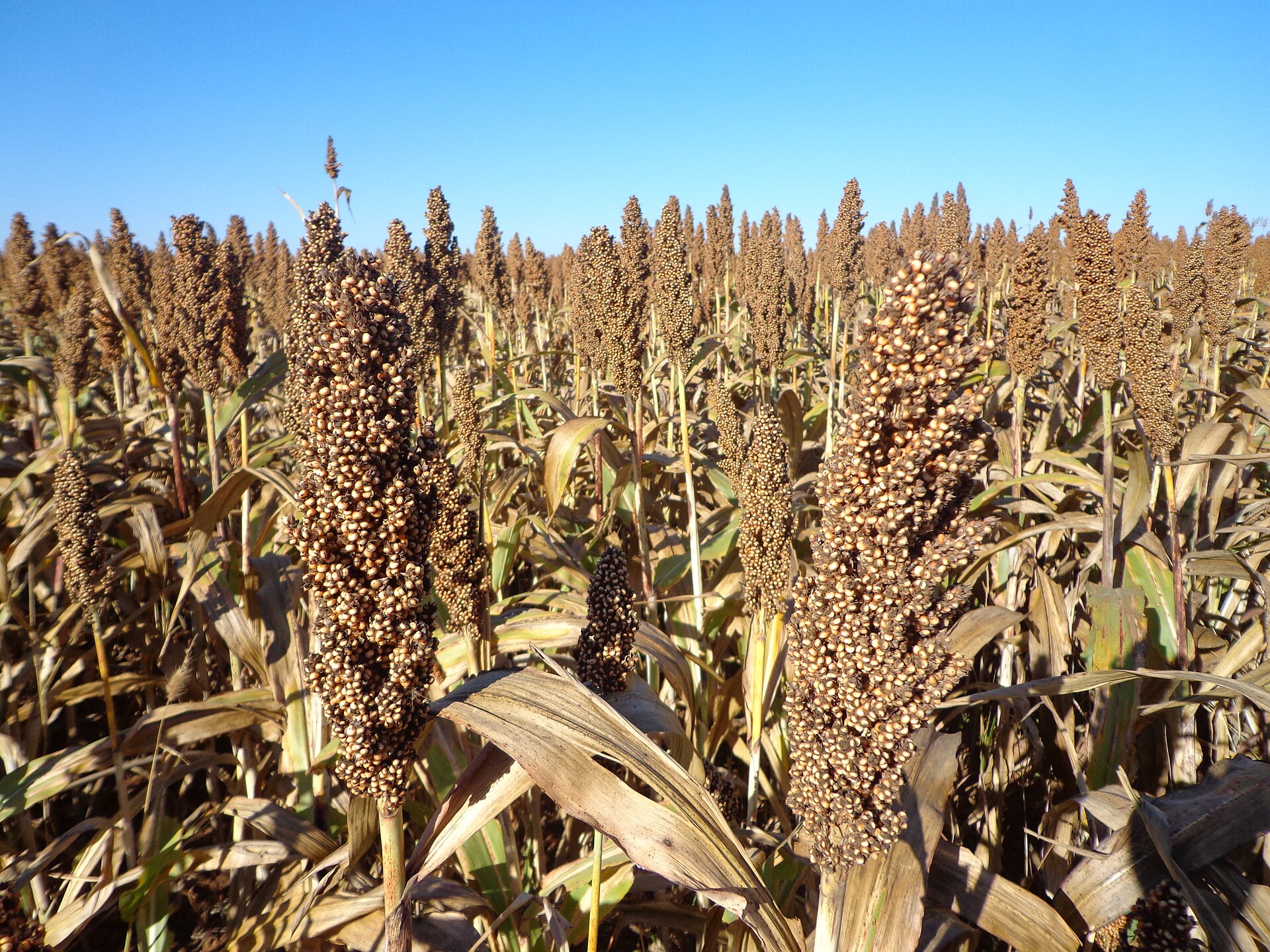
- —The country Brazil is a large grain exporter that grows sorghum mainly in the safrinha, the second crop sown after soybeans.
- —Why it matters China now takes almost all of Brazil’s sorghum exports, and more sorghum could compete with corn for field space.
- —Why now Analysts set out the outlook on Sunday 18 October 2026, days after Conab’s first 2026/27 crop survey and the September customs data.
- —What happened Brazil exported 790,800 tons of sorghum from January to September 2026, against 105 tons in all of 2025.
- —The numbers China took 95.6% of the volume, the 2026/27 crop is projected at 8.03 million tons, up 9.0%, and area is seen up only 2.1%.
- —What it means for you US grain traders and sorghum growers should watch whether China keeps buying in Brazil and whether sorghum cuts into corn area.
- —Still open Whether shipments reach 1.8 million tons in September and October together, and how much area farmers actually plant.
- —Power Index Brazil ranks 1st of 14 in The Rio Times Latin America Power Index, with 75.0 points (October 2026 edition).
Prediction markets · who wins the runoff
Implied chance of winning Brazil’s presidency on 25 October, from traders’ prices.
Polymarket
Flávio Bolsonaro 78.5% · Lula 21.5% (US$188 million traded)
Kalshi (regulated in the US by the CFTC)
Flávio Bolsonaro 79% · Lula 21%
As of 19 October, 1:40 am ET (06:40 Lisbon), updated every 20 minutes. Prices are bets, not polls, and can move fast.
Why we show this: prediction markets turn real-money bets into a live probability that moves within minutes of the news, which is why investors, campaigns and newsrooms in the United States now follow them closely. We show them next to polls and official results, never instead of them.
Secex customs data, updated on Tuesday 6 October 2026, show Brazil sorghum exports at 790,800 tons from January to September. Conab published its first 2026/27 crop survey on Thursday 15 October, and CNN Brasil added an outlook on Sunday 18 October.
For US readers the shift matters because Chinese demand for sorghum is moving to Brazil, and it may also touch corn supplies on the world market. AgRural’s Daniele Siqueira told The AgriBiz on 2 October that Chinese buyers had done this on a large scale in the United States, but that the trade war has sent them to Brazil.
CNN Brasil’s report of Sunday 18 October 2026 adds views from AgRural, the consultancy StoneX and the grain firm Agrobom, which expect more sorghum in the safrinha, the second crop sown after soybeans. The crop figures below come from Conab, the national supply agency, and the export figures come from Secex, the foreign trade secretariat.
Our earlier reports cover the wider grain picture in Brazil Harvest Hits Record 354.5M Tons and the China link in Brazil Agribusiness Posts Record Exports as China Buys 35% of Sales. Sorghum is a far smaller crop than soybeans or corn, but its exports have jumped from almost nothing this year.
How Brazil Sorghum Exports Jumped in 2026
Secex records show 790,800 tons of grain sorghum left Brazil from January to September 2026, worth about US$176.8 million at the dockside (FOB) price. For the whole of 2025 it registered only 105 tons, sent to Qatar.
China took 755,600 tons, or 95.6% of the total, and Morocco bought 35,200 tons in March. The change was sudden, with 185,400 tons going to China in August and 570,200 tons in September.
September’s China shipments were worth about US$127.5 million, or roughly US$224 a ton, in a simple division of Secex value by weight. August’s were worth about US$42.7 million, or roughly US$230 a ton.
The highest full year in the Secex series since 2020 was 2024, with about 178,400 tons, mostly sent to South Africa. The nine-month total for 2026 is already more than four times that figure.
AgRural estimates, as reported by CNN Brasil and The AgriBiz, that 1.8 million tons will ship in September and October combined, with China the main destination. That is more than twice the Secex total for the nine months to September, though the two counts are not directly comparable.
CNN Brasil reports that the first export deals ran through the port of Imbituba in Santa Catarina in 2025, and that Santos, Paranaguá and Northeast terminals joined in 2026. It also reports that the rail operator VLI has started moving sorghum on three corridors, with first shipments to China and Africa, and expects to carry more than 800,000 tons by the end of 2026.

Follow this story
Get an email when there’s news on Brazil
Free. One email a day at most, and only when there is news. This also signs you up to our weekday newsletter, The LatAm Brief. Nothing arrives until you click the confirmation link, and you can stop either with one click. Privacy policy.
Why Farmers May Plant More Sorghum
CNN Brasil reports that StoneX sees the high cost of growing corn and the tighter supply of sorghum favouring sorghum in 2026/27. Its market analyst Raphael Bulascoschi told the outlet he expects planted area to rise and even to press on the corn area.
Bulascoschi also told CNN Brasil that Brazil exported more sorghum in August and September than it had in 20 years. Marco Castelli, commercial director of the firm Agrobom, told the same outlet that foreign demand gives growers one more option when they plan the safrinha.
Sorghum has long had a place in the safrinha, and Bulascoschi said Brazil has consumed a lot of it, mainly in ethanol plants, as CNN Brasil quotes him. Conab adds that last season sorghum took over fields where second-crop corn could not be sown inside the right planting window.
What Conab Expects for 2026/27
Conab’s first survey for 2026/27, published on Thursday 15 October 2026, projects sorghum output of 8.03 million tons, up 9.0% from 7.37 million tons in 2025/26. It puts planted area at 2.22 million hectares, up 2.1% from 2.17 million.
Yield is projected at 3,625 kilograms per hectare, up 6.7% from 3,396, so most of the projected gain comes from better yields rather than new land. A 2.1% rise in area is modest next to the export story, and Conab updates its estimates as planting advances.
Conab sees second-crop corn area rising 3.7% to 18.49 million hectares, so sorghum’s 2.22 million hectares is about 12% of that size. Total corn output is projected at 148.0 million tons, up 2.4%.
Conab says the 2025/26 sorghum harvest is finished and that average yield fell below the previous season, because irregular rain hurt late-sown fields. The larger area still produced a bigger crop.
Why China Buys Brazilian Sorghum
The business site The AgriBiz wrote on Friday 2 October that Chinese buyers use sorghum to limit corn imports and so avoid a sharper rise in Chicago corn prices. Its explanation is that China wants to keep domestic prices attractive and so prevent a fall in planted area.
CNN Brasil adds that competition for field space could affect corn availability on the international market. Brazil is a major corn exporter, and Conab projects 43.9 million tons of corn exports in the 2025/26 cycle.
What It Means for You
US grain traders and agribusiness investors can read the jump in Brazil sorghum exports as a sign of how quickly China shifts purchases between origins. Feed and ethanol buyers face a new Brazilian supply, though sorghum remains small next to soybeans and corn.
US sorghum growers face a rival origin in China’s market, if AgRural’s reading of the trade war is right. That is a risk to watch rather than a measured loss, because the sources reviewed give no US export figures.
Brazilian growers weighing the next safrinha will see foreign buyers, rail routes and port options as part of the planting decision, as Castelli noted. The wider resource picture is in our guide Brazil Natural Resources Explained 2026.
What Is Not Known
The sources reviewed do not show whether Brazil sorghum exports will keep the September pace, or whether China will keep buying. They also do not show how many tons ship in October, because Secex had not published October data when this article was written.
AgRural’s 1.8 million tons for September and October is an estimate, and the sources do not say how its method compares with Secex customs counts. The exporters’ association ANEC lists 1.44 million tons scheduled for October, according to Portal do Agronegócio on 13 October, but that is a loading schedule and not completed exports.
Conab’s first survey is a projection made while soybeans are still being planted, and it will change before the safrinha is sown. Estimates of the 2025/26 crop also differ, with Conab’s October bulletin at 7.37 million tons, CNN Brasil giving 7.35 million in one passage and citing an IBGE estimate of 6 million tons for 2026 that we could not check.
The Secex figures cover grain sorghum under customs code 1007.90.00 only. The sources reviewed do not show what share of the crop is used at home and what share is held in storage.
Frequently Asked Questions
How much sorghum has Brazil exported in 2026?
Secex recorded 790,800 tons from January to September 2026, worth about US$176.8 million. China took 95.6% of that volume.
Why are Brazil sorghum exports rising?
China has started buying Brazilian sorghum in volume, and Brazil’s crop has grown. AgRural’s Daniele Siqueira links the Chinese buying to the trade war with the United States.
What is the safrinha?
The safrinha is Brazil’s second crop, sown after the soybean harvest and grown mostly with corn. Sorghum also grows in it, and Conab says sorghum took over fields where corn missed its planting window last season.
How big will Brazil’s sorghum crop be in 2026/27?
Conab’s first survey projects 8.03 million tons, up 9.0% from 2025/26. It puts the planted area at 2.22 million hectares, up 2.1%.
What does it mean for US readers?
Chinese demand is moving toward Brazil, according to AgRural, and sorghum area could compete with corn. The sources reviewed do not measure the effect on US farmers.
Sources: CNN Brasil, 18 October 2026; Conab, first survey of the 2026/27 grain crop, October 2026; Conab news release, 15 October 2026; Secex, Comex Stat foreign trade statistics, grain sorghum 1007.90.00, to September 2026; The AgriBiz, 2 October 2026; Portal do Agronegócio, 13 October 2026.
Editorial responsibility: Matthias Camenzind, Editor-in-Chief · Editorial standards · Report an error
The Rio Times · Power Map
See who really holds power in Latin America
Click to open the Power Map →