 By GB News (World News) | Created at 2026-09-02 16:35:33 | Updated at 2026-09-02 17:20:30
48 minutes ago
By GB News (World News) | Created at 2026-09-02 16:35:33 | Updated at 2026-09-02 17:20:30
48 minutes ago
United Nations experts have called on Britain and other countries involved in the transatlantic slave trade to take a series of measures to address its historical consequences, including creating public monuments honouring those of African descent.
The recommendations are contained in guidance produced by the UN Committee on the Elimination of Racial Discrimination (CERD), who say former slave-trading states have a moral and legal obligation to address the harms caused by slavery.
Among the proposed measures is the creation of public spaces, artworks and statues that recognise the contributions of people of African descent.
The guidance also calls for memorials that acknowledge the actions of individuals and institutions that supported or benefited from historical atrocities.
The recommendations follow a vote in March, in which UN member states backed demands for reparations for the transatlantic slave trade.
The report refers to the Black Lives Matter protests of 2020, during which demonstrators targeted monuments linked to slavery and colonialism.
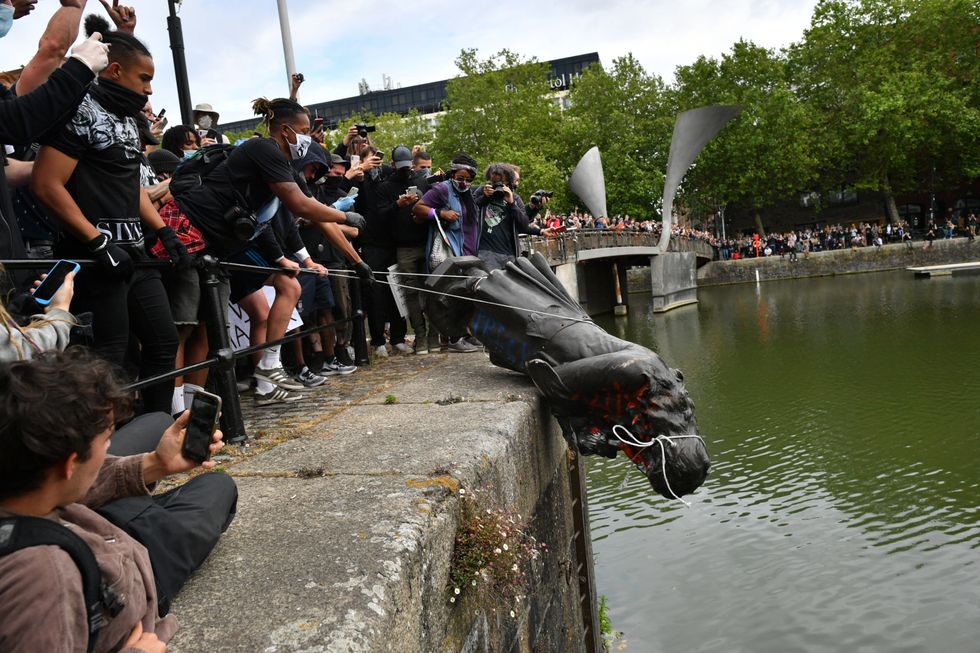
In Bristol, a statue of Edward Colston, a 17th-century slave trader and philanthropist, was pulled down during a protest and later became the subject of a high-profile legal case.
UN officials have stressed individual countries would decide how any public honours or memorials should be implemented.
UN member states backed demands for reparations for the transatlantic slave trade in March

The guidance says reparations should extend beyond direct financial compensation, and include broader measures aimed at addressing racial inequality and changing societal attitudes.
It recommends stronger enforcement of laws against hate speech, action to combat xenophobia and policies designed to challenge racial ideologies.
Education is also highlighted, citing the use of school textbooks and curriculum to provide accurate and unbiased accounts of transatlantic slavery, its aftermath, and the experiences of people of African descent today.
The committee also recommends political leaders educate the public about reparatory justice, and its potential role in creating a more inclusive society.
The guidance extends beyond governments, calling on non-state institutions to disclose information about their historical involvement in the slave trade.
It says relevant records should be made available without obstruction, selective disclosure or the concealment, alteration or destruction of evidence.
The issue is particularly sensitive for Britain ahead of the King’s planned autumn tour of the Caribbean.
Protesters threw the statue of Edward Colston into Bristol harbour during a Black Lives Matter protest rally
Ongoing research is examining the extent to which the British royal family was involved in, supported or benefited from the transatlantic slave trade, including through its historical links to the Royal African Company.
The recommendations are expected to influence discussions over potential reparations agreements between former colonial powers and countries affected by slavery, as African and Caribbean governments increase pressure for compensation and other forms of redress.
The African Union has previously explored the possibility of pursuing a legal case against Britain under international law, with lawyers working with the organisation reportedly considering an advisory opinion from the International Court of Justice as a means of encouraging negotiations over reparations.
Ghana has also played a leading role in African Union efforts to build international support for reparations, including lobbying for the UN resolution backed by member states in March.