By The Rio Times | Created at 2026-09-25 13:16:49 | Updated at 2026-09-25 14:37:55
2 hours ago
By The Rio Times | Created at 2026-09-25 13:16:49 | Updated at 2026-09-25 14:37:55
2 hours ago
GUIDES · TRINIDAD AND TOBAGO
Key Facts
- —What it is A standing guide to how foreigners buy property under the 1990 Foreign Investment Act.
- —Who it’s for Buyers from North America and Europe weighing a home in west Trinidad or a villa in Tobago.
- —The rules Up to one acre for a home in Trinidad needs no licence. Any foreign purchase in Tobago needs one.
- —What it costs About three-quarters of Terra Caribbean’s 2025 home sales fell between about US$147,000 and US$588,000, plus stamp duty.
- —The catch A foreign-exchange shortage means turning sale proceeds or rent back into US dollars can take months.
- —What is still open The fiscal 2027 budget has no announced date and may change the new tax on landlords.
Buying property in Trinidad and Tobago as a foreigner is legal and fairly simple on the larger island. Tobago, taxes and a scarce US dollar are where the friction lies.
Buying property in Trinidad and Tobago is governed by a 1990 law, and the rules differ between the two islands. A foreigner can own a home on up to one acre in Trinidad without special permission. In Tobago, every foreign purchase needs a government licence.
This guide sets out the rules, costs, prices and risks as of 25 September 2026.
All US$ figures use about 6.80 Trinidad and Tobago dollars (TT$) to the US dollar. That was the market rate on 25 September 2026 (open.er-api.com). The Central Bank quoted 6.80 selling and 6.77 buying on 23 September 2026.
The Foreign Investment Act: one acre, five acres and a notice
The Foreign Investment Act of 1990, Chapter 70:07 of the country’s laws, sets the rules. It defines a “foreign investor” as anyone who is not a citizen of Trinidad and Tobago or another CARICOM state. CARICOM is the Caribbean Community, a regional bloc.
Under section 6, a foreign investor may buy up to one acre for residential use without a licence. Under section 7, the licence-free limit for trade or business use is five acres. One acre is about 4,000 square metres, roughly three-quarters of an American football field.
No licence does not mean no paperwork. After the transfer, the buyer and attorney must send the Ministry of Finance a set form and a copy of the deed. The ministry returns an acknowledgement within seven days.
The Act requires the price to be paid in an internationally traded currency through an authorised dealer, such as a licensed bank. Anyone who knowingly causes a transfer without a required licence faces a fine of TT$100,000 (about US$14,700). Land held without a required licence can be forfeited to the State.
A few cases need no licence at all. They include annual tenancies of up to five acres in total and inherited land for one year. Land bought jointly with a spouse who is a CARICOM citizen living in the country is also exempt.
Tobago: a licence for every foreign purchase
One-stop reference
Company Intelligence
Every listed company in Latin America — financials, ownership and structure for 1,450+ companies across 26 exchanges, in one place.
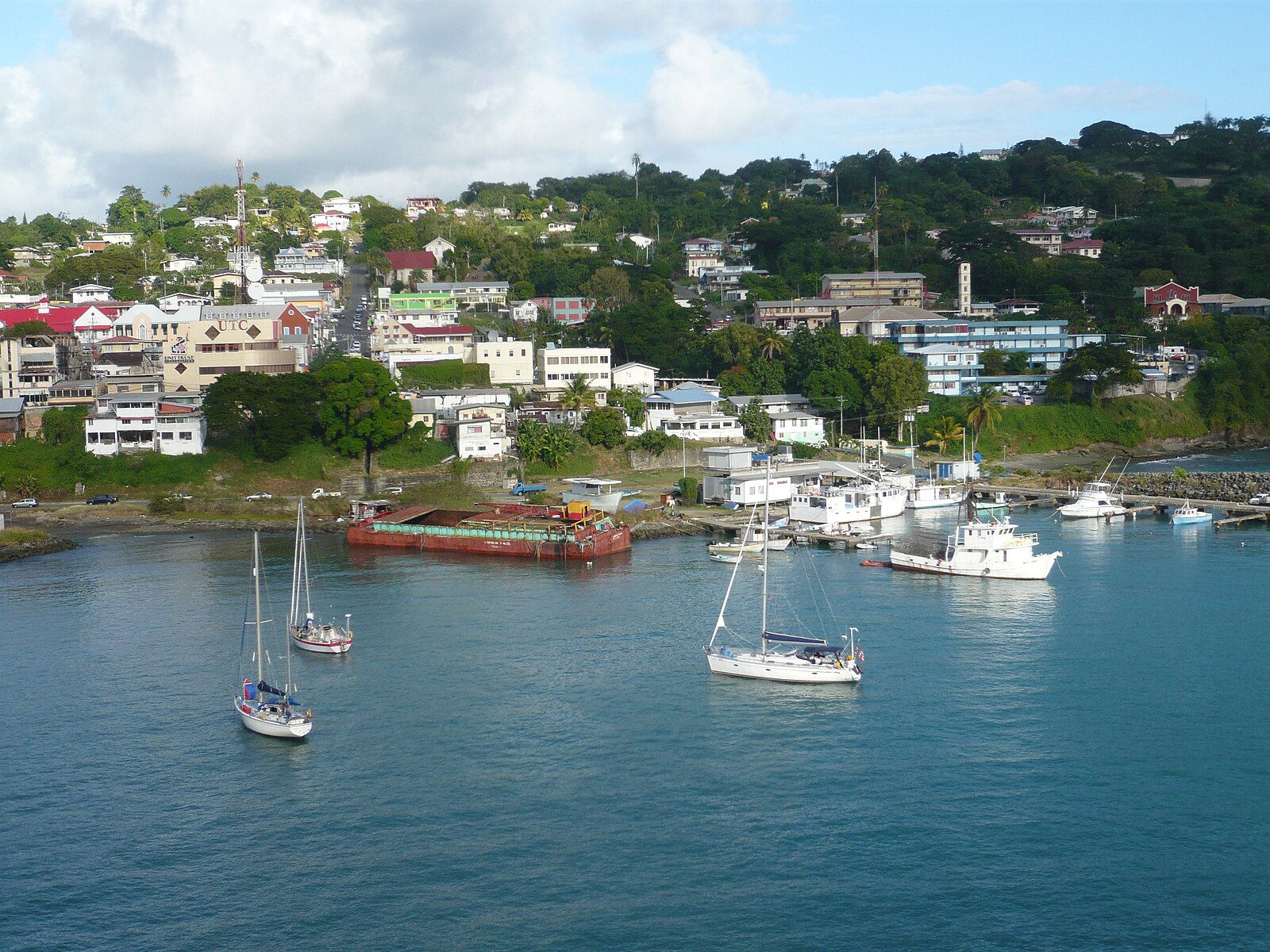
The one-acre rule does not apply in Tobago. Under Legal Notice No. 53 of 2007, a foreign investor needs a licence to buy any interest in land anywhere on the island, whatever its size. The Ministry of Finance states this in its published licence guidelines.
Tobago has its own elected government, the Tobago House of Assembly (THA), which runs many island services. Licence applications for Tobago can be filed with the THA’s Chief Administrator at Calder Hall in Scarborough, the island’s main town.
The THA and the finance ministry have named Designated Development Areas earmarked for tourism investment. They are Arnos Vale and Culloden Estate, Bacolet Estate, Buccoo and Golden Grove Estate, and Englishman’s Bay. Lowlands and Diamond Estate, and Mount Irvine and Grafton Estate, complete the list.
The Tobago People’s Party (TPP) of Chief Secretary Farley Augustine won all 15 THA seats on 12 January 2026. It took 60.4 percent of the vote, according to the Elections and Boundaries Commission. Augustine has made land titles a central issue.
Title is Tobago’s deepest property problem, with many families living on land for generations without a deed. Prime Minister Kamla Persad-Bissessar told the THA in November 2025 that it dates back to Hurricane Flora in 1963. The storm destroyed land records kept in homes.
Her government promised a unit at the Registrar General’s office in Tobago to process title applications, with the THA subsidising legal costs. The land registry itself stays with the central government, not the THA, as Augustine has pointed out.
For a foreign buyer the lesson is plain. An unclear family title can stall or block a Tobago sale, however attractive the villa.
How the licence works at the Ministry of Finance
Licences are granted by the Minister of Finance under powers delegated by the President. Applications go to the Permanent Secretary, the ministry’s top civil servant, at the Eric Williams Finance Building in Port of Spain.
The ministry asks for a notarised passport copy and a police certificate of good character from your country of residence. It also wants credit references and proof of financing. Any building needs outline approval from the Town and Country Planning Division.
Residential licences carry conditions. A foreign investor may hold only one licensed residential parcel, build only one house on it and not subdivide it. Construction must finish within 36 months, with a possible extension of up to two years.
Business licences allow 60 months to build or open, including for hotels and resorts. The ministry says a complete application may take up to 20 working days to process.
A licence belongs to the person, not the property. If you buy from another foreigner who held a licence, you still need your own. The ministry advises making the sale contract conditional on the licence, with the deposit refunded if it is refused.
The legal process: attorneys, title searches and the RPO
Trinidad and Tobago runs two land systems. The older common-law system records a chain of deeds at the Land Registry of the Registrar General’s Department. The newer system, still called the RPO after the old Real Property Ordinance, issues a State-guaranteed certificate of title.
Nearly 80 percent of land remains under the more complicated common-law system, according to the US State Department’s 2025 Investment Climate Statement. Under that system the State registers deeds but does not guarantee them.
A typical purchase starts with a written Agreement for Sale and a deposit of about 10 percent. Completion is usually set at 90 days. For common-law land, the buyer’s attorney traces deeds back at least 20 years to a sound “root of title”, law firms explain.
The attorney also gathers clearances, such as planning approvals, a water-authority (WASA) clearance and receipts for rates and taxes. At completion, both sides sign a Deed of Conveyance, or a Memorandum of Transfer for RPO land.
The deed is stamped at the Board of Inland Revenue, the tax authority, once stamp duty is paid. It is then lodged at the Land Registry, where registration fees are small, typically TT$20 to TT$60 (about US$3 to US$9).
Law firms put a normal residential purchase at six to twelve weeks from agreement to registered deed. Documents can be signed abroad under a power of attorney. Use an attorney registered with the Financial Intelligence Unit, the country’s anti-money-laundering authority.
Stamp duty, property tax and the landlord surcharge
Stamp duty is the main purchase tax, and the buyer pays it. On a house with land, the first TT$850,000 (about US$125,000) is exempt, according to the Inland Revenue Division.
Above that, the rate is 3 percent on the next TT$400,000 (about US$58,800) and 5 percent on the next TT$500,000 (about US$73,500). Everything above TT$1.75 million (about US$257,000) pays 7.5 percent.
On a TT$3 million (about US$441,000) home, duty comes to TT$130,750 (about US$19,200). That is roughly 4.4 percent of the price.
First-time homeowners are exempt up to TT$2 million (about US$294,000), a limit the previous government raised in stages from TT$850,000 (about US$125,000). Every joint buyer must qualify. Residential land without a house is exempt only up to TT$450,000 (about US$66,200).
Published tax guidance does not say whether a non-resident foreigner can claim the first-time exemption. Ask your attorney before counting on it. If an exempted home is turned to non-residential use within a year, the full duty falls due; within two years, half.
Recurring property tax has been largely absent since the old Lands and Buildings Taxes were suspended in 2010. The previous government began collecting a new residential property tax in 2024, at 2 percent of a discounted annual rental value.
The United National Congress (UNC) government that took office in May 2025 halted that tax. Finance Minister Davendranath Tancoo said people who had paid would be refunded, and his October 2025 budget confirmed the halt.
Since 1 January 2026, landlords pay a new Landlord Business Surcharge under the Finance Act 2025. It is 2.5 percent of gross quarterly rent up to TT$20,000 (about US$2,940) and 3.5 percent above that.
Every landlord must register, including those living abroad, and pay a one-time fee of TT$2,500 (about US$370). The Finance Act 2026 lets landlords credit the surcharge against their annual income tax. Tax on rental income itself is covered in the Rio Times guide to taxes for foreign residents.
What property costs: west Trinidad versus Tobago villas
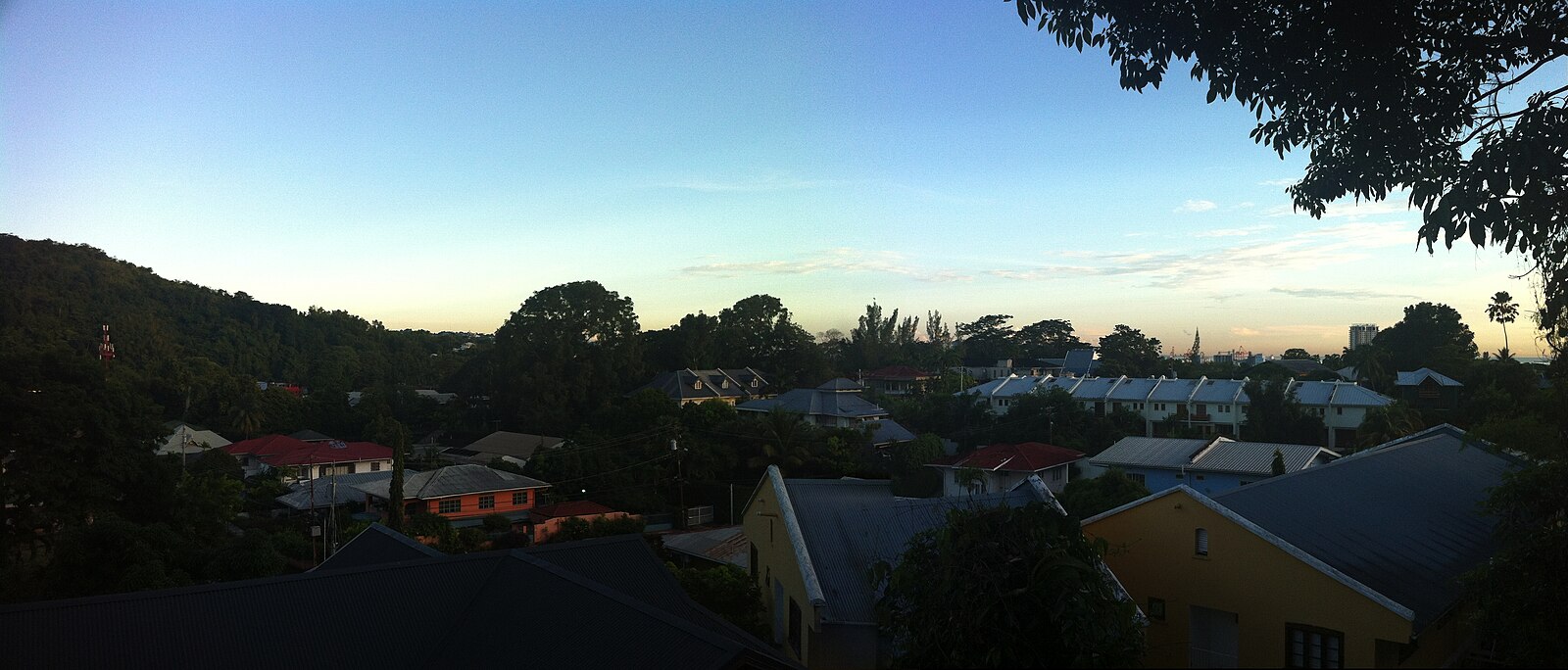
Most sales happen in the local middle market. At Terra Caribbean, a regional real-estate firm, about 74 percent of 2025 sales fell in one band. Those homes cost TT$1 million to TT$4 million (about US$147,000 to US$588,000).
Land-registry data cited by Terra show 2,250 residential conveyances and lease assignments in six tracked wards in 2025, down 11.7 percent from 2024. It calls offers 5 to 15 percent below the asking price normal.
The premium market sits in the north-west, around Westmoorings and Maraval near Port of Spain. Westmoorings, with its gated communities and waterfront homes, remains a preferred choice for executives and expatriates, Terra says.
In August 2026 listing data from the portal Trinidad Real Estate, the median Maraval house asked TT$3.5 million (about US$515,000). The median Westmoorings townhouse asked TT$2.4 million (about US$353,000). These are asking prices, not sale prices.
Tobago is a separate, smaller market. Terra describes it as “sluggish” but sees investor interest after the airport upgrade and an approved Marriott hotel project.
Many Tobago villas are priced in US dollars. A three-bedroom unit at Plantation Beach Villas in Grafton was listed at about US$410,000. A six-bedroom Mount Irvine villa asked US$1.85 million, and a large Black Rock estate US$3.75 million.
Some Tobago listings are leasehold, not freehold, so check the tenure and the years left on any lease. Building new is costly. Cement from TCL, the main local producer, rose 15 percent in February 2026, its sixth yearly rise since 2021, Terra notes.
The TT dollar and the foreign-exchange squeeze
The Trinidad and Tobago dollar is a tightly managed currency. The State Department describes a managed float in which the rate moves minimally from day to day.
The problem is supply. The Central Bank of Trinidad and Tobago (CBTT) said on 4 July 2026 that demand for foreign exchange was outstripping supply. Legitimate requests “are not always met,” it said.
The CBTT had injected US$1.2 billion into the banks’ trading over the previous year. Net official reserves were US$5.29 billion at the end of August 2026, CBTT data show, about six months of imports.
Governor Larry Howai has tied the shortage to lower energy output. He said in March 2026 that energy-sector inflows were close to US$1 billion a year lower than a decade earlier.
For a buyer, this cuts both ways. Bringing dollars in is easy. Getting them out after a sale, or from rent, can be slow.
The State Department’s 2025 Investment Climate Statement says businesses report “a minimum three-month delay” in converting to world currencies. Its 2024 edition says foreign investors face no legal limits on repatriating investment funds.
Keep bank records of every foreign-currency transfer you bring in. Plan your exit early, including whether a future buyer might pay from abroad. The CBTT says it will update the Exchange Control Act and rename it the Foreign Exchange Act.
Crime, security and the politics since 2025
Police recorded 369 murders in 2025, down about 41 percent from a record 626 in 2024, Newsday reported. In a country of about 1.4 million people, that is roughly 26 killings per 100,000 residents, several times the US rate.
Up to 31 July 2026, police recorded 221 murders, against 226 in the same period of 2025, the Trinidad Express reported. A state of emergency in force since 3 March 2026 ended on 17 September 2026.
The US State Department rates the country Level 3, “Reconsider travel,” in an advisory updated in April 2026. It says crime rates are lower in Tobago than in Trinidad.
Security shapes the premium market. Gated developments are common in Westmoorings and Maraval. Budget for guards, cameras and insurance when you compare homes.
Politics changed in 2025. The UNC won 26 of 41 seats in the general election of 28 April 2025. Kamla Persad-Bissessar was sworn in as Prime Minister on 1 May 2025.
Her government created a Ministry of Land and Legal Affairs under Saddam Hosein to speed up land titles. The fiscal 2027 budget had no official date as of 10 September 2026. The Prime Minister then indicated budget work would run into October.
Sources: The Foreign Investment Act and Ministry of Finance licence guidelines; the Inland Revenue Division; the 2026 budget statement and Finance Act 2026; the Central Bank of Trinidad and Tobago; the Elections and Boundaries Commission; the US State Department; Terra Caribbean; and Trinidad and Tobago press. All accessed 25 September 2026.
- Foreign Investment Act, Chap. 70:07 (Ministry of Trade)
- Ministry of Finance: guidelines and conditions for licences under the Foreign Investment Act
- Inland Revenue Division: residential stamp duty rates
- Inland Revenue Division: stamp duty FAQs
- Ministry of Finance: Budget Statement 2025 (September 2024)
- Ministry of Finance: Budget Statement fiscal 2026 (October 2025)
- Inland Revenue Division: Landlord Business Surcharge FAQs
- Parliament: Finance Act, 2026
- Registrar General: Land Registry
- Central Bank of Trinidad and Tobago: statement on foreign exchange, 4 July 2026
- Central Bank of Trinidad and Tobago: monthly foreign reserves
- US State Department: 2025 Investment Climate Statement
- US State Department: travel advisory
- Elections and Boundaries Commission: THA elections 2026 report
- Newsday: official 2025 general election results
- Newsday: measures on Tobago land deeds
- Terra Caribbean: residential property snapshot Q1 2026
- Newsday: 2025 murder figures
What Is Not Known
Real licence waiting times are not published. The Ministry of Finance says a complete application may take up to 20 working days. Actual waits and refusal rates, especially for Tobago land outside the tourism areas, are not public.
Whether a non-resident foreigner can claim the first-time-homeowner stamp-duty exemption is not settled in published guidance. The Inland Revenue Division’s own FAQ page still shows the older TT$1.5 million (about US$221,000) limit. Buyers should get a written view from their attorney.
The long-term fate of the residential property tax is not known. The government halted it in 2025, but public statements do not make clear whether the Property Tax Act will be repealed or could return. The landlord surcharge may also change in the fiscal 2027 budget.
When the foreign-exchange shortage will ease is not known. The Central Bank links it to lower energy inflows and expects any recovery to be gradual as new gas projects start. The planned Foreign Exchange Act was still a proposal in the Central Bank’s July 2026 statement.
How fast Tobago’s title backlog will clear is not known. The government has promised a dedicated unit and subsidised legal help. Its effect on the backlog has not yet been measured in public.
Frequently Asked Questions
Can foreigners buy property in Trinidad and Tobago?
Yes, within limits. The 1990 Foreign Investment Act lets a foreigner buy up to one acre for a home in Trinidad without a licence. Larger plots, business land over five acres and any land in Tobago need a Ministry of Finance licence.
Do foreigners need a licence to buy property in Tobago?
Yes, for any size of plot, under Legal Notice No. 53 of 2007. Applications go to the Ministry of Finance or to the Tobago House of Assembly’s Chief Administrator in Scarborough. Areas such as Mount Irvine, Buccoo and Bacolet are designated for tourism investment.
How much is stamp duty on a house in Trinidad and Tobago?
The first TT$850,000, about US$125,000, is exempt, and rates then rise from 3 to 7.5 percent. A TT$3 million home, about US$441,000, pays about US$19,200 in duty. First-time homeowners are exempt up to TT$2 million, about US$294,000.
How much does a house cost in Trinidad and Tobago?
Terra Caribbean says homes priced between about US$147,000 and US$588,000 made up about 74 percent of its 2025 sales. The median asking price of a Maraval house was about US$515,000 in August 2026 listing data. Recent Tobago villa listings ran from about US$410,000 to US$3.75 million.
Can I get my money out of Trinidad and Tobago after selling?
Legally, yes: the US State Department says foreign investors face no legal limits on repatriating investment funds. In practice, a foreign-exchange shortage causes delays, and businesses report waits of at least three months. The Central Bank said in July 2026 that legitimate requests for foreign exchange are not always met.
Is there property tax in Trinidad and Tobago?
The residential property tax that began in 2024 was halted by the government that took office in May 2025. Landlords, however, have paid a surcharge of 2.5 to 3.5 percent of gross quarterly rent since 1 January 2026. They must also register and pay a one-time fee of TT$2,500, about US$370.