By Engadget | Created at 2026-09-27 18:37:19 | Updated at 2026-09-27 19:35:44
1 hour ago
By Engadget | Created at 2026-09-27 18:37:19 | Updated at 2026-09-27 19:35:44
1 hour ago
The Chinese company is one of several car makers expected to adopt solid-state batteries in the next few years.
Tada Images/Shutterstock
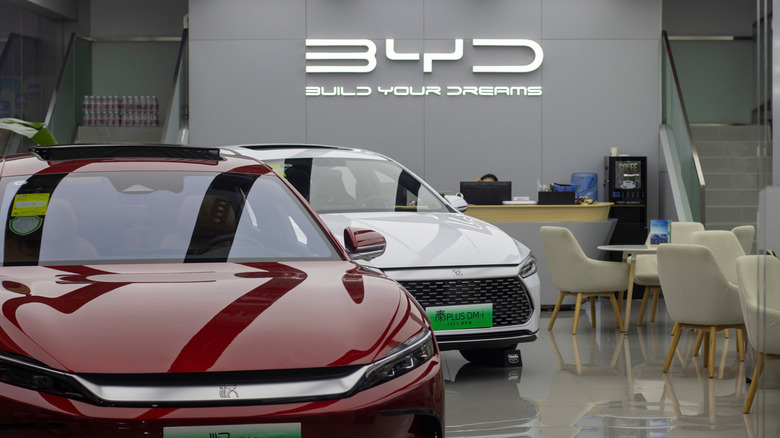
Switching from lithium-ion to solid-state batteries promises to extend the range and charging speeds of electric vehicles, and Chinese car maker BYD believes it's in a "leading position" to commercialize the technology. BYD's Executive Vice President Stella Li shared the claim in a recent interview with Carwow's Spanish outlet, alongside the news that BYD would release its first car with a solid-state battery in 2027.
"Talking about solid-state batteries, BYD is in the leading position," Li said. "We're in the leading position for commercialization and technology. So to prove that, next year, we have one model that will be the first one with that technology."
Li's comments further confirm plans shared by Sun Huajun, the Chief Technology Officer of BYD's battery subsidiary FinDreams, at a battery conference in February 2025. At the time, Sun said BYD would offer its first demonstration and installation of solid-state batteries in 2027 before the technology enters mass production around 2030, CarNewsChina reports. While that means people will be able to buy cars with the company's sulfide solid-state batteries, that doesn't mean its traditional lithium batteries will be phased out, BYD Chief Scientist Lian Yubo shared at the same conference. "Solid-state batteries will be mainly used in high-end models, empowering each other with lithium iron phosphate batteries, and used in vehicles of different levels," Lian said.
In comparison to lithium-ion batteries, which move ions between positive and negative terminals through a liquid solution of dissolved lithium salts, solid-state batteries replace the liquid with solid electrolytes made from oxides, polymers or sulfides (the kind BYD is developing). Solid electrolytes give solid-state batteries higher energy density, which opens up the possibility of smaller, lighter batteries and a longer range on a single charge. Solid-state batteries are also theoretically safer because they're far less prone to catching fire and they're able to operate at extreme temperatures, an issue current lithium-ion batteries struggle with.
The problem with using the battery technology as it exists now is cost, which is why BYD suggests you'll see its solid-state batteries on more expensive models first, like possibly a future version of its Denza Z. The company is one of several car makers planning to ship a vehicle with solid-state batteries in the next few years. For example, Toyota committed to offering cars with solid-state batteries by 2027 or 2028; Mercedes-Benz began testing a solid-state EQS model and shared that it would ship the technology before the end of the decade; and Stellantis began road testing a solid-state Dodge Charger in 2026. Earlier this year, Honda struck up a new partnership with QuantumScape to develop solid-state batteries it hopes will help it reach carbon neutrality by 2050. The potential for solid-state battery technology is exciting, but most car makers are only in the first leg of the race.