 By The Epoch Times | Created at 2026-09-25 09:27:01 | Updated at 2026-09-25 10:21:14
1 hour ago
By The Epoch Times | Created at 2026-09-25 09:27:01 | Updated at 2026-09-25 10:21:14
1 hour ago
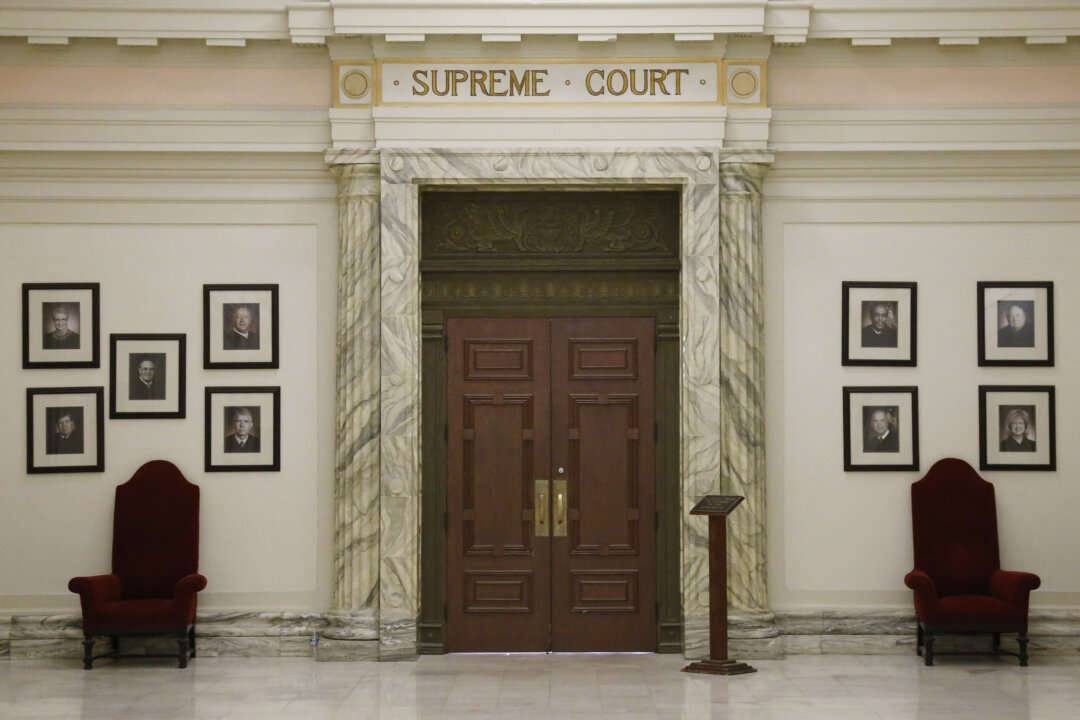
The California Supreme Court ruled unanimously on Sept. 24 that Riverside County Sheriff Chad Bianco illegally seized more than half a million voted ballots from a special election last year that approved a redistricting ballot question.
Voters easily approved Proposition 50 on Nov. 4, 2025, which authorized a Legislature-drawn congressional map favorable to Democrats for 2026 through 2030.
Bianco ran as a Republican candidate in this year’s gubernatorial primary election, but lost the primary in June.
Bianco began an investigation after a local group, the Riverside Election Integrity Team, compared handwritten voting precinct intake logs in his county with the certified count and alleged a gap of 45,896 votes. Bianco treated the complaint as a criminal case, and earlier this year obtained search warrants and seized about 650,000 voted ballots in around 1,000 boxes.
Riverside County Registrar of Voters Art Tinoco said the group misinterpreted ballot data and that the actual gap was only 103.
The court directed Bianco to return the ballots immediately to Tinoco. In a companion case, the court held that Bianco must obey California Attorney General Rob Bonta’s order to pause his criminal investigation of the election.
Chief Justice Patricia Guerrero wrote the opinions in the two related cases, Cervantes v. Bianco and Bonta v. Bianco, after hearing oral argument on Aug. 24.
She called the seizure of the ballots “unlawful,” saying state law requires that ballots remain in election officials’ custody, even during a criminal investigation.
Bonta previously told Bianco to pause his probe, preserve the evidence, and hand over the files. Bianco did not return the ballots. The court has now made Bonta’s directive binding.
The court ordered the sheriff to return the ballots “forthwith,” handle them only as needed to comply with the court’s order, take no further action on the November 2025 special election investigation pending Bonta’s review, and provide materials Bonta requested in a March 6 letter. The court had stayed the investigation in April.
Bianco’s attorney had told the court that as sheriff, Bianco had a legal duty to open an investigation after receiving a complaint, and that he adhered to the state penal code after the first search warrants were issued in February.
The court disagreed.
Guerrero said a search warrant does not supersede the state’s election law.
“If election misconduct is suspected, the Elections Code provides several mechanisms for law enforcement to review and examine ballots without compromising their integrity,” she said.
“But those procedures were not followed and the type of seizure that occurred here directly conflicts with the Elections Code’s carefully considered and controlling provisions.”
Chad Dunn, legal director of the UCLA Voting Rights Project, which brought one of the lawsuits challenging Bianco’s actions, said after the rulings that the ballots are public property.
“They must be protected through the processes the Legislature has established. This ruling provides important clarity for election officials, law enforcement, and voters across California,” he said.
Bonta Welcomes Rulings
Bonta hailed the court rulings, saying they “bring important clarity for our constitutional system in California,” and that he was “grateful” the court affirmed his authority to supervise county sheriffs.
“Election fraud can and should be investigated. But misuse of criminal investigative tools — without any evidence that a crime was committed — needlessly undermines trust in our elections system and in law enforcement,” he said in a statement.
Bianco said he will obey the rulings, but not “the message behind them.”
Bianco said the rulings gave the attorney general “unchecked power over any investigation in the state of California.”
The rulings fail to address the 45,896-ballot gap between the certified tally and the records obtained from the registrar, he said.
“The Registrar said it was a paperwork error. Bonta said stop looking. I got warrants from a judge and started looking anyway. That is my job,” Bianco told The Epoch Times.
Days before the rulings, on Sept. 19, California Gov. Gavin Newsom, a Democrat, signed a bill that makes it a felony to seize ballots, election records, or certified voting technology before election results are officially certified.
Jill McLaughlin and The Associated Press contributed to this report.