 By Foreign Affairs Magazine | Created at 2026-07-27 04:34:10 | Updated at 2026-07-27 05:16:39
1 hour ago
By Foreign Affairs Magazine | Created at 2026-07-27 04:34:10 | Updated at 2026-07-27 05:16:39
1 hour ago
The war on Iran, launched in late February by the United States and Israel, is doing more than rattling oil markets. It is accelerating a determination among African countries to reduce their dependence on imported fossil fuels and to turn toward renewable power. Africa has extraordinary solar, wind, and geothermal resources, but until the early 2010s, much of this potential had gone untapped. Most African states had long generated electricity from fossil fuels and hydropower, because these technologies were already well established, whereas solar and wind were the new, expensive, kids on the block.
That calculus began to change around 2022, when Russia’s invasion of Ukraine exposed the vulnerability of fossil fuel dependence. In sub-Saharan Africa, the cost of imported diesel and other fuels surged, with import bills rising by more than 35 percent in many countries over the course of a year, squeezing public finances and raising electricity bills for homes and businesses. The recent instability across the Middle East is only reinforcing that sense of vulnerability. And so African countries are now leaning toward the “electro-state” development model advanced by China, in which abundant, low-cost electricity from renewables underpins industrialization and economic growth. China is electrifying Africa through large-scale investment in renewable power generation, building electricity transmission and distribution infrastructure, and making electrified transport more accessible by financing electric-vehicle assembly lines, battery-swapping networks, and charging infrastructure.
Africa is now at the center of the world’s clean energy push, no longer at its periphery. And by embedding itself deeply into Africa’s energy infrastructure, China is positioning itself as a long-term strategic partner for industrializing the world’s youngest and fastest-growing continent. The United States under President Donald Trump, however, simply appears not to understand the appeal of renewables on the continent. (For instance, Washington has approved a $4.7 billion U.S. export-import bank loan to try to revive a liquefied natural gas project in Mozambique.) The truth is that infrastructure creates path dependency: countries tend to build future systems around the technologies, financing structures, and supply chains they already have.
If the United States cedes a role in Africa’s clean energy transition to China, it risks losing more than commercial opportunities. Beijing would deepen its diplomatic influence both in Africa and worldwide, shape the standards and supply chains underpinning the global energy transition, and strengthen its access to critical minerals essential for low-carbon technologies. And many African governments now prioritizing renewable energy are likely to view external partners that continue to emphasize fossil-fuel investments with growing skepticism. Rather than pushing hydrocarbons, the United States should partner with African countries on clean energy in ways that align with those countries’ development priorities. Doing so would not only expand Africa’s access to reliable and affordable energy; it would shore up American economic and geopolitical interests.
HERE COMES THE SUN
Nearly 600 million people in sub-Saharan Africa still lack access to electricity in their homes, roughly 80 percent of the world’s unelectrified population. Throughout much of the twentieth century, electrification relied on large, centralized fossil fuel and hydropower plants designed to serve cities, mines, and industry. Dispersed rural populations remained beyond the reach of these expensive transmission networks, leaving the continent with the world’s largest electricity access gap despite decades of investments in infrastructure.
But over the past 15 years, Africa’s energy transition began to accelerate as renewable sources became far cheaper. In 2024 alone, the International Energy Agency (IEA) estimated that Africa would attract around $110 billion in total energy investments, of which nearly $40 billion would go to clean energy, almost double the proportion of the total directed toward renewables in 2020.
The driver of this pivot is economic. Worldwide, solar costs have fallen by roughly 90 percent since 2010, while battery prices have dropped by 93 percent over the same period. In Africa, decentralized renewable systems are now simply proving faster and cheaper to deploy than fossil fuel infrastructure. Rooftop solar, battery storage, and other such installations can bring electricity to rural communities in the space of months, rather than the years it can take to expand the high-voltage transmission and distribution networks that carry power from a national grid’s large, centralized generating stations.
The continent also has especially abundant wind, solar, and geothermal resources. According to the IEA, Africa contains roughly 60 percent of the world’s best solar resources; its untapped onshore wind potential could hypothetically support the whole continent’s annual electricity demand. The East African Rift System, stretching north from Mozambique to Djibouti, has at least 15 gigawatts of untapped geothermal potential. Only one gigawatt has been developed so far. But renewable power capacity has grown steadily in recent years, and data shows that the continent added roughly 26 gigawatts of renewable power capacity in the ten years between 2013 and 2023, with solar accounting for the fastest growth.
In countries such as Kenya, Nigeria, Rwanda, and South Africa, both governments and businesses are increasingly adopting solar not just to blunt the impact of climate change but also because it provides more reliable electricity than overstretched national grids and generators. In Nairobi, for instance, where around two-thirds of businesses own diesel backup generators to cope with power outages, many firms are now installing rooftop solar and battery storage.
RENEWING A CONTINENT
Chinese manufacturers are substantially powering Africa’s turn toward renewables. A clear signal of Africa’s increasing reliance on China to help it turn away from fossil fuels can be found buried in China’s customs data. Ember, an energy think tank, found that Africa’s imports of solar panels surged by 60 percent between mid-2024 and mid-2025, and that these panels’ destinations extended far beyond early adopters such as South Africa. In that same time frame, Algeria’s imports soared more than 3,000 percent and Botswana’s rose by 700 percent; Angola, Benin, the Democratic Republic of Congo, Ethiopia, and Liberia all more than tripled their imports. The scale and speed of the increase suggest a potential tipping point: solar is shifting from a peripheral, largely donor-supported technology into core infrastructure for growth and energy security.
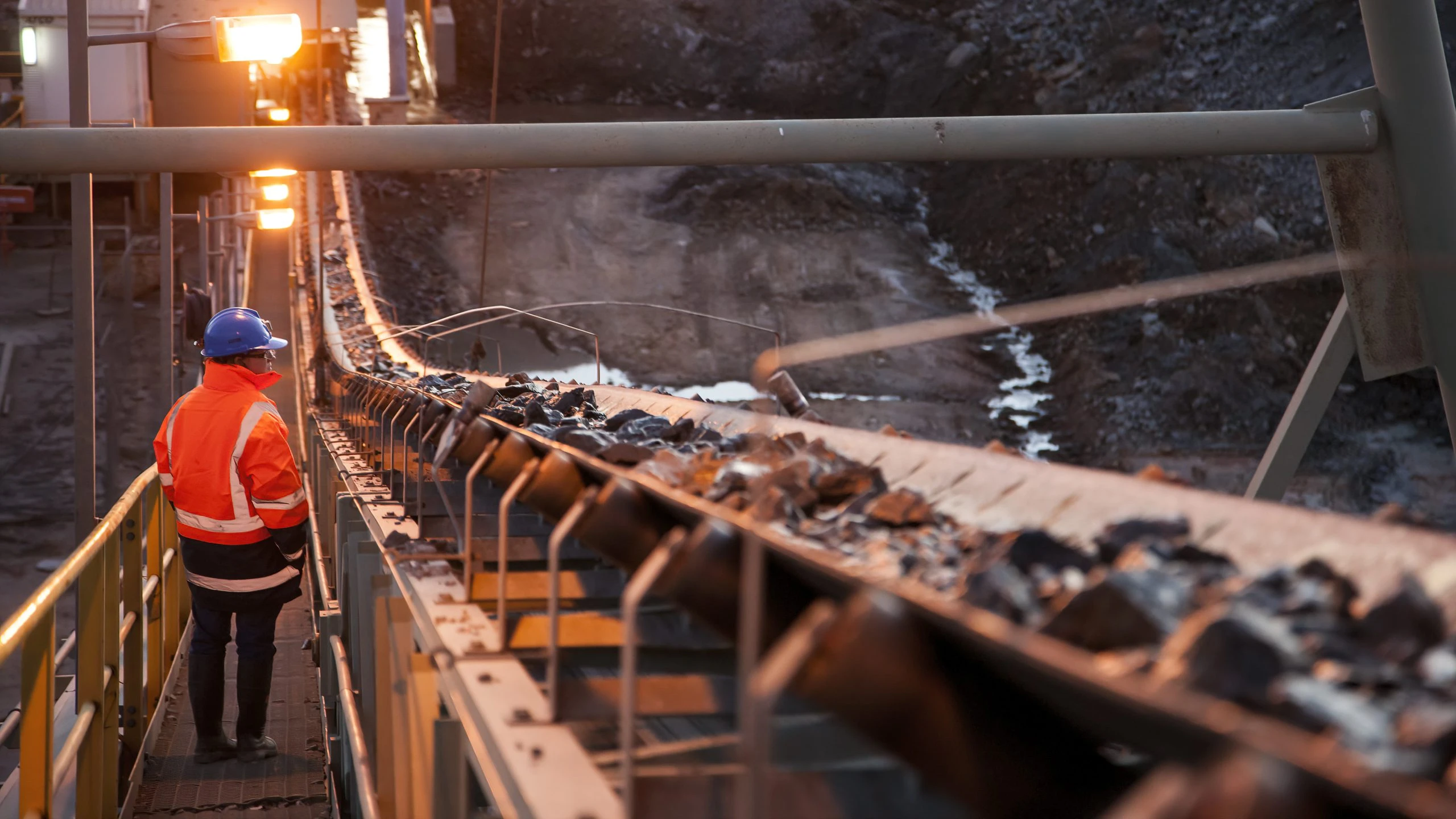
China itself recognized early that dependence on imported fossil fuels represented a strategic vulnerability. Its domestic deployment of renewables has been staggering. Its cumulative solar capacity now exceeds 1.2 terawatts, and its combined wind and solar installations are approaching two terawatts, constituting nearly half of global installed renewable capacity. That domestic strategy shift helps explain why China has emerged as the dominant force in global clean energy manufacturing. It controls major parts of the supply chains for solar panels, electric vehicles, wind turbines, and batteries, as well as the processing of the critical minerals—including lithium, cobalt, nickel, and rare earth elements—that underpin the clean energy transition.
Crucially, China is exporting not just products but also energy systems. A 2024 analysis by the International Monetary Fund shows that, through the Belt and Road Initiative, China has become one of Africa’s largest infrastructure financiers: between 2000 and 2023, its lenders provided roughly $182 billion in loans to African governments and state-owned entities, with substantial funds directed toward energy, transport, mining, and telecommunications infrastructure. Energy has been central to this engagement, with Chinese banks and companies supporting projects such as Uganda’s Karuma Hydropower Plant and Zambia’s Kafue Gorge Lower Hydropower Project.
At the same time, Chinese firms are constructing solar parks in Egypt, electricity transmission lines in East Africa, hydropower facilities in Angola, and electric rail systems in Nigeria. These efforts are an important addition to the continent’s energy transition, as the IEA estimates that achieving universal electricity access in Africa will require a mix of grid expansion and decentralized solutions.
GREEN PATH DEPENDENCE
These projects are reshaping development choices across the continent. African governments with hydrocarbon reserves will, of course, continue exploiting oil and gas in the near term, despite research showing that such exploitation often leaves their populations poorer. But a growing number of governments are adopting policies that put them on an electro-state trajectory, in which electricity, rather than imported fuels, powers the economy. Ethiopia, for instance, has banned imports of internal combustion engine vehicles as part of a broader push to electrify transport. In May, Kenyan President William Ruto announced the waiver of import taxes for the first 100,000 electric cars brought into the country. (Côte d’Ivoire, Madagascar, Uganda, and Zimbabwe have also introduced their own renewable energy tax incentives, such as VAT waivers, import-duty exemptions, and tax breaks for clean energy developers.) Electric vehicle uptake in Africa remains relatively low, but sales more than doubled in 2024, to nearly 11,000 vehicles; the shift is more visible in buses and commercial fleets.
A broad shift is underway in how Africa conceptualizes energy security. Morocco, for instance, is positioning itself as a major renewable export hub through large-scale projects such as the Noor Ouarzazate solar complex, a 580-megawatt facility designed to supply electricity to more than a million people and to support the country’s goal of generating 52 percent of its electricity from renewables by 2030. Rabat is also expanding its renewable power and green hydrogen partnerships with European partners. Egypt, meanwhile, has embarked on utility-scale solar development at the Chinese-built Benban Solar Park and unveiled a national green hydrogen strategy that aims to attract up to $40 billion in investment and ultimately produce millions of tons of green hydrogen annually.
In South Africa, reforms allowing for private power generation, including the removal of licensing requirements for embedded generation (small- and medium-scale power generated close to where it is consumed) up to 100 megawatts, have accelerated a boom in rooftop solar and private renewable investment. Nigeria has introduced regulations that allow households and businesses to feed excess solar power they generate back into the national grid for a credit on their electricity bills.
Africa cannot be powered entirely by renewables overnight. But it is speeding through a hybrid transition in which cities such as Lagos see more and more rooftop solar, battery-backed businesses, and cleaner industrial power alongside continued investment in national grids, and in which industrial zones increasingly rely on renewable electricity to support manufacturing, logistics, and green industries. The main constraint is not the potential in renewable energy sources on the continent but financing, transmission infrastructure, and the institutional capacity to integrate new sources of power.
MISSING THE FOREST
Washington has not grasped Africa’s new energy reality. Trump’s energy dominance agenda treats oil and gas not merely as commodities but as an ideological crusade. During his second term, his administration has frenetically promoted more drilling and sought to dismantle support for clean energy development at home and abroad. And it has explicitly framed African energy policy through the lens of geopolitical competition, urging greater development of the continent’s oil and gas resources as a means of boosting U.S. investment and countering China's influence.
In Africa, however, the petrostate pathway increasingly looks like a trap, particularly for countries betting on expanding their oil and gas exports. Countries such as Mozambique, Namibia, Senegal, Tanzania, and Uganda are investing heavily in new fossil-fuel projects or export infrastructure hoping to generate future revenues. Yet these investments face weakening long-term demand, price volatility, and the possibility that they will become stranded assets before they earn an adequate return.
Many other African states are already acutely exposed to swings in global oil and gas prices. After Russia’s invasion of Ukraine, many energy-importing African economies faced acute balance-of-payments pressures as the cost of fuel, food, and fertilizer prices surged simultaneously. Throughout 2022 and 2023, Ethiopia, Malawi, Sierra Leone, and others experienced inflation rates above 20 percent, with Ghana’s climbing to a staggering 54 percent.
The electro-state model offers African countries speedier rollouts, lower long-term energy costs, and insulation from oil-price shocks. Of course, too heavy a reliance on Chinese financing, technology, and supply chains could create its own dependences, limiting local industrial development and leaving countries exposed to shifts in Beijing’s priorities or global commodity markets. The challenge for African governments is not to replace one form of dependence with another. It must use foreign investment to expand domestic capacity, building up local manufacturing and strengthening regional power networks. Sub-Saharan Africa is already the world’s leading market for pay-as-you-go-solar. If its transition is managed well, it could soon lead the clean energy transition in many more ways than that.
Loading...