By Engadget | Created at 2026-09-29 15:27:51 | Updated at 2026-09-29 19:25:01
4 hours ago
By Engadget | Created at 2026-09-29 15:27:51 | Updated at 2026-09-29 19:25:01
4 hours ago
Cat7 looks like the obvious upgrade from Cat6, but its extra capability rarely matters at home.
ALEKSFILM/Shutterstock
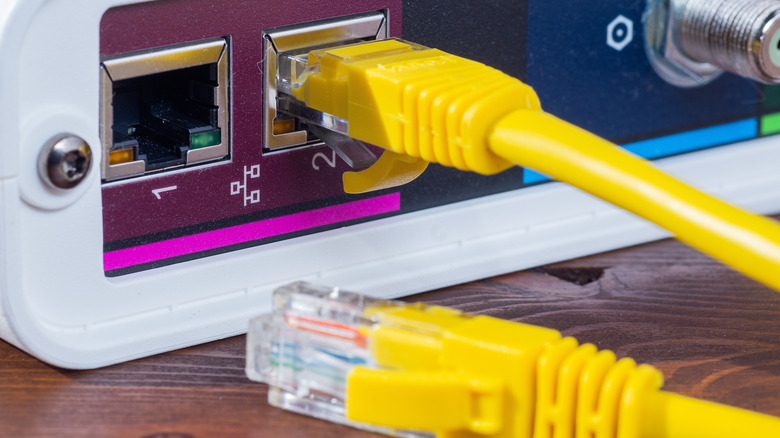
Buying an Ethernet cable should be simple, but it gets a little confusing when you compare Cat6 and Cat7 side by side. Cat7 has the larger number, a higher frequency rating and more shielding, so it definitely seems like the obvious upgrade. But there's a lot going on there with the number on the jacket.
Cat6 is still the best option for most home networks. It can carry Gigabit Ethernet over a standard 100-meter (328-foot) channel, and can even support 10Gbps over shorter distances. Although Cat7 is a true ISO cabling standard, it was never recognized by TIA. That may be one of the reasons why it didn't become the obvious next step from Cat6 in US homes.
Cat7 looks faster on paper
Shehriyar Qurbanov/Shutterstock
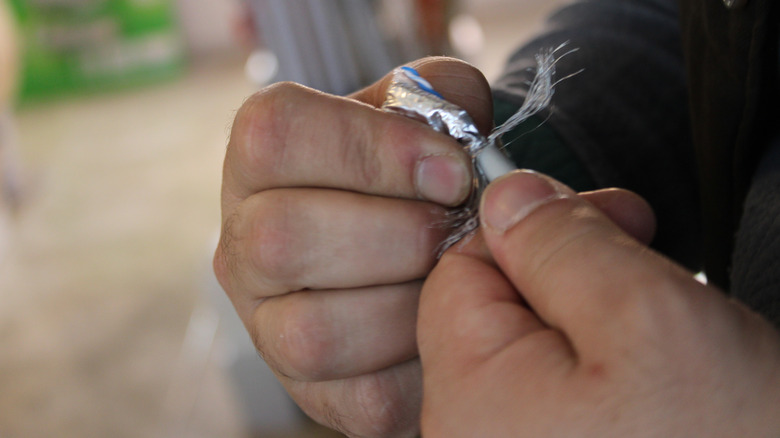
Cat6 is rated to 250 MHz. Cat7 adds more shielding and takes the frequency rating up a notch to 600 MHz, with foil around each twisted pair and an outer shield to minimize crosstalk and electromagnetic interference. It was mainly developed to enable 10 Gigabit Ethernet over 100 meters. That sounds impressive, but it also needs some context.
A Category 7/Class F installation is not just a Cat6 network with a more expensive cable installed. Cat7 can use RJ45-compatible GG45 connectors or TERA connectors, and the entire cabling channel has to meet the appropriate specification. Just connecting an affordable cable that is labeled "Cat7" to the same RJ45 ports you've always used does not automatically make everything around it Cat7.
Cat6 has more breathing room than its 1Gbps reputation would have you believe, too. TIA guidance says 10GBASE-T should be able to operate over Cat6 channels up to 37 meters (approximately 121 feet). From 37 to 55 meters (approximately 121 to 180 feet), performance depends on factors like interference between adjacent cables. That's enough distance for plenty of home installations.
However, Cat7's shielding may still be useful in electrically noisy environments. Most homes simply aren't networking inside a factory.
Cat6 is enough for most homes
oldamera1715/Shutterstock
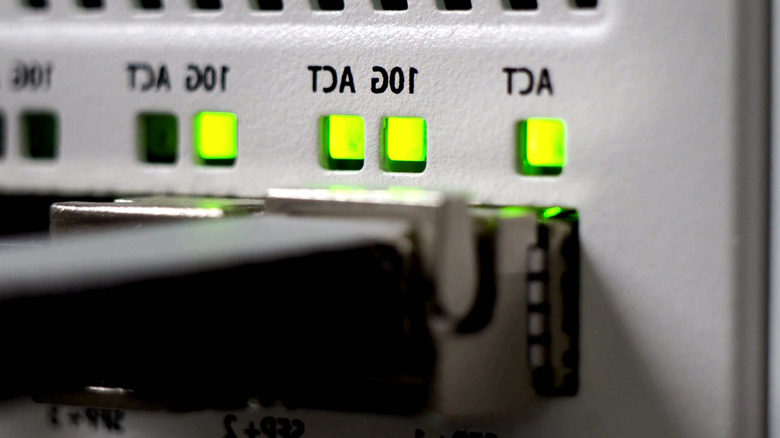
The speed of your Ethernet connection is ultimately limited by the hardware at either end and the cable between them. Even if you connect your router to your PC with a much more capable cable, you will still have a 1Gbps connection if your router has a 1Gbps LAN port and your PC has a 1Gbps Ethernet adapter. So replacing working Cat6 with Cat7 won't make downloads faster or suddenly provide your NAS with additional bandwidth.
There's also a much cleaner upgrade path for anyone wiring a house with 10Gbps in mind. Cat6A is rated to 500 MHz and supports 10GBASE-T over the entire 100-meter (328-foot) channel. Cat6A can also be suitable for environments where electromagnetic or radio-frequency interference is a concern, as shielded Cat6A systems are available.
That makes Cat6 the sensible option for most home networks, both new and existing, where gigabit or shorter multi-gigabit runs are desired. If you are looking for cable that will be pulled through walls for full-distance 10Gbps, it makes a lot more sense to look at Cat6A than the higher number on a Cat7 listing.
Cat7 is still used for specific purposes, especially when the Class F design or shielding is necessary. However, there are no IEEE Ethernet applications that require Category 7 or 7A cabling.