By The Rio Times | Created at 2026-08-30 13:41:23 | Updated at 2026-08-30 15:19:48
3 hours ago
By The Rio Times | Created at 2026-08-30 13:41:23 | Updated at 2026-08-30 15:19:48
3 hours ago
Chile · RETAIL
Key Facts
- —Date The alliance was announced on August 28, 2026, after the health institute’s authorisation.
- —Scope Digital medicine sales cover non-prescription products only, at 13 of nearly 900 stores.
- —Licence The pharmacies hold the sanitary permit, while Mercado Libre supplies only the technology platform.
- —Catalogue Seven smaller pharmacies already list more than 550 non-prescription products on the platform.
- —Objection The pharmacists’ association warns the model needs permanent and adequate sanitary inspection.
The permit covers over-the-counter products at 13 of nearly 900 stores, not a licence for online-only pharmacies.
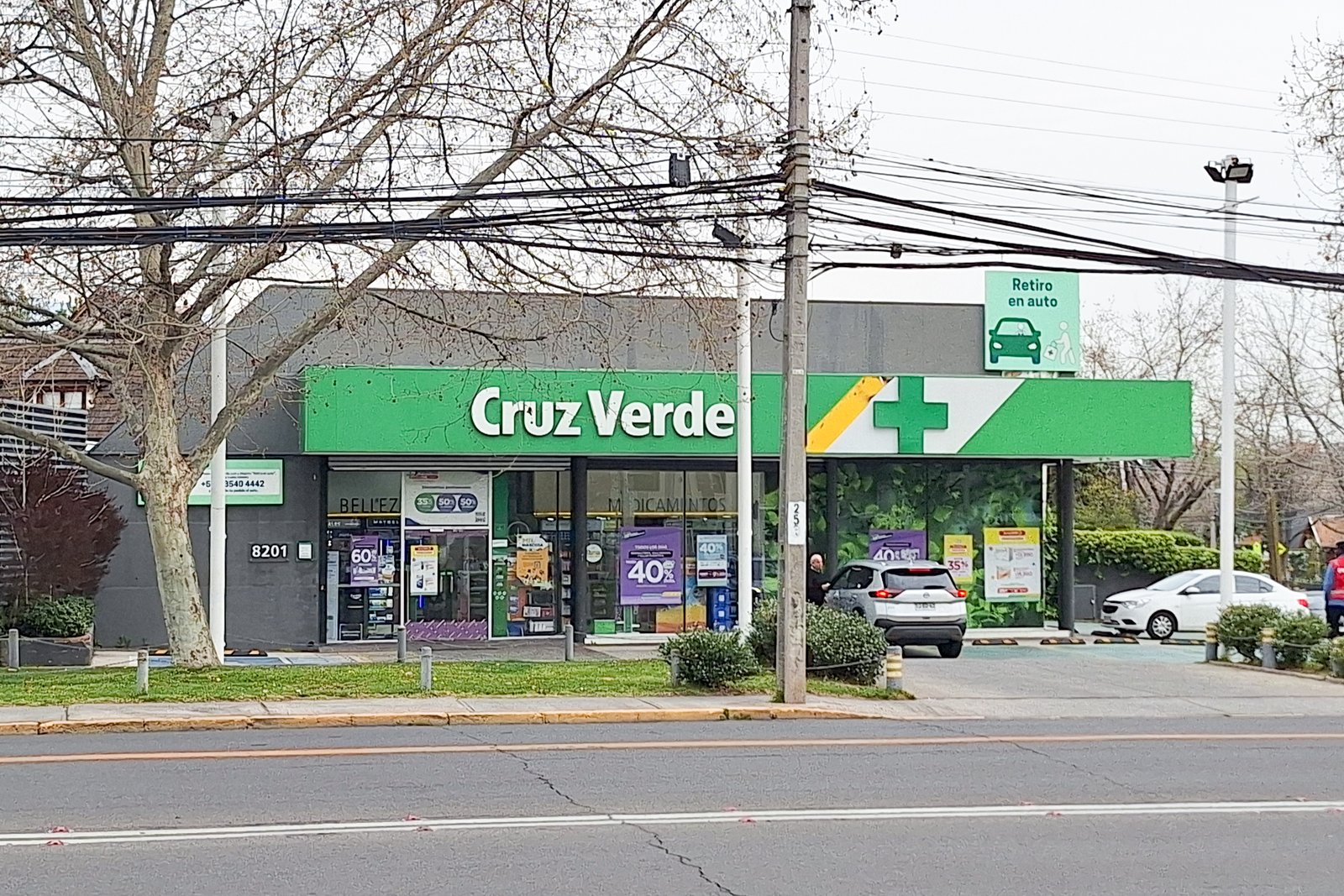
Chile has taken its biggest step yet toward digital medicine sales, and it is a smaller step than it looks. The Instituto de Salud Pública authorised 13 Cruz Verde stores to sell non-prescription medicines on Mercado Libre.
What the health institute actually authorised
The Instituto de Salud Pública (ISP), Chile’s medicines regulator, cleared Farmacias Cruz Verde to offer direct-sale medicines through Mercado Libre. Direct sale is the Chilean term for products that need no prescription.
The permit covers 13 stores out of a network the company puts at more than 890. Six sit in the Santiago region and seven in other cities.
The regional stores are Puerto Montt, Chillán, Talca, Temuco, Rancagua, Concepción and Viña del Mar. In Santiago they are Bulnes, Las Condes, Puente Alto, Maipú, San Miguel and Providencia.
Neither company published a resolution number when it announced the deal. That gap matters, because the scope of digital medicine sales in Chile turns on the wording.
Prices on the platform are quoted in Chilean pesos, not dollars. The Banco Central de Chile set its dólar observado at 925.25 pesos on August 28, 2026.
How the delivery model works
The 13 stores hold the offer and make the sale, and Mercado Libre connects buyers and sellers. The platform supplies the website, the payment system and the logistics.
Each store keeps operating under its own technical director, a licensed pharmacist required by Chilean law. Both companies say every sanitary rule stays in force.
Dispatch follows the coverage area each establishment is authorised to serve. Third-party carriers approved to move medicines handle the delivery itself.
That last point is the practical brake on digital medicine sales across the country. Transport rules, rather than the sales permit, decide how far a parcel can travel.
Live Company IntelligenceMercadoLibre Inc. — the full investor dossierInside: live share price, market cap, three-year financials, valuation, ESG and peer benchmarks — plus the latest Rio Times coverage.M
◆ Live Company Intelligence
MercadoLibre
NASDAQ: MELIMERCADOLIBREConsumer CyclicalInternet Retail123,670 employees
$99.68B
Market cap
Analyst target $2,256.54
Wall Street view
4.4Buy/ 5
21 Buy3 Hold1 Sell
Avg. price target $2,256.54 · +21% vs 200-day
Valuation & profitability
Market cap$99.68B
Revenue (TTM)$35.18B
P / E ratio53.6
Profit margin5.3%
Return on equity27.5%
Price & risk
52-wk low
$1,495.0052-wk high
$2,548.50
Beta (volatility)1.31
200-day average$1,863.12
Revenue trend · 6y
20202025
Latest $28.89B
Ownership
Institutions80.4%
Shares outstanding51M
Top holderCapital Research Global Investors
Institutional holders5+ funds
Dividend
No regular dividend — earnings reinvested for growth.
What MercadoLibre does. MercadoLibre, Inc. operates online commerce platforms in Brazil, Mexico, Argentina, and internationally. The company operates Mercado Libre Marketplace, an online commerce platform that can be accessed through mobile app or website; and Mercado Pago, a financial technology solution platform, which offers comprehensive set of financial technology services to users and other users…
Who holds the pharmacy licence
Mercado Libre is not a pharmacy in Chile and holds no sanitary permit of its own. The licence sits with each authorised Cruz Verde establishment.
Gonzalo Durán, general manager of FEMSA Salud Chile, said the deal widens access to health products. FEMSA Salud Chile is the parent company of Farmacias Cruz Verde.
Rafael Lira, interim marketplace head for Chile, Peru and Ecuador, described his company’s role narrowly. He said the task is to lend third parties the site, the payments and the logistics.
Seven smaller pharmacies joined the platform before Cruz Verde did, starting in 2025. They are Meddica, Farmex, RedFarma, Meki, Farmaloop, Zupharma and Eco.
The rules on selling medicines outside a pharmacy
Chilean law does not recognise a pharmacy that exists only online. A store must be physically installed, authorised and run by a pharmacist technical director.
Jorge Canales heads the ISP’s Agencia Nacional de Medicamentos, the national medicines agency known as Anamed. He said electronic dispensing is an accessory channel to that authorisation, not a substitute regime.
Canales pointed to Title VI Bis of Supreme Decree 466, the regulation covering pharmacies. Its first requirement is prior authorisation of the physical establishment.
Anamed says any mass internet project must rest on one or more licensed physical pharmacies. It must also meet rules on prescriptions, stock lists, dispatch, returns, advertising and data protection.
Ley de Fármacos II is still unfinished
Congress approved the first Ley de Fármacos, Chile’s drugs law, in January 2014. It pushed bioequivalent generics, prescribing by active ingredient and unit-dose sales.
A second version, called Ley de Fármacos II, has sat in Congress for more than a decade. Filed as Boletín 9914-11, it has never been enacted, yet it still frames the price debate.
Health Minister May Chomali told senators in April 2026 she wanted to rescue parts of that bill. Asked about a Ley de Fármacos III, she said the matter was under study.
The ministry’s stated priority is a different bill, Boletín 15850-11, on illegal medicine sales. It remains in its first committee stage.
A market still shaped by a collusion case
Three chains have long dominated Chilean retail pharmacy: Cruz Verde, Salcobrand and Farmacias Ahumada. Reporting in 2009 put their combined share at about 90 percent of the market.
In January 2012 the competition tribunal fined Cruz Verde and Salcobrand 20,000 annual tax units each. Chilean coverage valued each penalty at roughly US$19 million at the time.
The Supreme Court confirmed the fines in September 2012. Farmacias Ahumada had admitted the conduct and handed documents to the antitrust prosecutor.
The scheme ran from November 2007 to April 2008, with the chains raising prices in sequence. That case still colours how Chile reads any pharmacy alliance.
Farmacias populares and the price benchmark
Recoleta opened Chile’s first municipal pharmacy, the Farmacia Popular Ricardo Silva Soto, in October 2015. Mayor Daniel Jadue ran it as a social programme rather than a shop.
It bought straight from Cenabast, the state medicines purchasing agency, skipping the usual distribution markups. Reported prices ran about 70 percent below the big chains.
More than 30 municipalities were studying the model within weeks of the opening. Fifty-two communes had no pharmacy at all at that time.
The association behind the network later collapsed financially, and Jadue was charged in a case over it. The model nonetheless set the benchmark against which digital medicine sales are now judged.
What the pharmacists and the independents say
Héctor Torres, president of the Colegio de Químicos Farmacéuticos, called the alliance potentially very dangerous. He tied that judgement to the absence of adequate and permanent sanitary inspection.
Torres argued that medicines are not ordinary products and that their distribution is a health act. He said it must follow every procedure that guarantees quality, efficacy and safety.
María Adriana Calvo leads the Asociación de Farmacias Independientes de Chile, the independent pharmacies’ body. She said new models favour large players while independents face rising costs and restrictions.
Calvo said she does not question innovation, but she does question unequal conditions. Firms with dominant positions and advantages others lack raise competition concerns, she argued.
Critics also say Mercado Libre’s real goal is a pharmacy that is purely digital. Public lobby filings record 15 meetings with sector authorities since 2025, eight with the ISP.
Frequently Asked Questions
Can Chileans now buy prescription drugs on Mercado Libre?
No. The authorisation covers direct-sale products only, so digital medicine sales in Chile still exclude prescription medicines.
Who is legally responsible for the medicines sold?
Each authorised Cruz Verde store holds the sanitary permit and makes the sale. Mercado Libre supplies the platform, the payments and the logistics for digital medicine sales.
Does this let Mercado Libre open its own online pharmacy in Chile?
Not under current rules. Anamed says an online-only pharmacy is not recognised, so digital medicine sales must run through a licensed physical store.
Sources
This article was produced by The Rio Times’ automated newsroom system. How we use AI · Report an error
The Rio Times · Power Map
See who really holds power in Latin America
Click to open the Power Map →