By The Rio Times | Created at 2026-10-17 15:11:05 | Updated at 2026-10-17 16:37:40
2 hours ago
By The Rio Times | Created at 2026-10-17 15:11:05 | Updated at 2026-10-17 16:37:40
2 hours ago
GUIDES · COLOMBIA
Key Facts
- —The country Colombia is a close US security partner that grew 261,000 hectares of coca in 2024, up 3.5% on 2023. Washington kept it on its 2026 list of countries that failed to curb drugs.
- —Who is in charge Abelardo de la Espriella, a conservative lawyer, became president on 7 August 2026. In September 2026 he ended peace talks with the ELN guerrillas and said armed groups would get no political status.
- —Violence Colombia recorded between 14,038 and 14,780 homicides in 2025, depending on the official count. Killings from January to August 2026 ran about 2% above the same months of 2025.
- —Armed groups The ELN has about 6,300 members on official 2025 estimates, and the Gulf Clan about 9,000 on estimates from late 2025. Both are on the US terrorist list, as are the FARC-EP and the Segunda Marquetalia.
- —Travel Colombia carries Level 3, Reconsider Travel, on the US advisory scale since 31 March 2026. Arauca, Norte de Santander, Cauca (except Popayán), Valle del Cauca (except Cali) and the strip within 10 km (6 miles) of the Venezuelan border are Level 4, Do Not Travel.
- —Power Index Colombia ranks 6th of 14 in The Rio Times Latin America Power Index, with 51.9 points (October 2026 edition).
Colombia security in 2026 mixes falling kidnappings with stubbornly high homicide, extortion and displacement. This guide explains the numbers, the armed groups, the forces that fight them and what to know before you go.
Colombia security matters to Americans because the country grows coca on 261,000 hectares and works closely with Washington against traffickers. A conservative government that took office on 7 August 2026 has ended peace talks with armed groups and promised a harder line.
This guide sets out the crime trends, the main armed groups, the police and army, the hotspots and the safer areas, with every figure dated. It is written for investors, travellers and expats who want a calm, factual picture.
Colombia Crime Trends in Numbers
Colombia counted 14,038 homicides in 2025 in the defence ministry’s open data as of 16 September 2026, up from 13,497 in 2024. The ministry’s first count, reported by El Tiempo, was lower at 13,726, a rate of 25.8 per 100,000 people against 25.6 in 2024.
The forensic institute, Medicina Legal, gave a higher preliminary figure of 14,780 homicides for 2025, against 14,021 in 2024. The counts differ because the ministry tallies only killings it ties directly to violence, El Tiempo noted.
The first quarter of 2026 brought no fall. The ministry’s open data show 3,485 homicides from January to March 2026, up 4% from 3,345 a year earlier, and 9,434 from January to August, up 2% from 9,256.
Extortion also rose, to 2,914 cases in the first quarter of 2026, up about 7% on a year earlier. Massacres, meaning attacks that kill three or more people, numbered 30 with 94 victims by March, and victims rose 32%.
Kidnapping moved the other way in 2026. Preliminary ministry data show 238 victims from January to August 2026, against 434 in the same months of 2025, a fall of 45%.
That fall follows a sharp rise. The ministry’s year-end review called 2025 the worst year in a decade for extortive kidnapping, Publimetro reported.
City figures can differ from the national picture. Bogotá recorded 73 homicides in September 2026, its lowest September count since 2003, La Silla Vacía reported.
Bogotá’s security secretary, César Restrepo, put the capital’s cumulative fall in homicides for 2026 at about 8%. Bogotá, Barranquilla and Medellín all recorded fewer homicides in 2025 than in 2024, El Tiempo reported.
Young adults face the greatest risk. The ombudsman’s office, the Defensoría del Pueblo, put the 2025 rate at 57.61 per 100,000 among people aged 18 to 28, against 23.08 for the whole country.
The ombudsman, Iris Marín, blamed armed groups both inside and outside talks with the government. Her office quoted a national rate of 23.08, lower than the ministry’s 25.8, so every figure here is an estimate.
Who Runs Security Policy in 2026
President Abelardo de la Espriella took office on 7 August 2026. He ended the earlier government’s “total peace” policy and treats all armed groups as terrorists, the research group Security Council Report noted in October 2026.
In September 2026 he announced the end of the talks with the ELN that his predecessor, Gustavo Petro, had left in place. He summed it up as “the false peace is over”, Semana reported, and offered armed groups only submission to justice.
He named retired general Jorge Eduardo Mora López, who has led special forces and intelligence units, as defence minister on 6 July 2026. Mora was still in office in October 2026, after the Senate rejected a censure motion against him on 23 September.
A draft Anti-Terrorism Statute would create a public register of terrorist actors, similar to the US Treasury’s OFAC list. Banks and notaries would have to check it, and the draft sets rules for air strikes within humanitarian law.
As of 9 October 2026 the bill had not reached Congress, Vanguardia reported. Opposition senator Iván Cepeda called it “especially worrying” that the register could impose economic sanctions without a court conviction.
In a determination dated 11 September 2026, the US president kept Colombia on the list of countries that “failed demonstrably” on drugs. He also ruled that US aid to Colombia is vital to American interests.
The determination blamed the previous government for the label. It said the president would consider lifting it if De la Espriella’s campaign against coca and cocaine shows progress.
The ELN and the FARC Dissidents
The National Liberation Army, or ELN, is a guerrilla group formed in 1964 that has fought the state for decades. InSight Crime, citing official 2025 figures, puts it at about 6,300 members, including militia and support networks, with about a fifth of them based in Venezuela.
InSight Crime, a research group on organised crime, places the ELN in at least 184 municipalities across 19 departments. It funds itself through extortion, kidnapping, taxes on coca growers and traffickers, illegal mining and border smuggling.
In January 2025 the ELN began an offensive in Catatumbo, a border region of Norte de Santander, against the 33rd Front, a FARC dissident unit. By January 2026 the ombudsman’s office counted 105,203 victims of the fighting, including 101,587 people forced from their homes, Publimetro reported.
Across the country in May 2026, 15,045 people were confined to their homes and 2,799 were displaced, the ombudsman’s office said. Nearly half of those displaced were in Tibú and El Tarra, where dissidents loyal to the commander known as Calarcá fight the ELN, El Tiempo reported.
FARC dissidents are fighters who rejected or abandoned the 2016 peace deal with the former FARC guerrilla army. They are split into rival factions that fight one another and the ELN.
On 12 October 2026 a car bomb near the El Bordo toll on the Pan-American Highway in Cauca wounded three civilians. The army blamed the Carlos Patiño structure, a FARC dissident unit, in a preliminary attribution reported by Publimetro.
Security Council Report also noted a car bomb at a police station on 31 August 2026 that killed one civilian and injured 11 others. It added that late-August air strikes in Guaviare reportedly killed more than 30 people, including five children, an allegation in the UN Secretary-General’s report that we have not independently confirmed.
The Gulf Clan and Other Criminal Gangs
The Gaitanist Self-Defence Forces of Colombia, known as the EGC or Gulf Clan, is among the country’s biggest armed groups, with about 9,000 members on official figures cited by the think tank Ideas para la Paz. The think tank Pares found it present in 302 of Colombia’s roughly 1,100 municipalities, MDZ reported in December 2025.
The group grew out of 1990s paramilitary forces and former members of the EPL guerrillas, and it began in the Urabá region near Panama. Its reported leader is Jesús Ávila, known as Chiquito Malo.
The US State Department designated the EGC a foreign terrorist organisation in December 2025. It followed the ELN, the FARC-EP and the Segunda Marquetalia on the US list, and the move could complicate talks the former government held with the Gulf Clan.
In the north, the Autodefensas Conquistadoras de la Sierra Nevada, or ACSN, hold the mountains above Santa Marta. On 12 October 2026, 41 detainees escaped a holding centre in the city, among them the group’s alleged finance chief, alias Mongolo, El Espectador reported.
The escape came weeks after the ACSN’s armed strike of September 2026, which followed the killing of its alleged second-in-command, alias Cholo. Guards had opened a gate to give an ailing detainee paracetamol, and others used the moment to flee.
Cocaine and the Money Behind the Violence
Colombia had 261,000 hectares of coca in 2024, up 3.5% from 253,000 in 2023, in the UN drugs office survey. The results were published in June 2026.
The Pacific region held 121,612 hectares and Catatumbo 48,739 hectares. Tumaco, on the Pacific coast, was the municipality with the most coca, at about 31,000 hectares.
Coca grew in 180 of Colombia’s 1,122 municipalities, about 16% of the total. Cocaine seizures rose 19% in 2024 to about 889 tonnes, while manual forced eradication fell 54%.
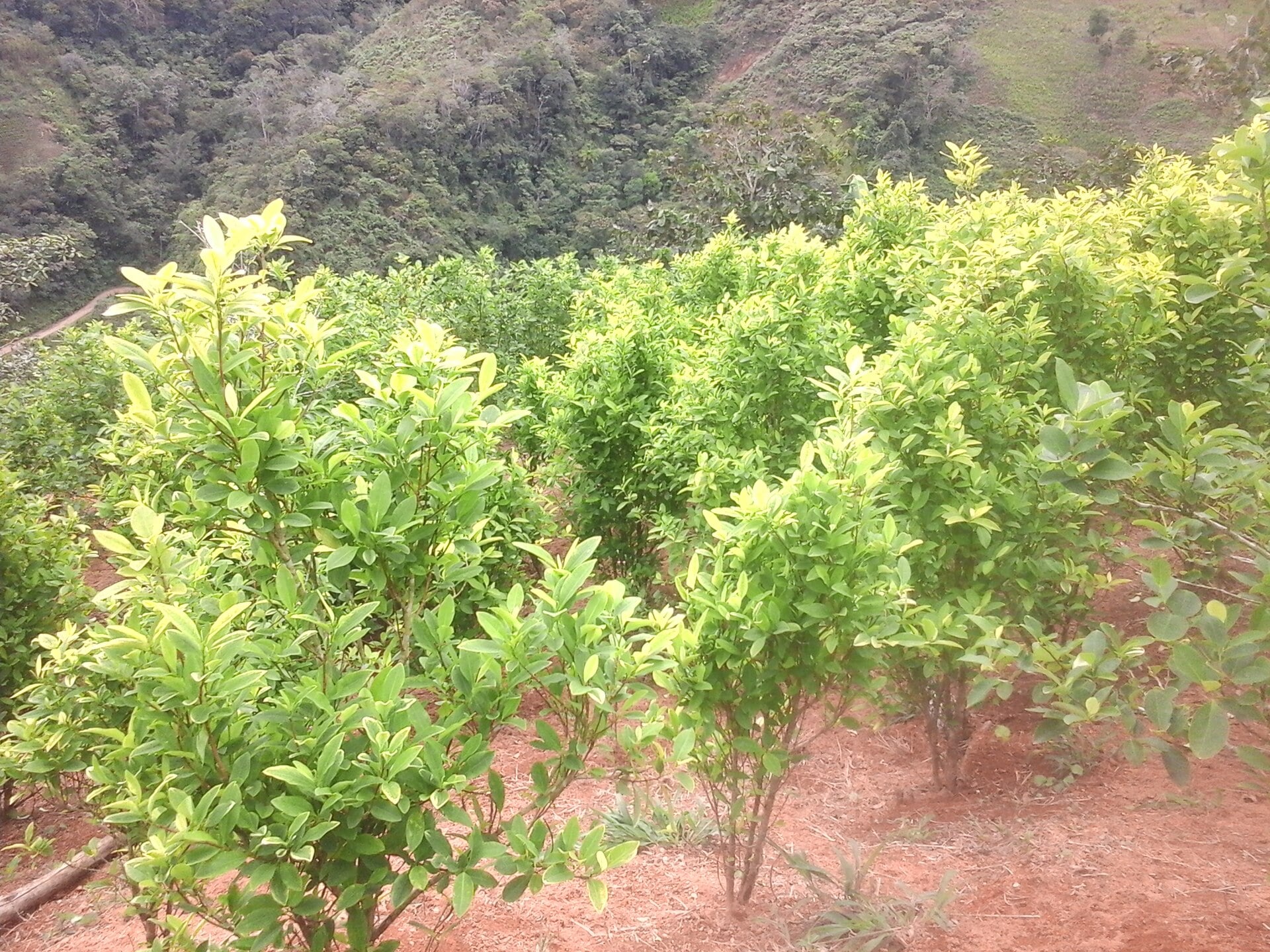
Armed groups earn money along the whole chain, from taxing growers to running labs and moving product across borders. InSight Crime says the ELN is directly involved in cocaine production and trafficking, especially along the border with Venezuela.
The White House determination of 11 September 2026 said coca cultivation and cocaine production reached record levels under the previous government. It expects De la Espriella’s campaign to show progress on eradication and on breaking up what it calls narcoterrorist networks.
Police, Army and Their Limits
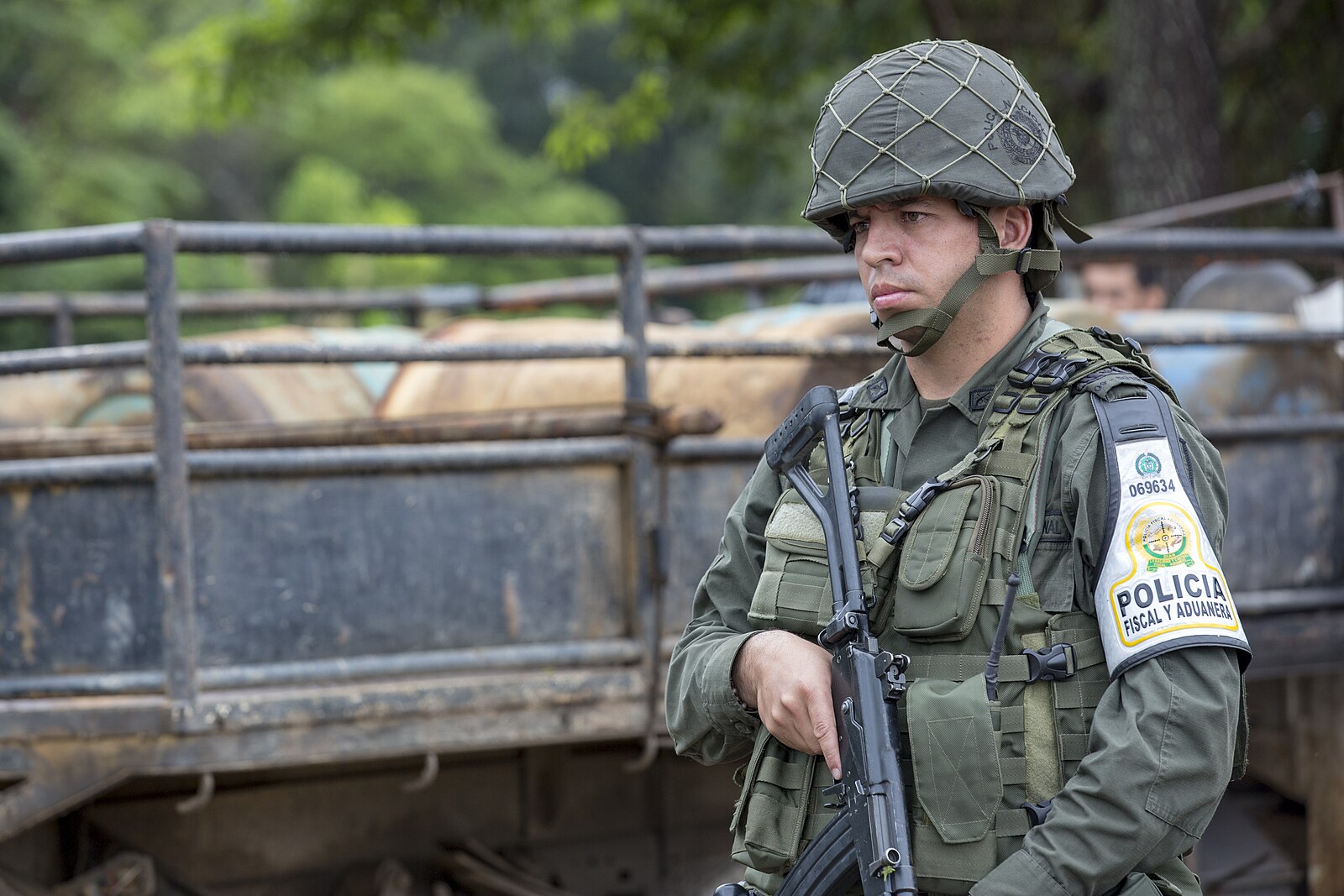
The National Police sits inside the Ministry of Defence, alongside the army, navy and air force. That structure puts one minister in charge of both the soldiers who fight armed groups and the officers who patrol cities.
About 11,200 soldiers were deployed in Operation Catatumbo as of January 2026, Publimetro reported. Armed groups answer with explosive-laden drones, and the ombudsman’s office counted 394 such attacks between April 2024 and December 2025, Publimetro reported.
Military action has intensified under the new government. InSight Crime recorded that the military bombed an ELN camp between San Calixto and Tibú on 11 August 2026.
The Santa Marta escape of 12 October 2026 showed the limits of the state’s grip. El Espectador said it revived debate on whether authorities can contain criminal groups.
The UN Verification Mission, which monitors the 2016 peace deal, has a mandate that expires on 31 October 2026, and the Security Council is expected to vote on renewal. Congress’s economic committees have backed a 2027 budget that would leave the Special Jurisdiction for Peace, the transitional justice court, about US$87.8 million short of its request.
Hotspots and Safer Areas
Violence in Colombia is local, and the map changes by department. These are the areas that official and press sources name most often in 2026.
- Catatumbo, Norte de Santander: the ELN and FARC dissidents fight over coca land and border routes, and the area holds 48,739 hectares of coca.
- Cauca: dissident attacks continue, including the car bomb at El Bordo on 12 October 2026.
- Arauca: InSight Crime describes clashes between the ELN and the FARC dissident 10th Front in the Arauca–Apure corridor.
- Pacific coast: the ombudsman’s office listed Buenaventura, Roberto Payán and Linares as emergencies in May 2026, and Tumaco has the most coca of any municipality.
- Caquetá and Putumayo: these two departments had the most confinement in May 2026.
- Santa Marta and the Sierra Nevada: the ACSN armed strike of September 2026 and the escape of 12 October 2026 centre on this area.
Safer areas exist, mostly in the big cities, though Cali’s homicides rose from 1,177 to 1,282 in 2025. Bogotá, Barranquilla and Medellín all recorded fewer homicides in 2025 than in 2024, El Tiempo reported.
The main tourist cities, Bogotá, Medellín and Cartagena, lie outside the conflict zones listed above. Street crime still occurs there, and the US advisory says violent crime is common in many areas of Colombia.
Civilians, Leaders and the Peace Deal
Indepaz, a Colombian peace research institute, counted 78 massacres in 63 municipalities in 2025, against 76 in 2024. It also recorded 187 social leaders and human rights defenders killed in 2025, up from 173 in 2024.
Indepaz counted 39 signatories of the 2016 peace deal killed in 2025, up from 31 in 2024, Minuto60 reported. The signatories are former FARC fighters who laid down arms.
The ombudsman’s office said at least 500 Colombians a day were displaced or confined in May 2026. The report blamed armed groups that control movement in communities.
What It Means for US Readers
For travellers, Colombia carries Level 3, Reconsider Travel, on the US State Department scale in an advisory dated 31 March 2026. Arauca, Norte de Santander, Cauca (except Popayán), Valle del Cauca (except Cali) and the strip within 10 km (6 miles) of the Venezuelan border are Level 4, Do Not Travel.
The advisory warns that the US embassy sometimes receives reports of US citizens kidnapped for ransom. Visitors should check it before booking and keep to the main cities and tourist routes.
For investors, the Anti-Terrorism Statute is the item to watch. If passed as drafted, its public register would oblige banks and notaries to screen counterparties, which affects US firms with Colombian partners.
Extortion and attacks on roads raise logistics costs outside the big cities. Security policy also shapes US aid, because the September 2026 determination ties any lifting of the drug-failure label to progress on coca.
For expats, daily risk depends mainly on the city and the neighbourhood. Residents should follow local alerts and avoid road travel in Cauca and Catatumbo.
What Is Not Known
It is not known whether homicides will fall or rise across 2026, because full-year figures are not out until early 2027. Preliminary counts are often revised, and the defence ministry and the forensic institute use different methods.
It is not known how the Anti-Terrorism Statute will read when it reaches Congress, or whether lawmakers will pass it. Nor is it clear whether the Security Council will renew the UN mission before 31 October 2026.
The true size of the armed groups is uncertain, and a new count of the Gulf Clan is under way. Coca data for 2025 is not yet published, so it is unknown whether the 2024 rise continued.
Frequently Asked Questions
How many homicides does Colombia record each year?
The defence ministry counted 13,726 homicides in 2025 and the forensic institute a preliminary 14,780. The rate was about 25.8 per 100,000 people.
Is Colombia safe for US tourists?
The US State Department rates Colombia Level 3, Reconsider Travel, in an advisory dated 31 March 2026. Most visitors stay in the main cities, which lie outside the conflict zones, but violent crime is common in many areas.
Which armed groups operate in Colombia?
The main ones are the ELN guerrillas, FARC dissident factions, the Gulf Clan and the ACSN in the Sierra Nevada. The US lists the ELN, the FARC-EP, the Segunda Marquetalia and the Gulf Clan as terrorist organisations.
Is kidnapping still a problem in Colombia?
Yes, although it fell in 2026. Preliminary data show 238 victims from January to August 2026, against 434 a year earlier.
Which areas of Colombia should travellers avoid?
The US advisory says do not travel to Arauca, Norte de Santander, Cauca (except Popayán), Valle del Cauca (except Cali) and the strip within 10 km (6 miles) of the Venezuelan border. Catatumbo, the Pacific coast and parts of the Sierra Nevada also see heavy armed-group activity.
What is Colombia’s Anti-Terrorism Statute?
It is a draft law that would create a public register of terrorist groups and people, with asset freezes and rules for air strikes. As of 9 October 2026 it had not reached Congress, and the opposition has criticised its reach.
Sources: US State Department, Colombia travel advisory; Federal Register, Presidential Determination No. 2026-23, 11 September 2026; White House, 2027 Majors List; Security Council Report, Colombia, October 2026; InSight Crime, ELN profile, 12 August 2026; Ministry of Defence, homicide open data, updated 16 September 2026; El Tiempo, homicides 2025; El Colombiano, Medicina Legal homicides 2025, 16 March 2026; El Espectador, defence ministry figures, first quarter 2026; Blu Radio, kidnapping January to August 2026; Publimetro, extortive kidnapping 2025; Publimetro, Catatumbo one year on; El Tiempo, Defensoría displacement May 2026; Blu Radio, youth homicides, Defensoría; La Silla Vacía, Bogotá September 2026; Minuto60, Indepaz 2025 balance; Forbes Colombia, coca survey 2024; Vanguardia, Anti-Terrorism Statute, 9 October 2026; Vanguardia, defence minister, 6 July 2026; MDZ, Clan del Golfo, December 2025; El Espectador, Santa Marta escape; Publimetro, El Bordo car bomb, 12 October 2026; Semana, end of ELN talks. Figures are the latest available and several are preliminary. All accessed 17 October 2026.