By The Rio Times | Created at 2026-09-29 19:26:37 | Updated at 2026-09-29 20:37:55
2 hours ago
By The Rio Times | Created at 2026-09-29 19:26:37 | Updated at 2026-09-29 20:37:55
2 hours ago
Politics · Colombia
Key Facts
- —What happened The Colombia visa revocations of 28 September 2026 cover senator Martha Peralta and businessman Euclides Torres.
- —Where the names came from Both had appeared on a list President Abelardo de la Espriella published in June 2026, before he took office.
- —The catch Washington published no individual reason for either Colombian, and its statement does not mention the president or his list.
- —Who they are Peralta sits in the Senate for the left-wing Pacto Histórico; Torres is a businessman close to former president Gustavo Petro.
- —What comes next De la Espriella says more names will follow, and that United States Treasury asset sanctions could come after that.
A senator and a businessman lost their United States visas on Monday. Their names had been on a list the Colombian president published in June.
Free daily brief — no card needed
Get every Colombia story in one morning email
We build you a personalized brief around the topics you follow — free for 7 days. Love it? Your first month after that is US$1.
Yes, email me my free daily brief — I can unsubscribe any time.
One-stop reference
Company Intelligence
Every listed company in Latin America — financials, ownership and structure for 1,450+ companies across 26 exchanges, in one place.
The Colombia visa revocations announced on Monday 28 September 2026 struck two people the country’s own president had named in public. Their names had been on his list since June.
The United States Department of State revoked the visas of Senator Martha Isabel Peralta Epieyú and the businessman Euclides Antonio Torres Romero. Their immediate families lost theirs as well.
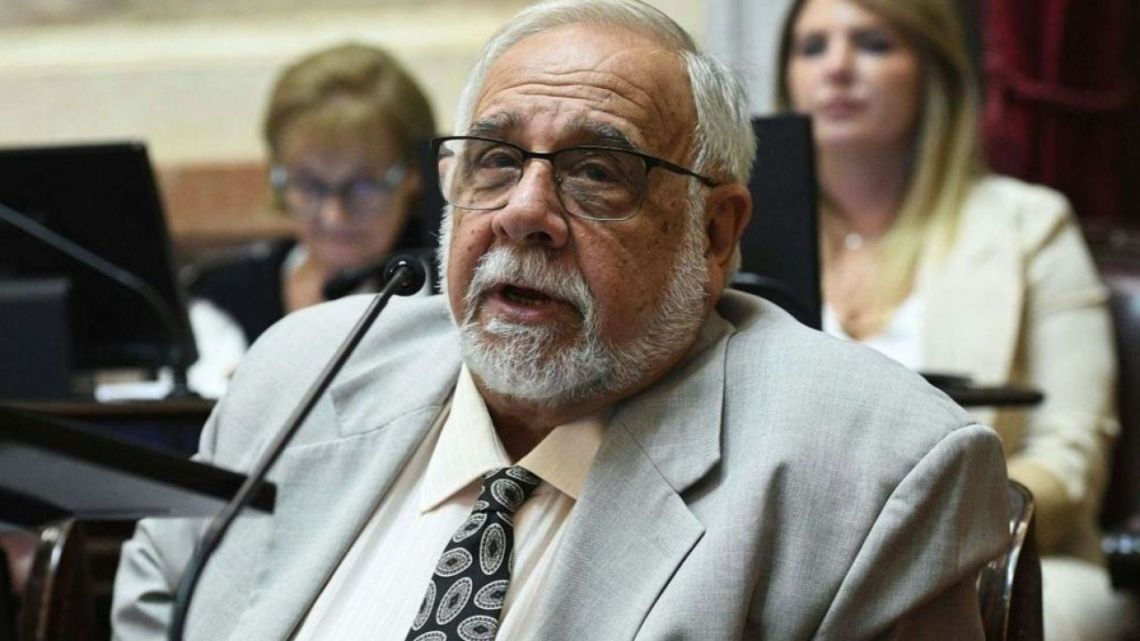
Peralta sits with the left-wing opposition in the Senate. Torres is a businessman investigated over the financing of Gustavo Petro’s 2022 campaign.
The list the president read out himself
In June 2026 Abelardo de la Espriella was still a presidential candidate. In a live broadcast on Monday 8 June he read out names of Colombian politicians he accused of buying votes.
He addressed them to Christopher Landau, the deputy secretary of state and the second-ranking official at the State Department. “Le dejo aquí, subsecretario, unos nombres para que usted los tenga en el radar,” he said.
In English: I leave you some names here, deputy secretary, so you can keep them on your radar. Colombian outlets nickname Landau “el quitavisas”, the visa remover.
Infobae, a Latin American news site, listed 23 names from that broadcast the next day. Peralta and Torres were both on it.
He kept adding names through June in posts on X. La Silla Vacía, an investigative outlet in Bogotá, counts about 26 in all, every one aligned with Gustavo Petro.
La Silla Vacía also notes that he offered no evidence for the vote-buying he alleged. He won the runoff on 21 June 2026 and took office on 7 August 2026.
What Washington said, and what it left out
The Colombia visa revocations came inside a State Department statement of 28 September 2026 announcing a new regional policy. It covers people who undermine a democratically elected government through corruption or drug trafficking.
The statement describes Peralta only as a senator of the Pacto Histórico and of a smaller indigenous party. It describes Torres only as the owner of an energy, traffic-signal and public-lighting group.
It gives no individual reason for either of them. It does not mention the Colombian president, or his list, or any recommendation from Bogotá.
The statement came from Thomas Pigott, the department’s spokesman. It ties the step to a leaders’ statement of 22 September by a group called the Shield of the Americas.
That group is an American-led security pact against drug cartels, founded at a summit in Doral, Florida, on 7 March 2026. Colombia was not invited then, under Petro, and joined in August under De la Espriella.
The same statement covered 26 people in four countries under the new policy. Our report on the wider list sets out Bolivia, Ecuador and Peru.
Who the two Colombians are
Peralta is a senator for La Guajira, the desert department on Colombia’s Caribbean border with Venezuela. The Supreme Court is investigating her over contracts at the national disaster-relief agency, El Heraldo reported.
She has not been convicted of anything, and the case has stalled. Torres is investigated over the financing of Petro’s 2022 campaign, and he has not been convicted either.
El Heraldo reported that Torres has acknowledged giving logistical support to Petro’s pre-campaign. He denies financing the 2022 campaign itself.
Neither faces any charge in the United States. Visa decisions there require no court and no published proof.
“Me enteré por los medios de comunicación de que me habrían retirado la visa,” Peralta told El Heraldo. She learned of it from the press, she said, and had received no official notice.
She added that she would carry on with her work calmly, facing the country and respecting its institutions.
A president who welcomed it
De la Espriella celebrated the revocations on X on Monday evening. “La lucha apenas empieza; pronto se ampliará no solo en número, sino también en decisiones administrativas,” he wrote.
The fight is only beginning, he meant, and it will widen in numbers and in administrative measures. He then pointed at the OFAC list.
OFAC is the United States Treasury office that freezes the assets of sanctioned people and companies. Being placed on its list is far heavier than losing a visa.
Petro himself knows the instrument. Washington revoked his visa in September 2025, after he addressed a protest outside United Nations headquarters in New York.
The reaction in Bogotá
María Fernanda Cabal, a former senator, told Peralta not to expect explanations from Washington. She said the senator should instead account for public money in La Guajira.
Julián Uscátegui, a Bogotá city councillor, said he hoped more names would follow. He added that anyone who had committed crimes should answer to Colombian courts.
Iván Cepeda, the senator De la Espriella beat in the runoff, made a separate claim on Tuesday. He said on X that a plan had been revived to fabricate testimony against him in a United States case.
Cepeda gave no evidence, and Vanguardia said the closeness in time does not by itself show a link. He lost that runoff by about 252,000 votes, or 0.96 of a percentage point.
Why this matters outside Colombia
A visa is cheap for Washington to withdraw and expensive for the person who loses it. No hearing is held, no charge is filed and no evidence is published.
That makes it an attractive tool for any government that wants pressure applied to its rivals. The pressure arrives from abroad, and the domestic courts are never troubled.
Colombian institutions are not being bypassed in a formal sense, because a visa is a foreign sovereign decision. The practical effect is still that a political fight has acquired a second, foreign arena.
For foreign residents and investors, the rules of ordinary travel have not changed. The measures reach named people and their close families only.
The open question is how long the Colombian list turns out to be. De la Espriella says the number will grow; Washington has named no further Colombians so far.
More: Colombia coverage, every day from The Rio Times.
Frequently Asked Questions
Who lost their United States visas in Colombia?
The Colombia visa revocations of 28 September 2026 covered Senator Martha Isabel Peralta Epieyú and the businessman Euclides Antonio Torres Romero, together with their immediate families. Peralta sits for the left-wing Pacto Histórico and the Movimiento Alternativo Indígena y Social. Torres owns a group active in energy, traffic signalling and public lighting. Neither has been convicted of any offence, and neither faces charges in the United States.
Did the Colombian president ask for this?
President Abelardo de la Espriella published names in June 2026, while he was still a candidate, and addressed them to the deputy secretary of state, Christopher Landau. Infobae listed 23 names from that broadcast, including Peralta and Torres. The State Department statement of 28 September 2026 makes no mention of the president, his list or any request from Bogotá.
Does this change anything for ordinary travellers?
No. The policy applies to named individuals and their immediate family members, under Section 212(a)(3)(C) of the United States Immigration and Nationality Act. Nothing in the announcement alters visa rules for other Colombians, or for foreign residents living in Colombia. The same announcement also covered 24 people in Bolivia, Ecuador and Peru.
What is the Shield of the Americas?
It is a security grouping led by the United States and aimed at drug cartels and organised crime in the Americas. It was launched at a summit in Doral, Florida, on 7 March 2026, hosted by President Donald Trump. Colombia did not attend that summit, which fell during Gustavo Petro’s presidency. Colombia joined in August 2026, shortly after Abelardo de la Espriella took office.
Sources: US State Department press statement of 28 September 2026, El Tiempo on the list the president recommended, Infobae on the June broadcast and the names read out, Semana on the names he added on X on 19 June 2026, La Silla Vacía on the composition of the list, El Universal on the president’s response, El Heraldo on the reactions in Colombia, El Heraldo on the investigations facing both, Vanguardia on Iván Cepeda’s claim, Infobae on Colombia joining the Shield of the Americas, Al Jazeera on the revocation of Gustavo Petro’s own visa