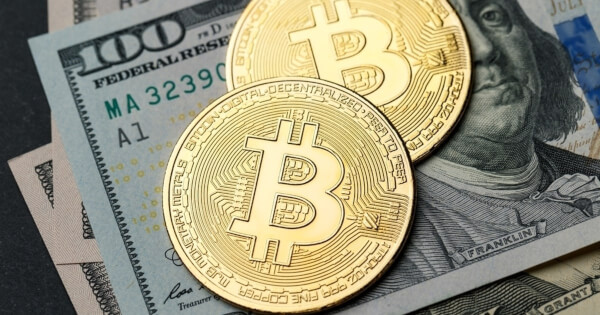
In the 1950s and ’60s, a strange thing happened to the U.S. dollar: It left home. The Marshall Plan saw billions of dollars leave the United States to rebuild Europe. Those dollars deposited in banks outside America — mostly in London — became known as “Eurodollars,” and because they sat beyond the reach of the Federal Reserve and U.S. banking regulators, they operated by their own rules.
While U.S. banks had transparency strictures imposed on them, the financial institutions operating in the Eurodollar system did not. It was, in practice, the wild west of finance: enormous sums moving with minimal oversight, in a market perfectly suited to laundering, sanctions evasion, and quiet financing of whatever needed financing.
HSBC, a major player in the Eurodollar market, provides an illuminating case study. The bank paid a then-record $1.92 billion settlement in 2012 after admitting it failed to stop at least $881 million in Sinaloa and Norte del Valle cartel drug proceeds from moving through its U.S. arm, on top of processing transactions for sanctioned regimes in Iran, Libya, Sudan, and Cuba. Leaked records later showed the bank kept moving suspect money for years afterward, even while under a court-monitored probation.
Shadow Banking
The Eurodollar market thrived precisely because it sat outside a regulatory perimeter built for domestic banks. Today, a similar dynamic is reassembling itself — not offshore, but inside the “shadow banking” system of private credit.
Private credit (i.e., lending by non-bank institutions rather than traditional deposit-taking banks) has exploded from roughly $158 billion in 2010 to an estimated $2 trillion to $3.5 trillion globally today. The Financial Stability Board has formally warned that the sector’s “complexity, leverage, and interconnectedness could amplify stress in adverse scenarios,” posing risks well beyond the private credit funds themselves. A recent Forbes analysis called the resulting structure — operating companies being leveraged, private credit funds financing them with more leverage, banks financing the funds, and collateralized loan obligations (loans made to companies with low credit ratings) stacked on top — an architecture that “closely resembles the pre-2008 shadow banking system: less transparent, less regulated, highly interconnected.”
Default rates in the sector have already climbed past six percent by some measures, even as the Fed chair has publicly downplayed contagion risk for now.
Corporations as Banks
What makes this moment different from 2008, or from the original Eurodollar era, is who’s doing the lending. Corporations themselves, including Apple, increasingly function as de facto financial institutions, extending credit and managing enormous cash positions with the reach of sovereign-scale financial actors but none of the transparency obligations of a bank or a state. Business consultant Marjorie Kelly noted in The Divine Right of Capital that by 2001, 51 of the world’s 100 largest economic entities were corporations rather than nation-states — enterprises with revenues rivaling GDPs while still legally treated as “private” property, much as monarchs once treated empires as personal possessions. That imbalance has only grown more pronounced since then, with 74 of the top 100 economic entities being corporations in 2026.
Whenever capital finds a channel that sits outside the regulatory architecture built for the last crisis, it moves there, and oversight lags years behind. It took decades and multiple laundering scandals for anyone to seriously reckon with the Eurodollar market. Private credit and corporate shadow lending are running the same experiment again, at greater scale, with essentially the same questions hanging over it: How much is happening that nobody can see, and how much will it cost to find out?
Removing the Guard Rails
Keep in mind that the federal government has no constitutional authority to regulate commercial banking. But prior to creation of the Securities and Exchange Commission in the 1930s, states governed securities-trading with “blue sky laws.” These protected depositors from fraud and detected whether banks were insolvent. The guard rails were erected to encourage average citizens to feel safe depositing their money in banks. The shadow-banking system removes the guard rails, and we therefore have no way of measuring the health of the opaque institutions controlling our financial situation.
This article is part of The New American’s weekly online newsletter Insider Report, which is emailed to TNA subscribers each week. Click here to subscribe to The New American to receive the Insider Report and access exclusive content.