A federal judge ordered the White House early Thursday to restore access to CNN, MS NOW, and Politico. The administration complied later that morning, after several chaotic hours at the gates.
But the fight did not end there.
That evening, CNN and MS NOW said the White House had excluded their journalists from part of Chinese President Xi Jinping’s state visit. The three organizations had their White House credentials back, but their access to individual presidential events remained contested.
The Order
The dispute began September 18, when President Donald Trump announced that he was banning CNN, MS NOW, and Politico from the White House.
Trump accused the organizations of repeatedly reporting “FICTION and LIES.” Their reporters began losing access the following day. Secret Service personnel deactivated or confiscated hard passes and turned journalists away from White House grounds.
The three outlets sued on Monday. They accused the administration of retaliating against them because of their coverage, in violation of the First Amendment. They also argued that officials revoked their credentials without the due process required by the Fifth Amendment.
At 12:58 a.m. Thursday, U.S. District Judge Timothy Kelly granted their request for a temporary restraining order.
Kelly, whom Trump nominated to the federal bench in 2017, did not resolve the larger First Amendment claim. Instead, he found that the plaintiffs were likely to succeed on their procedural due process claim. Existing D.C. Circuit precedent, he noted, holds that the government may not revoke a duly issued White House hard pass without due process.
His order was explicit:
[The] Defendants (except for President Trump) and their agents, representatives, and all persons or entities acting in concert with them shall immediately return, reinstate, and restore the White House “hard pass” press credentials held by employees of CNN, MS NOW, and POLITICO.
The order remains in effect for 14 days unless the court changes it. “This is a high bar, but Plaintiffs have met it,” Kelly wrote.
National Security Argument Falters
By the time the case reached court, the administration had offered another justification for the ban.
Justice Department lawyers argued that reporting by the outlets had threatened national security. They cited stories involving missile stockpiles, construction at the White House, and other sensitive matters.
Kelly was skeptical.
“Nothing in the record that predates this suit suggests that the revocation of Plaintiffs’ hard passes was motivated by national security concerns,” he wrote.
He noted that Trump had originally focused on what the president considered false and negative reporting.
Kelly also found little evidence that revoking the passes would actually protect national security.
“The record lacks factual support,” he wrote, for the claim that revoking the credentials would protect national security or that restoring them would endanger it. The government had submitted no declaration directly explaining how the cited reporting damaged national security.
The judge also questioned the standards the White House said the outlets had violated.
Administration letters accused them of violating standards of “professionalism and decorum.” Kelly called that standard “so vague it hardly does the trick.”
He rejected the argument that national security concerns justified skipping normal procedural protections. The circumstances were not so “extraordinary,” he wrote, that officials could abandon the usual requirement of notice and an opportunity to respond before revoking a protected interest.
The Doors Stay Shut, Briefly
The court said “immediately.”
Thursday morning proved more complicated.
Politico reported that a Secret Service agent confiscated one reporter’s hard pass. CNN stated several employees were denied entry. MS NOW correspondent Laura Barrón-López said an agent took her badge and told her it was “still being disabled.”
CNN reporter Betsy Klein tried to enter around 6:10 a.m. She said she showed Secret Service personnel Kelly’s order after they told her she was not approved for entry. They still turned her away.
The outlets returned to court and requested an emergency hearing.
The White House then submitted a sworn declaration from press operations director Micah Stopperich. He said White House Operations received instructions at 7:10 a.m. to restore access and began reinstating badges at 7:25.
According to Stopperich, Secret Service reported the badges active again at 9:07. Confiscated passes reached White House Operations at 9:45 and were placed at the press gate around 9:55.
By early afternoon, journalists from all three organizations were again entering White House grounds. Kelly declined to hold the requested emergency hearing after receiving the administration’s explanation.
Access Restored, Then Restricted Again
The dispute soon moved from general White House access to access to particular events.
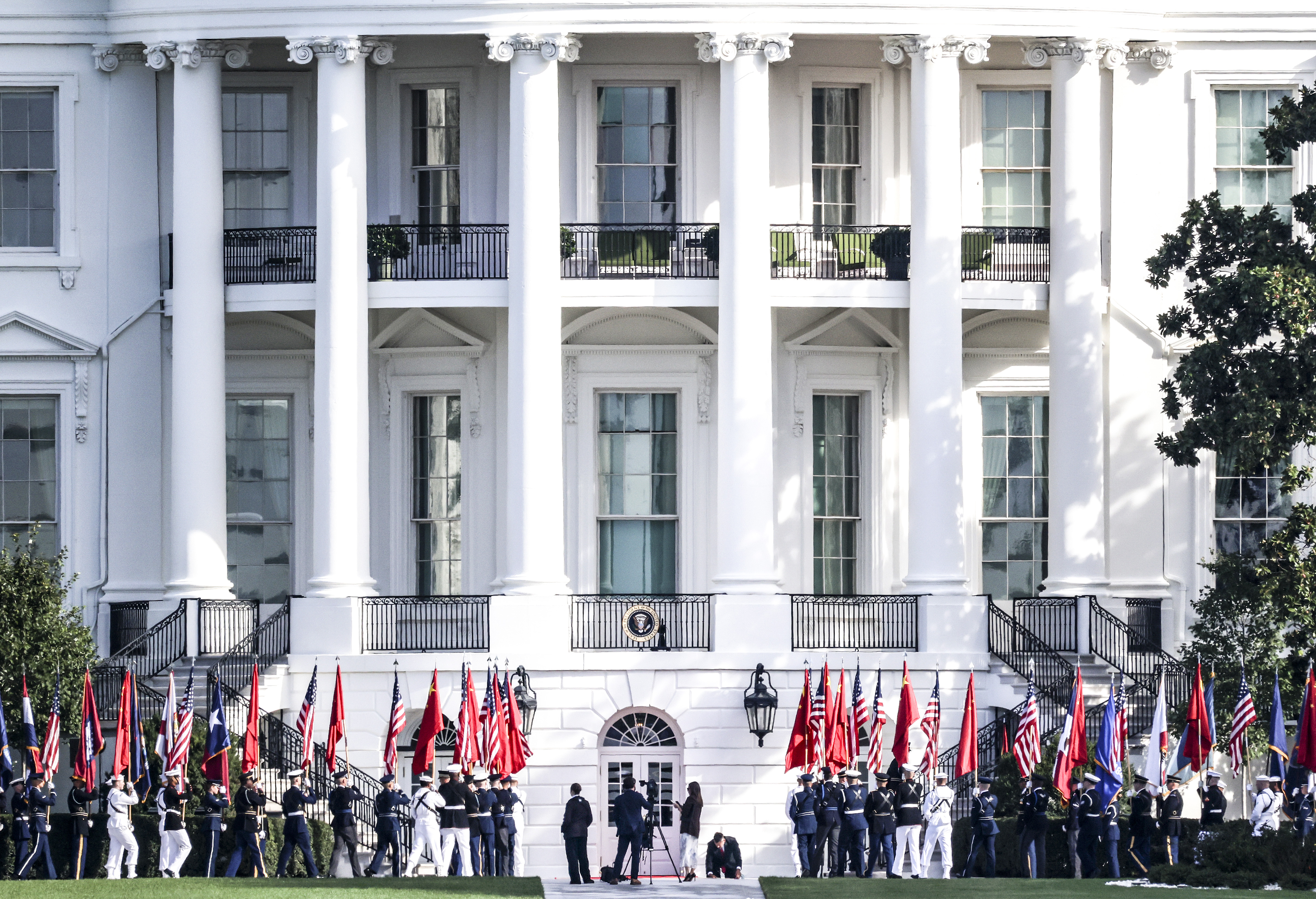
Thursday evening, Trump hosted Xi for a state dinner. CNN and MS NOW said the White House denied some of their journalists access to cover guest arrivals.
CNN emphasized that this was not a traditional pool event. It was a separately credentialed press event. Other outlets had received approval to attend.
CNN correspondent Kristen Holmes said the network had submitted names in advance. The White House later offered CNN spaces for camera and audio personnel, she said, but not the editorial staff the outlet had proposed sending. CNN declined that arrangement in keeping with the television networks’ broader agreement over coverage.
That distinction matters.
Kelly’s order restored the outlets’ hard passes; it did not state that every credentialed reporter must receive access to every presidential event. White Houses have long limited attendance at events where space, security, or logistics requires smaller groups.
The unresolved question is whether officials may use that discretion selectively against organizations whose broader exclusion the court has already blocked.
By Friday, the immediate standoff had eased further. CNN said the major television networks would resume pooled coverage. The outlet was also scheduled to cover Trump and Xi at the National Archives, while CBS handled White House pool duties.
Still, the underlying case remains alive.
As we previously reported, the original ban had disrupted the television pool. ABC, CBS, Fox News, NBC, and CNN stopped providing shared presidential video after CNN was prevented from performing its scheduled pool assignment.
Kelly’s temporary order reopened the White House gates.
It did not resolve the larger fight over when presidential control of press access crosses into unconstitutional retaliation for unfavorable coverage. That question now returns to federal court.