
 By The Epoch Times | Created at 2026-10-13 13:41:44 | Updated at 2026-10-16 15:33:37
3 days ago
By The Epoch Times | Created at 2026-10-13 13:41:44 | Updated at 2026-10-16 15:33:37
3 days ago
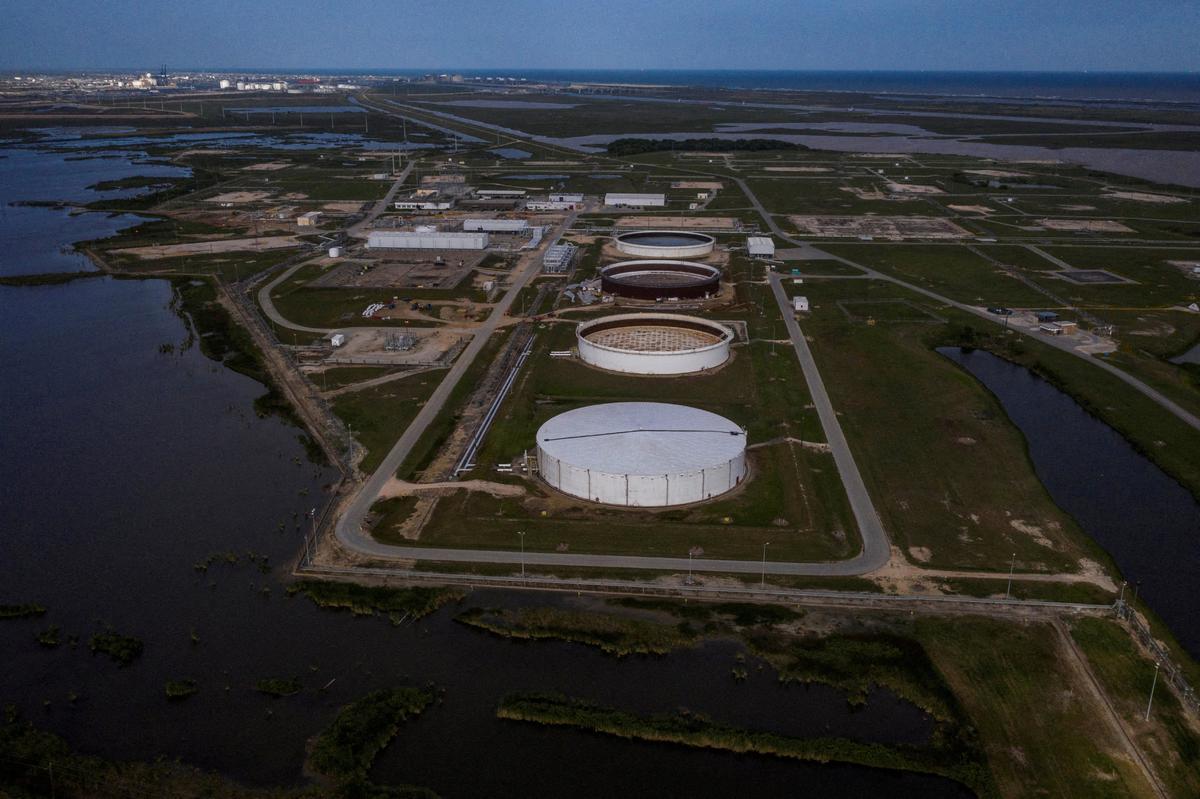
The Bryan Mound Strategic Petroleum Reserve, an oil storage facility, in this aerial photograph over Freeport, Texas, on April 27, 2020. Adrees Latif/Reuters
The Department of Energy (DOE) has authorized an emergency release of up to 4 million barrels of crude oil from the Strategic Petroleum Reserve to address a supply disruption caused by Hurricane Isaias.
The hurricane has impacted oil production in the Gulf of America, the DOE said in an Oct. 10 statement.
Isaias made landfall near Destin, Florida, on Oct. 9 and swept through the region. The storm
disruptedoffshore energy operations in the Gulf, forcing producers to halt roughly 70 percent of their daily output before the hurricane’s arrival.
The Strategic Petroleum Reserve (SPR) release involves an exchange of up to 2 million barrels each for BP America and ExxonMobil. Under the terms of the release, the companies will return the crude oil, along with additional barrels, next year, thereby replenishing and improving the reserves at no extra cost to taxpayers, the DOE said.
“With this emergency exchange, the Energy Department is acting swiftly to help maintain refinery operations, limit disruptions to fuel supplies, and ensure American families and businesses continue to have access to affordable, reliable, and secure energy,” Secretary of Energy Chris Wright said in the statement.
The hurricane weakened to a post-tropical cyclone on Saturday. It had caused widespread power outages, with a peak of more than 910,000 customers losing power on Saturday. As of 2:15 a.m. EDT on Tuesday, more than 99,400 customers were still without power nationwide.
The United States
offeredto lend up to 40 million barrels from its reserves to companies on Sept. 29. The offer is the final part of a 172 million-barrel SPR release the United States pledged in March, aimed at lowering oil prices following the outbreak of the Iran war.
“Thanks to President Trump, these exchanges will also ensure America’s Strategic Petroleum Reserve continues to be refilled, while saving taxpayers more than $3 billion,” Wright said in a statement posted on X.
According to data from the Energy Information Administration, the SPR stood at nearly 283 million barrels as of Oct. 2, the lowest level since October 1982. The reserves were more than 638 million barrels at the start of the Biden administration, but declined to around 394 million barrels by the time the Trump administration took over.
Venezuelan oil is another option to refill the SPR. In an Aug. 31 fact sheet, the White House announced that the United States had secured majority control of more than 65 billion barrels of proven oil reserves in Venezuela.
North American Blue Energy Partners (NABEP), the second-largest private oil producer in Venezuela, has granted the State Department the right to buy “a guaranteed 20 percent of the off-take from all current and future fields NABEP will operate—ensuring a stable supply of low-cost oil that can facilitate refilling the Strategic Petroleum Reserve (SPR),” the White House said.
Reps. Lizzie Fletcher (D-Texas) and August Pfluger (R-Texas) introduced the 21st Century Strategic Petroleum Reserve Act to study SPR modernization and strengthen U.S. energy security, according to a Sept. 3 statement from Fletcher’s office.
The Act would require the energy secretary to request that the National Petroleum Council submit a report assessing the SPR, including expanding the storage’s capacity and geographic distribution, encouraging oil purchases when petroleum prices are low for refilling the SPR, and eliminating congressionally mandated sales from the SPR outside of emergencies, the statement said.
“Having a reserve is critical to ensuring our energy independence and to helping protect American families when conflicts overseas disrupt global oil supply, as we have seen following Russia’s invasion of Ukraine and now the war in Iran,” Fletcher said in the statement.
“The 21st Century SPR Act is a common-sense first step toward making sure the SPR is capable of meeting our needs in the future in every way.”






