By The Rio Times | Created at 2026-08-07 06:51:58 | Updated at 2026-08-07 11:36:33
5 hours ago
By The Rio Times | Created at 2026-08-07 06:51:58 | Updated at 2026-08-07 11:36:33
5 hours ago
DR Congo · MINING
Key Facts
—Cobalt quota forfeiture: ARECOMS withdrew all unused cobalt export quotas for January to June 2026 and reassigned them to a state-controlled strategic pool on 29 June 2026.
—Annual quota volumes: From 2026 onward, annual cobalt export quotas are set at 96,600 metric tonnes, less than half of the country’s 2024 output, with a 10 percent strategic allocation.
—Global market weight: The Democratic Republic of Congo holds more than half of global cobalt reserves — about 6 million of the world’s 11 million tonnes — and produces roughly 70 to 80 percent of the world’s supply.
—Chinese dominance: Chinese firms control roughly 80 percent of Congolese cobalt output, on a US Army War College estimate, though the US National Geospatial-Intelligence Agency puts Chinese ownership nearer 72 percent of the country’s cobalt and copper mines, and account for 60 to 90 percent of global cobalt refinery production.
—US partnership: A Strategic Partnership Agreement between Washington and Kinshasa was concluded in December 2025, granting American companies preferential treatment in strategic mineral projects.
—Concentrate export ban: A separate order prohibits exports of copper and cobalt concentrates with immediate effect, pushing companies to process ore inside the country.
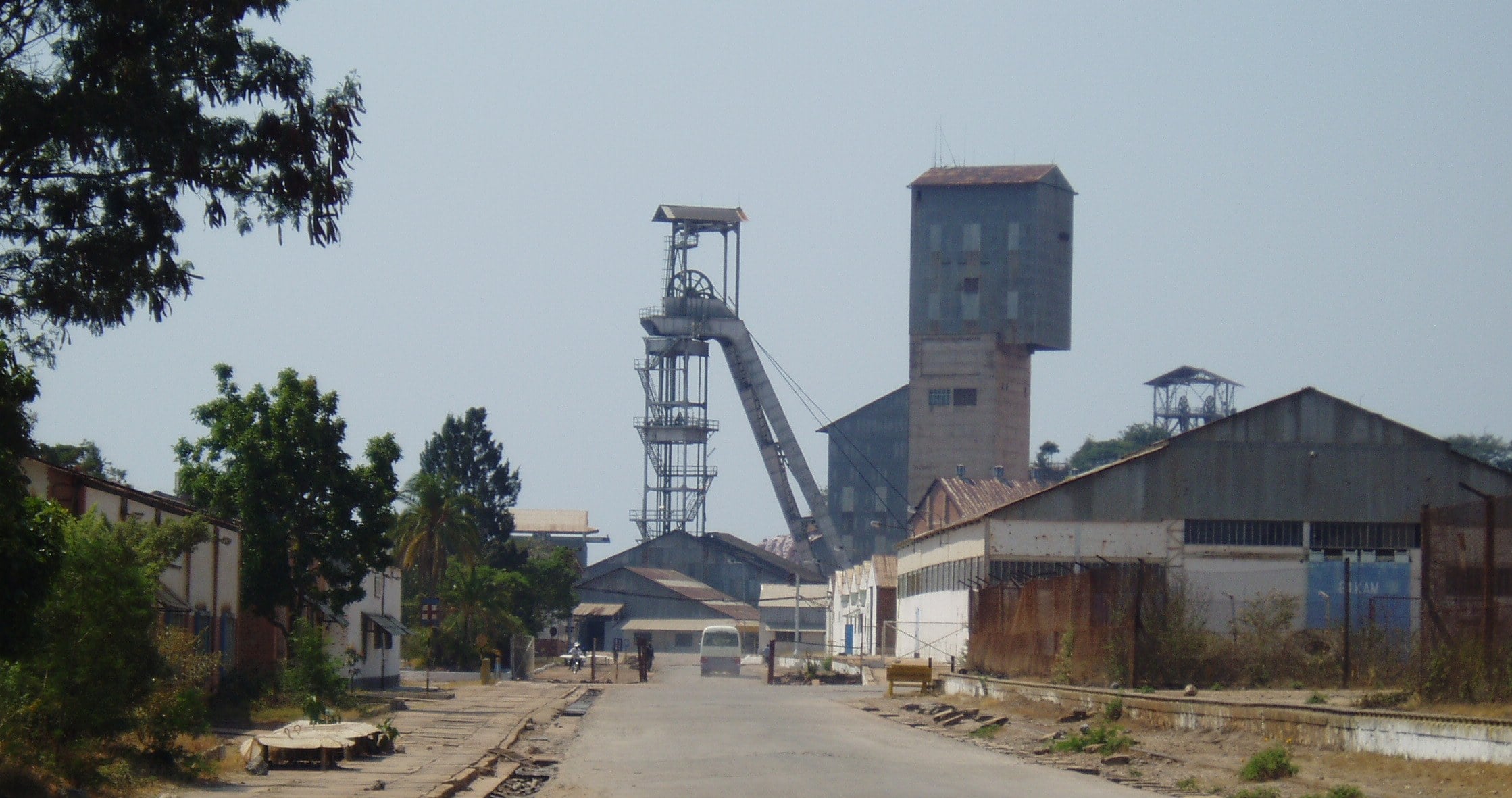
The DR Congo cobalt export regime just went further: the Democratic Republic of Congo has withdrawn all unused cobalt export quotas for the first half of 2026 and reassigned them to a state-controlled strategic pool, tightening its grip on the world’s most critical battery metal supply.
One-stop reference
Company Intelligence
Every listed company in Latin America — financials, ownership and structure for 1,450+ companies across 26 exchanges, in one place.
What Reuters obtained, and what it moved
The order became public only on 6 August, when Reuters obtained and published it. Benchmark three-month copper on the London Metal Exchange rose as much as 1.8 percent to US$14,369.50 a tonne on the news, the highest since 29 January, when it touched an all-time peak of US$14,527.50.
The company most exposed is Ivanhoe Mines. Its Kamoa-Kakula complex, a joint venture with China’s Zijin Mining and the Congolese state, has held exemptions to export copper concentrate since production began in 2021, though it says its concentrate now goes to on-site smelting or to the Lualaba copper smelter at Kolwezi. Its Kipushi mine holds a derogation for zinc concentrate. Christian-Geraud Neema of the China-Global South Project argues the ban will not bite most operators, since the bulk of Congolese copper and cobalt is already refined at home — which makes Kamoa-Kakula the outlier rather than the rule.
A progressive tightening of cobalt export quotas
The Authority for Regulation and Control of Strategic Mineral Substances Markets (ARECOMS) announced on 29 June 2026 that all quota allocations for January to June left unused by 30 June would be forfeited and automatically reallocated to a strategic quota managed by the regulator. Only shipments declared in the customs system by 5 July qualify under first-half quotas.
Forfeited volumes are deducted from companies’ original allocations and cannot be carried forward, effectively penalising operators that fail to export within the deadlines. ARECOMS warned it may withdraw quotas entirely from companies that fail to export allocated volumes, transfer quotas to third parties, or process third-party or artisanal material without authorisation.
The reallocated volumes are earmarked for projects of “national interest,” including local processing, value addition and protection of economic interests. This move is the latest in a sequence that began with a four-month cobalt export ban in February 2025, escalated to a total concentrate export ban in June 2025, and shifted to a strict quota system in October 2025.
Live Market IntelligenceCommodities — Live Market BoardInside: market breadth, the sector heatmap, currencies & rates, the Latin America scoreboard and the full instrument board.Rio Times · Live Market Intelligence
Commodities — Live Market Board
Global
Aug 7, 2026 · 03:45
Brent crude · benchmark
83.31
+0.99%
+25.41% over 12 months
Market breadth · 15 names
60% advancing
9 ▲ advancing6 declining ▼
Currencies, rates & key inputs
Full instrument board
| GOLD | 4,345 | +2.43% | +27.78% | 4,242 | 4,350 | 4,288 | 32,150 |
| SILVER | 63.68 | +3.65% | +66.89% | 61.44 | 63.89 | 61.42 | 11,291 |
| BRENT | 83.31 | +0.99% | +25.41% | 82.49 | 84.39 | 82.98 | 5,047 |
| WTI | 77.79 | +0.65% | +21.78% | 77.29 | 78.77 | 77.56 | 19,426 |
| COPPER | 6.73 | +0.69% | +53.77% | 6.69 | 6.77 | 6.71 | 5,312 |
| LITHIUM | 72.41 | -0.33% | +68.83% | 72.65 | 73.02 | 72.18 | 137,137 |
| IRON ORE | 161.91 | — | +59.97% | 161.91 | 161.91 | 1 | |
| SOY | 1,184 | +2.31% | +21.84% | 1,157 | 1,185 | 1,176 | 9,755 |
| CORN | 464.00 | +5.69% | +20.68% | 439.00 | 464.75 | 461.25 | 8,815 |
| WHEAT | 633.25 | +0.32% | +22.19% | 631.25 | 634.00 | 628.50 | 6,017 |
| COFFEE | 324.25 | -0.81% | +8.88% | 326.90 | 330.40 | 318.30 | — |
| SUGAR | 15.58 | +2.84% | -2.69% | 15.15 | 15.60 | 14.98 | — |
| COCOA | 5,723 | -2.70% | -33.79% | 5,882 | 5,830 | 5,534 | — |
| ORANGE JUICE | 152.55 | -3.27% | -32.29% | 157.70 | 157.00 | 149.60 | — |
| COTTON | 83.29 | +1.77% | +28.22% | 81.84 | 82.90 | 81.96 | 14,108 |
| BEEF | 225.20 | -3.83% | -5.68% | 234.18 | 230.05 | 224.00 | 28,685 |
| CATTLE | 341.75 | -3.28% | -1.98% | 353.33 | 349.45 | 340.33 | 9,215 |
| USD/BRL | 5.11 | -0.07% | -6.45% | 5.11 | 5.11 | 5.10 | — |
Largest moves today
CORN
464.00
+5.69%
BEEF
225.20
-3.83%
SILVER
63.68
+3.65%
CATTLE
341.75
-3.28%
ORANGE JUICE
152.55
-3.27%
SUGAR
15.58
+2.84%
COCOA
5,723
-2.70%
GOLD
4,345
+2.43%
The session read
The Brent crude rose 0.99%, with breadth positive — 9 of 15 names higher. CORN led, while BEEF lagged.
From The Rio Times
Related coverage · 6 Aug 2026
Vale Lifts 2026 Iron-Ore Cost Guidance and Improves Its Base-Metals Outlook
Read →
How the quota architecture works
Under the system introduced in October 2025, annual cobalt export quotas are set at 96,600 metric tonnes from 2026 onward, including a 10 percent strategic allocation. These volumes represent less than half of the country’s 2024 cobalt output, deliberately constraining supply to the international market.
Exporters must obtain a Quota Certificate from ARECOMS, pay a 10 percent royalty on quota volumes within 48 hours of filing origin and sales declarations, and secure a liberatory receipt before customs clearance. All shipments are subject to physical inspection, joint sampling, weighing and sealing under multi-agency oversight.
The June 2026 forfeiture order adds a new layer: unused quotas now revert to the state rather than expiring, giving Kinshasa a growing pool of strategic volumes it can steer toward preferred partners or domestic projects. In effect Kinshasa is taking back control of who ships what, without ever using the word expropriation.
The DR Congo cobalt export rules that force local processing
The cobalt export quotas sit alongside a broader push to ban raw mineral exports. A separate order, signed by Mines Minister Louis Kabamba Watum, Foreign Trade Minister Julien Paluku Kahongya and Economy Minister Daniel Mukoko Samba, prohibits exports of copper and cobalt concentrates with immediate effect, though the mines minister may grant one-year exemptions in strategic circumstances. It repeals the 2023 order and its exemptions, replacing them with a broader export-and-taxation framework that includes a three-month transition for economically significant by-products, taxed at a 55 percent valuation coefficient. The DRC has banned concentrate exports before, in 2013, 2019 and 2023, granting waivers each time where domestic smelting fell short.
Eric Kalala, chief executive of state-owned Entreprise Générale de Cobalt (EGC), has said the policy aims to demonstrate that the country “has control over exploration and production of minerals in a sustainable way” and to stimulate investment in producing battery metal sulphates and precursors inside the country. The 2018 Mining Code already formally forbids raw mineral exports and requires permit holders to present a refining plan.
A 2023 revision reportedly mandates a 51 percent Congolese ownership stake in secondary mining activities such as subcontracting and processing. Regulations also require 0.3 percent of mining turnover to be allocated to community development funds, operationalised through a 2021 procedures manual.
China’s vulnerability and the great-power contest
The Democratic Republic of Congo holds more than half of global cobalt reserves — about 6 million of the world’s 11 million tonnes — and produces roughly 70 to 80 percent of the world’s supply. Chinese firms control roughly 80 percent of Congolese cobalt output, on a US Army War College estimate, though the US National Geospatial-Intelligence Agency puts Chinese ownership nearer 72 percent of the country’s cobalt and copper mines,, and Chinese refiners account for 60 to 90 percent of global cobalt refinery production.
The export restrictions shift bargaining power toward Kinshasa. By constraining exports and reclaiming unused quotas into a state strategic pool, the government can steer volumes toward preferred partners, potentially diluting Chinese use in a supply chain where roughly two-thirds of China’s refined cobalt feedstock comes from the country.
Washington has moved to capitalise. A Strategic Partnership Agreement between the United States and the Democratic Republic of Congo was concluded in December 2025, giving American companies preferential treatment in Strategic Asset Reserve projects and priority access to top cobalt, copper and lithium deposits. The US-backed Lobito Corridor is framed as a route to move Congolese minerals to Atlantic ports without relying on Chinese-dominated logistics, a dynamic explored in Africa: The New Scramble.
Winners, losers and what to watch next
The Congolese state is the clearest winner, increasing its fiscal take through royalties and gaining discretion over who receives strategic volumes. Selected foreign partners, particularly American companies under the December 2025 partnership, stand to secure structured preferential access amid tightening regulation.
Chinese state-owned enterprises and private firms face the greatest pressure, their heavy exposure to Congolese cobalt becoming a vulnerability if quotas or political decisions redirect volumes elsewhere. Smaller operators and traders involved in artisanal or semi-formal supply chains risk permanent bans and quota losses if they miss deadlines or breach rules.
Global downstream industries must contend with higher prices and supply uncertainty. Analysts note that frequent policy shifts risk making Congo look like an unreliable supplier, potentially accelerating investment in alternative battery chemistries that diminish the country’s long-term centrality. The next test comes with the second-half quota allocation and any further forfeitures before year-end.
What it means for Latin America
Every tonne of Congolese copper that cannot leave as concentrate tightens a market Chile and Peru dominate. The two supply roughly 35 percent of world mine output between them, and Thursday’s LME move went straight to their revenue line. Codelco and Antofagasta are the direct beneficiaries of Kinshasa restricting supply.
The policy is also a template. Indonesia did this with nickel and forced smelters onshore; the DRC is trying the same with copper and cobalt. Brazil, Chile and Argentina all face the same question about lithium and rare earths, and each new example makes export restrictions plus forced local processing look a little more normal.
Frequently Asked Questions
What did ARECOMS announce on 29 June 2026?
ARECOMS withdrew all unused cobalt export quotas for January to June 2026 and reassigned them to a state-controlled strategic pool for projects of national interest, with a customs declaration deadline of 5 July.
How much cobalt can be exported under the current quota system?
Annual cobalt export quotas are set at 96,600 metric tonnes from 2026 onward, including a 10 percent strategic allocation, representing less than half of the country’s 2024 output.
Which countries are most affected by the export restrictions?
China is most exposed, controlling roughly 80 percent of Congolese cobalt output, while the United States has secured preferential access through a Strategic Partnership Agreement concluded in December 2025.
Connected Coverage
The great-power contest over African critical minerals, from Congolese cobalt to the Lobito Corridor, is tracked in Africa: The New Scramble.
Sources
This article was produced by The Rio Times’ automated newsroom system. How we use AI · Report an error
The Rio Times · Power Map
See who really holds power in Latin America
Click to open the Power Map →