By Literary Hub | Created at 2026-08-18 09:52:08 | Updated at 2026-08-18 14:47:13
5 hours ago
By Literary Hub | Created at 2026-08-18 09:52:08 | Updated at 2026-08-18 14:47:13
5 hours ago
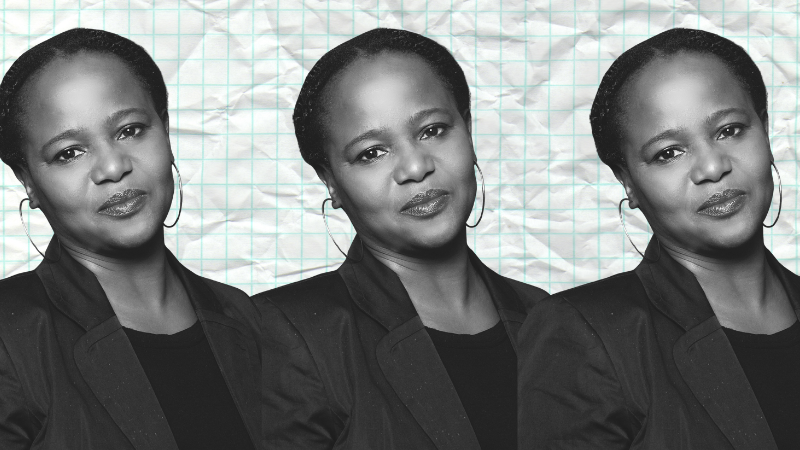
The Author of Dèy Takes the Lit Hub Questionnaire
Edwidge Danticat’s new book, Dèy, is available now from Alfred A. Knopf, so we asked her a few questions about favorite characters, writing advice, writer’s block, and more.
Article continues after advertisement
*
Who do you most wish would read your book?
Of course I would love for everyone to read my book. The only people I ever wanted to hold off from reading my books, at least for a while, were my parents. I feared their opinions more than anyone else’s. But if I had to choose two people I’d most want to read it, I’d choose my first teachers in this country at Jackie Robinson Intermediate School in Brooklyn, New York. My English as a Second Language teacher, Mr. Dusseck, and my first English teacher whose name I’m never sure of because I only had her for a while. They were the first people who told me I had a way with words and made me seriously think I could possibly be a writer.
Which of your characters is your favorite?
My most recent characters are always my favorites, so it’s not a permanent position. Magnolia from Dèy now holds that place. She’s stubborn in a way I wish I could be, with a job that lets her peek into people’s homes while wearing an incredible wardrobe I secretly envy. She’s a “good” daughter, but not so good that she doesn’t challenge or question her parents. I sometimes think of her as the heir to my earlier characters, a descendant of the women in my debut novel Breath, Eyes, Memory and my first story collection Krik? Krak! She’s managed to find the type of financial stability her forebears could only dream of while at the same time realizing there’s more that she can be and that she can also contribute to her family and her community.
How do you tackle writers block?
I’ve never really had writer’s block, mostly because I refuse to acknowledge it. If something I’m writing and want to write isn’t coming, I simply tell myself it’s not ready yet, and I try to trust that it will arrive in its own time. During these times, I’ll read a lot or I’ll draft shorter pieces to keep my creative juices flowing. Middles are often where I get most stuck, after the excitement of a beginning fades, so I muddle through, writing very imperfect sentences and paragraphs until I find my way forward. I also try to use my down time from writing to reconnect with life beyond the page. Living more fully can sometimes bring the words back.
What’s the best or worst writing advice you’ve ever received?
I’ve been fortunate to receive some excellent writing advice early on that I still carry with me today. After I turned in my final proofs for Breath, Eyes, Memory, some 33 years ago, my editor, Laura Hruska at Soho Press, told me to start writing something else right away. You’re young, she said, and both praise and criticism, or some combination of the two, can end a writing career even before it starts. Get something else going so you can project yourself into the future beyond this book. I remember that conversation nearly word for word because I went home and wrote about it in my journal that night.
That same night I also began assembling the stories in Krik? Krak!, which was nominated for the National Book Award two years later. At the ceremony, Erica Jong, who was one of the fiction judges that year, came over to my table and told me, “It’s good you didn’t win so young. It wouldn’t have been good for your writing in the long term. Now get back to work.” She’d graduated from the same college I did—Barnard College—so I considered us part of a loose sisterhood. I really appreciated her saying that.
If you weren’t a writer, what would you do instead?
I used to say I would be a psychiatrist. I might even have declared this in my high school yearbook after spending four years at a high school geared toward the health professions. Later I realized there’s a long tradition of writers imagining themselves in professions where they could access people’s stories. Now I think I’d do something visual, like be a photographer or a visual artist. I’ve interviewed some visual artists whose practice has made me fall in love with the way they see and recreate the world.
Also, I know it may sound a bit morbid, but after watching both my parents die over the course of several months after receiving terminal diagnoses some years ago, I’ve thought that someday I might become a death doula, even as a volunteer. There’s something profoundly moving about helping others exit this world surrounded by love and with dignity. That work is, in my opinion, as honorable as being a midwife or the kind of doula who helps deliver babies.
_______________________________
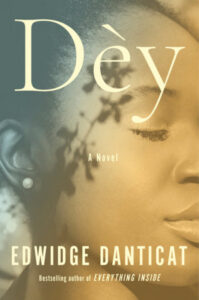
Dèy by Edwidge Danticat is available from Alfred A. Knopf, an imprint of Knopf Doubleday Publishing Group, a division of Penguin Random House, LLC.