 By GB News (World News) | Created at 2026-09-18 21:31:18 | Updated at 2026-09-18 22:10:58
40 minutes ago
By GB News (World News) | Created at 2026-09-18 21:31:18 | Updated at 2026-09-18 22:10:58
40 minutes ago
As Andy Burnham wades through the waters of building several large-scale communities to build 1.5 million new homes by 2029, GB News has investigated the Government's "New Towns" legacy to find out what lessons Labour can learn from past developments.
The post-war New Towns programme, which was initiated by Labour prime minister Clement Attlee in 1946, saw the inception of planned urban communities, including Harlow, Crawley and Stevenage, to ease severe housing shortages and clear overcrowded inner cities.
The 32 traditional New Town projects established across the UK since the end of the Second World War are home to nearly three million people – and employ thousands of Britons in fields such as high tech and pharmaceuticals.
But 70 years later, many Britons believe the impact of New Towns leaves much to be desired, with empty shops and unsafe streets becoming a byproduct of urban expansion.
Between March 23 and May 19 this year, Sir Keir Starmer's administration consulted with local authorities, housebuilders and community groups on the "New Towns Draft Programme".
Officials invited feedback from the public on seven proposed New Towns amid concerns over local infrastructure and the environment.
Ministers are currently analysing the comments received, with the intention to “publish a response in due course”.
“Once we have completed all necessary environmental assessments, the Government will publish final proposals, including confirming the New Town locations," a Ministry of Housing, Communities & Local Government spokesman said.
Labour aims to build 1.5 million new homes by 2029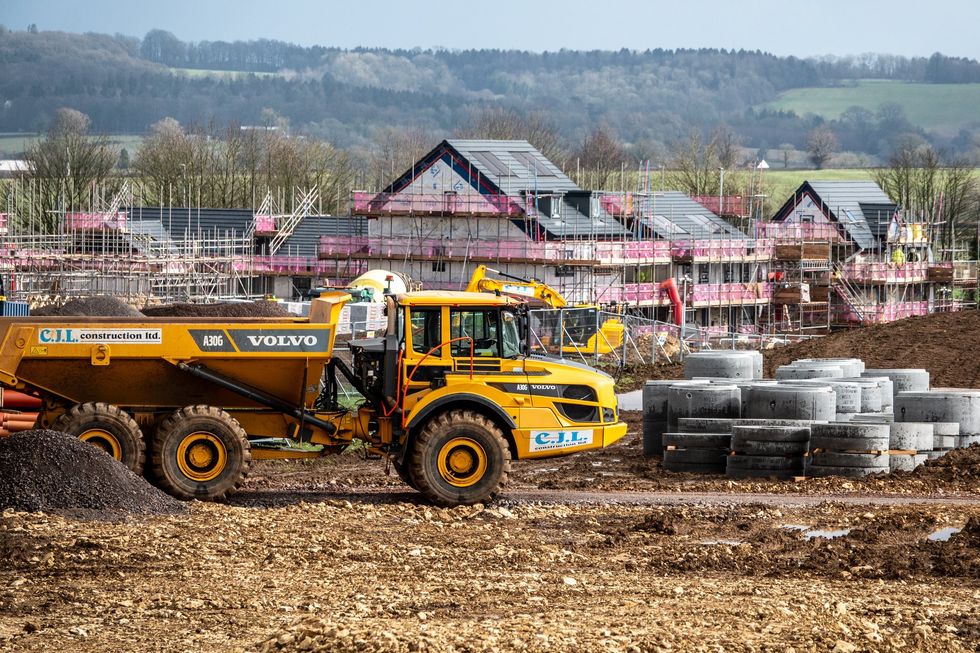
Each development is expected to deliver at least 10,000 homes, with some sites set to exceed 40,000.
The selected locations are: Tempsford in Bedfordshire; Leeds South Bank in West Yorkshire; Crews Hill and Chase Park in North London; Victoria North in Greater Manchester; Thamesmead in South London; Brabazon and West Innovation Arc in Gloustershire; and Milton Keynes in Buckinghamshire – the latter of which, the Government claims, builds on "its history as one of the original new towns to take forward the 'renewed town' vision".
Proposed names for the New Towns include Elizabethtown (named after the late Queen), Pankhurst (a tribute to the suffragette Emmeline Pankhurst) and Attleton (to honour Mr Attlee).
At the time of the announcement, then-housing secretary Steve Reed said: "People want real change – homes they can afford, local infrastructure that works, and good jobs in thriving communities.
Angela Rayner assumed the role of Housing Secretary in Andy Burnham's new Cabinet
"Our next generation of new towns marks a turning point in how we build for the future. From the ground up, we’re planning whole communities with homes, jobs, transport links and green spaces designed together – so we can give families the security and opportunities they deserve."
Milton Keynes has prospered with a surging housing surplus and approximately 15,000 businesses, including Formula 1 team Red Bull Racing, operating in the area.
However, another New Town built around the same time has suffered with impoverished living standards, a neglected town centre and troubling crime linked to County Lines operations.
Harlow – a collection of Essex villages, hamlets and farmlands with a history stretching back to the Middle Stone Age – rapidly expanded to the New Town of today, with residents still voicing concerns decades later.
Josiah Norris, 24, a lorry driver, told GB News: “One thing Harlow could have done better is to put its industrial areas closer to the motorway. You have to drive through the entirety of Harlow to get to it, and it messes up all the traffic in and around the town.”
However, Mr Norris noted the cycle lane infrastructure as a positive, adding: “You can get around pretty much all of Harlow on a cycle lane.”
On the issue of anti-social behaviour in the town, Mr Norris pointed to a “lack of activity for the youth, which then leads them to cause trouble”.
Meanwhile, fellow local Owen Devlin, 24, told the People’s Channel: “Many sections of Harlow feel almost abandoned... where it is clear very little funding is provided to maintain even simple cleanliness, let alone for businesses to try and flourish.
Harlow resident Josiah Norris pointed to insufficient infrastructure 
GB NEWS
"This is clear throughout Harlow, with areas such as Church Langley and Newhall receiving a disproportionate amount of funding in comparison to other areas, which would be lucky to have potholes fixed. Crime is, of course, an issue, with a lacking police presence, nor community officers.”
Mr Devlin pointed to Harlow – whose 100,000 residents work in trades such as healthcare, retail and logistics – "feeling industrial”, with little to no spaces for young people to keep busy, “causing them to simply roam streets”.
He continued: “There is a general consensus there’s ’nothing to do’ in Harlow."
On a more positive note, Mr Devlin added: “Harlow still offers beautiful green spaces such as Harlow Town Park, and the water gardens feel like a safe space to shop and go for nice meals. Overall, I really feel Harlow lacks a sense of community and simply is a town without a soul, yet the residents yearn for one, and it has the potential to be a much more enjoyable place to live.”
Despite this, Harlow has lots to celebrate, including a connection to Henry Moore – a world-famous English artist best known for his semi-abstract bronze and stone public sculptures.
Beyond this, Harlow is globally recognised as the birthplace of optical fibre communications, where groundbreaking telecommunications research took place in the 1960s that shaped the technology we know now.
Dan Swords, the Conservative leader of Harlow Council, reflected on the troubles the area has faced over time and stressed things were on the up.
He told Britain's News Channel: “For decades Harlow declined. A New Town built with extraordinary post-war ambition suffered decades of weak leadership and poor decisions, with its town centre, housing, neighbourhoods and infrastructure all feeling the consequences.
Harlow, Essex has long suffered with impoverished conditions
GETTY
"But that story is changing, and changing fast. Against the odds, we are now delivering the biggest regeneration programme of any district council in the country and the rebirth of Harlow as a New Town for a new generation. For years, people talked about regenerating Harlow. We decided to actually do it. No failed promises – but progress people can see with their own eyes.”
Mr Swords said the council had acquired the land and buildings that “held regeneration back”, securing the investment alongside development partners which have already begun building in “every corner” of Harlow.
He added: “The cranes are in the sky. The diggers are on the ground. Every corner of Harlow is being transformed. There is an important lesson here for the next generation of New Towns. It is not enough simply to build them and walk away. They need sustained investment, strong local leadership and, sometimes, the courage to completely reinvent themselves.
"In fact, I believe Harlow is increasingly providing a national example that other towns can follow. We have shown that even after decades of decline, a council can take control, acquire the land, secure the investment, get construction underway and bring residents with it. We are not managing decline as too many councils are. We are reversing it.
"Our plan for this year, Building Harlow’s Future: the rebirth of a New Town, sets out exactly what we are delivering across our six missions. Harlow’s story should no longer simply be told as a warning about what went wrong with Britain’s first generation of New Towns – it should increasingly be told as an example of how, against the odds, you bring one back.”
"Harlow’s story should no longer simply be told as a warning about what went wrong with Britain’s first generation of New Towns - it should increasingly be told as an example of how, against the odds, you bring one back.”
Nearby is the town of Basildon, also a post-war town established in the late 1940s – which has also suffered similar levels of decline.
With an equally barren town centre, Basildon's hospital was rated "inadequate" in the latest Care Quality Commission (CQC) report, highlighting some of the struggles the community faces.
Dan Swords, Conservative leader of Harlow Council, reflected on the troubles Harlow has faced
HARLOW COUNCIL
Andy Barnes, the Tory chief of Basildon Council, commented: “Basildon is currently undergoing a program of regeneration, particularly across its town centre.
“The town is uniquely positioned with excellent transport links and proximity to London. Companies such as Ford’s, Leonardos and Amazon all have significant operations in Basildon. Whilst I acknowledge there have been issues, there’s no doubt Basildon has tremendous strengths and will be a key part of the South Essex economy for the foreseeable future.”
Pledging to heed these shortcomings in the development of new communities nationwide, a spokesman for MHCLG, now headed by Angela Rayner, stated: “Our landmark New Towns programme will get tens of thousands of new homes built in the coming decade to make sure we have the homes we need, where we need them.
"The programme will also make sure local communities have the infrastructure and utilities they need to thrive, including GPs, schools, and high-quality public transport.”
The department pointed to the Taskforce report, which conceded “there are lessons to be learned from previous generations of new towns”.
Housing ministers pointed to “huge success” in places such as Milton Keynes, which “demonstrated the potential of well-planned developments to create thriving communities and act as catalysts for economic growth”.
The spokesman added: “Each wave of new towns has had distinct objectives, with the immediate post war towns addressing housing shortages and relieving pressure on overcrowded cities, and later waves focusing more on economic growth and broader regional planning.”
“The Taskforce’s primary objective was to advise government on where to create new and expanded communities and thereby boost economic growth and the supply of new homes. As emphasised by the New Towns Taskforce, success will ultimately depend on strong and coordinated government intervention.
“The Taskforce was clear that delivery must be infrastructure-first and design-led, enabled by effective delivery vehicles such as development corporations where appropriate. Once we have confirmed new town locations, the government will use every lever at its disposal to prioritise early delivery of homes and infrastructure.”