 By GB News (World News) | Created at 2026-09-18 22:05:52 | Updated at 2026-09-18 22:49:13
56 minutes ago
By GB News (World News) | Created at 2026-09-18 22:05:52 | Updated at 2026-09-18 22:49:13
56 minutes ago
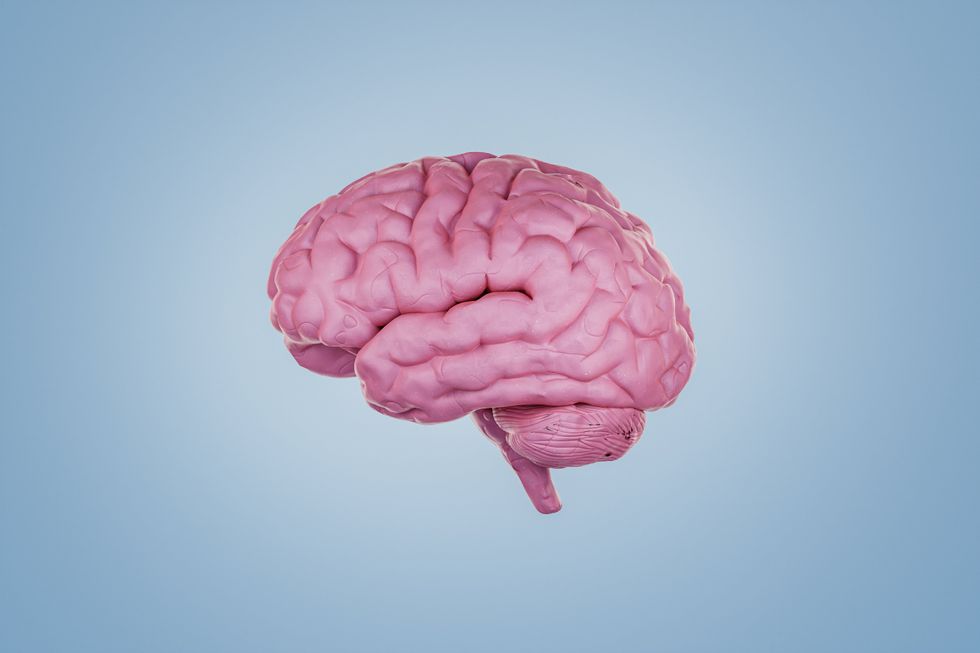
Researchers at Stanford University have upended fundamental assumptions about human brain development, revealing today what humans consider a single organ is actually two entirely separate systems that evolved independently.
The breakthrough discovery, published in Nature Neuroscience, demonstrates the forebrain and midbrain develop from completely different progenitor cells the hindbrain, contradicting the longstanding belief that all brain tissue originates from one master parent cell.
The finding emerged whilst scientists attempted to solve a persistent laboratory mystery: whilst cells from the frontal brain regions could be cultivated with relative ease, brain stem cells proved nearly impossible to grow in laboratory conditions.
Through examination of the earliest stages of embryonic development, the Stanford team identified the front and back sections of the brain arise from entirely distinct cellular origins, following parallel developmental trajectories that never intersect.
By studying mouse embryos during gastrulation — the critical stage when a simple cluster of cells begins organising into body structures — the team identified two fundamentally different types of brain progenitor cells.
One cell population expresses a gene designated Otx2 and is exclusively committed to forming the forebrain and midbrain, whilst the other expresses Gbx2 and develops solely into the hindbrain.
These two populations never overlap, even at the earliest developmental stages, with their DNA packaged in entirely different configurations.
"We've shown for the first time that the front of the brain arises from a totally different progenitor cell than the back of the brain," said Dr Kyle Loh, associate professor of developmental biology at Stanford.
The finding emerged whilst scientists attempted to solve a persistent laboratory mystery
The genetic packaging differences lock the cells onto separate developmental tracks, making it impossible for one type to transform into the other.
The hindbrain, positioned at the base of the skull, serves as the body's automatic control centre, managing essential survival functions such as heart rate, breathing, and sleep cycles, as well as swallowing and digestion.
Meanwhile, the frontal regions — comprising the midbrain and forebrain — govern higher-order cognitive processes, including language, consciousness, logic and abstract reasoning, alongside vision, hearing, and movement control.
Despite originating from entirely separate cellular sources, these two systems integrate seamlessly to execute daily functions.
Rayyan Jokhai, the study's first author, told The Telegraph: "While the front and back of the brain are built from different sources, it is remarkable that they intimately connect with one another to form a functional brain."
Movements, for instance, require collaboration between both systems: the forebrain initiates decisions to move, whilst the hindbrain coordinates and smooths the execution.
This understanding of separate developmental origins explains decades of laboratory frustration, as scientists had unknowingly attempted to transform one type of progenitor cell into another it was inherently incapable of becoming.
Graduate student Rayyan Jokhai noted that previous attempts to create hindbrain neurones likely tried to coax forebrain and midbrain progenitors into hindbrain cells, which the study demonstrates is impossible.
Armed with their new knowledge of how hindbrain cells uniquely form, the Stanford team has successfully transformed human pluripotent stem cells into functional hindbrain motor neurones for the first time.
This capability represents a significant advance for research into amyotrophic lateral sclerosis and spinal muscular atrophy, both fatal conditions progressively destroy hindbrain motor neurones, ultimately robbing patients of their ability to swallow and breathe.
"Now we have a model to better understand these devastating diseases and work toward regenerative therapies for them," Jokhai said. "This is a very exciting new frontier in brain research."
The evolutionary roots of this dual-brain architecture extend back more than 500 million years, with the Stanford researchers identifying the identical two-system pattern in acorn worms — tiny marine creatures that share a distant common ancestor with humans.
The same arrangement was also observed in jellyfish and chickens, suggesting these separate neural systems existed in ancient organisms and subsequently fused spatially over evolutionary time.
Dr Loh noted: "Having the brain as one organ would probably be more efficient, but we rely on this primordial way to make the brain as two separate pieces."
The researchers are now employing their new laboratory model to examine how spinal muscular atrophy destroys hindbrain motor neurons and to test potential drug treatments.
"The hope would be to one day provide regenerative therapies for patients suffering from the numerous neurodegenerative diseases that exist," Jokhai said.