 By The Epoch Times | Created at 2026-10-05 15:32:06 | Updated at 2026-10-05 17:11:58
1 hour ago
By The Epoch Times | Created at 2026-10-05 15:32:06 | Updated at 2026-10-05 17:11:58
1 hour ago
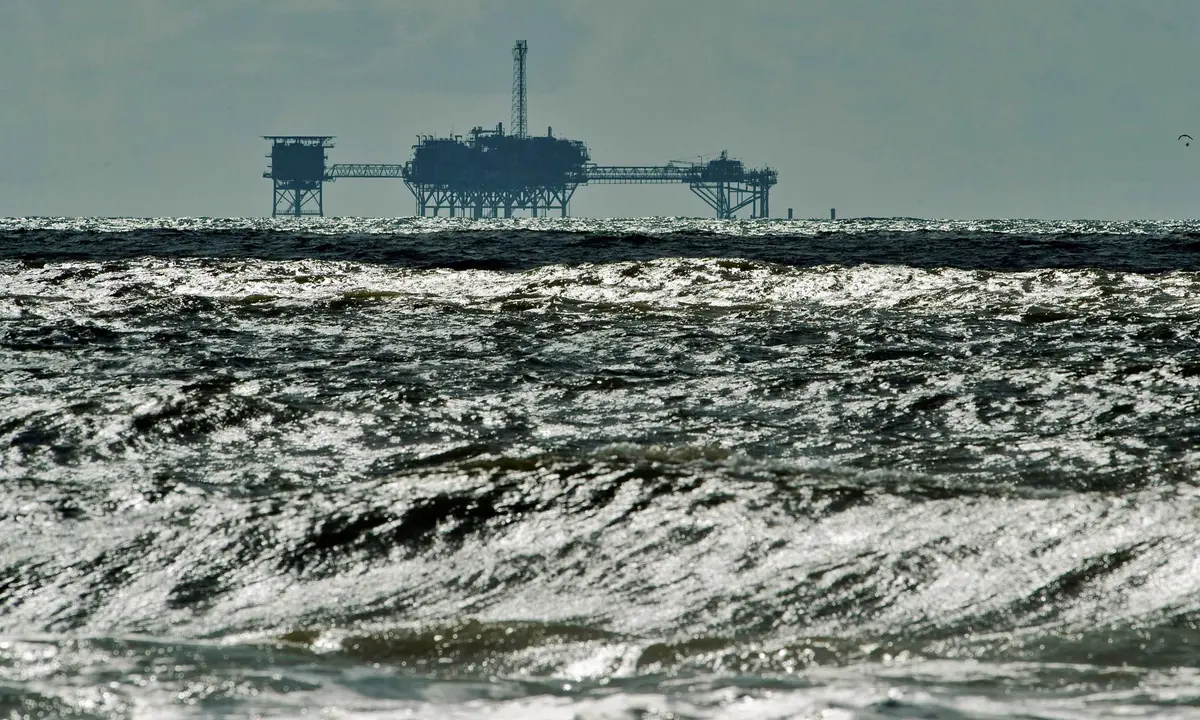
An oil and gas drilling platform stands offshore near Dauphin Island, Ala., in the Gulf of America, on Oct. 5, 2013. Steve Nesius/Reuters
The Environmental Protection Agency (EPA) has proposed authorizations for a deepwater port in the Gulf of America capable of exporting roughly 605 million barrels of crude oil per year.
Two draft air quality permits are being proposed for the Blue Marlin Offshore Port in the Gulf of America, which, if issued, would allow construction to proceed. Once completed, the port can export around 80,000 barrels of crude oil per hour from the facility, the EPA said in an Oct. 1 statement.
“This project is not just about expanding infrastructure; it is about providing good-paying energy jobs and lowering prices at the pump by unleashing the full potential of American energy,” EPA regional administrator Scott Mason said in the statement.
“If finalized as proposed, the Blue Marlin Deepwater Port will bring prosperity to not only the Gulf of America states but to Americans across the nation,” Mason said.
The Prevention of Significant Deterioration (PSD) preconstruction permit and the Title V federal operating permit are the authorizations under consideration for the port located off the coast of Cameron Parish, Louisiana.
The PSD permit applies to certain sources of pollutants and requires an air quality analysis, an impact analysis, and the installation of best available control technology to limit emissions, while the Title V federal operating permit, required under the Clean Air Act, clarifies the actions facilities must take to control air pollution.
The project aims to use vapor-capture technology to prevent volatile organic compounds from being released into the air as crude oil gets transferred into carrier vessels, the EPA said.
Once a dedicated vapor collection system and combustion units are installed at the port, vapor-capture efficiency is expected to reach 99 percent. This ensures higher air quality standards as export volumes go up, according to the EPA.
The Blue Marlin Offshore Port project is being led by oil and gas company Energy Transfer, which operates one of the largest energy asset portfolios in the United States, overseeing more than 135,000 miles of pipeline and related energy infrastructure.
The project will convert an existing 36-inch natural gas pipeline into a crude oil pipeline, transporting oil from a Texas terminal to the port for loading onto carrier tankers, and will construct a new 42-inch, 37-mile pipeline from the terminal to Johnson Bayou, Louisiana.
Energy Transfer claims the port will offer “much-needed export capacity” along the Gulf Coast, with higher oil exports strengthening national security and fueling domestic economic growth.
Environmental nonprofit Earthworks criticized the project’s economic output and said in a statement last year that it would create only 39 permanent jobs after the initial months of construction. There is no guarantee that these workers would be from local communities, it said.
Moreover, any potential oil spills or leaks could cause economic damage to communities, the statement said.
The proposal regarding Blue Marlin’s permits comes as a port approved by the Trump administration last year is now facing legal trouble.
In February 2025, a federal agency
approvedthe construction of the Texas GulfLink deepwater port, which would be capable of shipping up to 2 million barrels of crude oil per day to international markets.
However, in August, the Court of Appeals for the Fifth Circuit vacated the approval, effectively blocking the GulfLink project from moving forward because it violated a federal law.