By The Rio Times | Created at 2026-09-19 11:21:46 | Updated at 2026-09-19 12:03:12
1 hour ago
By The Rio Times | Created at 2026-09-19 11:21:46 | Updated at 2026-09-19 12:03:12
1 hour ago
Argentina · Culture
Key Facts
- —What happened The Argentine production designer Eugenio Zanetti died in Buenos Aires on Friday 18 September 2026, at the age of 79.
- —Why he mattered He won the Academy Award for Best Art Direction for Restoration, at the ceremony held on 25 March 1996.
- —What he was doing He was rehearsing Offenbach’s Les Contes d’Hoffmann at the Teatro Colón in Buenos Aires when he died.
- —The catch No formal cause of death has been published, and Argentine outlets differ on whether he collapsed at the theatre or at home.
- —Where he came from He was born in the city of Córdoba, in central Argentina, on 19 October 1946.
- —What else he did Sets, costumes, lighting and direction for theatre and opera, plus a 2014 feature film, Amapola, that he wrote and directed.
The Córdoba-born designer built the worlds that films take place in, and won an Academy Award for one of them. He died in Buenos Aires on Friday, aged 79.
One-stop reference
Company Intelligence
Every listed company in Latin America — financials, ownership and structure for 1,450+ companies across 26 exchanges, in one place.
Eugenio Zanetti, the Argentine designer who won an Academy Award for the film Restoration, has died. He was 79.
He died on Friday 18 September 2026 in Buenos Aires, according to La Nación and Infobae. He had been rehearsing an opera.
A production designer invents the physical world a film takes place in. Sets, colours, furniture, costume and light all pass through that one job.
A sudden death, and two accounts of it
The collapse was sudden and no formal cause of death has been published. Relatives and friends in his circle told the Argentine media.
La Nación reported that he felt unwell and died after reaching home. ElDoce.tv reported that he fell ill during a rehearsal and died in hospital.
The rehearsal was for Offenbach’s Les Contes d’Hoffmann at the Teatro Colón, the Buenos Aires opera house. He was staging the production there.
The Oscar for Restoration
Zanetti won Best Art Direction at the 68th Academy Awards on 25 March 1996. The prize was for Restoration, a film released the previous year.
Argentine obituaries date the award to 1996, the year of the ceremony. The Academy indexes it to 1995, the year of the film.
Emma Thompson handed him the statuette at the Dorothy Chandler Pavilion in Los Angeles. The Academy lists him as the sole recipient, with no set decorator beside him.
He beat Apollo 13, Babe, A Little Princess and Richard III that night. Three of those four nominees shared the credit with a set decorator.
Richard III was the other exception. Its designer, Tony Burrough, was cited alone, exactly as Zanetti was.
“I did follow my heart, until here, and I’m grateful to God,” he said from the stage. He thanked his mentor and his mother, who was in the room.
He thanked the Academy and Miramax before closing on a single line of advice. “My only advice is follow your heart,” he said.
Three years later the Academy nominated him again, at the 1999 ceremony. The film was What Dreams May Come, and he shared the nomination with the set decorator Cindy Carr.
He lost that year to Shakespeare in Love. Those two citations are the whole of his Academy record.
The films
Hollywood called on him for pictures that needed a world invented from nothing. He designed Flatliners in 1990 and Last Action Hero in 1993.
Restoration followed in 1995, and What Dreams May Come in 1998. Later came Zapata: el sueño del héroe in 2004.
In 2011 he worked on There Be Dragons, released in Spanish as Encontrarás dragones. Three years after that he stepped behind the camera himself.
Amapola, released in 2014, was his debut as a director, and he wrote it as well.
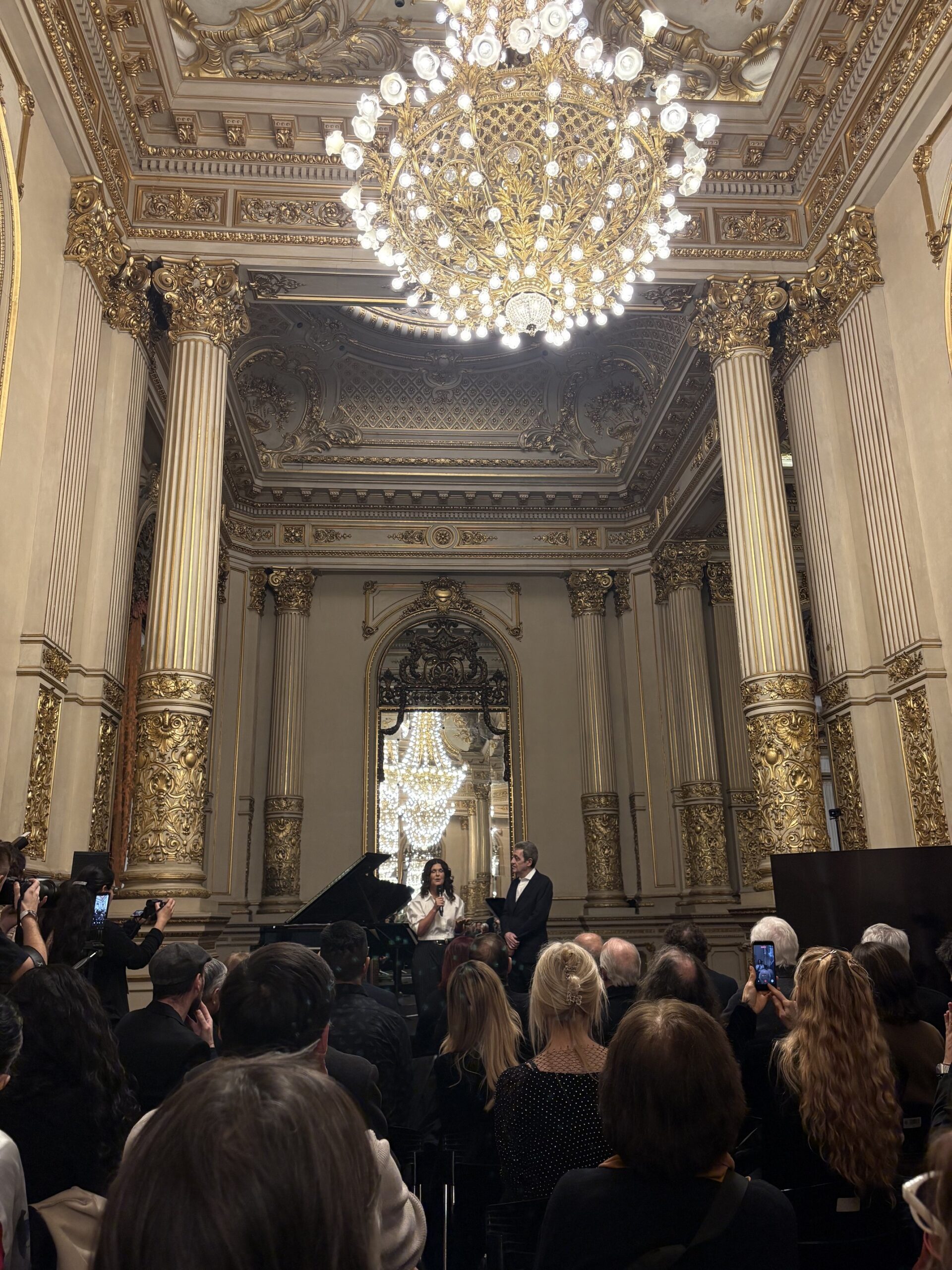
The stage was the other half
Theatre and opera were not a sideline for him. He designed sets, costumes and lighting, and he also directed.
Argentores, the Argentine authors’ society, lists El zoo de cristal among his productions. That is the Spanish staging of Tennessee Williams’ The Glass Menagerie.
It also names Están tocando nuestra canción, the local version of They’re Playing Our Song, and Filomena Marturano. At the Teatro Colón he worked on lyric opera.
Córdoba, and the world
He was born in the city of Córdoba, in central Argentina, on 19 October 1946. La Nación, Infobae and the national culture secretariat all give that date.
Perfil noted that he would have turned 80 this 19 October. He studied architecture at the Universidad Nacional de Córdoba, completing only the first year.
His film career was built abroad, and the honours followed him home and away. Buenos Aires, Córdoba and Los Angeles all made him an honorary citizen.
He held exhibitions in Argentina, Mexico, the United States and Spain. He also held honorary doctorates, among them from the Universidad de las Artes and the Universidad de Palermo.
The Argentine Senate gave him its Domingo Faustino Sarmiento Mention of Honour in 2019. Argentine film critics had already awarded him a special Cóndor de Plata in 2010.
Days before he died he opened a retrospective at the Museo Tamburini in Córdoba. It was called El hombre que habita muchos mundos, the man who lives in many worlds.
At that retrospective he put the reason in one sentence. “Art represents a great freedom and a direct contact with destiny,” he said.
How Argentina said goodbye
The national actors’ union, the Asociación Argentina de Actores y Actrices, said farewell to Eugenio Zanetti. It called him a fundamental figure in Argentine culture, citing exceptional talent and international reach.
The Secretaría de Cultura, the national culture secretariat led by Leonardo Cifelli, said he had carried Argentine talent to the world. Argentores issued its own statement of mourning.
Martín Llaryora, the Governor of Córdoba, sent condolences to the family and the artistic community. He described Zanetti as an artist who took the province’s name around the world.
Eugenio Zanetti left work scattered across film, theatre, opera and gallery walls. The shortest way into it is Restoration, the film the Academy gave to him alone.
More: Argentina coverage, every day from The Rio Times.
Frequently Asked Questions
Who was Eugenio Zanetti?
He was an Argentine production designer, art director and stage director, born in the city of Córdoba on 19 October 1946. He won the Academy Award for Best Art Direction for the film Restoration, at the ceremony held on 25 March 1996, and was nominated again in 1999 for What Dreams May Come. He died in Buenos Aires on 18 September 2026, aged 79.
What does a production designer actually do?
A production designer is responsible for how a film looks in physical terms. That covers the sets, the colours, the furniture, the textures and the way light falls on all of it. On a period film such as Restoration, the job means building a believable past from scratch. The Academy recognised that work under the name Best Art Direction, the category Zanetti won in 1996.
Which of his films can I watch?
The credits corroborated by Argentores and the Argentine obituaries are Flatliners (1990), Last Action Hero (1993), Restoration (1995), What Dreams May Come (1998), Zapata: el sueño del héroe (2004) and There Be Dragons (2011), released in Spanish as Encontrarás dragones. Two of those, Restoration and What Dreams May Come, also appear in the Academy’s own records, which cover nominations and awards rather than full filmographies. He also wrote and directed Amapola, released in 2014, his debut as a director.
How did he die?
His death was sudden and no formal cause has been published. He was in rehearsals for Offenbach’s Les Contes d’Hoffmann at the Teatro Colón in Buenos Aires. La Nación reported that he felt unwell and died after reaching home, while ElDoce.tv reported that he collapsed during the rehearsal and died in hospital. Relatives and people close to him informed the Argentine press.
Sources: La Nación on the death and the honours, Infobae on the actors’ union tribute, The Academy on the 1996 Best Art Direction award, The Academy’s speech database on his acceptance, The Academy on the 1999 nomination, Argentores on his stage and screen credits, The Secretaría de Cultura on its tribute, Perfil on his birth in Córdoba and his studies, ElDoce.tv on the governor’s condolences, Cadena 3 on the Córdoba retrospective