 By GB News (World News) | Created at 2026-09-30 05:26:00 | Updated at 2026-09-30 06:06:52
48 minutes ago
By GB News (World News) | Created at 2026-09-30 05:26:00 | Updated at 2026-09-30 06:06:52
48 minutes ago
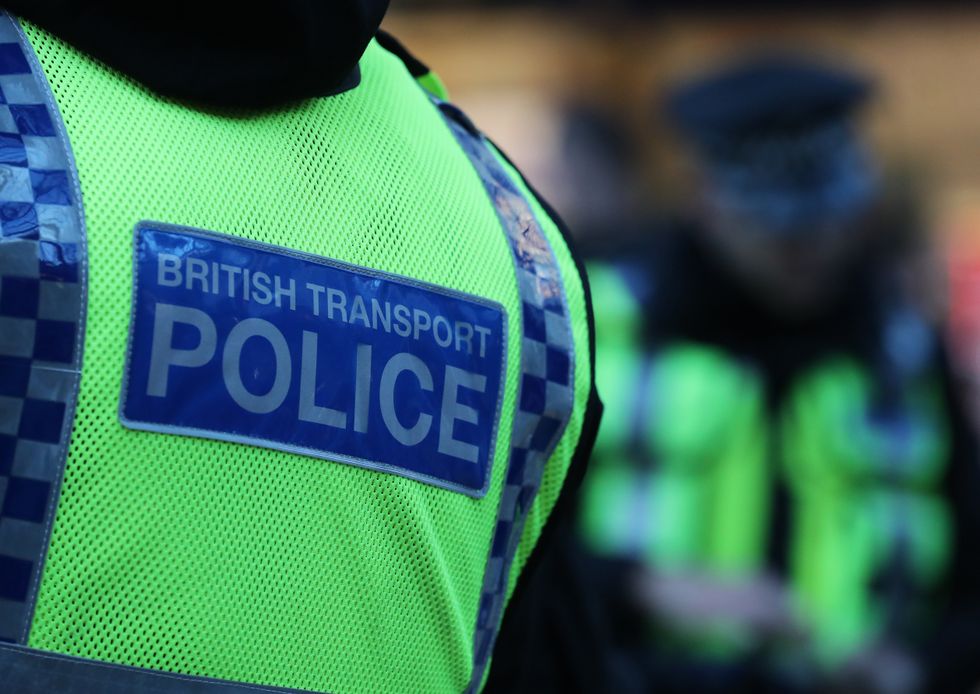
British Transport Police spent more than £320,000 on a six-month live facial recognition (LFR) trial across London's railway stations, scanning upwards of half a million faces yet failing to produce a single arrest.
The pilot programme ran from February to July this year, deploying the surveillance technology 18 times at some of the capital's busiest transport hubs.
Freedom of information documents obtained by Liberty Investigates and shared with The Guardian revealed that the entire exercise generated just one watchlist alert - which proved to be a false positive.
Equipment hire and officer staffing consumed £320,786 and nearly 100 hours of police time across the trial period.
The technology was intended to identify wanted criminals and individuals in breach of court orders.
Despite these underwhelming results, BTP announced last month that it would extend the pilot by four months and broaden its scope to encompass London Underground stations.
Since the extension began, three confirmed positive alerts have been recorded, though the individuals identified were found to be complying with their sexual harm prevention orders or other court-imposed conditions.
Transport for London backed the expanded trial, stating that LFR technology "will target and identify people on police watchlists at key stations chosen for maximum impact" and would "specifically tackle violence against women and girls, whose travel behaviours are shaped by experiences of sexual harassment and sexual offences".
The LFR trial was intended to identify wanted criminals and individuals in breach of court orders

PA
Fraser Sampson, formerly the UK's biometrics and surveillance camera commissioner, questioned whether the deployment met the threshold of proportionality.
"There many variables and all need to align: the choice of location, times of day, make up of the watchlist and likelihood of people being present and many more," he said.
Mr Sampson, now a non-executive director at retail facial recognition firm Facewatch, drew a distinction between commercial and policing applications of the technology.
"We know the technology works, but using it in supermarkets to deter shoplifters and prevent attacks on staff is very different from deploying it to catch people on a public transport network," he said.
"Success in a shop means no such people coming in. Success for the police trying to catch people means people being caught. In that respect the trial doesn't appear to have been very fruitful."
Despite these underwhelming results, BTP announced last month that it would extend the pilot by four months
He noted that the cameras process special category personal data and stressed that "the technology must be used in a way that is appropriate, proportionate and necessary".
The BTP trial forms part of a broader national expansion of facial recognition surveillance, with more than half of police forces across England and Wales now having deployed the technology, according to Liberty Investigates' analysis.
The Metropolitan Police and the Mayor of London's office confirmed this summer that permanent LFR cameras would be installed in the West End, with Sadiq Khan confirming their use on the soon-to-be-pedestrianised Oxford Street.
Parliament's joint committee on human rights recently flagged the rollout as a "particularly clear example of risk" in a report urging the Government to legislate against AI threats to civil liberties.
Labour MP Bell Ribeiro-Addy said: "Live facial recognition technologies are a serious invasion of our privacy. The Government should be suspending their rollout until there are stronger safeguards in place, including a proper legal framework."
Bell Ribeiro-Addy MP branded the technology 'a serious invasion of our privacy'

A BTP spokesman said the force had launched the pilot "to understand how the technology could most effectively support the identification of wanted offenders and individuals who may pose a risk to passengers and staff".
They said: "During these deployments, officers have made a number of associated arrests, including for assault, theft, possession of an offensive weapon, breach of a criminal behaviour order and public order offences, as well as locating individuals wanted by the courts and other police forces.
"As these arrests did not result directly from an LFR alert, they are not included within LFR performance data.
“Throughout the pilot, we have continued to refine how the capability is deployed within the railway environment. This has included developments to deployment locations, operating procedures, equipment and watchlist construction.
“A particularly important point is that watchlist growth has been deliberate, controlled and aligned to BTP policy. We began with a more limited watchlist whilst ensuring data quality, governance and safeguarding arrangements were robust.”