 By The Epoch Times | Created at 2026-10-06 03:52:05 | Updated at 2026-10-06 04:29:30
54 minutes ago
By The Epoch Times | Created at 2026-10-06 03:52:05 | Updated at 2026-10-06 04:29:30
54 minutes ago
Newly declassified memos
releasedOct. 5 by the White House show former special prosecutor Jack Smith and FBI agents during the Biden administration monitored President Donald Trump’s campaign manager’s phone and tracked First Lady Melania Trump and her son Barron Trump’s travel ahead of the 2022 raid on Mar-a-Lago in search of sensitive documents.
FBI agents tracked Trump’s co-campaign manager Susie Wiles’s calls using a pen register device, which records all outgoing phone numbers dialed from a monitored number, and a trap-and-trace device, which records all incoming numbers, according to the memos.
Agents sent detailed reports about when Trump’s defense lawyers would call Wiles, if the calls were missed or returned, and the duration of the conversations. They even tracked when one lawyer would attempt to call while Wiles was on the phone with another person.
The agents also reported when Melania Trump called Wiles, which phone the first lady used, and the length of the call.
The White House responded to the memos, calling the findings an abuse of power.
“Jack Smith’s surveillance operation was a disgraceful abuse of government power,” White House spokeswoman Lauren Bis told The Epoch Times in an emailed statement. “Spying on political opponents is weaponization of law enforcement, plain and simple. Those responsible must be held accountable.”
In one document detailing a timeline of tasks to complete on or before May 31, 2022, for Washington Field Office agents assigned to the operation, a line item stated they planned to finalize the FBI’s understanding of Melania and Barron Trump’s travel, and which type of aircraft they would use. The agents also planned to finalize coordination among the FBI, Department of Justice (DOJ), and Secret Service in the Miami and West Palm Beach jurisdictions before the Aug. 8 raid on Mar-a-Lago, President Trump’s estate in Palm Beach.
The memos included a few attempts by the special agent in charge of the counterintelligence division at the Washington Field Office to get the documents at Mar-a-Lago without serving a search warrant.
On July 13, 2022, one month before the raid, a memo shows FBI agents reported they were having difficulty speaking with anyone with knowledge of records being stored at Mar-a-Lago and concluded they didn’t have enough information for a search warrant.
“[The Washington Field Office] does not believe (and has articulated to DOJ CES), that we have established probable cause for the search warrant at Mar a Lago. … Finally, if the goal is to identify and recover classified records quickly, so as to protect the information, the 5 weeks spent fixated on probable cause of a search warrant have been counterproductive,” the assistant special agent in charge of counterintelligence in Washington reported in the memo.
Approval for the investigation appeared to come from the top of the DOJ. On a March 24, 2022, memo by FBI Director Christopher Wray to Deputy Attorney General Lisa Monaco, Monaco initialed the memo with a note to then Attorney General Merrick Garland, saying “Merrick, I recommend you approve, Lisa 3/25/22.”
Wray noted he was required to get written approval from the attorney general, through the deputy, before opening any investigation of a declared candidate for president or vice president, a presidential campaign, or a senior presidential campaign staff member or adviser.
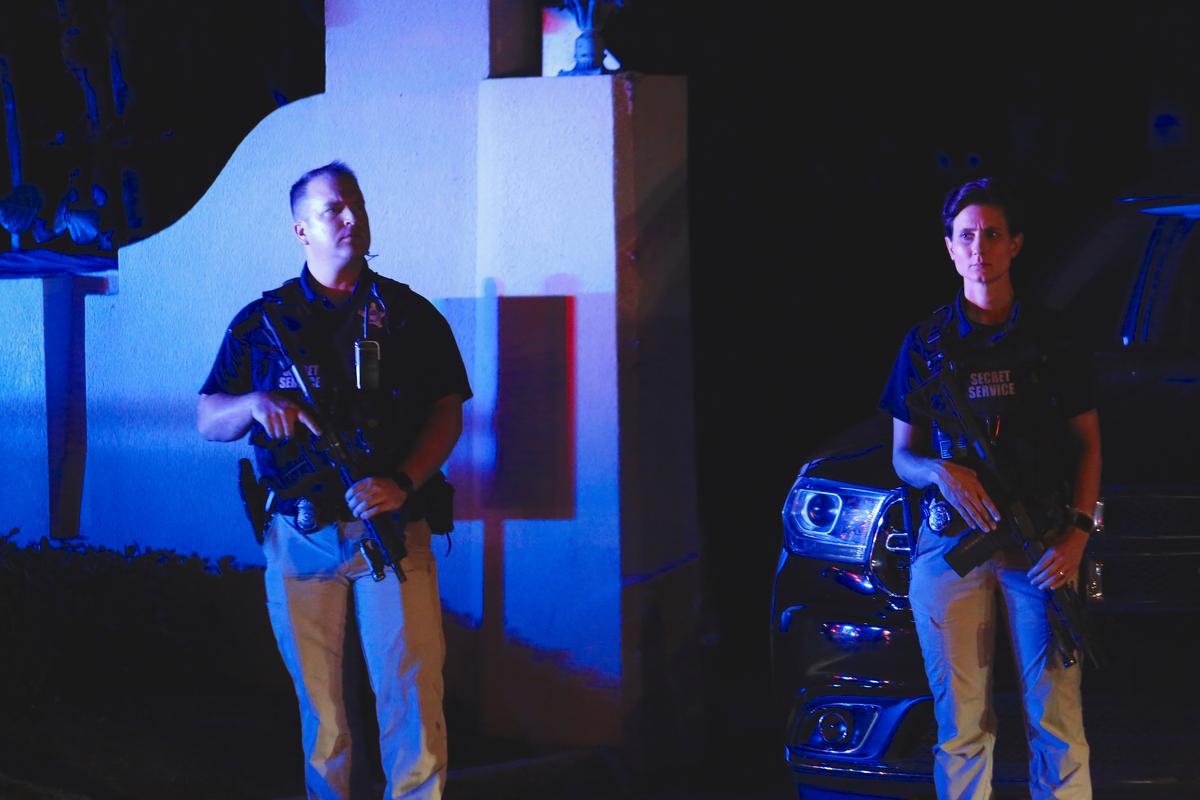
Secret Service personnel in front of Mar-A-Lago in Palm Beach, Fla., on Aug. 8, 2022. Eva Marie Uzcategui/Getty Images
The memos were part of Operation Plasmic Echo, the FBI’s codename for the criminal investigation into Trump’s alleged retention of classified and national defense documents from his first presidential term at Mar-a-Lago.
The president was never found guilty of retaining the sensitive documents at his Florida estate. A judge ruled that special counsel Smith’s appointment and funding were unconstitutional and dismissed his case.
Smith eventually dropped the federal prosecution after Trump was reelected in November 2024.