By The Rio Times | Created at 2026-10-12 17:46:45 | Updated at 2026-10-12 19:21:35
1 hour ago
By The Rio Times | Created at 2026-10-12 17:46:45 | Updated at 2026-10-12 19:21:35
1 hour ago
COSTA RICA · WILDLIFE AND SAFETY
Key Facts
- —The species Bothrops asper, a large pit viper Costa Ricans call terciopelo.
- —The range Northeastern Mexico to Venezuela, plus Pacific Colombia and Ecuador.
- —The size Adults usually 1.4 to 1.8 meters, at most 2.5 meters.
- —The risk Researchers estimate it causes 50 to 80% of Central American snakebites.
- —What it means for you Wear boots and long trousers, and never handle snakes.
- —If bitten Call 911, immobilize the limb and reach a hospital fast.
Central America’s most medically important snake is common, well camouflaged and lives close to people. Knowing where it lives and what to do after a bite keeps the risk for visitors low.
The fer de lance snake is the English name for Bothrops asper, a large pit viper Costa Ricans call terciopelo. Researchers estimate it causes 50 to 80% of all snakebites in Central America.
For US hikers in Costa Rica, Panama or Nicaragua, it is the snake that matters most. This guide explains how to recognize it, where it lives, how to avoid it and what to do after a bite.
What the Fer De Lance Snake Is
Bothrops asper belongs to the lanceheads, a group of American pit vipers named for their broad, spear-shaped heads. The French name fer-de-lance means the iron tip of a lance, a reference to that triangular head.
In Costa Rica most people call it terciopelo, Spanish for velvet, while elsewhere it is barba amarilla, or yellow beard. The Instituto Clodomiro Picado, the University of Costa Rica’s antivenom institute, notes that many places simply call it the X snake.
The institute counts about 140 snake species in Costa Rica and describes only 23 of them as venomous. The fer de lance snake matters most because it is common, large and adapts well to land disturbed by people.
Three Snakes Share One Name
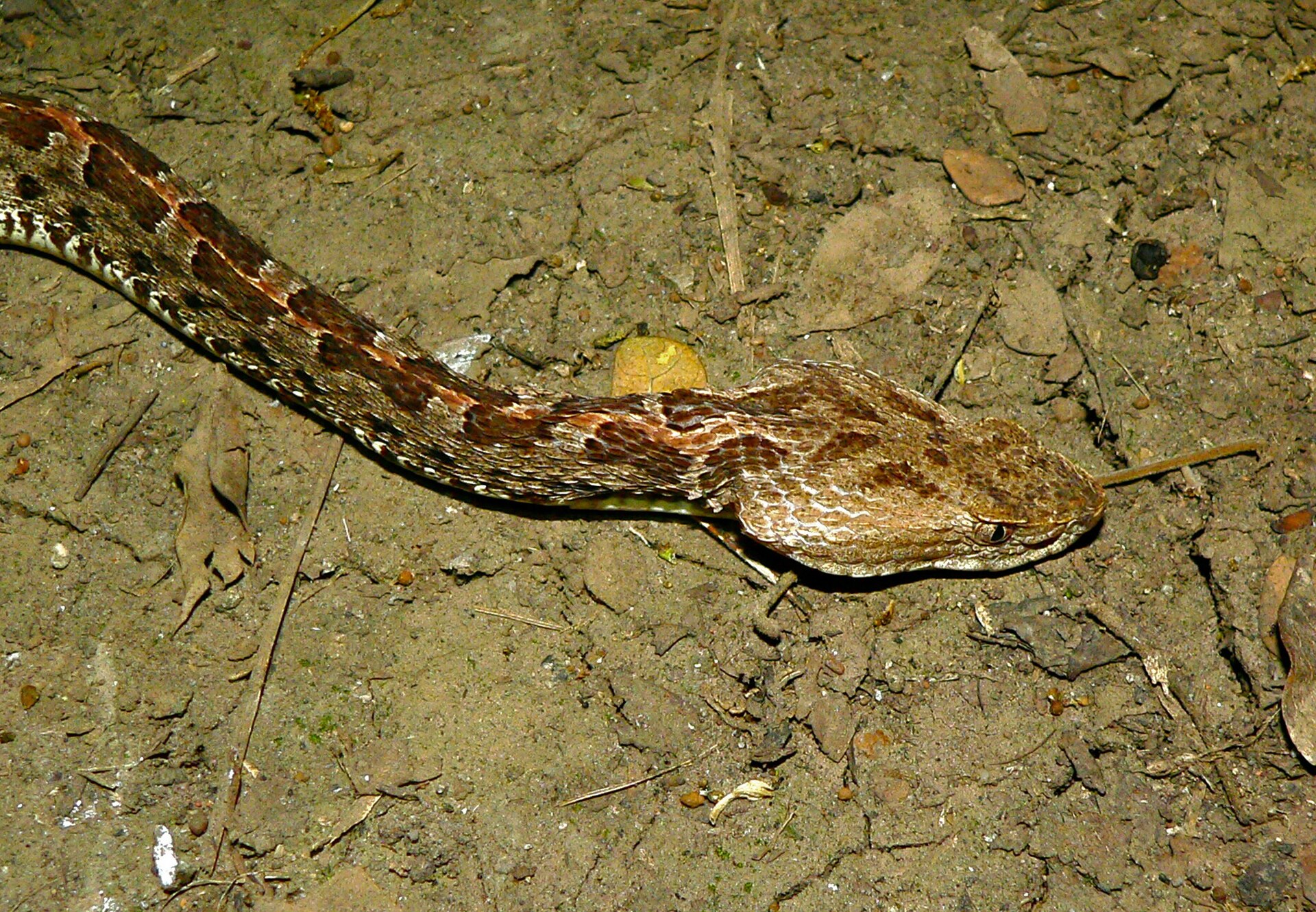
English speakers use fer-de-lance for at least three different lanceheads, which causes confusion in travel advice. In Central America and northwestern South America, the name means Bothrops asper, the species this guide covers.
In the Amazon region and the Guianas, the common lancehead, Bothrops atrox, fills the same role. A 2023 study in PLOS Neglected Tropical Diseases found it causes most snakebites in French Guiana.
The original fer-de-lance is Bothrops lanceolatus, a viper found only on the French Caribbean island of Martinique. The same study says this endemic species causes every snakebite envenoming on the island.
Martinique’s species can trigger a rare and severe clotting reaction, known as a thrombotic effect, in some patients. Doctors there use a monospecific antivenom, made against that single species, which the researchers say has worked well.
The three snakes are related, and their venoms act in broadly similar ways. Still, the researchers say antivenoms made elsewhere in the Americas need testing against French Guiana’s vipers before anyone relies on them.
How to Recognize It
Adult males usually measure 140 to 180 centimeters, about 4.6 to 5.9 feet, and females grow longer than males. The Instituto Clodomiro Picado says the species can reach 250 centimeters, about 8.2 feet.
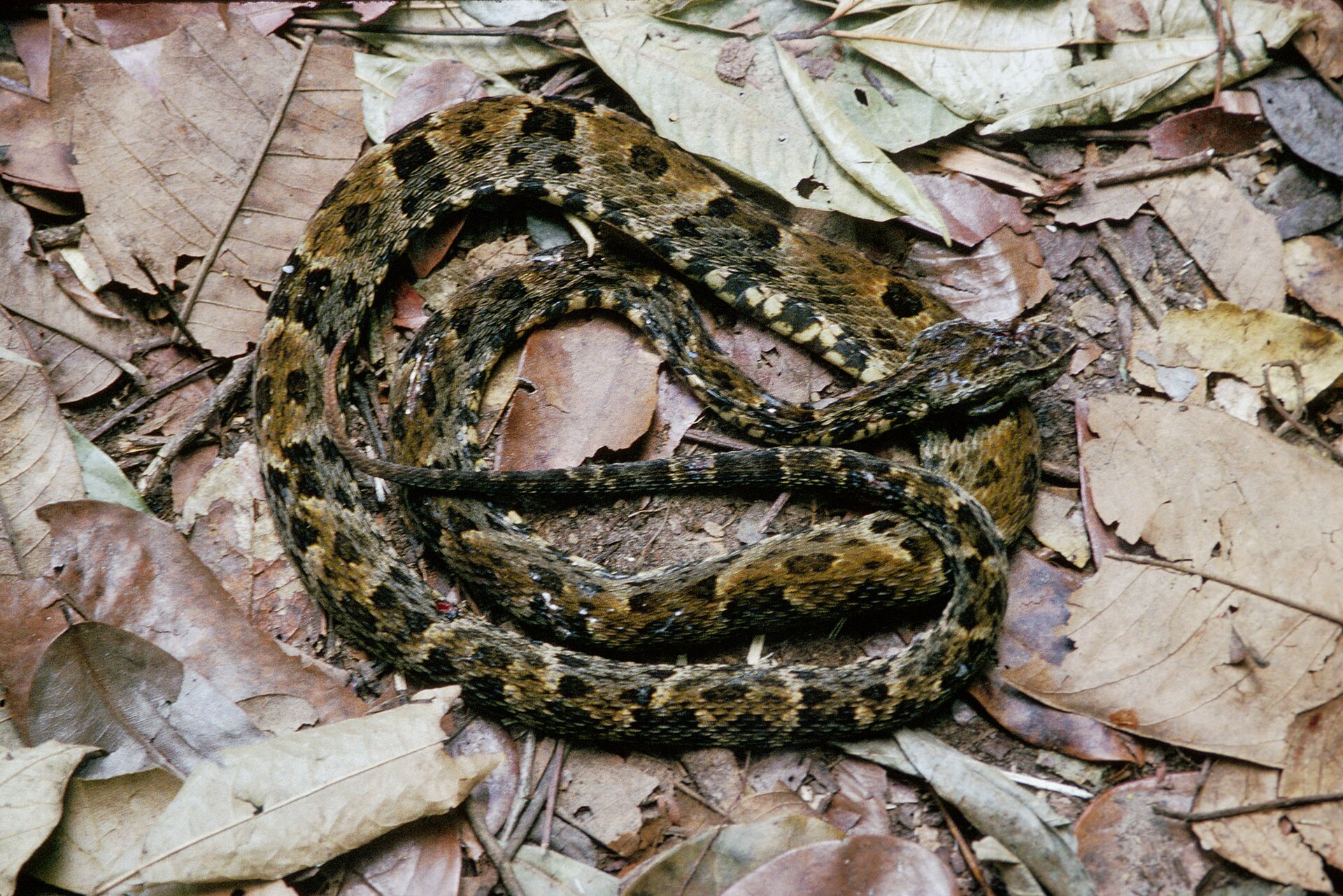
The body is moderately robust, with a large head that looks clearly triangular from above. Its back scales are strongly keeled, which gives the skin a rough, ridged texture.
The base colour is grey, brown or olive green, broken by triangular markings along both sides. Seen from above, those triangles meet to form a chain of X shapes down the back.
A dark band runs behind each eye along the side of the head. Such patterns make the snake hard to spot among dead leaves on a forest floor.
The species gives birth to live young rather than laying eggs, and the institute calls it very fertile. A single female can produce up to 90 offspring.
Several harmless snakes look similar at a glance, and amateur identification is unreliable. The safest rule for visitors is to treat any large brown snake with a triangular head as dangerous.
Where It Lives in Costa Rica
Bothrops asper ranges along the Caribbean side of the isthmus from northeastern Mexico to Venezuela. On the Pacific side it runs from central Costa Rica to the lowlands of Colombia and Ecuador.
In Costa Rica it lives mainly in low, wet land on both the Pacific and Caribbean slopes. It usually stays in the lowlands but has been found as high as 1,500 meters, about 4,900 feet.
The snake adapts well to disturbed habitats, so it is not confined to deep forest. Cleared land and forest edges near homes and farms can hold it as well as protected parks.
Many lowland parks popular with foreign visitors lie inside this range, on both coasts. The Rio Times guide to seven Costa Rica national parks and their costs lists entry fees and access rules.
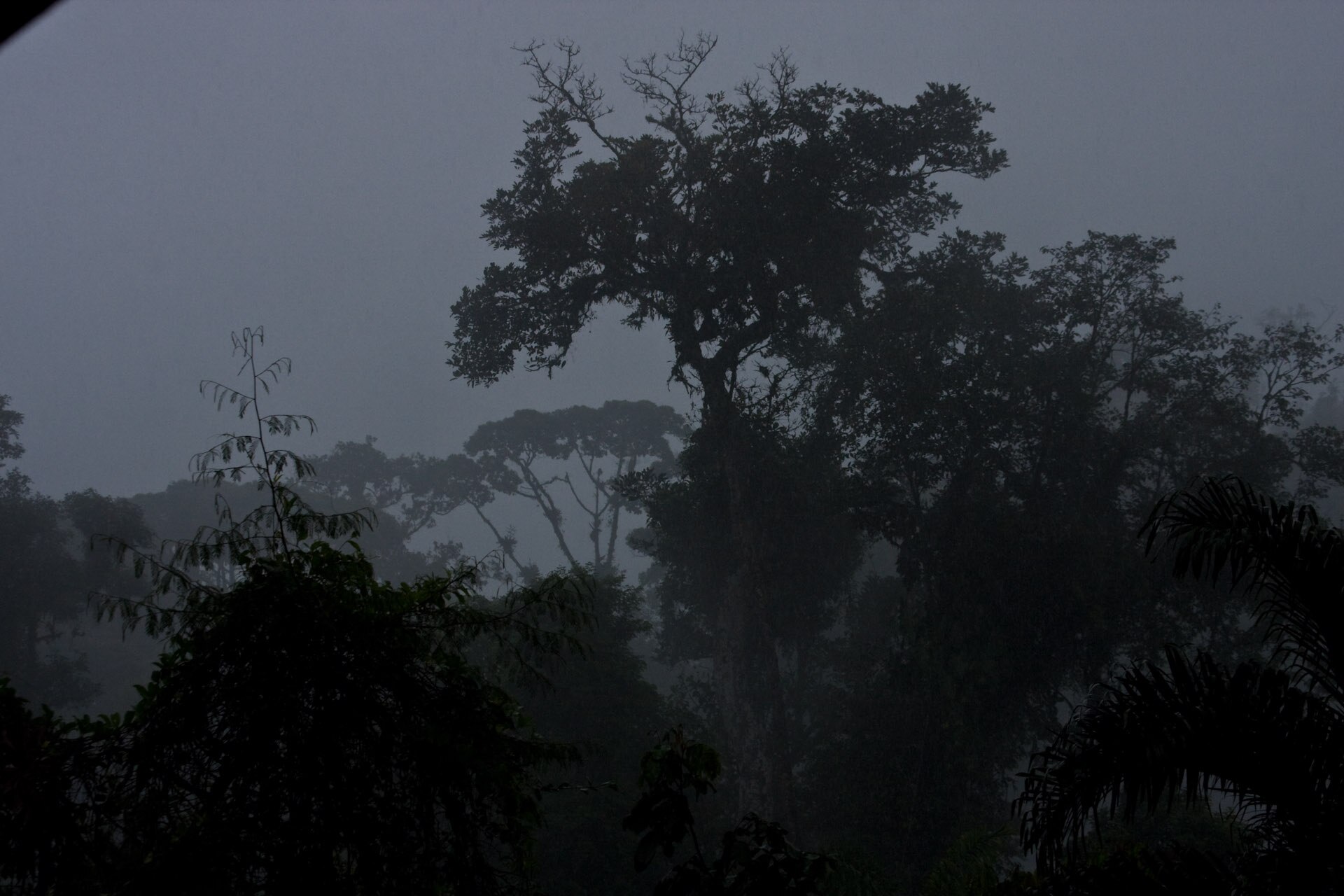
CDC guidance for outdoor workers says snakes are more active at dawn, at dusk and in warm weather. Walks at those hours call for extra care on paths and around leaf litter.
How Dangerous a Bite Is
Lancehead venom damages tissue and blood at the same time. Describing the closely related Bothrops atrox, the 2023 study lists local tissue damage, clotting failure, bleeding, circulatory changes and acute kidney injury.
Untreated envenoming can end in amputation, permanent disability or death. The Instituto Clodomiro Picado therefore urges getting every patient to a hospital quickly, so antivenom can be given as soon as possible.
Worldwide, the World Health Organization estimates 5.4 million snakebites a year and 1.8 to 2.7 million envenomings. Its fact sheet, dated 17 September 2026, puts annual deaths at 81,410 to 137,880.
WHO estimates around three times as many amputations and permanent disabilities as deaths. In June 2017 it listed snakebite envenoming as a highest-priority neglected tropical disease.
For Latin America, researchers writing in Revista de Biología Tropical in 2021 cite 130,000 to 150,000 cases a year. They put regional deaths at about 2,300 a year.
Costa Rica has cut snakebite deaths sharply since the mid-20th century. A 1997 Toxicon study found the rate fell from 4.83 deaths per 100,000 people in 1953 to about 0.2 by 1993.
That study also counted 3.6 male deaths for every female death. Agricultural workers and rural families in poorer areas remain among the people most affected, the institute says.
Costa Rica’s Antivenom System
The Instituto Clodomiro Picado traces its work to a first polyvalent antivenom batch made in March 1967. The institute was created in April 1970 under the health ministry and joined the University of Costa Rica in 1972.
A polyvalent antivenom is made to neutralize the venoms of several viper species at once. Output rose from about 8,000 vials a year in the 1970s to 110,000 in 2016, says the institute’s José María Gutiérrez.
The institute exports antivenom to Central America and Ecuador and has helped develop products for Africa, Papua New Guinea and Sri Lanka. It says it cooperates with more than 115 organisations in 31 countries.
Costa Rica’s public hospitals and clinics are run by the Caja Costarricense de Seguro Social, the social security fund. The Rio Times explainer on Costa Rica healthcare and the Caja covers how foreigners use that system.
Safety Tips for Hikers
Prevention is mostly about avoiding accidental contact with a snake you have not seen. The tips below follow guidance from the CDC and the Instituto Clodomiro Picado.
- Wear boots and long trousers outdoors, as the CDC advises.
- Keep away from tall grass and leaf piles where you can.
- Do not climb on rocks or wood piles where snakes may hide.
- Never touch or handle a snake, even a dead one or a severed head.
- Take extra care at dawn, at dusk and in warm weather.
- Wear leather gloves if you clear brush or move debris.
Staying on marked, cleared trails makes a snake easier to see before you reach it. On night walks, a flashlight pointed at the path does the same job.
If you see a fer-de-lance, stop, back away slowly and give it room to leave. Do not try to move it, photograph it up close or kill it.
Children and teenagers need these rules explained before every walk. People aged 10 to 19 made up most snakebite deaths in the 1997 Costa Rican study.
A realistic budget helps with planning, and the Rio Times guide to Costa Rica travel costs for US visitors covers prices. Its explainer on the Costa Rica ecotourism model shows how the park system is funded.
What to Do If Bitten
Treat any fer-de-lance bite as a medical emergency and do not wait for symptoms, as the CDC advises. Call 911, the emergency number the Instituto Clodomiro Picado gives for snake emergencies.
Do these things while help is on the way, following the institute’s and the CDC’s first-aid guidance. The goal is to reach antivenom quickly without causing further harm.
- Keep the person calm and at rest, sitting or lying down.
- Remove rings, watches and tight items before swelling starts.
- Wash the bite with soap and water and cover it with a clean, dry dressing.
- Immobilize the bitten limb in a comfortable, neutral position.
- Mark the edge of the swelling on the skin and write the time beside it.
- Photograph the snake only from a safe distance, and only if that is quick.
- Go to the nearest hospital or clinic at once, and do not drive yourself.
Avoid the following, which the CDC, the institute or both warn against. Folk remedies waste time and can cause infection, bleeding or tissue damage.
- No tourniquet, and remove any tourniquet someone has already applied.
- No cutting the wound and no sucking out venom by mouth.
- No ice, cold packs or soaking the bite in water.
- No alcohol, and no aspirin, ibuprofen or naproxen.
- No electric shocks, herbal extracts or other folk remedies.
- No handling the snake, even if it appears dead.
Tell the medical team when the bite happened and show any photo of the snake. That information helps doctors decide on treatment, including whether antivenom is needed.
What It Means for US Readers
Many US trips to Costa Rica centre on hiking, wildlife watching and night tours in lowland forest. The fer de lance snake is a real but manageable risk for visitors who follow basic precautions.
Check before departure that travel insurance covers emergency medical care and evacuation. Save 911 in your phone and note the nearest hospital to each lodge or park on your route.
Plant and animal remedies have no proven effect, the Instituto Clodomiro Picado says, and the delay they cause is harmful. Skip snakebite kits with blades or suction pumps, since the CDC advises against cutting a bite or sucking out venom.
For wider context on the country, see the Rio Times Costa Rica news hub. It covers safety, politics and the travel rules that affect visitors.
What Is Not Known
By 12 October 2026, no confirmed national count of 2026 snakebites or deaths had been published by health authorities. Estimates of the fer de lance snake’s share of bites also vary, from more than half to about 80%.
The institute’s species page cites 23 venomous species, while its own list names more, so the exact total depends on classification. How well Central American antivenoms work against lanceheads in other regions also remains under study.
Frequently Asked Questions
What is a fer de lance snake?
In Central America it is Bothrops asper, a large pit viper called terciopelo in Costa Rica. The name is also used for Bothrops atrox in the Amazon region and Bothrops lanceolatus on Martinique.
How big does a fer de lance get?
Adult males usually measure 1.4 to 1.8 meters, about 4.6 to 5.9 feet, and females grow longer. The Instituto Clodomiro Picado gives a maximum length of about 2.5 meters, or 8.2 feet.
Where do fer de lance snakes live in Costa Rica?
They live mainly in wet lowlands on both the Pacific and Caribbean sides, up to about 1,500 meters. They adapt well to disturbed land, including forest edges and cleared areas.
Is a fer de lance bite deadly?
Lancehead venom can cause bleeding, tissue damage and kidney injury, and untreated envenoming can kill. Costa Rica’s snakebite death rate fell to about 0.2 per 100,000 people by 1993, a 1997 study found.
What should I do if a fer de lance bites me?
Call 911, keep still, remove rings and watches, immobilize the limb and get to a hospital without driving yourself. Do not use a tourniquet, cut the wound, suck out venom, apply ice or drink alcohol.
Is there antivenom in Costa Rica?
The Instituto Clodomiro Picado at the University of Costa Rica has made polyvalent antivenom since 1967. It produced about 110,000 vials in 2016 and exports to Central America and Ecuador.
How can hikers avoid snakebites?
Wear boots and long trousers, avoid tall grass and leaf piles, and never touch or handle a snake. Take extra care at dawn, at dusk and in warm weather, when snakes are more active.
Sources: Instituto Clodomiro Picado, University of Costa Rica: Bothrops asper; Instituto Clodomiro Picado: first aid; Instituto Clodomiro Picado: venomous snakes of Costa Rica; Gutiérrez (2018), snakebite care in Costa Rica; World Health Organization: snakebite envenoming fact sheet; CDC/NIOSH: venomous snakes, symptoms and first aid; Resiere et al. (2023), PLOS Neglected Tropical Diseases; Rojas, Bogarín and Gutiérrez (1997), Toxicon; Uribe-Arjona et al. (2021), Revista de Biología Tropical (all accessed 12 October 2026).