 By GB News (Politics) | Created at 2026-09-13 23:16:29 | Updated at 2026-10-05 20:02:57
3 weeks ago
By GB News (Politics) | Created at 2026-09-13 23:16:29 | Updated at 2026-10-05 20:02:57
3 weeks ago
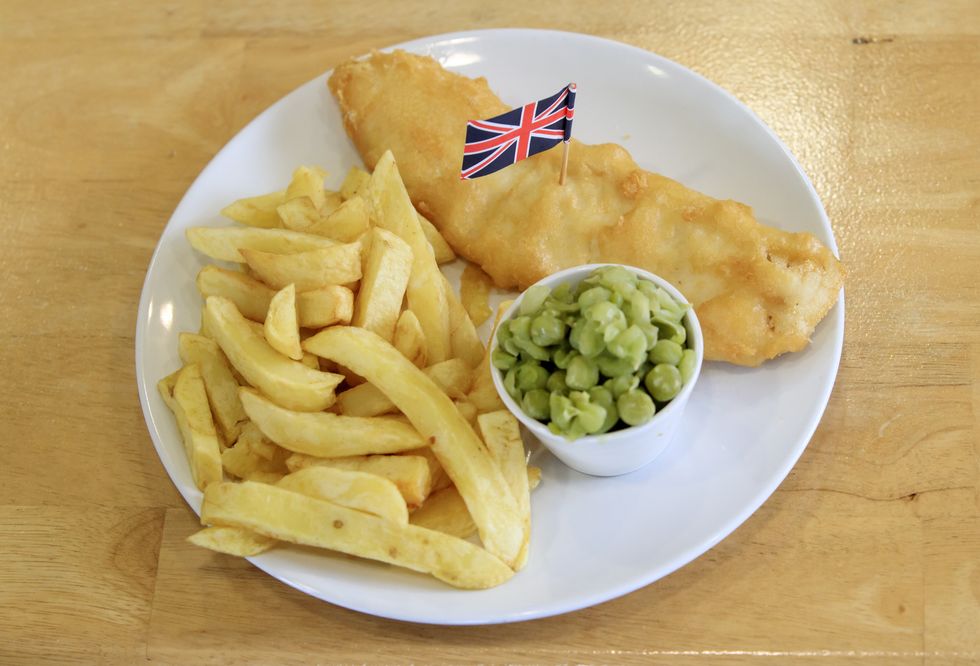
Schools across England will be banned from serving traditional fish and chips as Labour orders pupils to eat lentils and chickpeas every week under sweeping new food rules.
The Department for Education (DfE) is set to unveil new standards on Monday requiring schools to serve pulses, such as lentils and chickpeas, at least once a week.
Deep-fried dishes will be eliminated from school kitchens, while breakfast favourites including fried eggs, pastries, chocolate spread and high-sugar cereals will also be banned.
Cakes and other desserts will be limited to once a week in primary schools and twice a week in secondary schools, with each dessert required to include a portion of fruit.
Ice cream will also be restricted.
In another major change, every individual dish served will have to incorporate at least one portion of fruit or vegetables.
The DfE has drawn up sample menus for the weekly serving of pulses, including chicken and lentil curry with rice, peas and naan bread.
Another suggested main course is lentil bolognese with sweetcorn and wholegrain spaghetti.
Recommended desserts include watermelon, orange slices, cheese with crackers and grapes, and "custard with banana".
Deep-fried dishes such as fish and chips will be eliminated from school kitchens
Wholegrain requirements will also be tightened, with pasta required to be at least 50 per cent wholewheat on at least one occasion each week.
Bread will have to contain a minimum of 50 per cent wholemeal flour and at least 4g of fibre per 100g.
Condiments such as ketchup will only be permitted in reduced-salt-and-sugar varieties and restricted to 10g portions.
Schools will also have to publish their menus and food policies online and appoint a designated food governor responsible for ensuring accountability.
The DfE plans to monitor schools' compliance with the new standards.
Education Secretary Lucy Powell described the reforms as 'once-in-a-generation changes'

PA
Education Secretary Lucy Powell described the reforms as "once-in-a-generation changes that will transform school food for children across the country."
She added: "From our historic expansion of free school meals to the rollout of free breakfast clubs and new school food standards, we are making sure that every child has access to the healthy meals we know children need to learn, grow and succeed.
"No child should spend the school day hungry, and no family should have to struggle to put food on the table. This is what change looks like: healthier food, fuller stomachs and a fairer start for every child."
The announcement comes just a fortnight after all pupils in England from families receiving Universal Credit became eligible for free school meals for the first time.
The overhaul comes amid concerns over children's health, with a third of pupils leaving primary school overweight or obese.
The overhaul comes amid concerns over children's health, with a third of pupils leaving primary school overweight or obese

PA
Tooth decay linked to high-sugar diets also remains the leading cause of hospital admissions among children aged five to nine.
However, teaching unions have warned that the new requirements must be backed with additional funding.
Paul Whiteman, general secretary of the National Association of Head Teachers, said: "If the Government is serious about them working in practice it must provide significant additional funding to reflect the real costs of school meals, which these new requirements are likely to increase."
Pepe Di'Iasio, general secretary of the Association of School and College Leaders, warned that existing funding for free school meals already falls short, forcing schools to divert money away from teaching.
"It is a case of having to rob Peter to pay Paul," he said.
Jamie Oliver, whose campaign against unhealthy school dinners famously targeted Turkey Twizzlers, also backed the overhaul.
He said: "Back 20-plus years ago when I started School Dinners I could not believe that we had standards for dog food but not what we serve our children at school. And I've never stopped banging that drum."
The celebrity chef also praised the inclusion of "proper monitoring to make sure they're followed".
The new standards take effect from September 2027, though secondary schools will be granted an additional year - until September 2028 - to implement certain elements of the changes.