By The Straits Times | Created at 2026-09-25 21:16:57 | Updated at 2026-09-25 22:05:35
1 hour ago
By The Straits Times | Created at 2026-09-25 21:16:57 | Updated at 2026-09-25 22:05:35
1 hour ago
GYEONGGI – On the last full day of their 10-day holiday in South Korea, German tourists Sarah Fiedler and Maria Seidler did something off the beaten path.
Instead of squeezing in last-minute shopping for hot-selling K-beauty products like most visitors do, the pair decided to escape Seoul’s crowds for some time in the countryside.
Inspired by a travel video made by an expatriate living in South Korea, they took an 80-minute train ride from Seoul to Dumulmeori park in Yangpyeong county east of Seoul.
Named for the confluence of the North and South Han rivers before they flow through the capital, the picturesque spot is more popular with the locals, making both Seidler and Feidler a rare sight among the visitors.
“It was so crowded in Seoul, and we thought it would be nice to find a spot to enjoy nature and calm down a little, where there are fewer people and tourists,” said Fiedler, 24, a medical student in Germany.
The pair from Zeitz, a “small and quiet” industrial town near the city of Leipzig, said the frenetic bustle of Seoul had left them overwhelmed after the excitement of their first few days.
Their decision to venture beyond Seoul is precisely the kind of detour that South Korea is hoping more tourists would make, as it seeks to spread the benefits of a tourism boom beyond its crowded capital.
Fuelled by the global popularity of K-culture, South Korea welcomed a record 18.94 million foreign visitors in 2025, and looks set to break the record yet again in 2026, with the first half of this year already seeing 10.71 million arrivals, a 21 per cent increase from the same period last year.
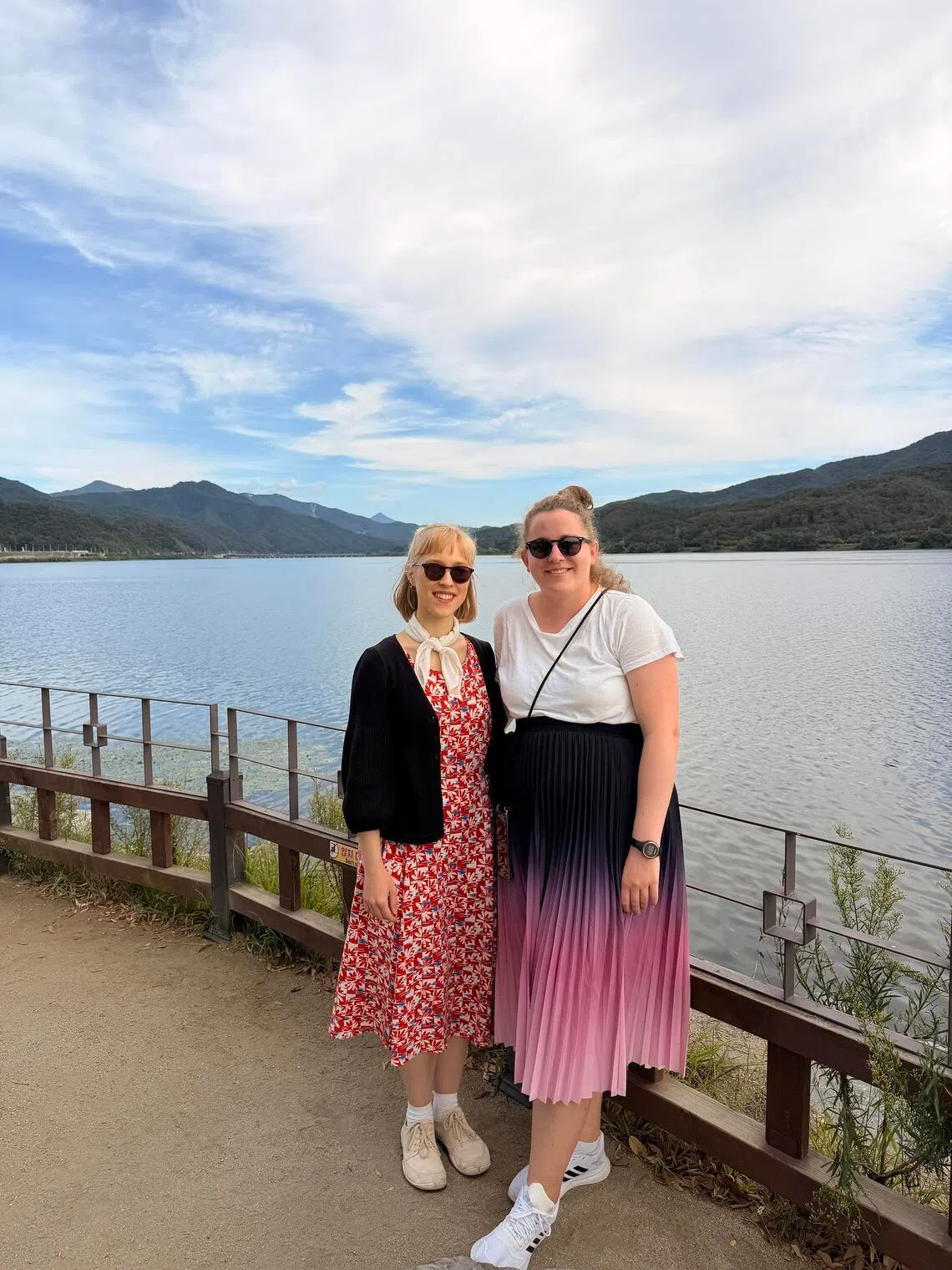
German students Sarah Fiedler (left) and Maria Seidler ventured out of Seoul for peace and quiet among nature after being overwhelmed by the frenetic pace of the city.
ST PHOTO: WENDY TEO
But tourism remains heavily concentrated in a handful of destinations, particularly Seoul. Nearly 77 per cent of foreign visitors visited the capital in 2025, compared with about 16 per cent who visited the southern port city of Busan, and 10 per cent who visited Jeju.
The government has made decentralising tourism a policy priority, seeking to shift the focus of Korean tourism from the capital to regional areas. It is promoting regional destinations and experience-based travel to encourage visitors to explore more of the country, stay longer and spread tourist spending to regional economies.
It would also present a further draw for tourists to return. A survey conducted by Creatrip, a travel platform for inbound tourism to South Korea, in February showed that 79 per cent of 100 respondents were keen to visit South Korea again.
This push is also tied to a broader demographic challenge, as South Korea faces a deepening regional depopulation crisis. Some 89 of South Korea’s 226 municipalities, or nearly 40 per cent, have been designated as population-decline areas as youth flock to the capital region for better work opportunities. Meanwhile, roughly half of the country’s 51 million people live in the Seoul metropolitan area.
Riding on the momentum of the current surge in tourist arrivals, the South Korean government has rolled out various initiatives in the push for rural tourism, leveraging popular K-culture icons to entice visitors to venture beyond the major cities.
In April, the government launched a pilot programme offering travellers a 50 per cent refund on eligible travel expenses when they visit designated rural areas facing population decline, such as Yeongwol and Pyeongchang counties.
Yeongwol gained attention this year as a tourist destination following the success of the historical film, The King’s Warden, starring Korean actor Park Ji-hoon. Shot on location in the county, the film released in early 2026 tells the tragic story of the young King Danjong, who was exiled there in the 15th century.
Pyeongchang, meanwhile, is best known internationally for hosting the 2018 Winter Olympics and remains a popular destination for winter sports.
Rural charms
At the launch of the initiative in March, Culture Minister Chae Hwi-young said at that time: “We are hoping that this initiative will breathe new life into regions struggling with depopulation, while offering citizens an affordable and rewarding travel experience through close collaboration with local governments.”
Separately, the Ministry of Agriculture, Food and Rural Affairs (MAFRA), which is responsible for agricultural and rural development, is seeking to link popular K-drama and film locations with existing rural attractions through tourism belts designed to encourage visitors to travel across neighbouring counties, stay longer and spend more locally.
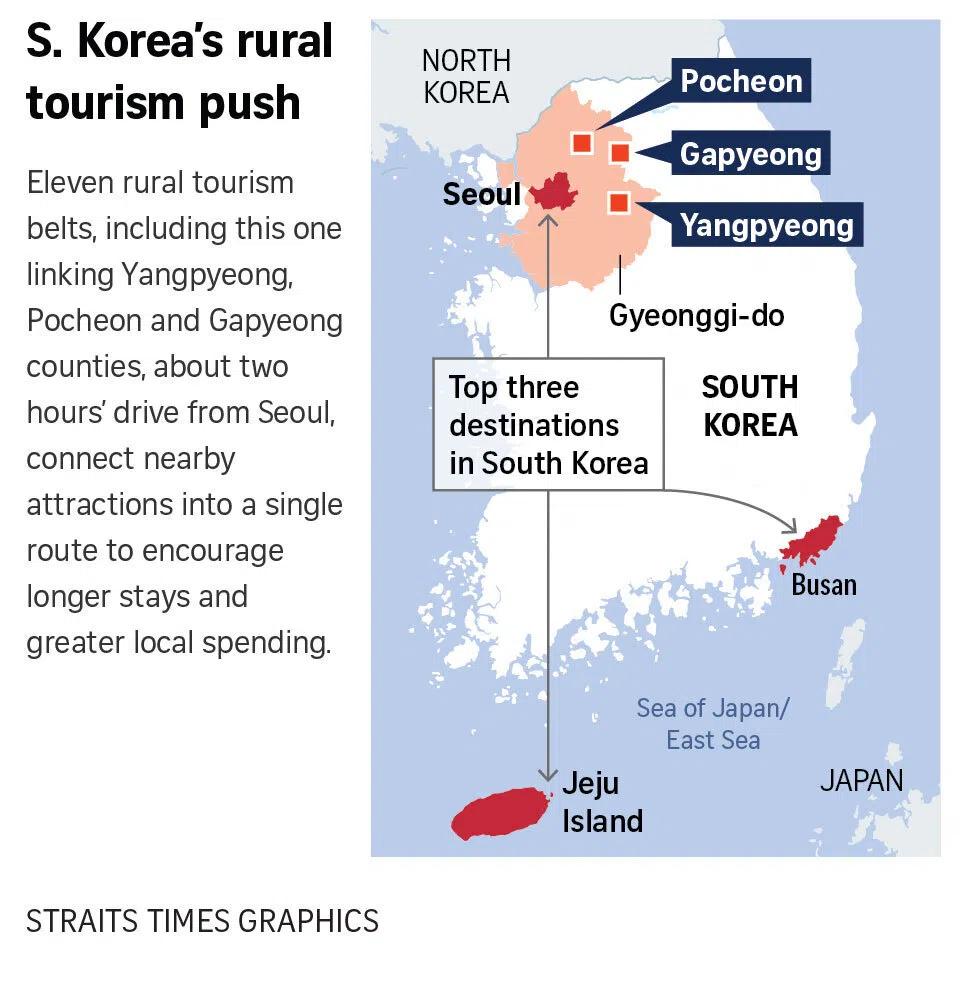
In July, the ministry unveiled 11 such belts, including one linking Yangpyeong, Pocheon and Gapyeong counties, about two hours’ drive from Seoul. Among its attractions are Seohuri Forest in Yangpyeong, known as a photo-shoot location for K-pop group BTS, and the Garden of Morning Calm, where K-dramas such as Love In The Moonlight, starring Park Bo-gum, were filmed.
To make it easier for visitors to reach rural areas where public transport can be less convenient than in cities, the ministry will also roll out specialised rural tour packages from late September, combining rural experiences, meals, accommodation and transport.
Travellers seeking to explore rural experiences can book these packages through South Korea’s digital services platform Naver and KorailTalk, the official mobile app for booking South Korean train tickets.
In a media briefing on Sept 16 to explain the ministry’s rural tourism policies, a MAFRA spokesperson said: “South Korea’s rural areas have many attractive tourism resources, from rural experience villages to traditional breweries, healing forests and historical cultural sites. But many tourists are unaware of them, resulting in shorter stays and less spending.
“What we are trying to do is to connect these existing attractions into a single route and travel experience for the convenience of travellers.”
Jeon Ki-bo, a retired professor turned master brewer, runs Jeon’s Brewery and Distillery in Pocheon county, one of the attractions included in the Yangpyeong-Pocheon-Gapyeong rural tourism belt.
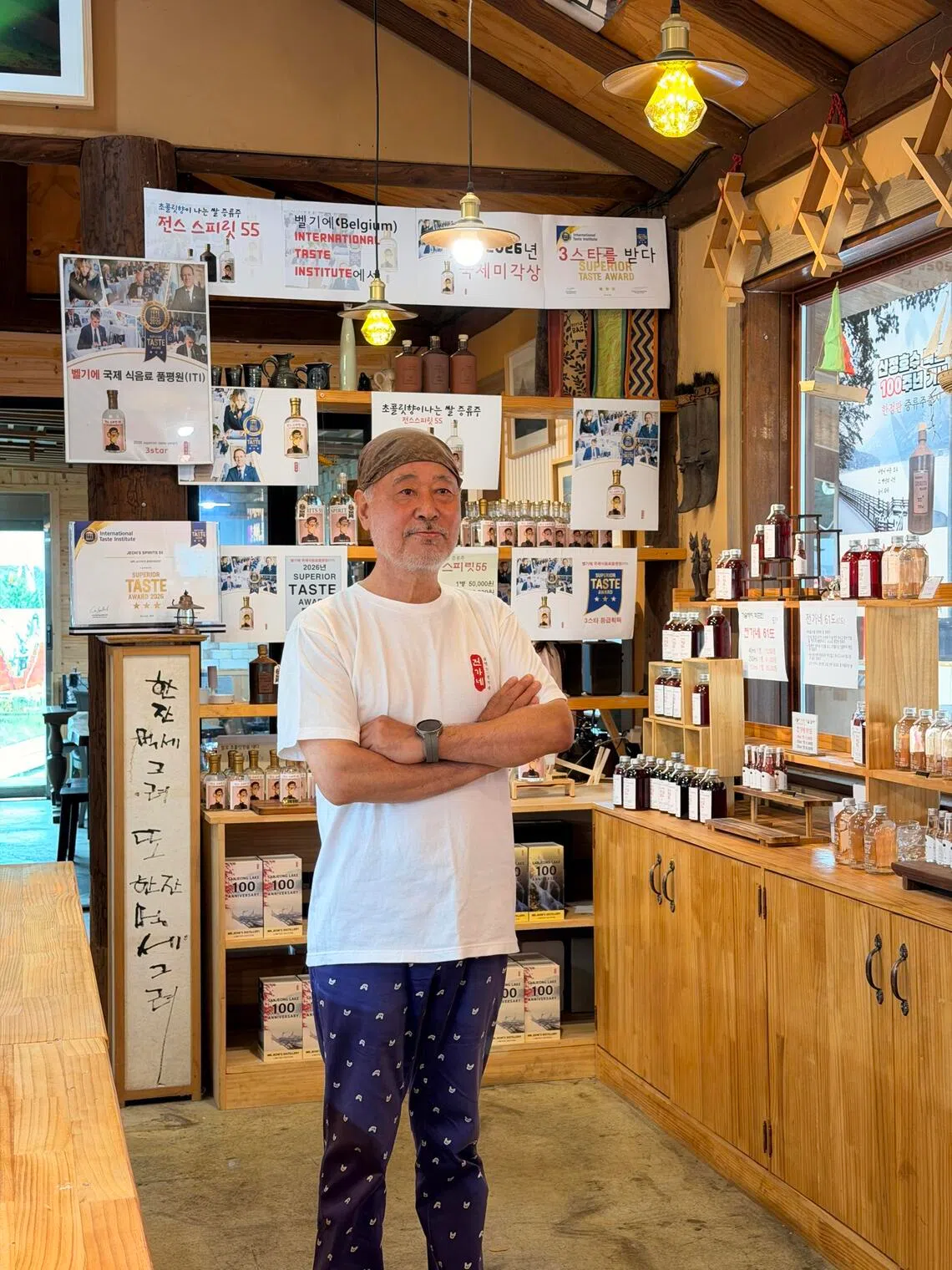
Jeon Ki-bo, a retired professor turned master brewer, runs Jeon’s Brewery and Distillery in Pocheon county.
ST PHOTO: WENDY TEO
His brewery is known for its award-winning traditional Korean rice wine Dongjeongchun makgeolli, made using a traditional method dating back to the Joseon dynasty that involves fermenting rice with virtually no added water.
The liquor won the grand prize at the annual Korea Traditional Liquor Competition in 2018, 2024, 2025 and 2026.
Apart from online sales, the brewery receives about 1,000 walk-in customers a month, with mainly domestic tourists accounting for about 80 per cent of such walk-ins.
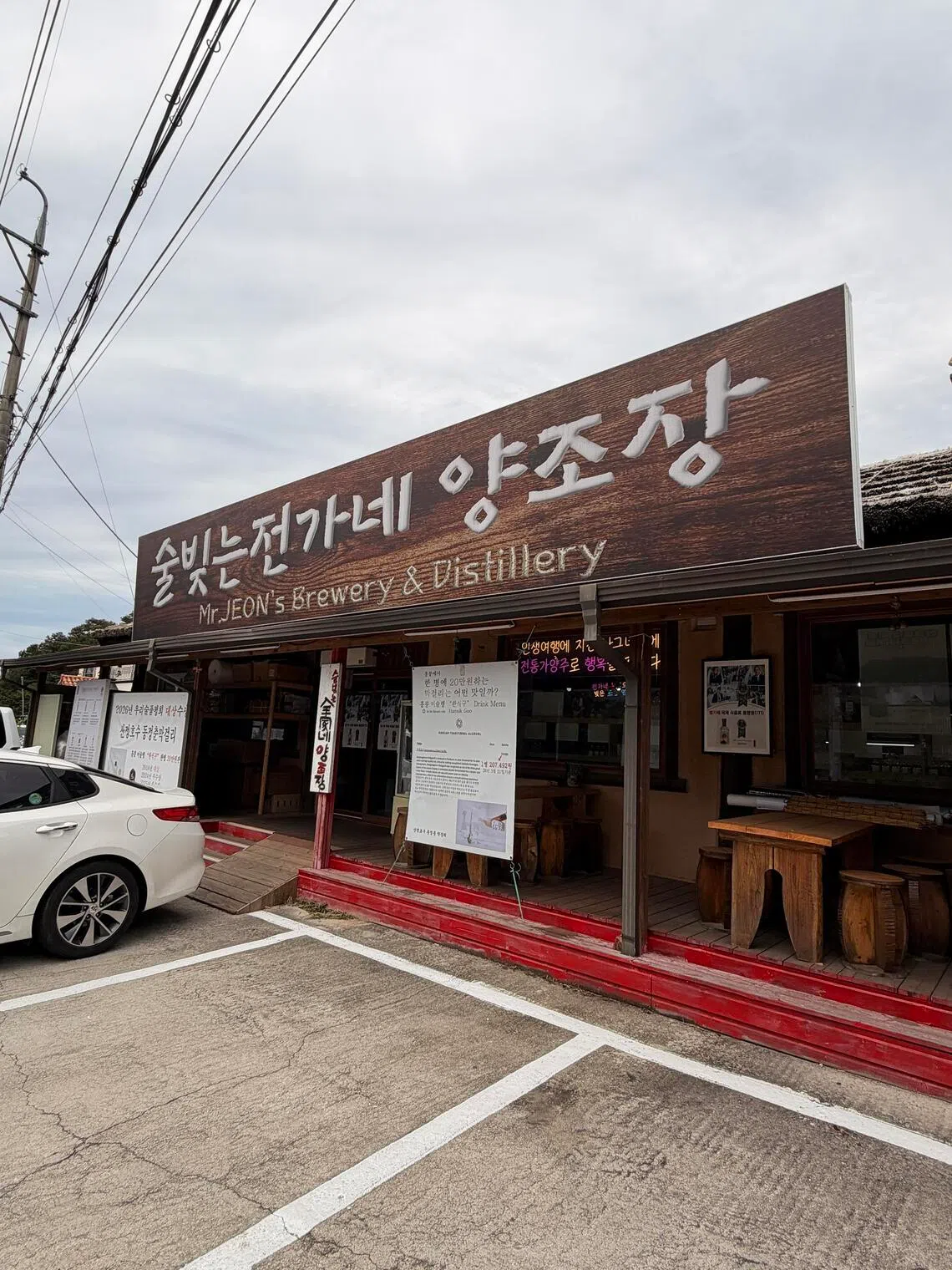
Jeon’s Brewery and Distillery is known for its award-winning traditional Korean rice wine Dongjeongchun makgeolli, made using a traditional method dating back to the Joseon dynasty.
ST PHOTO: WENDY TEO
Jeon told The Straits Times that his brewery has welcomed a handful of Singaporean visitors before and that he is in talks with exporters about bringing the makgeolli to Korean fine-dining restaurants in Singapore. The liquor is currently only exported to Hong Kong, beyond sales within South Korea.
While the 68-year-old Pocheon native welcomes the rural tourism initiative to boost the county’s reputation as a premier makgeolli brewing region, he is nevertheless apprehensive about an increased footfall in visitors to the family-run brewery, which he operates with his wife.
“As I brew the liquor all by myself. I cannot handle that kind of volume. When orders pour in, it can be absolute torture for me,” said Jeon.