By The Straits Times | Created at 2026-09-25 21:16:57 | Updated at 2026-09-25 22:05:56
1 hour ago
By The Straits Times | Created at 2026-09-25 21:16:57 | Updated at 2026-09-25 22:05:56
1 hour ago
HANOI – The Vietnamese immigration authorities on Sept 12 received 110 Vietnamese nationals who were sent back from the US, the latest group in a sharp increase in deportations to Vietnam since 2025.
Court documents show that the US Immigration and Customs Enforcement (ICE) removed 1,851 Vietnamese nationals in financial years 2024, 2025 and 2026 up to June, including 1,094 in FY2026 alone. The FY2026 figure has since risen by nearly 200.
The latest arrivals are part of a spike in US deportations to Vietnam since 2025, including people who arrived in the US decades ago and had previously been largely protected from removal. Many have spent much of their lives in the US and, once returned, face practical problems ranging from obtaining documents and finding work to reconnecting with family and adapting to a country they barely know.
“Upon their return, some individuals face difficulties in re-obtaining identification documents, contacting relatives, and finding housing and employment,” said Ho Chi Minh City police in a recent social media post after the latest batch of returnees landed.
It added that there are cases where returnees “no longer have relatives eligible to receive them, have lost contact with their families for extended periods, or are elderly and in poor health”.
The US Department of Homeland Security (DHS), which oversees ICE operations, said in a February statement that people served with administrative warrants by DHS have had “full due process and a final order of removal from an immigration judge”.
Andrew Fenton, 58, has little recollection of his birth parents. His Vietnamese-issued birth certificate, obtained after he was deported to the country more than a year ago, lists him as Nguyen Bao Linh, born on Oct 23, 1967. A locally issued birth certificate is required to obtain an identity card, which citizens aged 14 and older residing in the country must have.
His mother’s name was left blank. His father was Nguyen Bao Tinh, but apart from his name and the fact that Tinh served in the South Vietnamese Air Force, Fenton does not remember much else.
“My mother lived in Hanoi looking after her elderly parents, so I was raised by my father at an airbase in Danang,” Fenton told The Straits Times. “Just before the war ended, my father lied that I was an orphan so that an American couple could adopt me and take me to the US in 1975.”
Despite having lived in the US for 50 years, Fenton does not have US citizenship because “the adoption agency and my adoptive parents were never told by the government that they had to file an N-600 for citizenship for me”. They believed that because they were both US citizens, he had automatically become one when they adopted him, he added.
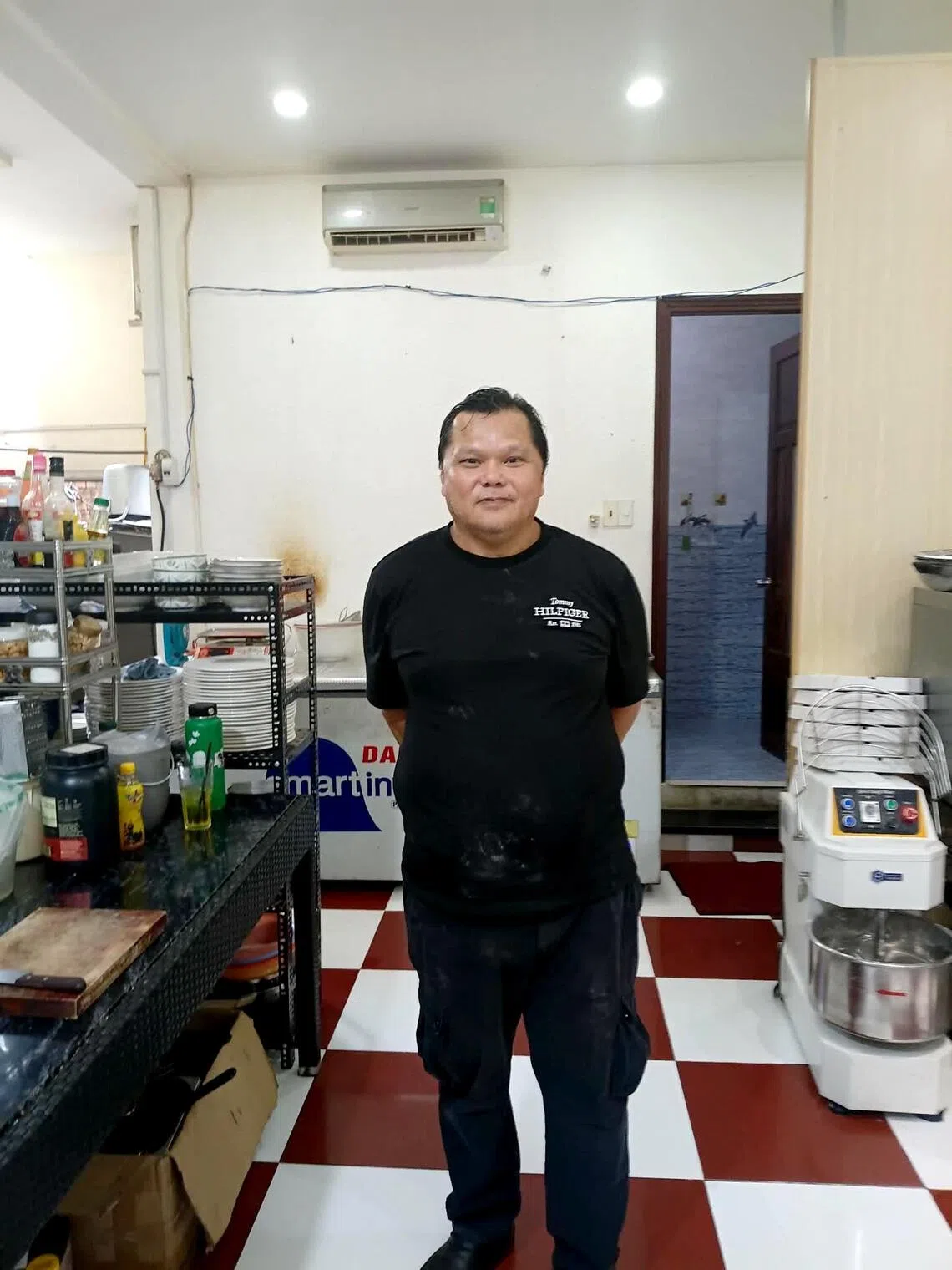
Andrew Fenton at his new workplace, a cafe in Vung Tau, a coastal city 100km from Ho Chi Minh City.
PHOTO: COURTESY OF ANDREW FENTON
The first deportation order was issued for Fenton in 1989 when he was caught in possession of drugs, but since Vietnam and the US did not have diplomatic relations at the time, he was released. After that, he got into trouble several other times, “all petty theft and nothing violent”, said Fenton.
“Every time I got arrested, they put a hold on me because on the arrest record, I put Vietnam as where I was born, and when they put my name in their computer, there’s a red flag that says I cannot be deported,” he recounted.
“But the last time, in August 2025, immigration came and picked me up, and that’s when I was told that I was being deported.”
“And here I am now in Vietnam, with no family, no money and speaking no Vietnamese,” said Fenton, who is not married and has no relatives in either country.
A shift in policy
Vietnamese immigrants who arrived in the US before July 12, 1995, had historically been largely shielded from deportation under US-Vietnam arrangements.
In 2008, the US and Vietnam signed an agreement on deportation to Vietnam, but it excluded immigrants who had arrived in the US before July 12, 1995 – the day Hanoi and Washington normalised diplomatic ties.
However, the Trump administration began pressing Vietnam to accept some pre-1995 immigrants, explained Tin Nguyen, a US-based immigration lawyer who has been helping Vietnamese navigate legal processes in both countries and has an office in Ho Chi Minh City.
In November 2020, just before US President Donald Trump left office, the two countries signed another memorandum of understanding that created a process for accepting the return of some pre-1995 immigrants.
After Trump returned to office for his second term in January 2025, ICE began stepping up the detention and deportation of pre-1995 Vietnamese immigrants. In June that year, the agency formally rescinded its longstanding policy of generally considering them unlikely to be removed in the reasonably foreseeable future. Deportations have accelerated since then.
More than 8,600 Vietnamese have removal orders in the US, according to legal aid and civil rights organisation Asian Law Caucus.
“Amid threats of higher tariffs and trade barriers, foreign governments, not only Vietnam, are also seeking to appease the Trump administration, including by accepting more returned migrants,” Tin told ST.
“Many people who have been living in the US for decades with green cards and never felt the need to obtain citizenship are now facing the danger of deportation, especially if they have a past conviction,” the lawyer added.
Half of Vietnamese deportees between 2025 and 2026 had convictions that were at least two decades old, according to the Washington-based Southeast Asia Resource Action Center (SEARAC).
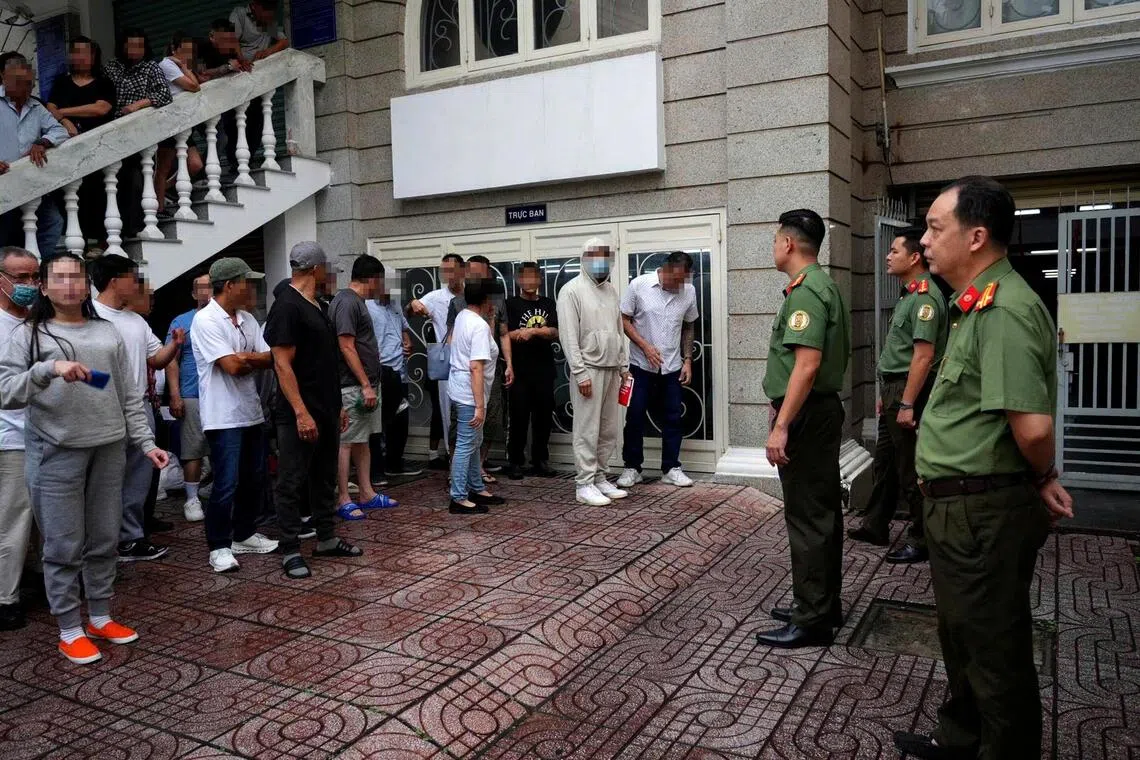
More than 8,600 Vietnamese have removal orders in the US, according to legal aid and civil rights organisation Asian Law Caucus.
PHOTO: HO CHI MINH CITY POLICE DEPARTMENT
Lam T (not his real name), who is in his 50s, has an order of removal for a minor crime – making a fake driving licence – which he committed as a teenager.
He has been detained twice – in 2003 and again in early 2026 – and subsequently released. His case is still pending in court after he was granted a gubernatorial pardon and filed a motion to reopen his removal proceedings, arguing that he no longer has a conviction that makes him deportable.
His lawyer hopes the immigration judge will grant the motion, allowing T to have his green card reinstated and no longer face the threat of deportation to Vietnam.
His wife, who wishes to be known only as Susan because her husband’s motion is still pending and she fears retribution, said the whole family is “always in fear of him being re-detained because there are so many unknowns”.
The family, including three young children, live in the Midwest and rely on Susan’s salary while her husband is unemployed.
“I have crippling anxiety,” said Susan. “Imagine your husband calling you saying he’s not coming home because they’re detaining him (and) you have no idea where he is.”
Deportations of people of South-east Asian origin have risen sharply since 2025, when Trump began his second term. SEARAC says 42 per cent of all South-east Asian deportations since 1998 occurred in FY2025 and FY2026, as did 51 per cent of Vietnamese deportations.
Struggling to adapt
Do Phi Long, 60, is an Amerasian who left Vietnam in 1989. He lived in Orange County, California, where his wife and two sons remain.
“In 1997, I had a big fight with my wife, for which I was reported and arrested for 15 days,” Long told ST.
“Then in 2007, I was arrested for DUI (driving under the influence) and my green card was revoked. They issued a deportation order for me, but it was put on hold because the Vietnamese government refused to accept me. After 90 days, I was released on the condition that I regularly report to immigration,” said Long, who now runs a small coffee shop in Long Thanh, Dong Nai province, around 55km east of Ho Chi Minh City.
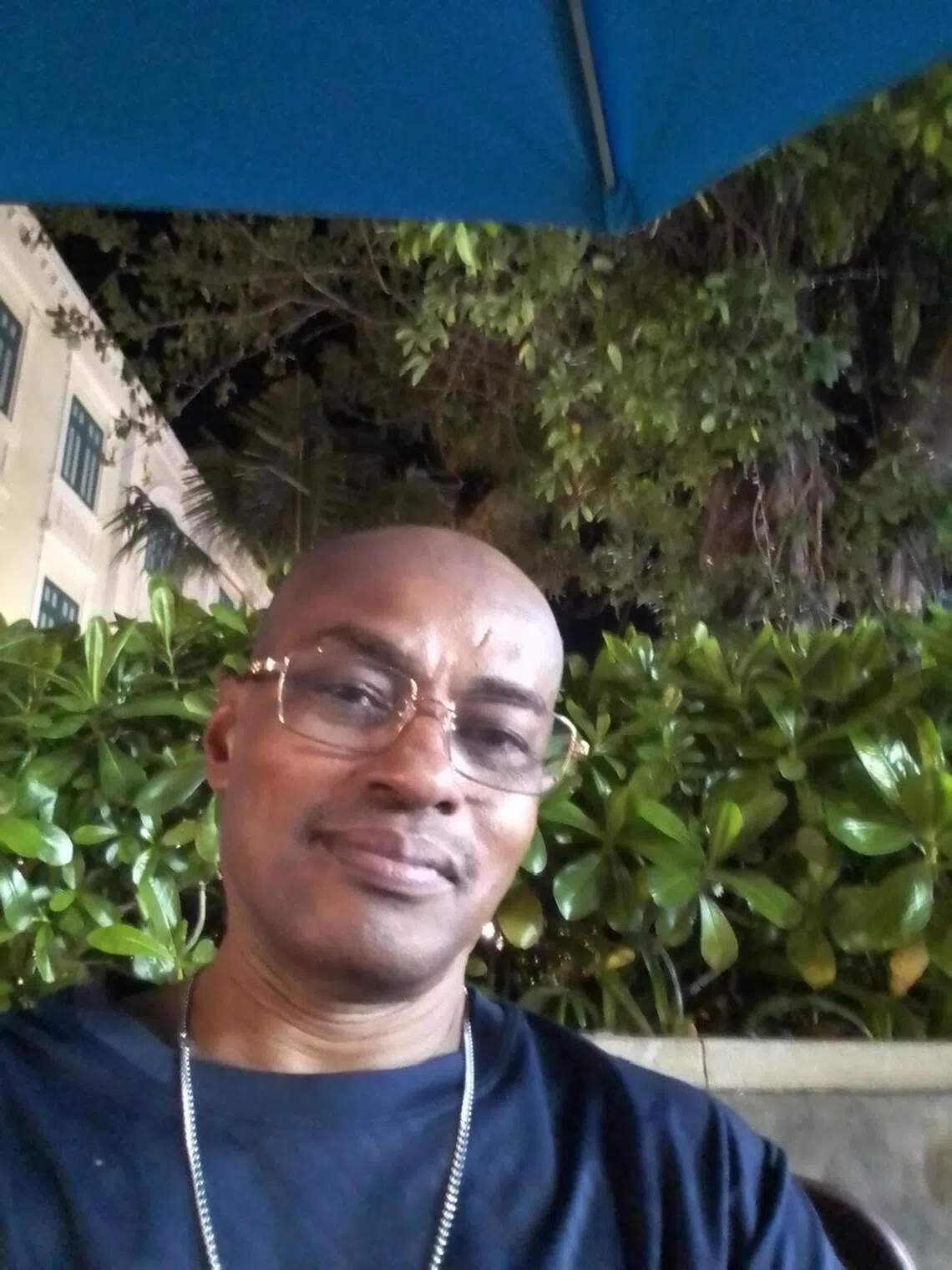
Do Phi Long now runs a small coffee shop in Long Thanh, Dong Nai province, about 55km from Ho Chi Minh City.
PHOTO: COURTESY OF DO PHI LONG
In January 2025, just before the Lunar New Year, Long was arrested by ICE while filling his car at a petrol station, but it took the Vietnamese authorities a long time to issue him a passport.
Finally, on Aug 13, 2025, the chartered flight carrying him and dozens of other deportees touched down at Noi Bai airport in Hanoi.
“I was confused by the unfamiliar scene at first, as I’d never been to Hanoi. But most of all, I was overwhelmed with sadness and a bitter emotion that the US had treated me in such an inhumane way,” said Long, who grew up in southern Vietnam’s Dong Nai province.
“Chartered flights are generally multi-stop flights with Vietnam as the final destination. These flights can take 30 to 60 hours to reach Vietnam, and stops along the way may include stops for fuel and to drop off deportees in other countries,” said the Ba Lo Project, a US-based NGO that supports Vietnamese deportees, in its deportation FAQs last updated in April 2026.
The project provides legal and practical advice, such as applying for Vietnamese identity cards and finding jobs or housing.
“On chartered flights, passengers’ hands and feet are often shackled to a chain around the waist, preventing free movement for the duration of the flight. Passengers are often given only bread to eat and are permitted minimal bathroom access,” the project said.
Tin said the treatment described by the project led some people to decide to self-deport or obtain a Vietnamese passport and return to Vietnam through legal channels before being deported by ICE.
“But it works only if you have a strong base in Vietnam, a family that awaits you and supports you in resettling,” the lawyer said.
For people like Fenton, life in Vietnam is hard. He does not speak Vietnamese and has no family to fall back on. For a year, he worked 12-hour shifts as a security guard and was paid seven million Vietnamese dong (S$340) a month.
Recently, Fenton found work as a cook at a cafe in Vung Tau, a coastal city 100km from Ho Chi Minh City. His situation has improved, with better pay and working conditions, as well as a compatible roommate. He told ST he felt more or less at peace, but still hoped to return to the US.
There is no formal financial assistance for deportees from the Vietnamese government, with practical help coming largely from non-governmental organisations and individuals who volunteer their time and expertise, including lawyer Tin and popular YouTuber Dang Tuan Duong.
Some returnees are reluctant to seek help because “they may feel ashamed before their friends and relatives”, said Duong, who gives advice to deportees like Long on housing, jobs and other aspects of resettling in Vietnam.
“People who go overseas to live and work are often perceived as well-to-do, so if they return with not much money and status, they may feel like they’ve ‘lost face’ and are a failure.”
Others have asked Duong to post their stories online to seek help and raise awareness about deportations, he added.
Long is among those who have appeared on Duong’s YouTube channel, which has more than 600,000 subscribers.
“I am much poorer now than in the US, but I am happy to be back in my motherland, and so much freer,” he said.
“For me, America is an illusion. Living in constant fear of being arrested and deported is a nightmare, so if I am to go back to join my family, I will only do it fully documented.”