By The Rio Times | Created at 2026-09-26 19:16:31 | Updated at 2026-09-26 20:16:22
3 hours ago
By The Rio Times | Created at 2026-09-26 19:16:31 | Updated at 2026-09-26 20:16:22
3 hours ago
Guyana · Economy
Key Facts
—The story. Guyana’s government credits private investment for growth outside the oil sector.
—Why it matters. Oil now accounts for most of output, so diversification decides the country’s future.
—The numbers. The non-oil economy grew 10.1% in the first half of 2026.
—The background. Total output rose 33.3% over the same period, on rising offshore production.
—The catch. Data centres abroad have booked turbine capacity that Guyana needs for its power plants.
—What comes next. The first turbine at the Wales gas plant is due to fire in December.
Guyana is the fastest-growing economy in the Americas and the most dependent on a single product. Two questions ran through this week: whether growth reaches beyond oil, and whether the lights can keep up.
One-stop reference
Company Intelligence
Every listed company in Latin America — financials, ownership and structure for 1,450+ companies across 26 exchanges, in one place.
Guyana’s government said this week that private investment is driving expansion outside the oil sector. On the same day it confirmed that a worldwide shortage of gas turbines is shaping its power plans.
Why This Matters
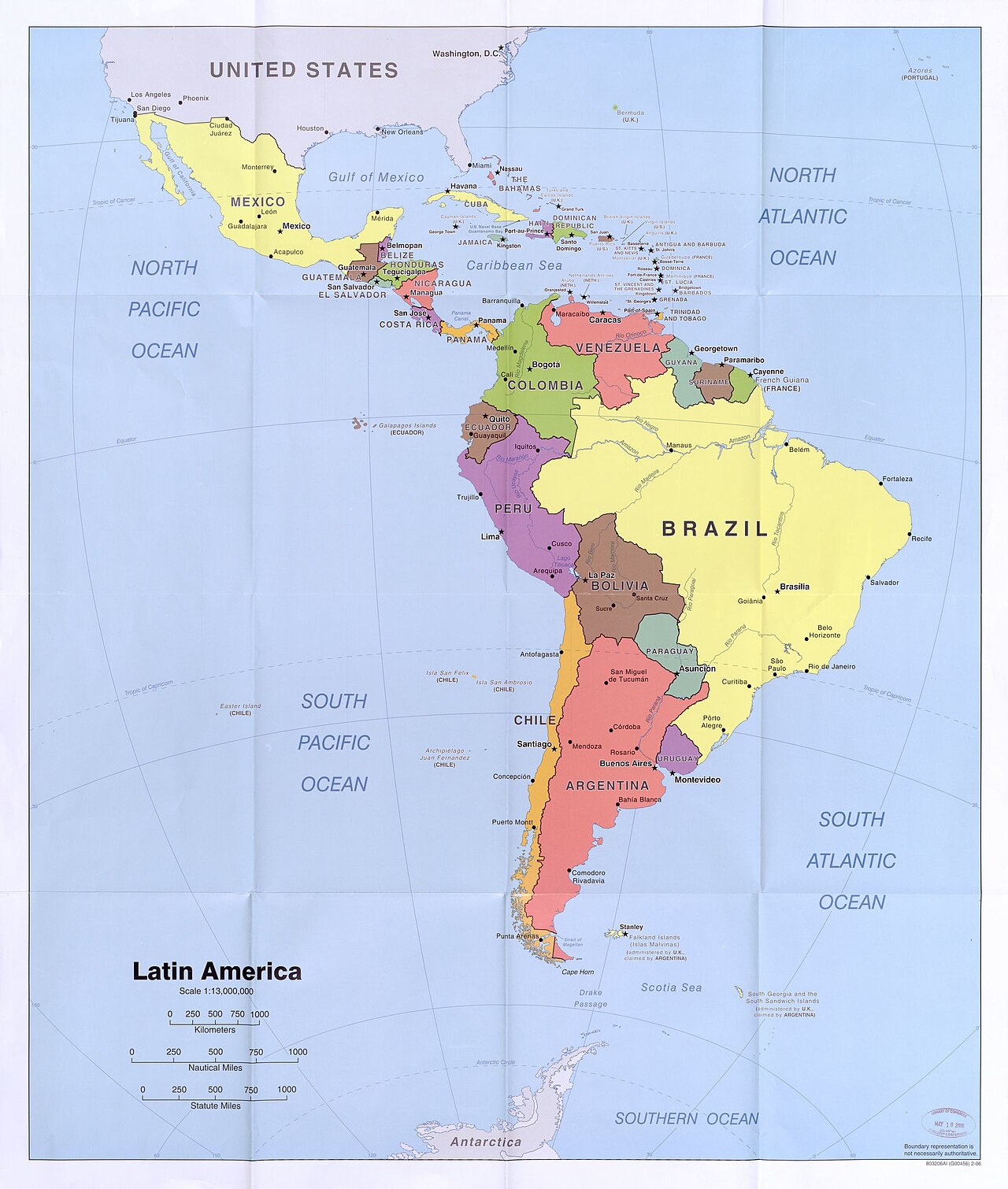
Guyana is a country of about 800,000 people on the north-eastern shoulder of South America. Since the Stabroek Block came on stream in 2019, its economy has grown faster than any other.
That growth is narrow, and the opposition says dangerously so. Crude oil generated 92.9% of merchandise exports, according to figures cited by the opposition this month.
Everything the country builds with that money depends on electricity it does not yet have. Guyana’s grid has long been small, costly and prone to outages.
The gas-to-energy plant at Wales is the project meant to fix that. It is also the project now caught in a global queue for turbines.
For investors, the two stories are the same story seen from different ends. One is about whether demand outside oil is real, the other about whether supply can serve it.
For residents and expats, the practical question is the price and reliability of power. For the region, Guyana is the test case of an oil windfall managed in public view.
What the Government Said About Growth
The Guyana Chronicle reported that ministers credited private investment across several sectors. Tourism, Industry and Commerce Minister Carolyn Rodrigues said the effect of investment was visible across Guyana.
She listed hotels, restaurants, tour operators, transport providers, artisans, farmers and entertainers as beneficiaries. Investment in infrastructure, connectivity and accommodation lets more Guyanese share in the growth, she said.
Permanent Secretary Roger Rogers put the emphasis on what has to change next. New opportunities require new business models, new organisational structures and stronger governance, he said.
The sectors named were manufacturing, agriculture, agro-processing, services, logistics, construction, energy and tourism. Tourism arrivals reached 320,174 by the end of August 2026, the ministry reported.
August alone brought 48,582 visitors, the highest August figure on record. The country received 453,489 visitors in 2025 and expects to pass 500,000 this year.
The stated target is one million visitors a year by 2030. President Irfaan Ali made the same case at an Americas Society business roundtable during the UN assembly on 23 September.
The Numbers Behind the Claim
The finance ministry’s mid-year report, published on 15 September, put first-half growth at 33.3%. The non-oil economy grew 10.1% over the same six months.
Mining and quarrying expanded 40.7% and construction 24.7%, according to figures the president cited. The full-year forecast for total output is 20.8%.
Unemployment stood at 6.2%, down from 12.8% at the start of 2020. The ministry counted more than 156,000 additional people in work since 2020.
Consumer prices rose 4.4% between the end of 2025 and June 2026. Food prices rose 6.7% over the same period, faster than the general index.
The government has raised the old age pension to G$46,000 (about US$220) a month. Public assistance rose to G$25,000 (about US$119), and adults received a G$100,000 (about US$477) cash grant.
Those conversions use the official rate of about G$209.5 to the US dollar in September 2026. The Rio Times covered the same mid-year report earlier this month.
What the IMF Found
An International Monetary Fund team completed its 2026 Article IV consultation with Guyana in July. It described the outlook as highly favourable and praised the management of the economy.
The Fund recorded real growth above 19% in 2025, after average growth near 40% in 2023 and 2024. Oil output passed 900,000 barrels a day at the end of 2025, about 35% more than a year earlier.
Non-oil activity grew about 14% in 2025, led by construction, with mining, farming and manufacturing adding more. The Fund said inflation stayed relatively contained despite rising global food and energy prices.
Over the medium term the Fund expects non-oil growth of about 7% a year. That is well below this year’s rate, a gap the opposition has seized on.
It praised prudent macroeconomic policies and the Low Carbon Development Strategy 2030. It cited new oil developments and sustained public investment as supports for long-term growth.
The Opposition and the Business Case
APNU parliamentary leader Terrence Campbell set out the critical reading on 18 September. Demerara Waves reported his complaint that the non-oil forecast had been trimmed while the oil forecast rose.
Stronger oil-led growth must not obscure weaker expectations for important non-oil activities, he said. He noted that oil had climbed to 78.9% of real output from 74.4% a year earlier.
Agriculture, forestry and fishing contracted 0.5%, and cole crops such as cabbage fell 19.1%. He asked for funded regional recovery plans with public targets for production and food affordability.
APNU asked for regional recovery plans covering drainage, irrigation, cold storage and market access. The private sector made a different criticism at a chamber of commerce luncheon on 25 September.
Georgetown chamber president Kathy Smith said the next stage must be about capability. Firms had to become stronger, more technically competent and better capitalised to win larger contracts, she said.
Public Utilities and Aviation Minister Deodat Indar told the same room that oil was a catalyst. ExxonMobil Guyana president Alistair Routledge said people were the country’s most valuable long-term resource.
The Turbine Problem
Indar said Guyana had reserved manufacturing slots for turbines in advance, the Guyana Chronicle reported. Manufacturers face heavy demand because of data centre construction elsewhere, he said.
The build-out has to be staggered against economic demand for power, he added. The Wales gas-to-energy plant on the West Bank of Demerara is the immediate case.
It combines four gas turbines of 57 megawatts each with two steam turbines and a liquids plant. Testing is due to begin in December, with full capacity of 300 megawatts arriving in stages.
The Rio Times reported that the first firing is targeted for early December, about two years behind the original plan. Government works on the project are budgeted at US$1.0 billion to US$1.1 billion.
The Export-Import Bank of the United States approved US$527 million of that financing. Indar said Guyana will need 1,600 to 1,700 megawatts of capacity by 2030.
The plan includes a second 300 megawatt gas project and the 165 megawatt Amaila Falls hydropower scheme. A single bauxite processing plant could absorb about 100 megawatts on its own, he noted.
Aubrey Norton, who leads the PNC Reform party, said contractors should pay penalties for missing deadlines. He was answering a question about the builder of the Wales plant, Kaieteur News reported.
What It Means If You Live In or Invest In Guyana
For businesses, the binding constraint over the next three years is power, not capital. Any project that needs firm electricity should assume the grid tightens before it loosens.
For residents, the first fire in December does not mean cheaper bills in January. Prime Minister Mark Phillips said the promised 50% cut in bills comes only at full capacity.
For expats and visitors, tourism capacity is being added faster than at any point in Guyana’s history. That also means construction noise, higher rents in Georgetown and pressure on services.
For investors in the region, Guyana remains a leveraged bet on one offshore block. The diversification argument will be settled by farm output and manufacturing, not by headline growth.
What Is Not Yet Known
The government has not published the delivery dates it has reserved with turbine makers. It has not said what the reserved slots cost or which manufacturers hold them.
The date when the Wales plant reaches its full 300 megawatts has not been fixed. No financing decision has been announced for the second gas project or for Amaila Falls.
It is unclear whether the non-oil growth rate can hold once construction spending levels off. The government has not responded publicly to the opposition’s farm-output warning.
Frequently Asked Questions
How fast is Guyana’s economy growing?
Total output rose 33.3% in the first half of 2026, according to the finance ministry. The non-oil economy grew 10.1% over the same period.
Why does the turbine shortage matter?
Gas turbines are the equipment Guyana needs for its new power plants. Global demand, much of it from data centres, has stretched manufacturing queues.
When will the Wales power plant start?
Testing is expected in December 2026, starting with one 57 megawatt turbine. Full capacity of 300 megawatts will follow over the months after that.
What does the opposition say?
APNU argues the government is leaning too heavily on oil while farm output weakens. It has asked for regional plans on drainage, irrigation and market access.
Sources: Guyana Chronicle, private investment and non-oil growth, Guyana Chronicle, global turbine demand and power expansion, Guyana Chronicle, the chamber of commerce energy luncheon, Demerara Waves, the APNU critique of the growth figures, IMF, concluding statement of the 2026 Article IV mission, Demerara Waves, Indar on first fire at Wales in December, Kaieteur News, the prime minister on when power bills actually fall, Kaieteur News, Norton on penalties for the gas-to-energy contractor, Guyana Chronicle, President Ali’s investment pitch in New York, The Rio Times, the mid-year report and unemployment, The Rio Times, the Wales gas-to-energy project, TheGlobalEconomy, Guyana dollar exchange rate