By The Rio Times | Created at 2026-06-20 09:37:16 | Updated at 2026-06-20 12:10:28
2 hours ago
By The Rio Times | Created at 2026-06-20 09:37:16 | Updated at 2026-06-20 12:10:28
2 hours ago
Metropole · The Business of Sport
Key Facts
—The upset. A YouTube channel run by a Brazilian streamer has won the rights to show Spain’s top football league in Brazil.
—The loser. The deal pushes aside Disney, the American giant that held those rights through its ESPN networks.
—The catalogue. The same channel will also stream all 104 matches of this year’s World Cup, free, across Brazil.
—The scale. CazeTV has more than twenty-six million YouTube subscribers and ranks among the world’s biggest live streamers.
—The backer. Cristiano Ronaldo has reportedly joined the venture as an investor and co-owner.
—The signal. A creator with a sofa and a microphone is now competing with networks for premium sport.
When a meme-laced YouTube channel beats Disney for the CazeTV football rights to Spain’s top league, it is no longer a novelty—it is a glimpse of how the world’s most valuable sport may be watched, and sold, from here on.
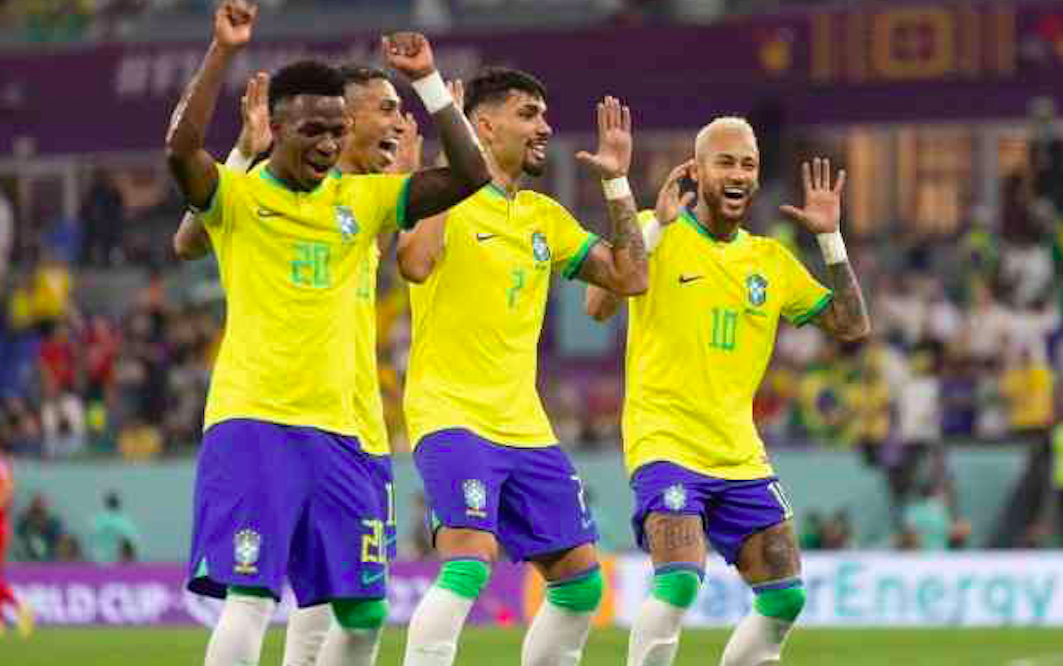 (Photo internet reproduction)
The deal that turned heads
In May, Spain’s top football division, LaLiga, signed away its Brazilian broadcast rights for the next six seasons. The buyer was not a television network or a global streaming service. It was CazeTV, a YouTube channel built by a Brazilian internet personality named Casimiro Miguel.
The contract runs from the 2026-27 season through 2031-32, and it makes the channel LaLiga’s main home in Brazil. In doing so it displaces Disney, the American media giant whose ESPN networks had carried the Spanish league there for years.
For a Brazilian audience, the appeal is obvious. The matches will stream free on YouTube, with the channel promising to prioritise Real Madrid and Barcelona, the clubs where Brazilian stars like Vinícius Júnior and Raphinha play.
Who is Casimiro, and what is CazeTV?
To understand the upset, you need to know the man behind it. Casimiro Miguel, born in Rio de Janeiro in 1993, is a former sports journalist who reinvented himself as a streamer, watching and commentating on matches in a loose, funny, meme-filled style that drew a vast young following.
He turned that audience into a business. Launched in late 2022 with the sports-marketing agency LiveMode, CazeTV began by streaming the 2022 World Cup and has since grown into a genuine broadcaster, with more than twenty-six million subscribers on YouTube and billions of total views.
Its reach is now world-class in the literal sense. By one industry count, the channel broke into the global top three for live-streaming in 2026, and at the 2022 World Cup it drew a peak of more than six million people watching a single match at once.
A portfolio that rivals a network
LaLiga is only the latest trophy. CazeTV has assembled a sports catalogue that would make a traditional broadcaster envious, anchored by the rights to show all 104 matches of this year’s expanded World Cup, free, across Brazil.
Around that centrepiece sit Italy’s Serie A, Germany’s Bundesliga, France’s Ligue 1, and two European club competitions, the Europa League and the Conference League. It has also secured the next Women’s World Cup.
The venture’s ambitions have attracted serious money and star power. Cristiano Ronaldo, one of the most famous athletes alive, has reportedly come on board as an investor and co-owner, and the parent agency has begun expanding the model into Portugal.
Why the CazeTV football rights matter beyond Brazil
For a reader in London or Munich, the lesson is not really about one channel. It is about how the economics of televised sport are shifting under everyone’s feet. For decades, leagues sold their matches to a handful of deep-pocketed broadcasters, who locked them behind expensive subscriptions.
That model assumed audiences would always follow the rights. But younger viewers have drifted to YouTube and social platforms, and they increasingly expect to watch where they already are, often for free. A creator who already commands that audience can suddenly look like a more valuable partner than a legacy network.
LaLiga said as much in announcing the deal, framing it as a way to reach fans through a model aligned with how new audiences consume sport. In plainer terms, the league decided that meeting viewers on YouTube was worth more than the prestige of a traditional broadcast partner.
Part of a wider creator wave
Brazil is the boldest example, but it is not alone. Germany’s Bundesliga has paired free Friday matches with popular British football creators, a French streamer shows Saudi league games free on his own channels, and American football has experimented with YouTube broadcasts built around online personalities.
The common thread is a bet that attention, not infrastructure, is now the scarce asset. The expensive part of broadcasting was once the satellites and the studios; increasingly it is the audience, and creators arrive with that audience already built.
There are open questions, of course. Free streaming has to be paid for somehow, whether through advertising, sponsorship or subscriptions layered on top, and whether a creator-led channel can sustain the cost of premium rights over many years is still unproven.
What to watch next
The immediate test is this summer’s World Cup, where CazeTV is showing every match free to a football-obsessed nation. If the audience numbers are as large as expected, more leagues will take the creator route seriously.
The longer test is durability. Traditional broadcasters still hold most premium rights in most markets, and they will not cede them quietly. But the direction of travel is clear, and a Brazilian streamer with a microphone has just shown the established order how quickly the ground can move.
Frequently Asked Questions
What is CazeTV?
CazeTV is a Brazilian sports streaming channel founded in 2022 by the streamer Casimiro Miguel, in partnership with the agency LiveMode. It broadcasts mainly free on YouTube and has more than twenty-six million subscribers, making it one of the world’s largest live-streaming operations.
What did CazeTV win, and from whom?
CazeTV secured the rights to show Spain’s LaLiga in Brazil for six seasons, from 2026-27 to 2031-32, becoming the league’s main local broadcaster. The deal displaces Disney, whose ESPN networks had previously carried the competition.
Why does this matter for sport globally?
It shows that creator-led channels can now out-compete traditional broadcasters for premium sports rights by bringing huge, ready-made young audiences. Similar free, creator-driven deals are emerging in Germany, France and the United States, pointing to a wider shift in how sport is distributed.
The Rio Times · Power Map
See who really holds power in Latin America
Click to open the Power Map →