By Literary Hub | Created at 2026-08-14 11:16:09 | Updated at 2026-08-14 13:49:24
4 hours ago
By Literary Hub | Created at 2026-08-14 11:16:09 | Updated at 2026-08-14 13:49:24
4 hours ago
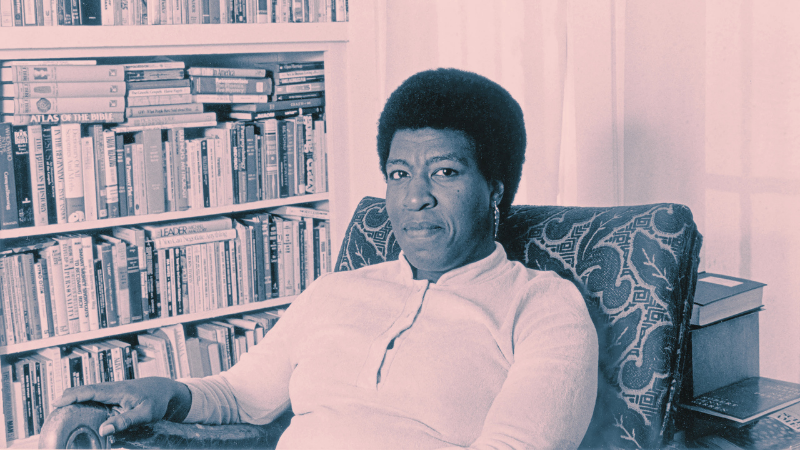
“We need your voice.”
For most of my life, I’ve harbored a deep, abiding passion for speculative fiction, and like so many folks in the know about sci-fi and fantasy, I hold iconic Afrofuturist author Octavia E. Butler as an all-time hero. Ever since she published her first novel Patternmaster in 1976, Butler has placed Black folks—and primarily Black women—front and center in stories that touch on everything from interplanetary conflict to vampirism. Butler triumphantly crafted her books during a time when there were few Black authors being published in the genre.
Article continues after advertisement
I met Butler in person in the mid-2000s, before her untimely death in 2006. I was working as an associate editor at Random House and attended a signing for a new edition of her short story/essay collection Blood Child. The crowd size was modest, and I felt like pinching myself at my good fortune, to experience a master of craft up close and personal. She was a striking, tall figure, her words infused with gravitas, thoughtfulness, and kindness as she spoke about her books. A tad starstruck, I chatted with Butler briefly during the event. When I told her I was an editor with a deep love for her genre, she immediately encouraged me to write, saying “we need your voice.”
Butler’s titles would eventually reach a level of acclaim and fame she’d never experienced when she was alive.
It took more than a decade before I would start to work on my own novels, and my literary voice is undoubtedly shaped by my hero’s out-of-the-box approach to storytelling. I was introduced to my first Butler title, Wild Seed, during an undergraduate college seminar focusing on Black fiction. Wild Seed’s cover showcased main character Anyanwu, a Black woman with several animals emanating from her head meant to indicate she’s a shapeshifter, which to me also served as a metaphor for the possibilities inherent in the Black experience.
Butler’s titles would eventually reach a level of acclaim and fame she’d never experienced when she was alive. Kindred and Parable of the Sower have become particularly popular: Kindred uses time travel to look at the horrors and paradoxes of American slavery. Parable of the Sower, Butler’s New York Times bestseller, is a “futuristic” dystopia where society has been catastrophically riven by class conflict and political demagoguery. (Sound familiar?) Both are magnificent works, yet after reading almost all of her eleven novels, my favorite Butler title has long been Mind of My Mind, part of the Patternist series.
In Mind, we follow main character Mary as she awakens to spectacular telepathic abilities and forms her own society of psychics. Her centuries old father Doro (who also appears in Wild Seed), is an ever present threat, concerned that his ambitious daughter will usurp his power. Mind of My Mind speaks to some of the common themes found in Butler’s other novels—relationship ambivalence, resilience, and adapting to change, to name a few. Yet Mind has a unique interiority that I find refreshing, as it relies on multiple POVs to showcase the layered interpersonal struggles of folks striving to move beyond a toxic patriarch. The novel showcases how a writer can effectively balance internal and external stakes, which would end up becoming one of my storytelling signatures as well.
I was so awestruck by the scope of Mind of My Mind and its dramatic ending, which basically takes place in the main character’s head, that I wrote the climax of my second novel The Broken Hearts Agency as an homage to Butler’s vision. In Broken Hearts, psychic private investigator Linda Villanueva discovers that there’s a type of “pattern” element to her empathic abilities, that she must go within her consciousness and build on her link to others to fight a shadowy, deadly threat.
And while the publishing industry certainly needs to do a far better job of supporting Black speculative fiction, I’m also enlivened by the range of stories that are currently out there that didn’t exist when Butler wrote her first story.
When Butler advised me to write my own books, I didn’t have the wherewithal to ask for more advice, to get a better sense of where she was coming from. Still, I suspect her encouragement came from not wanting to be so alone in her genre landscape, that she envisioned a time when all sorts of Black experiences would be showcased. That such an array of experiences are what readers need and deserve.
Sure enough, though I’m inspired by my hero, I’ve also gone my own way with my novels, using Western African spiritual traditions as the foundation for paranormal drama while centering different modes of intimacy. And while the publishing industry certainly needs to do a far better job of supporting Black speculative fiction, I’m also enlivened by the range of stories that are currently out there that didn’t exist when Butler wrote her first story.
Authors like Tananarive Due and Cebo Campbell are top sellers as they respectively look at real-world history infused with haints and an alternative history that zooms in on an abruptly changed America. Sci-fi/fantasy writer Veronica G. Henry (whom I’ve edited) takes on everything from the climate crisis to the implementation of hologram libraries in narratives some would deem Afrofuturist. YA scribes showcase dragon bonding and fireball witches and orisha lore, all centering Black experiences in some way, all benefitting from Butler’s trailblazing path.
By pure coincidence, through no corporate coordination as far as I know, The Broken Hearts Agency was released on the same day as the rerelease of Mind of My Mind, part of an overall repackaging of the Patternist series that arrived right after Butler’s birthday. I smile at this divine coincidence and reflect on Butler’s infinite wisdom, forever grateful for her encouragement. I’d like to believe that our books being released at the same time is a sign from the heavens, that maybe, somewhere, she’s nodding in approval.
__________________________________
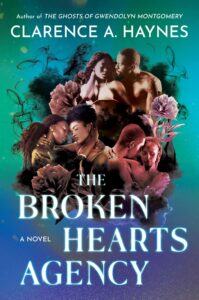
The Broken Hearts Agency by Clarence A. Haynes is available from Legacy Lit, an imprint of Hachette.