 By The Epoch Times | Created at 2026-10-03 23:53:26 | Updated at 2026-10-04 00:53:16
1 hour ago
By The Epoch Times | Created at 2026-10-03 23:53:26 | Updated at 2026-10-04 00:53:16
1 hour ago
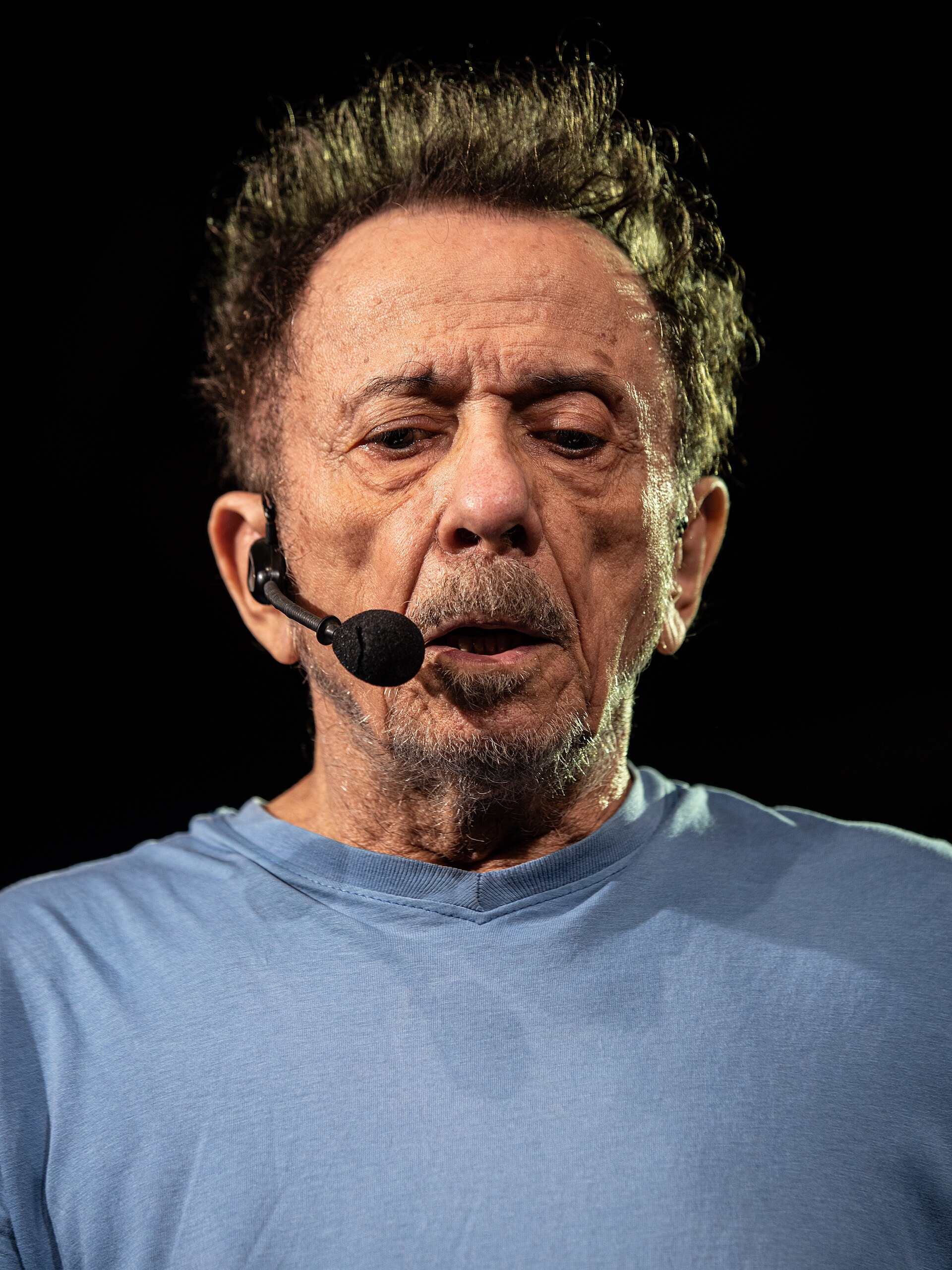
After the U.S. Senate unanimously passed a bill seeking to address forced organ harvesting in China, David Matas, a renowned international human rights lawyer who has been investigating the Chinese regime’s atrocity for decades, spoke with The Epoch Times about the bill’s significance.
The Senate passed the Falun Gong and Victims of Forced Organ Harvesting Protection Act (S.4009) by unanimous consent on Sept. 28. The bill aims to address the persecution and forced removal of organs from prisoners of conscience, largely Falun Gong practitioners, Uyghurs, and other religious or ethnic minority groups. It authorizes the U.S. government to investigate and impose mandatory sanctions against foreign individuals and entities involved in state-sponsored forced organ harvesting and trafficking within the China.
Matas pointed ot the significance of the Senate passing the bill unanimously. “That means that the legislation had support across the political and ideological spectrum,” he said.
To become law, the bill still needs to pass the House of Representatives and be signed by the president.
“Those are the next critical steps,” Matas said.
Matas is one of Canada’s most prominent international human rights lawyers, having long focused on major human rights issues such as refugee protection, the prevention of genocide and hate speech, and exposing the Chinese Communist Party’s (CCP) practice of forced organ harvesting.
He collaborated with the late David Kilgour, a human rights activist and former Member of the House of Commons of Canada, to investigate the CCP’s forced organ harvesting against Falun Gong practitioners. Their 2006 investigative report, later published as the book “Bloody Harvest: Organ Harvesting of Falun Gong Practitioners in China,” has drawn international attention to the Chinese state-sponsored crime against humanity, and won them a nomination for the Nobel Peace Prize in 2010. Matas has received numerous international human rights awards, including the Order of Canada.
“The fact that the bill was adopted in the Senate now is an acknowledgement that the problem of forced organ harvesting with Falun Gong victims persists,” Matas said.
The bill proposes sanctions on individuals involved in forced organ harvesting and organ trafficking, such as visa restrictions and asset-blocking measures.
These sanctions “make sense only if one assumes that the abuse is happening. If it were not happening, there would be no need for the actions proposed in the bill,” Matas said.
“Unless and until the government of China shows that the abuse is not happening, the assumption should be, according to the bill, as I understand it, that it is happening.”
Falun Gong, also known as Falun Dafa, is a Chinese spiritual practice consisting of meditation exercises and the principles of truthfulness, compassion, and tolerance. It grew in popularity during the 1990s, with an estimated 70 million to 100 million practitioners nationwide by 1999, when the regime launched a systematic elimination campaign. The number of practitioners detained over the years is likely to be in the millions, according to the Falun Dafa Information Center.
Besides Matas and Kilgour’s works, other organizations have been investigating the CCP’s forced organ harvesting against Falun Gong practitioners and other prisoners of conscience and have compiled evidence, including the World Organization to Investigate the Persecution of Falun Gong, Doctors Against Forced Organ Harvesting, the International Coalition to End Transplant Abuse in China, and others.
U.S. writer and researcher Ethan Gutmann also conducted a six-year independent investigation, interviewing more than 100 refugees, doctors, and law enforcement personnel. He published his findings in the 2014 book “The Slaughter: Mass Killings, Organ Harvesting, and China’s Secret Solution to Its Dissident Problem.”
“The Senate would not have passed this bill if it did not take seriously the findings that researchers have presented over the years,” Matas said. “What makes the evidence so compelling is its combination.”

Falun Gong practitioners demonstrate the exercises before a parade in the Czech capital city of Prague on Sept. 19, 2026. Zhang Qingqi/The Epoch Times
Matas said Falun Gong practitioners been disproportionately targeted within China’s organ transplant system for many reasons, including their sheer numbers. Before the Chinese regime launched its persecution campaign against Falun Gong, it was estimated that more than 70 million people had taken up the practice in China.
Also, “the exercise regime of the practitioners meant that their organs were healthy,” Matas said.
The Senate bill expresses an appreciation for the suffering of the families of the victims, Matas said, which he believes will help surviving victims or victims’ families feel safer to come forward and share their experiences.
International Impact
Matas said Canada already has immigration legislation similar to the Senate bill, and the U.S. move will inspire other countries.
The global Council of Europe Convention against Trafficking in Human Organs has only 16 ratifying parties so far, Matas noted. “Other states could and should join,” he said.
The Senate bill could indeed serve as a “sorely needed” catalyst for action at the United Nations or other multilateral human rights bodies to take action, he said.
Progress in stopping China’s live organ harvesting has been slow, Matas said. After more than 20 years of effort, “it is some comfort that, however long it took, this has happened,” he said.
Liang Yao contributed to this report.