By The Straits Times | Created at 2026-09-30 10:32:18 | Updated at 2026-09-30 11:26:31
1 hour ago
By The Straits Times | Created at 2026-09-30 10:32:18 | Updated at 2026-09-30 11:26:31
1 hour ago
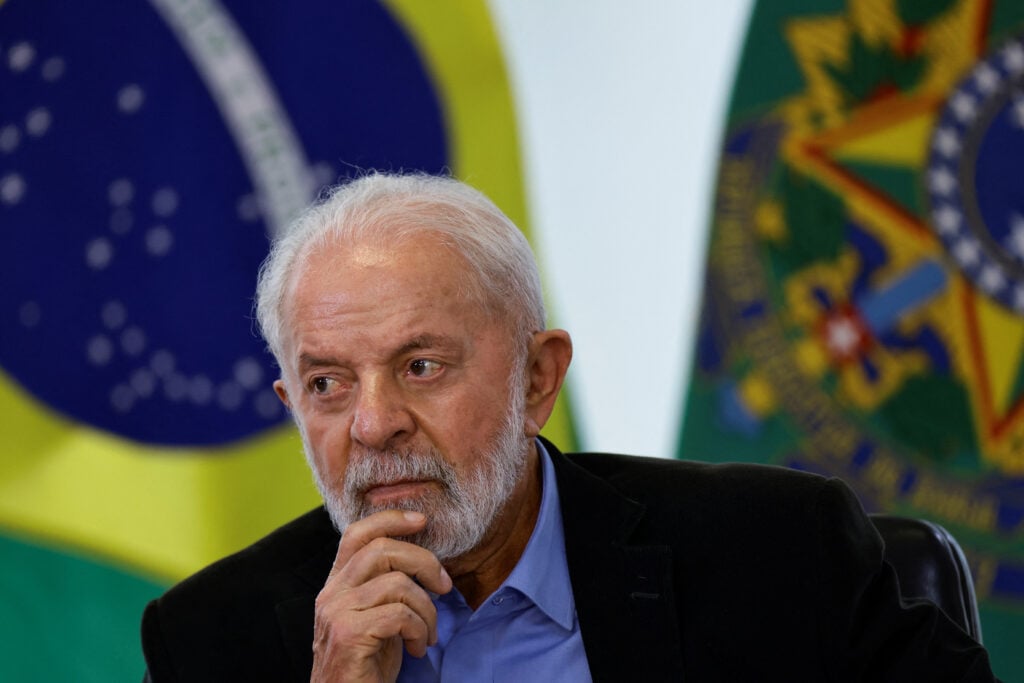
JAKARTA – South-east Asia has never produced a World Health Organization (WHO) chief, and Indonesia’s Budi Gunadi Sadikin wants to change that.
The Indonesian Health Minister believes a leader from the region could bring fresh perspectives to a WHO that needs to better respond to the different health needs of its 194 member states.
Budi, 62, is the only South-east Asian among six prospective candidates for WHO Director-General.
The successful candidate will replace Tedros Adhanom Ghebreyesus, who has led the United Nations health agency since 2017 and whose second five-year term ends in August 2027.
He told The Straits Times in an exclusive interview on Sept 29 in Jakarta that he spent the past three months sounding out more than 70 health ministers around the world on what they want changed at the global health body.
His conversations with ministers across ASEAN, Africa and Latin America showed a common appetite for change in the WHO, he said. Singapore Health Minister Ong Ye Kung was among the ASEAN ministers he consulted, he added.
Among their concerns were that the organisation was trying to do too much, that its finances needed fixing, and that countries should have more say in setting their own health priorities, rather than having them driven from WHO headquarters in Geneva.
“The first message from the majority (of the health ministers) is number one: WHO should focus on its core mandate. Don’t do too many things because if you do too many things, you achieve nothing,” he said.
The case for reform at WHO
The WHO is the main international body for coordinating global health responses and setting health standards. It has had eight directors-general since 1948, including three from Asia.
Budi said the organisation’s core role should include developing scientific norms and standards, as well as bringing governments and other organisations together to tackle health problems. But that does not mean every member state has the same health priorities.
For example, an ageing society such as Singapore may increasingly be concerned with issues such as dementia and menopause, he said, while other countries are still battling infectious diseases such as tuberculosis or Ebola.
He said health priorities should not be dictated uniformly from Geneva, as a campaign that is critical in one country may be far less relevant in other places.
This does not mean decentralising WHO itself, Budi stressed, but giving individual countries a bigger role in deciding where support was most needed.
“The country should be given the chance to lead, to define, and to decide what are their health priorities, and WHO backing them up fully,” he said.
There was also concern among some ministers that WHO has moved away from putting scientific and technical experts in key positions, with some posts instead going to “political appointees”.
In particular, the 2023 election of Saima Wazed, daughter of then-Bangladesh prime minister Sheikh Hasina, as WHO’s South-east Asia regional director drew questions over nepotism, prompting WHO to strengthen the transparency of such elections. Wazed resigned on Sept 9 amid separate fraud investigations by WHO and Bangladeshi authorities, allegations she denied.
Budi also noted that WHO is grappling with a major funding squeeze. Its approved base programme budget for 2026 and 2027 was reduced to US$4.2 billion (S$5.4 billion), from a proposed US$5.3 billion, as foreign aid budgets came under pressure amid wars and geopolitical tensions while the United States withdrew from the organisation in January.
“The biggest problem with WHO and many UN institutions and many countries now is lack of funding,” he said.
The financial strain has strengthened the case for someone with a different background to lead the organisation, Budi said.
A nuclear physicist by training, he spent much of his career in technology, banking and corporate roles, including as president director of Bank Mandiri, previously Indonesia’s largest bank, before entering government. He became health minister in December 2020 and was retained by President Prabowo Subianto, who took office in October 2024.
WHO still needs strong scientists to determine its norms and standards, Budi said, but its current predicament also demands expertise in financing.
He argued that the challenges facing global health called for a different approach from the WHO, and potentially a leader from outside the organisation’s traditional mould.
“These extraordinary events need extraordinary measures,” he said.
What Indonesia can offer
Budi pointed to Indonesia’s experience managing healthcare for some 280 million people across thousands of islands, as well as its efforts to bring health and finance officials together during the Covid-19 pandemic.
Under its 2022 Group of 20, or G20, presidency, Indonesia helped launch the Pandemic Fund to strengthen countries’ ability to prepare for future pandemics.
The following year, it secured nearly US$4 billion from the World Bank, Asian Development Bank, Asian Infrastructure Investment Bank and Islamic Development Bank to strengthen its own health system.
“Money is there actually, but not many health ministers understand how to get that money,” Budi said.
He said WHO could play a similar role, helping countries turn their health needs into credible plans and bringing health ministers together with finance ministries and development banks to fund them.
The approach can be particularly important for the Global South, he said, as poorer countries bear the brunt of aid cuts.
Developing nations need a stronger voice in deciding how global health resources are used, he stressed. “The recipient of the money usually does not have as much of a voice as the donors of the money.”
Indonesia’s campaign puts Budi against a field dominated by candidates with careers in medicine and public health.
The other five publicly known contenders are Saudi Arabia’s Hanan Balkhy, WHO’s regional director for the Eastern Mediterranean; Belgium’s Hans Kluge, WHO’s regional director for Europe; former Qatari health minister Hanan Mohammed Al-Kuwari; Spanish physician Maria Neira, a former senior WHO official; and Armenian paediatric oncologist Gevorg Tamamyan, who was nominated by Botswana.
Nominations closed on Sept 24, though WHO will publish the official list of candidates only after its final regional committee meeting from Oct 29.
Its executive board will shortlist and nominate up to three candidates in January 2027, before member states vote to appoint the next director-general at the World Health Assembly in May.
Budi said he was mounting a serious campaign, spending much of his time travelling and meeting health ministers, often accompanied by Indonesian ambassadors.
“It’s not only about the size of the country that matters, but the commitment to support the candidate from each country that matters,” he said, referring to Indonesia’s large population and the strength of government backing for his bid.
Asked about concerns that countries could use financial or other inducements to secure votes – often referred to as “money politics” in Indonesia – Budi said he had heard similar talk, but had no evidence of such practices and would not participate in them.
“First, it is against my personal principle to do it,” he said. “If the world would like to choose the best person, you know, you cannot buy that person.”
“I’m not naive. I heard the same thing like what you said,” Budi added. “So if somebody wins because of these things, then let it be. I will be very sad, but let it be.”
From Indonesia to 8 billion people
Budi said the WHO job was not something he had initially sought. A close aide to Prabowo first approached him about the role shortly after the World Economic Forum in Davos in January.
His response was simply to accept the task. “I’m ready. Whatever task that you give to me,” he recalled telling the aide.
Budi said he is “very happy” as health minister because the job allows him to make a direct impact on Indonesians.
But as he considered the WHO role, people around him encouraged him to think about the opportunity differently – not in terms of the job itself, but the scale of the impact he could have.
As health minister, he could make a difference to Indonesia’s 280 million people; at the WHO, he said, that potential reach could extend to the world’s eight billion people.
That prospect resonated with him at this stage of his life. “Whatever you do, if that will give the biggest impact to humanity, that is something that you (should) do,” he said.
Global ambitions aside, Budi chuckled when asked what he would miss if the job took him from Jakarta to Geneva.
“Food,” he replied immediately, before explaining with a smile that Indonesian food overseas is often adjusted to European tastes and does not taste quite like it does at home. He said he would also miss the warmth and informality of Asian communities.
Budi also joked that he would miss Ong, whom he described as one of his closest friends among ASEAN health ministers. The two would still be able to meet, he said, adding that he could keep up with his Singapore counterpart on social media.
“I always see his TikTok and his social media,” Budi said with a laugh, gesturing to his phone.