By New York Post (World News) | Created at 2026-08-10 18:20:57 | Updated at 2026-08-10 19:26:09
1 hour ago
By New York Post (World News) | Created at 2026-08-10 18:20:57 | Updated at 2026-08-10 19:26:09
1 hour ago
Iran’s “Misery Index” hit a record high of 91.1% due to rampant inflation and unemployment, with the economic strain likely to get worse under the US naval blockade.
The country’s Misery Index — which is calculated by adding the point-to-point inflation rate, 82%, with the unemployment rate, 9.1% — hit its highest level yet this year, according to a recent report from the Statistical Center of Iran.
The Misery Index spike is notably more than double what it was last spring, with not even Tehran spared from the economic blow as the city’s own index hit 78.3%, according to provincial data.
Iran’s economy has been in a free fall since late last year, with its rial currency falling to record-low levels as the cost of basic commodities soars.
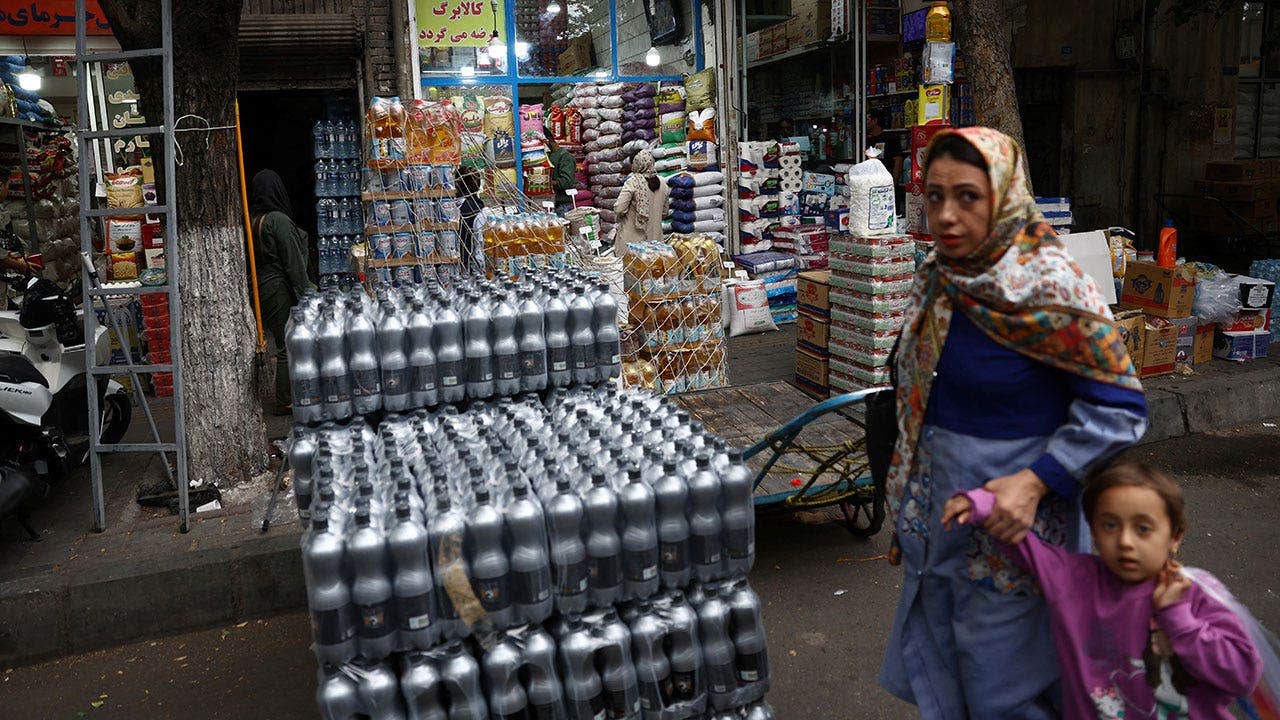
Grocery prices, specifically, have shot up since war broke out with the US in February, with bread up 140%, dairy up 116.8% and food and drink prices overall up 113.8%, according to the Statistical Center of Iran.
Food inflation overall reached 134% nationwide in July, with rural areas hit the hardest. Iran’s labor ministry also said about 1 million jobs have been lost as a direct result of the war with the US.
The current situation has gotten so bad that some Iranians have been reportedly forced to start stealing groceries and foregoing medical treatment just to survive.
Iran’s economic plummet will only get worse as the war continues, with the renewed US blockade set to cause larger problems, noted William Jackson, a chief emerging markets economist at Capital Economics.
“Iran’s financial lifeline has been cut by the US blockade, and the economy will remain in a very depressed state unless it can secure concessions,” Jackson wrote in a Monday note.
“But whether this happens ultimately comes down to the degree of economic pain that the Iranian regime is willing to bear to achieve its military and geopolitical objectives,” he added.
The economist noted that Iran’s oil exports have fallen to nearly zero in July, with Iran having less oil at-sea than before to generate income and its imports from China likely down from spring.
“If anything, Iran’s economy may be less well placed to cope with a US blockade now than it was at the start of the first blockade in April,” Jackson explained.
Despite the reported infighting among Iran’s leaders on how much economic pressure the country can realistically take, the strain will likely force Tehran back to the negotiating table like it did in June, Jackson concluded.
The outcome is just what President Trump is currently eyeing after he opted to keep a “low key” approach to the war on Sunday, saying he preferred to see Iran’s economy crushed rather than physically destroyed.
“We are low-keying it,” Trump told Axios of his new hands-off approach. “We are only semi-negotiating with them. We are just watching Iran with its huge inflation and the fact they have no money.”
The president also claimed that the economic woes have also reached Iran’s military, suggesting the Islamic Republic had no money to pay its troops.
Iran’s security and military forces have previously had to deal with delayed salary payments during the war, with at least three deferments recorded this year, Iran International reported.