By The Rio Times | Created at 2026-08-08 22:16:41 | Updated at 2026-08-08 23:00:53
1 hour ago
By The Rio Times | Created at 2026-08-08 22:16:41 | Updated at 2026-08-08 23:00:53
1 hour ago
Earnings · Brazil
Key Facts
—The deal JBS and PT Danantara Investment Management (DIM), an arm of Indonesia’s sovereign wealth fund, agreed a joint venture worth up to US$5 billion on 7 August 2026.
—Equity component Danantara will invest US$2.5 billion in equity for a 25% stake, phased with US$800 million at closing and up to US$1.7 billion over three years.
—Debt capacity The venture plans to raise up to an additional US$2.5 billion in debt financing after the equity is fully funded.
—Geographic scope The joint venture will target protein production investments across Indonesia, Southeast Asia, Australia, and New Zealand.
—JBS contribution JBS will contribute 100% of its Australia and New Zealand businesses into the new structure.
—Citi rating Citi reiterated a buy rating on JBS shares, citing the deal as a capital-light growth avenue.
JBS has agreed a deal worth up to US$5 billion with an Indonesian sovereign wealth fund to form an Asia-Pacific protein joint venture, the Brazilian meatpacker’s largest strategic partnership in the region.
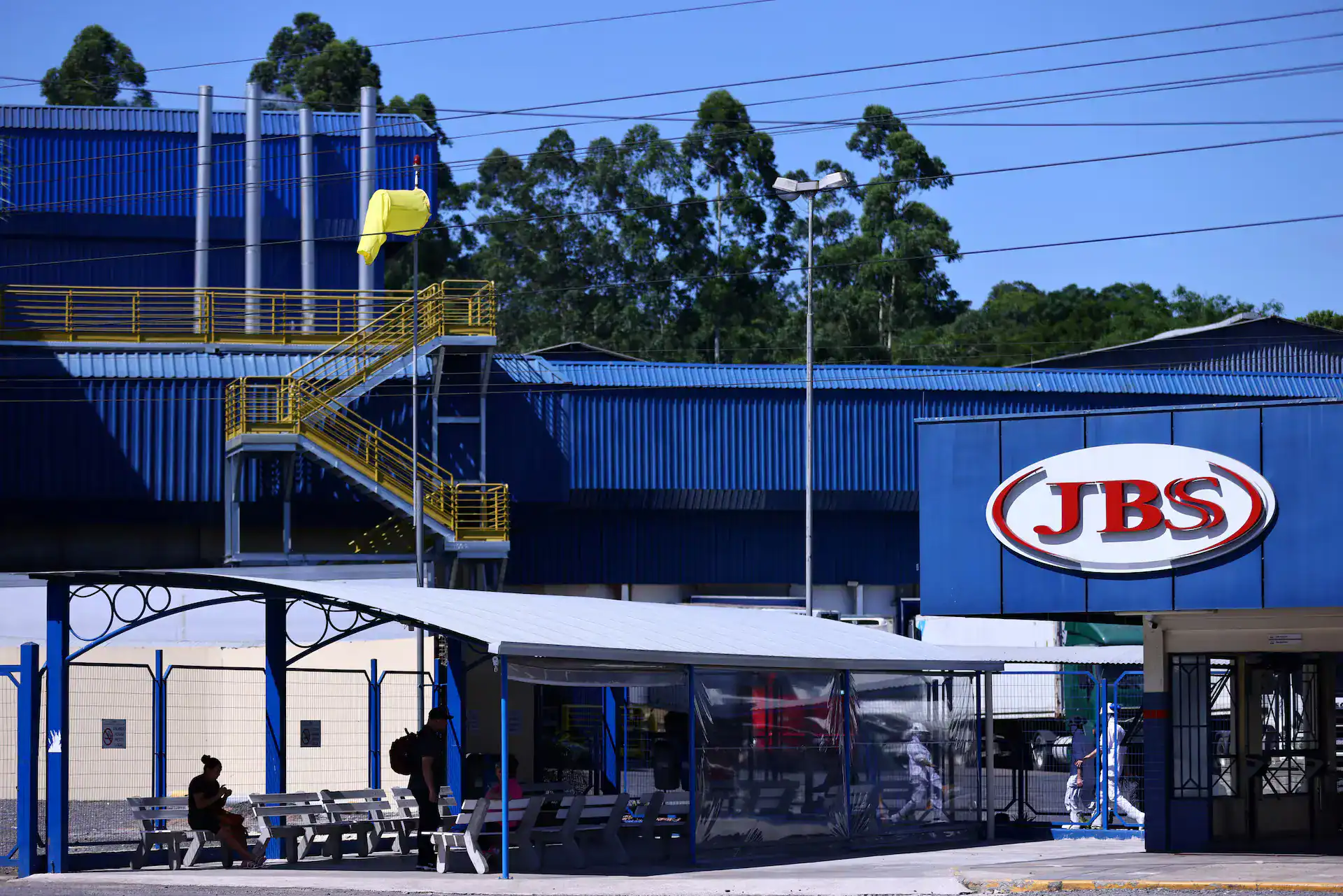
Structure of the venture
JBS SA (NYSE: JBS; B3: JBSS3) and PT Danantara Investment Management, an arm of Indonesia’s sovereign wealth fund Danantara, announced on 7 August 2026 that they had signed a binding agreement to create a joint venture focused on protein production across the Asia-Pacific region. The venture will be capitalised through a US$2.5 billion equity injection from Danantara for a 25% stake, with JBS contributing the entirety of its Australia and New Zealand operations.
The equity component will be delivered in two phases: an initial US$800 million at closing and the remaining US$1.7 billion over a period of up to three years, according to statements from both companies. After the equity is fully funded, the joint venture intends to raise up to an additional US$2.5 billion in debt financing, lifting the total capital available to the venture to as much as US$5 billion.
Who Danantara is
PT Danantara Investment Management is the operational investment arm of Danantara, Indonesia’s sovereign wealth fund, which was established in early 2025 to manage state assets and attract foreign co-investment into strategic sectors. The fund’s mandate includes food security and protein supply chains, making the JBS partnership a direct fit with its national investment priorities.
For JBS, the arrangement provides a state-backed partner with deep access to Southeast Asian markets and a long-term capital commitment without requiring the Brazilian parent to dilute its own equity or take on additional consolidated debt. The joint venture will be governed as a separate entity with its own balance sheet, ring-fencing the Australian and New Zealand assets that JBS is contributing.
Live Company IntelligenceJBS N.V. — the full investor dossierInside: live share price, market cap, three-year financials, valuation, ESG and peer benchmarks — plus the latest Rio Times coverage.J
◆ Live Company Intelligence
JBS N.V.
NYSE: JBSJBSConsumer DefensivePackaged Foods283,000 employees
$46.80B
Market cap
Analyst target $18.32
Wall Street view
4.0Buy/ 5
1 Buy0 Hold0 Sell
Avg. price target $18.32 · +27% vs 200-day
Valuation & profitability
Market cap$46.80B
Revenue (TTM)$88.27B
P / E ratio8.5
Profit margin2.0%
Return on equity22.1%
Price & risk
52-wk low
$11.4552-wk high
$17.27
200-day average$14.47
Revenue trend · 6y
20202025
Latest $471.14B
Ownership
Institutions22.8%
Shares outstanding776M
Top holderBNDES Participacoes SA -BNDESPAR
Institutional holders5+ funds
Dividend
Yield7.3%
Payout ratio16.3%
Fwd. annual$1.34
What JBS N.V. does. JBS N.V., together with its subsidiaries, engages in the processing of animal proteins, encompassing activities related to beef, pork, lamb, and poultry worldwide. The company is involved in the production and marketing of prepared foods and other related products, as well as operations in leather, collagen, hygiene and beauty products, metal packaging,…
Asia-Pacific growth strategy
The joint venture is explicitly aimed at expanding protein processing and distribution capacity in Indonesia and neighbouring Southeast Asian markets, while also strengthening JBS’s existing footprint in Australia and New Zealand. Reuters reported on 7 August 2026 that J.P. Morgan analysts described the structure as a mechanism that allows JBS to pursue M&A and organic growth while preserving its own cash reserves.
By folding its wholly-owned Australian and New Zealand subsidiaries into the venture, JBS retains a 75% economic interest and operational control while bringing in a partner that can unlock political and commercial doors across the Indonesian archipelago and the wider ASEAN region. The dual focus on developed-market processing assets and emerging-market consumption growth mirrors the playbook JBS used successfully in Brazil and the United States.
Citi reiterates buy rating
Citi reiterated its buy rating on JBS shares following the announcement, characterising the transaction as a capital-efficient path to expansion in high-growth Asian protein markets. The bank’s analysts pointed to the structure’s limited upfront cash outlay for JBS and the strategic logic of pairing Brazilian operational expertise with Indonesian state capital.
The stock reaction on the B3 exchange in São Paulo showed a positive bias in early trading on 7 August, although the full session’s close was not available at the time of reporting. JBS American depositary receipts traded on the New York Stock Exchange under the ticker JBS also edged higher in pre-market activity, reflecting investor support for a transaction that does not require issuing new JBS equity.
What it means for foreign investors
For foreign holders of JBS paper, the deal represents a significant de-risking of the company’s Asia-Pacific ambitions by attaching them to a sovereign-backed vehicle with its own financing capacity. The structure keeps JBS’s consolidated leverage in check while opening a conduit to one of the world’s fastest-growing protein consumption zones at a time when demand in developed markets is flattening.
The transaction remains subject to regulatory approvals and customary closing conditions, and Reuters noted that the deal was not yet complete as of its 7 August report. Investors will be watching for confirmation of the initial US$800 million closing tranche and for any conditions imposed by Australian or New Zealand foreign-investment review bodies, given the contribution of strategic agricultural assets into a partly foreign-state-owned venture.
Brazilian protein exporters have faced a more complex global trade environment in 2026, with shifting sanitary protocols and regional trade agreements altering market-access terms across Asia. A locally domiciled joint venture backed by an Indonesian sovereign fund provides JBS with a structural hedge against future trade frictions, positioning production capacity inside the consuming region rather than relying solely on cross-border shipments.
Frequently Asked Questions
How much is JBS receiving in cash from the Danantara deal?
The joint venture itself will receive US$2.5 billion in equity from Danantara, phased as US$800 million at closing and up to US$1.7 billion over three years, with the venture planning to raise up to an additional US$2.5 billion in debt later.
Will JBS sell its Australian and New Zealand businesses?
No, JBS will contribute 100% of its Australia and New Zealand operations into the new joint venture but will retain a 75% stake and operational control.
Is the deal already closed?
No, the transaction is subject to regulatory approvals and customary closing conditions and was not yet complete as of 7 August 2026.
Source: Meat packer JBS to partner with Indonesian wealth fund arm in joint venture
Source: JBS gets $2.5 billion from Indonesia fund to expand in Asia
Source: JBS fecha parceria estratégica com fundo soberano da Indonésia em investimento de até US$ 5 bilhões
Source: Danantara and JBS Announce Strategic Protein Partnership
Source: JBS, Danantara deal embeds Indonesia state fund in $8.1b Australasian meat operation
This article was produced by The Rio Times’ automated newsroom system. How we use AI · Report an error
The Rio Times · Power Map
See who really holds power in Latin America
Click to open the Power Map →