 By The Epoch Times | Created at 2026-08-05 00:57:01 | Updated at 2026-08-05 13:05:36
12 hours ago
By The Epoch Times | Created at 2026-08-05 00:57:01 | Updated at 2026-08-05 13:05:36
12 hours ago
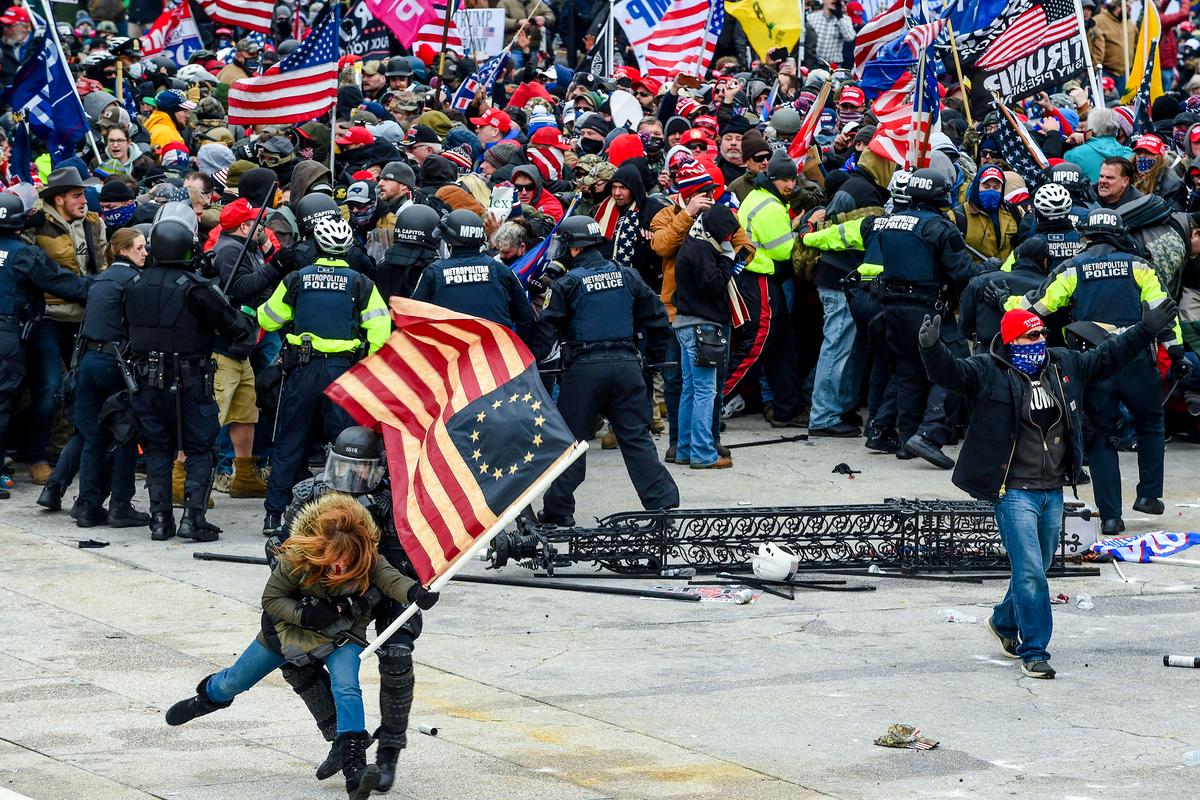
Police try to hold back protesters on the West Plaza of the U.S. Capitol on Jan. 6, 2021. Roberto Schmidt/AFP via Getty Images
A federal judge dismissed the criminal case Tuesday against eight members of the Oath Keepers after the Justice Department sought to erase their convictions, saying he was required to defer to the executive branch despite believing the decision was not in the public interest.
After the U.S. Court of Appeals for the D.C. Circuit vacated the defendants’ convictions at the Justice Department’s request, prosecutors returned to the district court and asked Judge Amit Mehta to dismiss the superseding indictment with prejudice.
Mehta granted the government’s motion to dismiss the indictment against the defendants, including Oath Keepers founder Elmer Stewart Rhodes.
The defendants had been convicted in two trials of offenses stemming from the Jan. 6, 2021, breach of the U.S. Capitol. Most were convicted of seditious conspiracy, conspiracy to obstruct an official proceeding, conspiracy to prevent members of Congress from carrying out their duties, and obstruction of an official proceeding.
Mehta wrote that the Justice Department did not argue the evidence was insufficient, that prosecutors committed misconduct, or that the defendants were wrongfully convicted. Instead, the department said dismissal served the interests of justice and cited its prosecutorial discretion.
The judge rejected several of the government’s justifications, calling its argument that dismissal protected the defendants from harassment “a strange argument.” He also questioned the department’s reliance on President Donald Trump’s Jan. 20, 2025, proclamation, noting Trump commuted the defendants’ prison sentences but did not pardon them or direct dismissal of their cases.
Mehta said dismissing the case would erase the legal judgments that the defendants committed crimes “against the United States itself” and concluded that doing so was “not in the public interest.”
Despite his disagreement, Mehta said precedent required him to grant the motion because courts generally cannot reject a prosecutor’s decision to dismiss charges.
In the closing paragraphs of the opinion, Mehta wrote that the ruling marked the end of the Jan. 6 prosecutions, saying the outcome “diminishes the gravity of that day, denigrates the work of the prosecutors and law enforcement officers who secured these convictions, and excuses criminal acts” that disrupted the peaceful transfer of presidential power. He said the court “cannot write a different ending.”
Trump’s January 2025 proclamation pardoned approximately 1,500 individuals involved in the breach and commuted the sentences of 14 individuals who were still serving time.
“This proclamation ends a grave national injustice that has been perpetrated upon the American people over the last four years and begins a process of national reconciliation,” the proclamation stated.
In a December 2024 interview with Time Magazine, Trump said he would examine the Jan. 6 participants’ cases “on a case-by-case basis,” starting during the first hour of his presidency.
“If they were non-violent, I think they’ve been greatly punished,” he said. “They’ve suffered greatly, and in many cases, they should not have suffered.”
Nathan Worcester contributed to this report.