By The Rio Times | Created at 2026-10-05 16:51:59 | Updated at 2026-10-05 17:34:47
2 hours ago
By The Rio Times | Created at 2026-10-05 16:51:59 | Updated at 2026-10-05 17:34:47
2 hours ago
IBOV 208,763.59 ▲ 8.67% IPSA 11,018.02 ▲ 0.93% IPC MEX 64,531.68 ▲ 1.10% MERVAL 2,841,487 ▲ 2.67% COLCAP 2,538.58 ▲ 0.94% BVL PERÚ 59,751.67 ▲ 0.18% USD/BRL4.97▼ 4.61% USD/MXN18.12▼ 0.25% USD/CLP969.92▼ 2.08% USD/COP3,201▼ 1.64% USD/PEN3.42▼ 0.41% USD/ARS1,524▼ 0.04% USD/UYU40.34▼ 0.30% USD/PYG5,844▲ 0.40% USD/BOB11.95▲ 0.17% USD/DOP59.83▼ 0.12% USD/CRC455.71▼ 0.15% USD/GTQ7.63▼ 0.09% USD/HNL26.86▼ 0.01% USD/NIO36.62— 0.00% USD/VES869.19▼ 0.13% USD/PAB1.00— 0.00% USD/BZD2.00— 0.00% USD/JMD 157.28 — 0.00% USD/TTD6.68▼ 0.14% EUR/BRL5.59▼ 4.98% BRENT 88.88 ▼ 0.03% WTI 83.11 ▼ 0.11% IRON ORE 161.91 — — COPPER 6.61 ▲ 0.03% GOLD 4,461 ▲ 1.78% SILVER 65.59 ▲ 1.26% SOY 1,184 ▲ 3.20% CORN 480.50 ▲ 10.02% WHEAT 655.00 ▲ 3.93% COFFEE 317.25 ▼ 5.51% SUGAR 16.43 ▼ 1.79% ORANGE JUICE 138.55 ▼ 0.47% COTTON 85.03 ▲ 2.33% COCOA 5,719 ▲ 3.18% BEEF 223.60 ▼ 3.93% CATTLE 339.10 ▼ 3.16% LITHIUM 75.20 ▲ 1.47% PETR4 41.64 ▼ 0.05% VALE3 72.97 ▲ 0.83% ITUB4 38.60 ▼ 1.03% BBDC4 16.85 ▲ 0.36% ABEV3 14.89 ▼ 0.80% BBAS3 19.37 ▲ 0.47% B3SA3 14.26 ▼ 0.21% WEGE3 47.59 ▲ 0.49% PRIO3 59.14 ▼ 0.19% SUZB3 41.33 ▲ 2.35% RENT3 34.68 ▼ 0.09% AZZA3 15.89 ▼ 2.63% CSAN3 3.22 ▼ 1.83% RAIZ4 0.25 — 0.00% PCAR3 2.75 ▼ 0.36% GMAT3 3.65 ▼ 1.08% PSSA3 48.13 ▼ 0.54% CVCB3 1.33 ▼ 2.92% POSI3 3.36 ▲ 2.44% SLCE3 13.34 ▲ 0.30% NATU3 8.14 ▼ 0.73% IBOV 208,763.59 ▲ 8.67% IPSA 11,018.02 ▲ 0.93% IPC MEX 64,531.68 ▲ 1.10% MERVAL 2,841,487 ▲ 2.67% COLCAP 2,538.58 ▲ 0.94% BVL PERÚ 59,751.67 ▲ 0.18% USD/BRL 5.16 ▲ 0.01% USD/MXN 17.06 ▼ 0.24% USD/CLP 913.98 ▲ 0.04% USD/COP 3,140 ▲ 0.03% USD/PEN 3.36 ▼ 0.66% USD/ARS 1,493 ▲ 0.10% USD/UYU 40.27 ▲ 1.24% USD/PYG 5,939 ▲ 1.68% USD/BOB 11.64 ▼ 0.76% USD/DOP 58.34 ▲ 1.25% USD/CRC 445.92 ▲ 0.89% USD/GTQ 7.62 ▲ 2.21% USD/HNL 26.79 ▲ 1.57% USD/NIO 36.62 ▲ 0.69% USD/VES 762.44 ▼ 0.13% USD/PAB 1.00 — 0.00% USD/BZD 2.00 — 0.00% USD/JMD 157.28 — 0.00% USD/TTD 6.70 ▲ 0.61% EUR/BRL 5.95 ▲ 1.01% BRENT 88.88 ▼ 0.03% WTI 83.11 ▼ 0.11% IRON ORE 161.91 — — COPPER 6.61 ▲ 0.03% GOLD 4,461 ▲ 1.78% SILVER 65.59 ▲ 1.26% SOY 1,184 ▲ 3.20% CORN 480.50 ▲ 10.02% WHEAT 655.00 ▲ 3.93% COFFEE 317.25 ▼ 5.51% SUGAR 16.43 ▼ 1.79% ORANGE JUICE 138.55 ▼ 0.47% COTTON 85.03 ▲ 2.33% COCOA 5,719 ▲ 3.18% BEEF 223.60 ▼ 3.93% CATTLE 339.10 ▼ 3.16% LITHIUM 75.20 ▲ 1.47% PETR4 41.64 ▼ 0.05% VALE3 72.97 ▲ 0.83% ITUB4 38.60 ▼ 1.03% BBDC4 16.85 ▲ 0.36% ABEV3 14.89 ▼ 0.80% BBAS3 19.37 ▲ 0.47% B3SA3 14.26 ▼ 0.21% WEGE3 47.59 ▲ 0.49% PRIO3 59.14 ▼ 0.19% SUZB3 41.33 ▲ 2.35% RENT3 34.68 ▼ 0.09% AZZA3 15.89 ▼ 2.63% CSAN3 3.22 ▼ 1.83% RAIZ4 0.25 — 0.00% PCAR3 2.75 ▼ 0.36% GMAT3 3.65 ▼ 1.08% PSSA3 48.13 ▼ 0.54% CVCB3 1.33 ▼ 2.92% POSI3 3.36 ▲ 2.44% SLCE3 13.34 ▲ 0.30% NATU3 8.14 ▼ 0.73%
The Latin America Defense Monitor: military moves, arms deals and security policy across Latin America and the Caribbean, in plain language
Weekly Edition · Sunday, 5 October 2026 · Issue #24
Executive Summary
The Big Picture: This week’s Latin America Defense Monitor is about paper catching up with firepower. On 30 September, a federal judge in New York ruled that the secret legal memo behind the US boat-strike campaign has become the government’s “working law” — and gave the administration until 14 October to hand it over for private review. One day earlier, the UN Security Council renewed Haiti’s Gang Suppression Force for six months. And on Ecuador’s coast, US Marines were photographed running heavy machinery on the Taura air base, testing a constitution that bans foreign bases.
Venezuela’s transition moved from handshake to homework. Acting president Delcy Rodríguez returned from New York with no signed deals and no election date. President Trump said the two spoke about elections. Secretary of State Marco Rubio demanded them “as soon as possible” — and threatened Cuba in the same breath. Reports this week linked the White House to a US$100 billion investment goal for Venezuela. Nobody has published the plan.
Colombia’s police and army arrested 148 people in a national anti-kidnapping sweep on 1–2 October, killing five suspected fighters, two of them from the ELN. Courts handed ELN leaders long sentences for recruiting children. Drone attacks hit police stations in Cauca and Chocó on 29 September. And Argentina’s second batch of six F-16 fighters landed on 30 September, days after bad weather held them in the Canary Islands — twelve of twenty-four are now home.
Bottom Line Up Front: Three legal systems pressed against three military campaigns this week. A New York court against the strike memo. Ecuador’s constitution against the Taura works. Colombia’s courts against the ELN’s child soldiers. None stopped the machinery — but each one now has a date, a docket or a deadline attached. The Latin America Defense Monitor reads the dockets as closely as the deployments, and this week the dockets moved.
Latin America Defense Monitor: Where Things Stand
| Venezuela | High | Rodríguez returns from UN week with no signed deals and no election date; Trump says they discussed elections (26 September); Rubio demands elections “as soon as possible” (29 September); US$100bn investment goal reported, plan unpublished. |
| US (SOUTHCOM) | High | Judge rules strike memo is “working law,” orders in camera review by 14 October (30 September); ACLU tally: 234 dead; no new strike announced inside the window. |
| Ecuador | High | US Marines photographed adapting Taura air base (30 September); Noboa proposes concentrating all foreign military cooperation there; curfew lifted 30 September; constitutional ban on foreign bases back in debate. |
| Colombia | High | 148 arrested in anti-kidnapping sweep (1–2 October), five suspects killed; ELN leaders sentenced for child recruitment (28 September); drone attacks on police stations (29 September); Putumayo demobilization zone closed (30 September). |
| Haiti | Active | UN renews Gang Suppression Force to 31 March 2027 (29 September), 12–0–3 vote; 1,500+ troops on the ground, 4,000 more pledged; elections and referendum set for 13 December. |
| Argentina | Watch | Second batch of six Danish F-16s arrives (30 September) after Canary Islands weather hold; twelve of 24 delivered. |
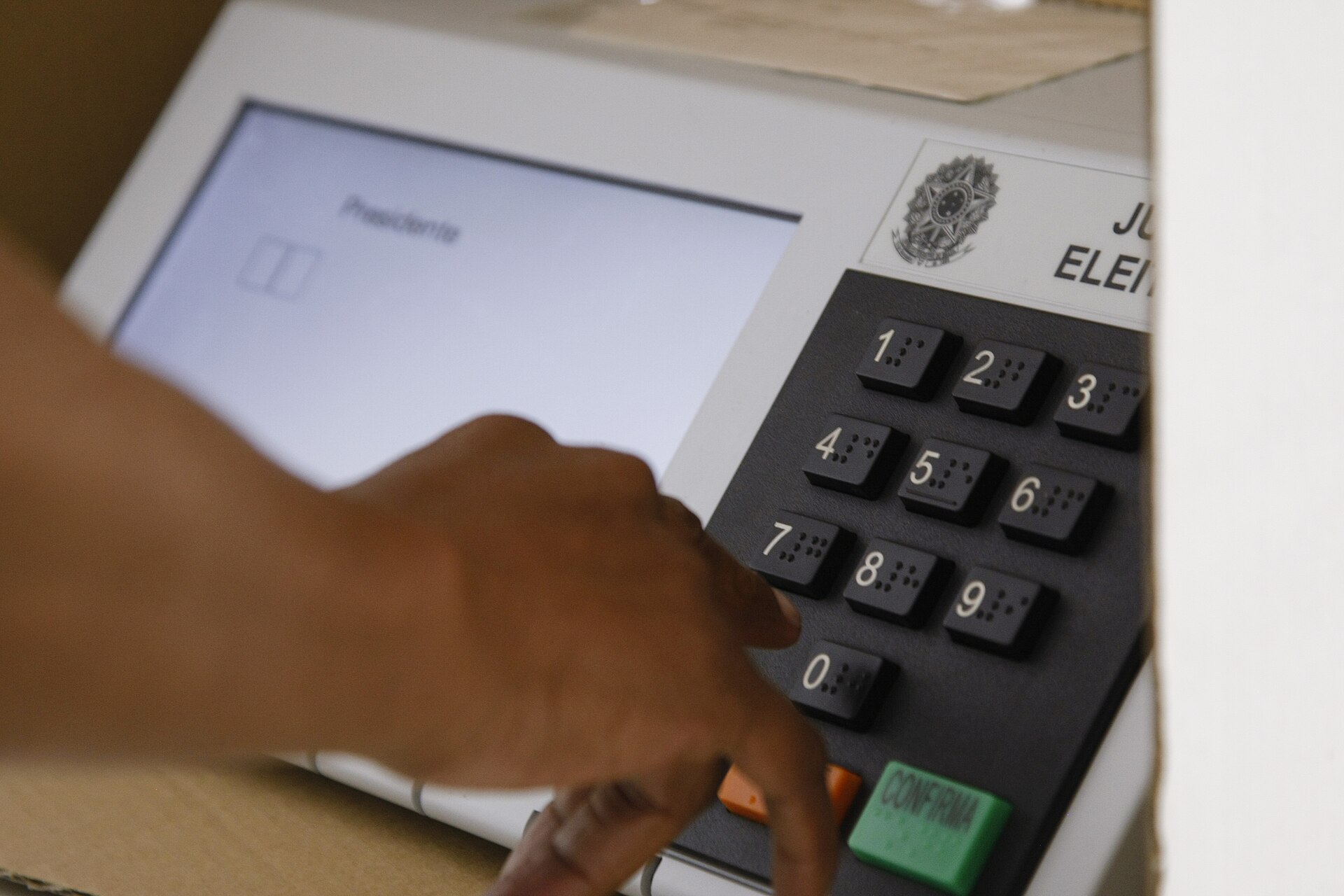
| Brazil | Watch | Votes in general election 4 October; Formosa follow-up reporting shows SIATT anti-tank missile live-fire and a 15-company industry fair. |
| Mexico | Watch | Navy holds 159 personnel in mirror operations on the Tamaulipas border as some 500 US troops deploy in Texas. |
| Peru | Watch | Quiet after UNITAS; F-16 procurement scandal still unresolved in Congress. |
01The Week’s Key Stories26 September – 2 October 2026
UNITED STATESJudge Rules the Strike Memo Is “Working Law,” Sets 14 October Deadline
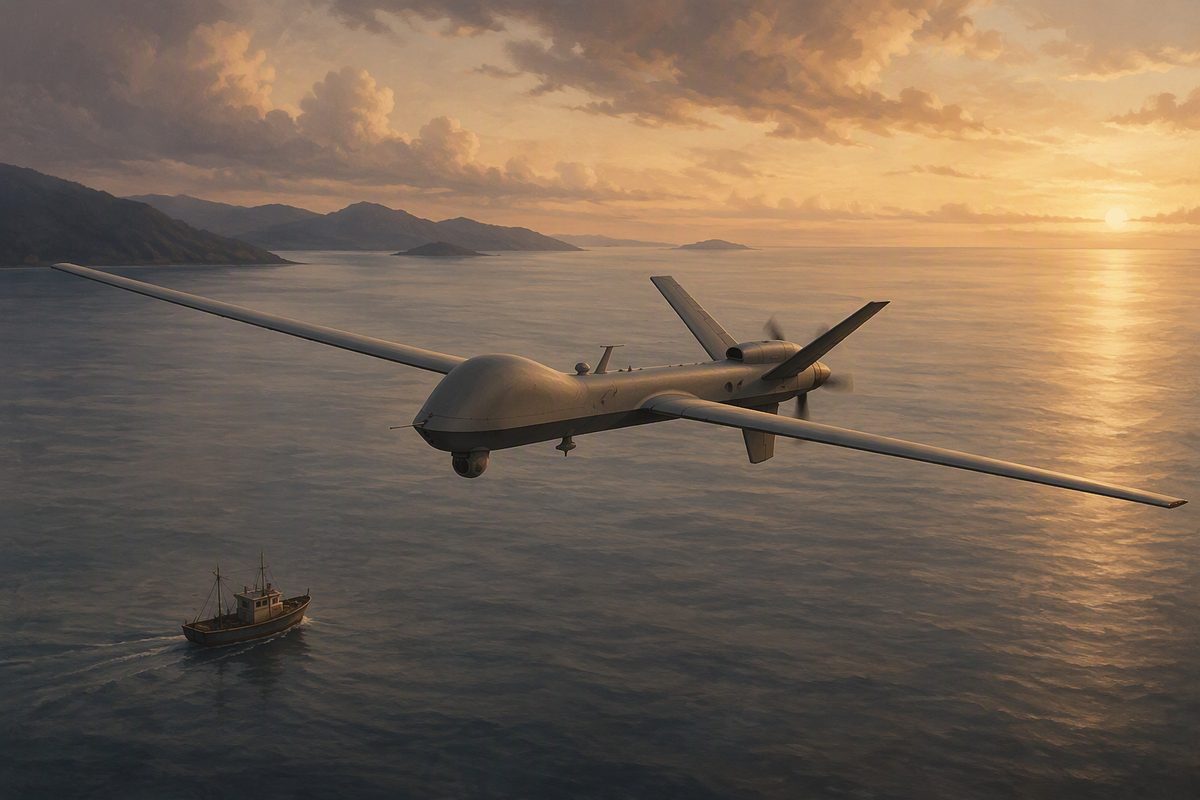
On 30 September, Judge Paul Engelmayer of the Southern District of New York ruled that the classified Office of Legal Counsel memo behind the boat-strike campaign has become the Pentagon’s “working law.” The administration had cited it too often, in too many places, to keep calling it private advice.
The court rejected two of the government’s three secrecy claims — deliberative process and attorney-client privilege. It ordered the memo handed over for private judicial review, with a 14 October deadline, to decide whether any of it can stay secret. The ruling came in a freedom-of-information suit by the ACLU and the Center for Constitutional Rights, as The Rio Times reported on 1 October.
The memo dates from 5 September 2025 — three days after the first strike. The ACLU counts 234 people killed in the campaign so far. Open-source tallies differ by incident selection; no official public count exists. A UN Special Rapporteur reported on 22 September that the strikes may amount to crimes against humanity, documenting 68 strikes and at least 223 dead through August.
What it means: The campaign’s legal foundation is moving from a locked drawer to a courtroom. Even if the judge keeps parts secret after review, “working law” is a label the administration cannot take back — it concedes the memo governs real operations. What is stabilizing: an actual court now sits inside the loop. What could reverse it: an appeal, which the government has not announced.
VENEZUELAAfter the Handshake: No Election Date, a US$100 Billion Pitch
Delcy Rodríguez flew home from New York without the two things Washington wants dated: elections and signed energy deals. Analyses published 26 September describe a UN week that produced images, not instruments.
President Trump told reporters on 26 September that he and Rodríguez had spoken about elections. On 29 September, Secretary of State Marco Rubio demanded Venezuelan elections “as soon as possible” and warned Cuba it could be next. Reporting this week linked the White House to a goal of steering US$100 billion into Venezuela; no plan, fund or timetable has been published.
On 1 October, CNN’s Christiane Amanpour aired an interview with Crisis Group’s Phil Gunson under the line “for many people, the revolution is over.” Rodríguez promises elections without a timeline. The legal basis of her presidency — a caretaker mandate whose constitutional limit passed in July — remains unpublished.
What it means: The transition is now a negotiation about sequencing: Washington wants an election date before full normalization; Caracas wants normalization before a date. The US$100 billion figure tells investors the direction is real, but direction is not a contract. What is not known: the date, the money’s structure, and the presidency’s legal frame — the same three unknowns as last week, now with higher stakes.
ECUADORUS Marines Start Works at Taura as Noboa Proposes It as Cooperation Hub
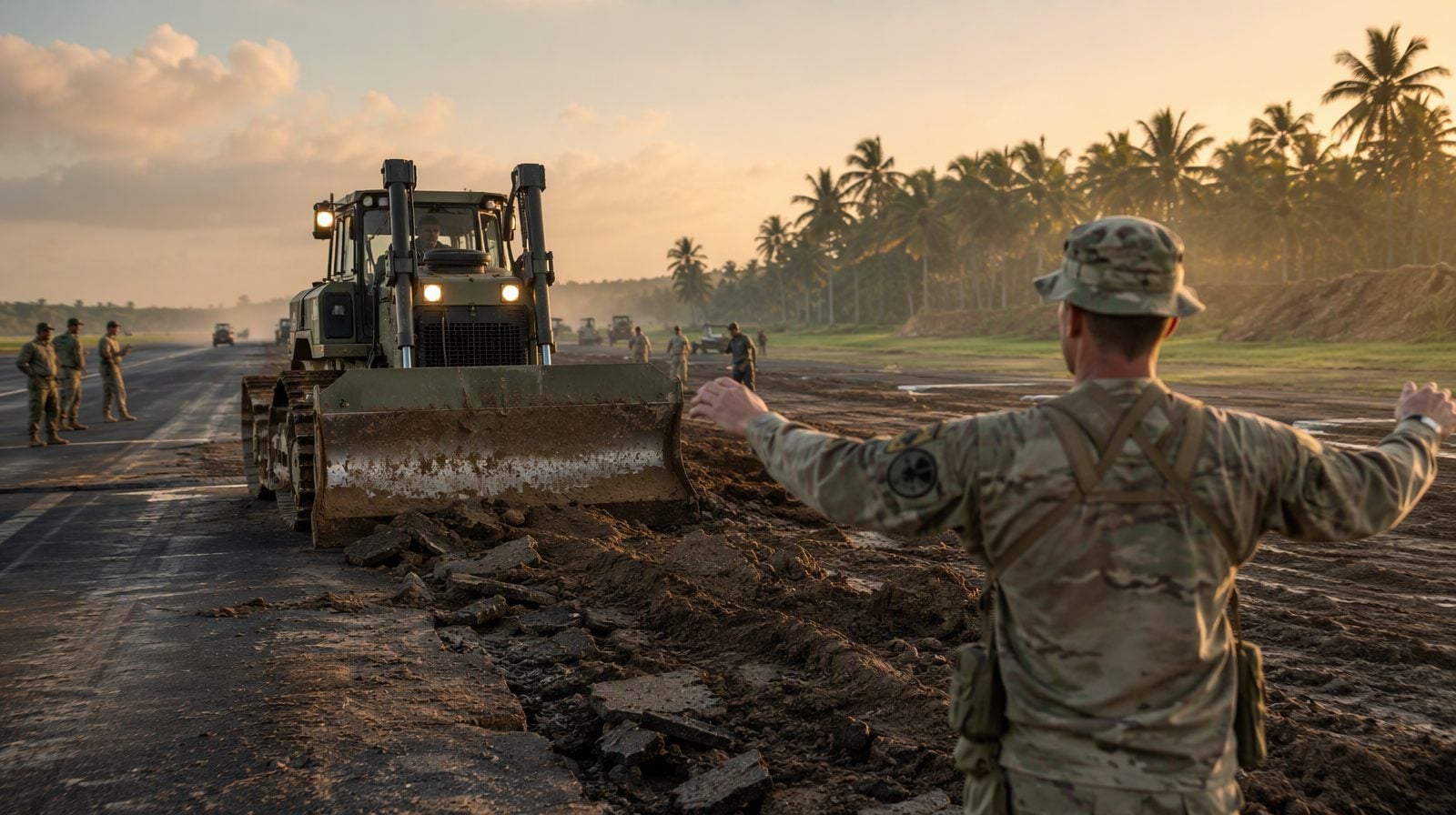
Images released through the US military’s distribution service show Marines from Combat Logistics Battalion 8 clearing vegetation, leveling ground and working the perimeter at Taura air base, in Guayas province near Guayaquil. The works, reported by Infodefense on 30 September, use UH-60M Black Hawk helicopters and RQ-20B Puma surveillance drones.
President Noboa told Bloomberg TV on 22 September that Taura is being adapted for joint operations with the United States, Brazil and the European Union. He has since proposed concentrating all foreign military cooperation there. Taura’s runway exceeds 3,040 meters and sits beside the drug corridors of the gulf.
The constitutional problem is real. Article 5 of Ecuador’s constitution bans foreign military bases, and 61 percent of voters rejected removing that ban in a November 2025 referendum. The government says the works are bilateral cooperation, not a base; the air force keeps ownership. No contract, budget or duration has been published.
What it means: Taura is becoming the physical center of the US posture in the eastern Pacific — a base in all but name, built under a constitution that forbids bases. The opposition’s questions (command, duration, oversight) are the ones that matter, and none has an answer. What is stabilizing: the air force keeps title, and the referendum’s red line is public. What could reverse it: a court challenge, which is now more likely than not.
COLOMBIA148 Arrested in Anti-Kidnapping Sweep as the ELN Feels the Courts
Police and the army arrested 148 people in a national anti-kidnapping operation on 1–2 October, as The Rio Times reported. Five suspected fighters were killed — two from the ELN and three from FARC dissident groups.
Two days earlier, Colombian courts handed ELN leaders long prison sentences for recruiting children. On 29 September, drone attacks hit police stations in Cauca and Chocó — the ELN’s answer from the air. And on 30 September the government closed the temporary demobilization zone in Putumayo where 99 Commands de la Frontera members had gathered, folding another piece of the old “total peace” architecture.
The ELN’s four August hostages — an army major, two police officers and a civilian — remain in captivity. The government ended all dialogue processes on 11 September and shows no sign of reopening them.
What it means: De la Espriella’s model is now fully visible: police mass plus judicial pressure plus military strikes, with negotiation off the table. The 148 arrests show the police machine works at scale; the drone attacks show the ELN adapting its own technology race. What is not known: whether the hostages become leverage the government cannot ignore. What is stabilizing: the courts keep convicting on evidence, which gives the campaign a legal spine.
HAITIUN Renews the Gang Suppression Force for Six Months
On 29 September, the Security Council adopted Resolution 2829, extending the Gang Suppression Force’s mandate to 31 March 2027. The vote was 12 in favor, none against, with China, Russia and Pakistan abstaining. The United States and Panama hold the pen on Haiti.
US envoy Mike Waltz said the force has more than 1,500 troops on the ground, with 4,000 more slated to arrive in coming months, toward an authorized strength of 5,550. Personnel from Chad, El Salvador, Guatemala, Jamaica, Mongolia and Sri Lanka are serving. The force, created in September 2025 to replace the failed Kenya-led mission, can detain suspects — a power no recent Haiti mission has held.
Elections and a constitutional referendum are scheduled for 13 December, the first national vote since 2016. Haiti’s delegate told the Council that taking territory is not enough; recovered areas must be held, and services restored.
What it means: The hemisphere’s only active multinational combat mission just got its second wind — and a deadline that matters more than the mandate: 13 December. Whether 4,000 pledged troops actually arrive decides whether the vote happens. China’s and Russia’s abstentions were about method, not obstruction. What to watch: deployment numbers, month by month, against the election calendar.
ARGENTINASecond F-16 Batch Lands: Twelve of Twenty-Four Home
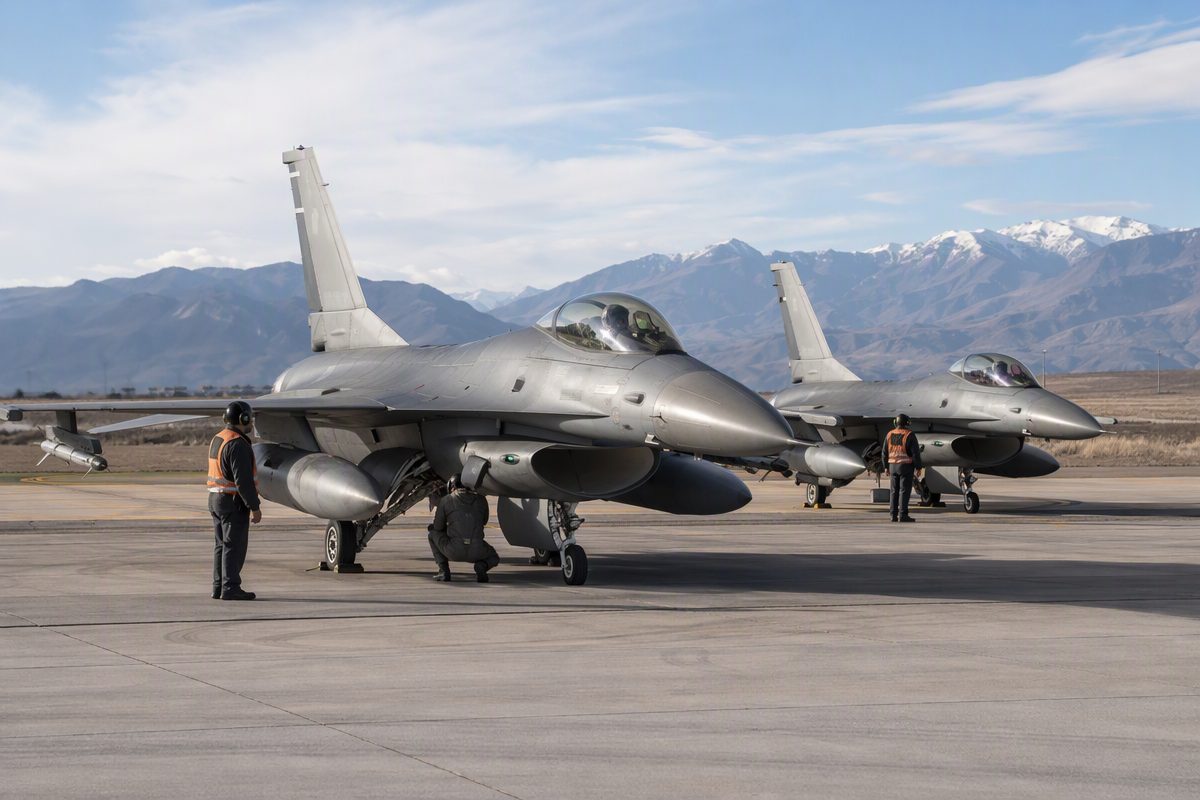
Six former Danish F-16AM/BM fighters arrived in Argentina on 30 September, completing a ferry flight that bad weather had interrupted in the Canary Islands — a hold The Rio Times covered on 27 September. The delivery brings the air force to twelve F-16s of the twenty-four bought from Denmark, Argentina’s first modern supersonic fighters in a decade.
The program is now half-delivered and past its most fragile logistics: every further batch is routine.
What it means: For a region short on air-defense fighters, twelve operational F-16s quietly change the southern cone’s balance — Chile flies F-16s, Brazil flies Gripens, and Argentina is no longer out of the club. What is not known: the pace of the remaining twelve, and the weapons fit Argentina can afford for them.
02What’s Being Bought
| Argentina | 24 F-16AM/BM from Denmark | 12 delivered as of 30 September; 12 pending | Restores a modern fighter arm; half the fleet is now home |
| Ecuador | Taura air-base adaptation (US Marine engineers) | Works photographed 30 September; no contract or budget published | Builds the eastern-Pacific hub without calling it a base |
| Ecuador | US$45m package, one cutter, five interceptors | Still pending in Washington | Would fund the US-facing navy; delivery tests the Taura question |
| Brazil | SIATT MAX 1.2 AC anti-tank missile | Three live-fire launches at Formosa, reported this week | Domestic missile industry proving product in front of foreign observers |
| US → four partners | US$52 million in Foreign Military Financing | Notified 15 September; split unpublished | The money track behind the alignment; source countries still silent |
| Haiti (GSF) | Build-up to 5,550 authorized troops | 1,500+ deployed; 4,000 pledged | The hemisphere’s largest security deployment is a coalition of the willing |
03The Big Powers
United States
Present in every story again: the courtroom in New York, the runway at Taura, the Haiti resolution it co-wrote, and the US$100 billion Venezuela pitch. The week’s pattern is legalization — putting paper under operations already running.
China
Abstained on Haiti, calling the crisis a governance problem, not a security one. No verified regional military moves this week; its position is still defined by what Washington is trying to pre-empt.
Russia
Also abstained on Haiti, questioning the force’s financing while not blocking it. Moscow’s hemisphere relevance now runs through what it does not do.
France
Forty troops at Formosa, TotalEnergies in Caracas: Paris keeps small, durable positions inside an American-designed map.
Brazil
Votes on 4 October. Defense policy has been campaign-quiet; the Formosa reporting afterglow (SIATT missile, industry fair) is the extent of it. Whoever wins inherits the AV-MTC November test and the Amazon radar gap.
04What to Watch Next7–30 days
What the coming editions of the Latin America Defense Monitor will be tracking:
UNITED STATESThe 14 October deadline: does the government hand the strike memo to Judge Engelmayer, appeal, or claim the presidential-communications privilege that survived? Any new strike announcements.
BRAZILThe 4 October first-round result and what it means for defense continuity; the AV-MTC cruise-missile test expected in November.
VENEZUELAAny election date; any detail on the US$100 billion investment goal; publication of the presidency’s legal basis.
ECUADORA court challenge or congressional demand over Taura; the promised contract or budget for the works; the US$45 million package.
HAITITroop arrival numbers against the 13 December election date; first signs of the GSF’s detention power in use.
COLOMBIAThe ELN’s four hostages; further drone attacks; sentencing follow-through on child recruitment.
05The Bottom Line
For a year, the region’s military story ran ahead of its paperwork. Strikes happened under a memo nobody could read. Troops landed under agreements nobody could see. This week, the paperwork started to fight back.
A judge in New York looked at the government’s own words and ruled that a secret memo had become public law in everything but publication. Photographs of Marines on an Ecuadorian runway forced a constitutional question that a referendum was supposed to have settled. The Security Council put Haiti’s experiment on the clock: six more months, with an election inside them.
None of this stops the machinery. The strikes continue, the works at Taura continue, the force in Port-au-Prince grows. But each campaign now has a docket, a deadline or a vote attached — and dockets, unlike communiqués, produce dates that someone must answer. The Latin America Defense Monitor will be watching all of them.
Latin America Defense Monitor
Weekly Edition · Sunday, 5 October 2026 · By The Rio Times Defense Desk
Sources: SDNY opinion in ACLU v. DOJ/DOD (30 September) via Courthouse News; ACLU press statement; UN Security Council SC/16466 and Resolution 2829; UN News; US News & World Report, Miami Herald and CNN on Venezuela; Infodefense and DVIDS on Taura; El Universo and Bloomberg TV via Adam Isacson’s security-policy roundup; International Crisis Group CrisisWatch September 2026; AP on the ELN sentences; Defence Industry Europe on the F-16 delivery; defensetalks.com on SIATT; The Rio Times’ own reporting.
Background: US Judge Gives Trump 14 Days to Show Boat Strike Memo.
Background: Brazil Revives Its Big Marine War Game, With US Troops Back After 2025 Halt.
Previous edition: September 19–25, 2026.
This article was produced by The Rio Times’ automated newsroom system. How we use AI · Report an error · Editorial responsibility: Matthias Camenzind, Editor-in-Chief