Brazil plunged deeper into diplomatic disputes with two of its most important partners in the Americas over what it described as attempts by the conservative governments of the United States and Argentina to interfere in its October presidential election.
President Luiz Inácio Lula da Silva’s government accused Donald Trump’s administration of improperly intervening in Brazil’s affairs on Tuesday, after a senior US State Department official said the US was revoking the visa of the country’s ambassador in Washington.
The government also downgraded relations with Argentina by deciding to keep its ambassador from returning to Buenos Aires indefinitely in response to President Javier Milei’s repeated attacks on Lula, according to an official familiar with the matter. Argentine newspaper La Nación first reported the decision.
The twin disputes are unfolding against the backdrop of a fierce election battle between the 80-year-old Lula and Flávio Bolsonaro. The right-wing senator has sought support from Trump and Milei, two leaders eager to see Latin America’s recent wave of conservative momentum topple Lula in Brazil’s vote.
“This decision is not an isolated event,” Lula’s government said in a statement about the US visa revocation. “It is part of a deliberate escalation of hostile measures against Brazil, driven by ideological reasons incompatible with a bilateral partnership that has always been grounded in mutual respect.”
Earlier in the day, the Trump administration revoked the visa of Brazil’s ambassador to the US, Maria Luiza Ribeiro Viotti, after accusing Lula’s government of slow-walking diplomatic approval for Washington’s choice of envoy to Brasilia.
The US isn’t expelling Viotti and will restore her visa once Brazil approves Daniel Perez as ambassador, a senior State Department official told reporters.
Brazil said the process of granting agreement to Perez, who has yet to be confirmed by the US Senate, is ongoing. It also said the Vienna Convention on diplomatic relations sets no deadline for granting approval.
The visa dispute marks the latest chapter in a broader clash that intensified last month, when the US imposed 25 percent tariffs on many Brazilian goods, citing unfair trade practices.
Lula viewed the levies as another attack on Brazil’s sovereignty from Trump, who last year imposed imposed tariffs on the country in an unsuccessful attempt to help Bolsonaro’s father, former president Jair Bolsonaro, avoid conviction on charges of plotting a coup after losing the 2022 election.
In late July, Brazil also blocked the visas of two senior US State Department officials, citing concerns that they intended to cast doubt on the integrity of its electoral system during a planned visit. The US State Department denied that was the purpose of the trip.
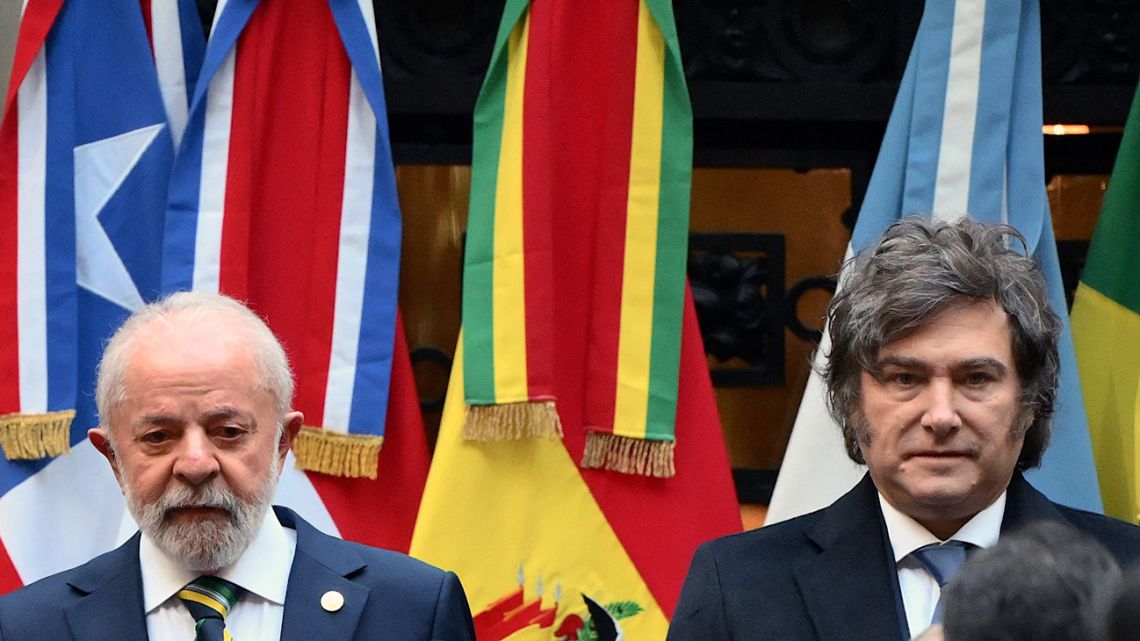
Lula’s long-running rivalry with Milei – one of Trump’s closest allies in Latin America – flared at the same time after the libertarian leader called him a “thief” during a campaign kickoff event for Flávio Bolsonaro in São Paulo.
Milei also accused Lula of interfering in Argentina’s 2023 election, citing the work of Brazilian campaign advisers for his opponent.
Brazil initially recalled its ambassador to Buenos Aires for consultations, while summoning Argentina’s envoy to Brasília for an explanation.
Recalling an ambassador is considered a strong diplomatic rebuke. It was an unprecedented step between Brazil and Argentina, neighbouring nations whose ties have endured periods of sharp political disagreement.
“This is a unilateral decision by Brazil, which we regret,” Argentine Foreign Minister Pablo Quirno told reporters in Buenos Aires on Wednesday, blaming Lula’s government for escalating the dispute.
Milei repeated his attacks in a Sunday radio interview, citing Lula’s previous corruption conviction, which was later annulled, and claiming without evidence that the Brazilian leader had also provided financial support to his opponent in Argentina’s election.
“I didn’t attack the Brazilian people,” Milei said in the interview. “I spoke about Lula, the corrupt one.”
Brazil’s decision will leave its embassy in the hands of a charge d’áffaires rather than an ambassador for an undetermined amount of time until Milei’s attacks stop, the Brazilian official said, requesting anonymity.
Brazilians will go to the polls on October 4 for a first round vote, with a runoff likely to take place three weeks later.
The disputes are poised to cast a shadow over the contest as Lula seeks to portray himself as a defender of Brazil’s sovereignty. His approval ratings rose during an initial trade clash with Trump last year.
by Simone Iglesias & Manuela Tobias, Bloomberg