By The Rio Times | Created at 2026-10-06 13:07:03 | Updated at 2026-10-06 17:16:24
4 hours ago
By The Rio Times | Created at 2026-10-06 13:07:03 | Updated at 2026-10-06 17:16:24
4 hours ago
GUIDES · MEXICO
Key Facts
- —Heritage UNESCO inscribed traditional Mexican cuisine on its intangible heritage list in 2010. Its base, says the listing, is corn, beans and chilli.
- —Regions This guide groups 25 dishes into six regions, from Baja California and Nuevo León in the north to Oaxaca and Yucatán in the south.
- —Exchange rate MXN 18.13 per US dollar, the Banco de México FIX rate for Monday 5 October 2026, used for every conversion below.
- —Typical prices Birria in Guadalajara averages MXN 170 a head (about US$9); a 2026 chile en nogada in Puebla costs MXN 250 to 600 (about US$14 to US$33).
- —Seasonal dish Chiles en nogada are a summer dish. Puebla’s 2026 season ran from 1 July to 16 September.
- —Michelin The Michelin Guide now lists street-level places across Mexico, from taquerías in Mexico City to a seafood cart’s offshoot in Ensenada.
Anyone looking up Mexico food soon learns that the country has no single cuisine, but a map of regional kitchens. UNESCO recognised this in 2010, when it inscribed traditional Mexican cuisine as intangible heritage of humanity. This guide takes 25 dishes region by region: where each comes from, what to order and where to eat it.
Mexico Food by Region: How to Read the Map
The base is the same everywhere: corn, beans and chilli, according to the UNESCO listing. Corn is nixtamalised, cooked with lime to loosen the hull and raise its nutritional value. It is then ground into masa for tortillas and tamales.
What changes is everything on top. The Maya south seasons with achiote and sour orange. The cattle north roasts goat over charcoal, and the Pacific coast cures raw shrimp in lime. Immigrants added layers too, most visibly the vertical spit that an Iraqi family built in Puebla.
Prices are converted at MXN 18.13 per US dollar, the Banco de México FIX rate for 5 October 2026. Menus move often, so treat every figure as a guide rather than a quote.
Mexico City and the Centre: Tacos, Tamales and Barbacoa
1. Tacos al Pastor
Mexico City’s signature taco is chilli-marinated pork stacked on a vertical spit, the trompo, and shaved to order. It descends from the spit-roasting technique behind Puebla’s tacos árabes, described below. Order it with pineapple, onion and coriander.
Michelin gives a Bib Gourmand to El Vilsito in Narvarte, a taquería attached to a car repair shop. It opens only at night. Its gringa wraps al pastor and melted cheese in a flour tortilla. Taquería Los Cocuyos, in the historic centre since 1980, is another Bib Gourmand address.
2. Gaonera and Griddle Tacos
Plancha tacos are thin cuts of beef seared on a griddle with lard, coarse salt and lime, then folded into corn tortillas. Taquería El Califa de León in San Rafael won a Michelin star in May 2024 for this style, and the 2026 guide still lists it. Its signature gaonera uses thinly sliced beef fillet.
There is room for only a handful of diners, standing at the counter. Michelin lists bistec, chuleta (pork chop) and costilla (beef rib) as the other options.
3. Quesadillas
A quesadilla is a folded corn tortilla with a filling, cooked on a griddle or fried. In Mexico City cheese is optional, an argument older than most visitors assume. An 1872 Puebla cookbook already listed fillings of ground crackling, brains and squash blossom.
Order con queso if you want cheese, because in the capital it is not assumed.
4. Chilaquiles
A breakfast staple, chilaquiles are fried tortilla pieces simmered in salsa. A dictionary of Mexican Spanish from 1899 already defined chilaquiles as broken tortillas cooked in chilli sauce and broth. Ask for them verdes (green salsa) or rojos (red).
5. Tamales
Tamales are corn dough steamed in a husk or leaf around a filling. Mexico’s culture ministry counts dozens of regional types, from Michoacán’s corundas and uchepos to the chicken tamales of Yucatán. UNESCO notes that tamales and tortillas are part of Day of the Dead offerings.
That makes late October a good time to try them. The Day of the Dead guide has the Mexico City dates.
6. Barbacoa
In Hidalgo, barbacoa means lamb or goat wrapped in maguey leaves and cooked in an earth oven over hot volcanic stones. The Hidalgo daily Criterio reports cooking times of 8 to 14 hours. It is served with a consommé made from the drippings.
Actopan, in the Mezquital Valley, held its barbacoa fair from 4 to 13 July 2025 with backing from the federal tourism ministry. Order tacos de barbacoa and a cup of consommé.
Puebla: Mole Poblano, Walnut-Sauced Chiles and Tacos Árabes
7. Mole Poblano
Mole is a thick sauce of dried chillies, spices, seeds and nuts, often finished with chocolate. The name comes from the Nahuatl mulli, meaning sauce or mixture. Puebla’s version layers several dried chillies with seeds, nuts and chocolate.
The Michelin Guide singles out a sample platter of poblano, green, red and white moles at Restaurante Casareyna. At Mural de los Poblanos, beside the cathedral, it calls the cheese enchiladas with three moles a must.
8. Chiles en Nogada
A poblano chilli is stuffed with beef, pork and fruit, covered in a walnut sauce and scattered with pomegranate and parsley. Legend credits Augustinian nuns of the Santa Mónica convent in Puebla with creating it. They are said to have chosen the green, white and red of the Trigarante independence army.
It is strictly seasonal, because the Castilian walnuts and pomegranates ripen in summer. Puebla’s 2026 season ran from 1 July to 16 September, with plates at MXN 250 to 600 (about US$14 to US$33). The state tourism ministry expected to sell about 4.45 million plates.
Michelin calls the dish a must at Casareyna when in season. The dish has also spread well beyond Puebla, as San Miguel de Allende shows each summer.
9. Tacos Árabes
Seasoned pork is roasted on a vertical spit and rolled in a thick wheat flatbread called pan árabe. It comes with a thick red chipotle salsa and often jocoque, a strained yoghurt. Family accounts collected by the Puebla site Conexión Puebla trace the dish to two Iraqi families, the Tabe and the Galeana.
They are often wrongly credited to Lebanese settlers. Zayas Galeana swapped lamb for pork and built a vertical grill, and his wife Esperanza Águila created the red salsa. Order them in the historic centre, where La Oriental and Bagdad are the names with the longest tradition.
Oaxaca: Mole Negro, Tlayudas and Garnachas
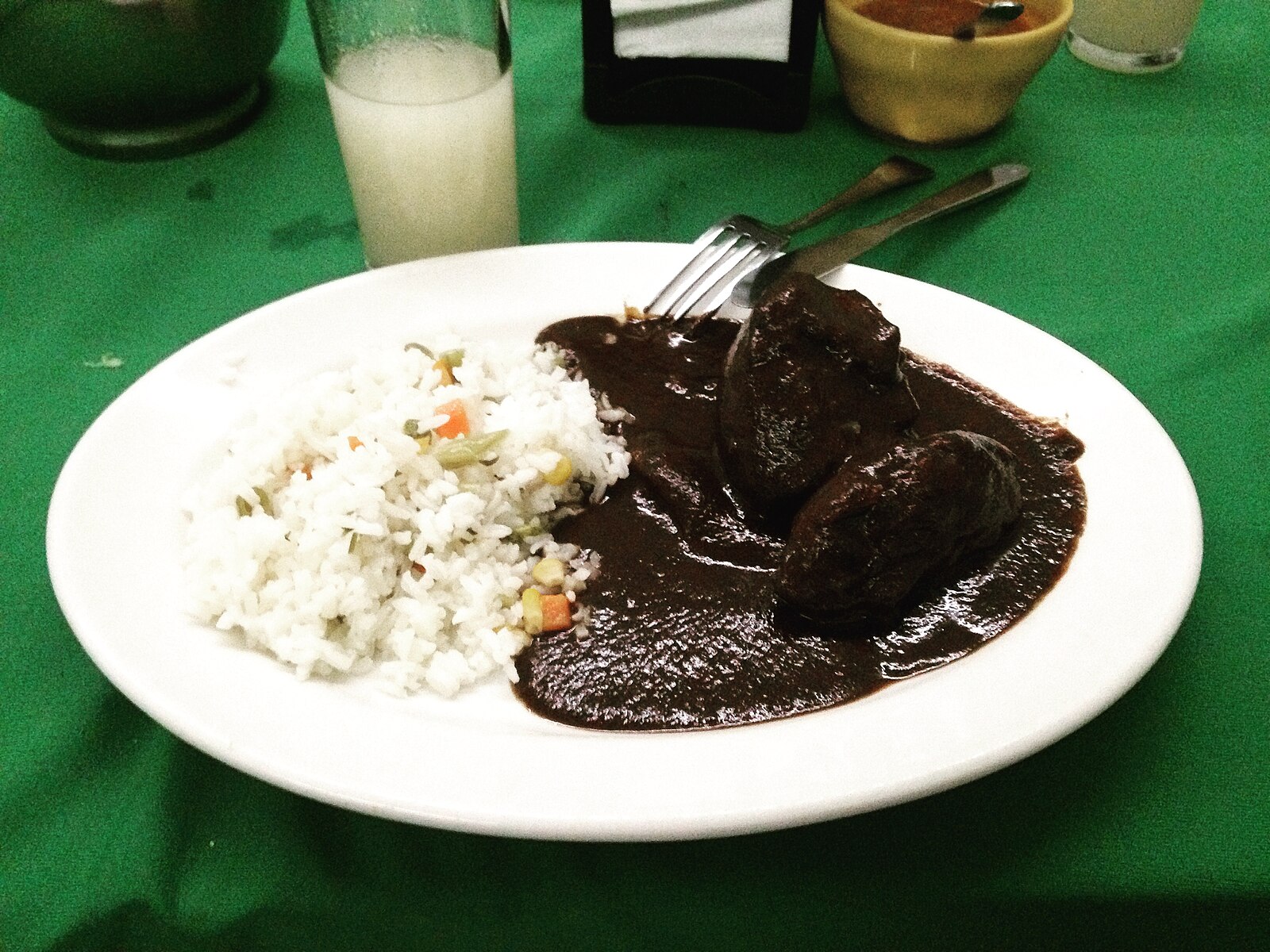
10. Mole Negro
Oaxaca calls itself the land of seven moles, and black mole is the most complex of them. It takes dried chillies, spices, chocolate and more than 30 ingredients, cooked for hours. It is the dish for weddings and Day of the Dead.
Michelin gives a Bib Gourmand to Las Quince Letras, where Celia Florián has cooked since 1992. Her mole negro, in the guide’s words, is black as night and smoky. At La Olla, chef Pilar Cabrera serves it with plantain and sweet potato purées.
11. Tlayuda
A tlayuda is a large, thin corn tortilla toasted until crisp. It is spread with asiento, unrefined pork lard, then refried beans and quesillo, Oaxaca’s string cheese. Toppings run from tasajo (salted beef) and chorizo to chapulines, toasted grasshoppers.
A whole tlayuda is a full meal, so order one to share.
12. Garnachas Istmeñas
From the Isthmus of Tehuantepec come garnachas: small crisp masa cakes topped with shredded beef and pickled cabbage. Michelin names them a highlight at Las Quince Letras. They are a snack, so order them to share before the mole.
Yucatán: Cochinita Pibil and the Maya Kitchen
Yucatán cooking mixes ancient Maya ingredients with flavours the Spanish brought, according to the state government. Its seasoning leans on pumpkin seed, sour orange, achiote, habanero and purple onion. The state declared its cuisine intangible cultural heritage of Yucatán in 2013.
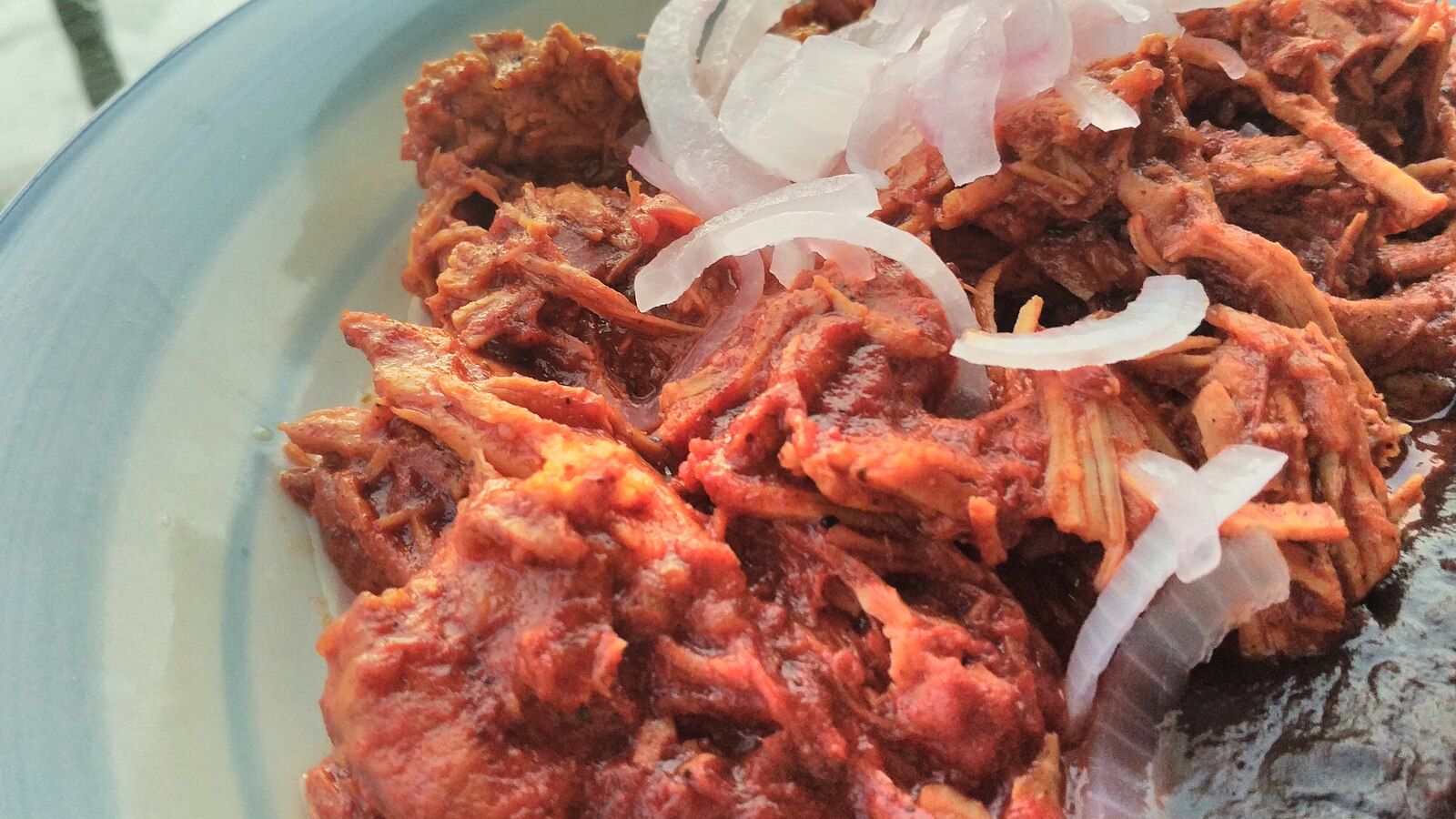
13. Cochinita Pibil
Pork is marinated in achiote and sour orange, wrapped in banana leaf and slow-cooked. Pibil refers to the pib, an earth oven once used for pheasant, wild boar or deer before pork arrived. That account comes from the federal government’s own food pages.
Order it in tacos or a torta with pickled purple onion and habanero. Yucatán’s tourism ministry credits that achiote, sour orange and pickle combination for the dish’s fame.
14. Poc Chuc
Poc chuc is pork fillet marinated in sour orange and grilled over charcoal. It comes with corn tortillas, tomato salsa, roasted red onion, habanero salsa, radish and coriander. The Yucatán tourism ministry points visitors to Kaua, two hours from Mérida, near Chichén Itzá.
There, a corridor of about five traditional cooks’ restaurants is known as Las Tías de Kaua. It makes an easy lunch stop on the way to the ruins.
15. Papadzules
Papadzules, from the Maya papak-tsul, are tortillas bathed in a pumpkin-seed sauce and rolled around chopped hard-boiled egg. A tomato sauce goes on top. With no meat, they suit vegetarians.
16. Sopa de Lima
This chicken broth is sharpened with lima, the local citrus, and served with crisp tortilla strips. The state government lists it among Yucatán’s typical dishes, with cochinita and poc chuc. It is a light starter in the heat.
Jalisco, Michoacán and Guerrero: Birria, Carnitas and Pozole
17. Birria
Birria is goat or beef slow-cooked in a chilli marinade and served with its own consommé. Guadalajara’s tourism office names birria, torta ahogada and carne en su jugo among Jalisco’s food symbols, with tequila.
Birriería David is an eight-stool counter in the Mercado Alcalde, run by three generations over 60 years. The Michelin Guide lists it, and Reforma put the average ticket at MXN 170 (about US$9) in June 2026. Birriería Las 9 Esquinas serves goat birria at about MXN 250 a head (about US$14).
18. Torta Ahogada
A crusty birote roll is filled with carnitas and drowned in tomato sauce and fiery chile de árbol salsa. Ask for it media ahogada, half-drowned, if you fear the heat. Guadalajara has held a Municipal Day of the Torta Ahogada each September since 2022, with free tortas handed out in the historic centre.
19. Carnitas
Carnitas are pork cooked slowly in lard, traditionally in a copper cauldron, until golden at the edges. Quiroga is the town most associated with them, according to the Michoacán press. Order them in tacos with salsa bandera of tomato, onion and chilli.
Michoacán now runs a certification mark, Carnitas de Michoacán, that requires set ingredients and about four hours of cooking. As of 3 October 2026, six businesses in Morelia, Quiroga and Tacámbaro held it. The state says the mark is also registered in the United States.
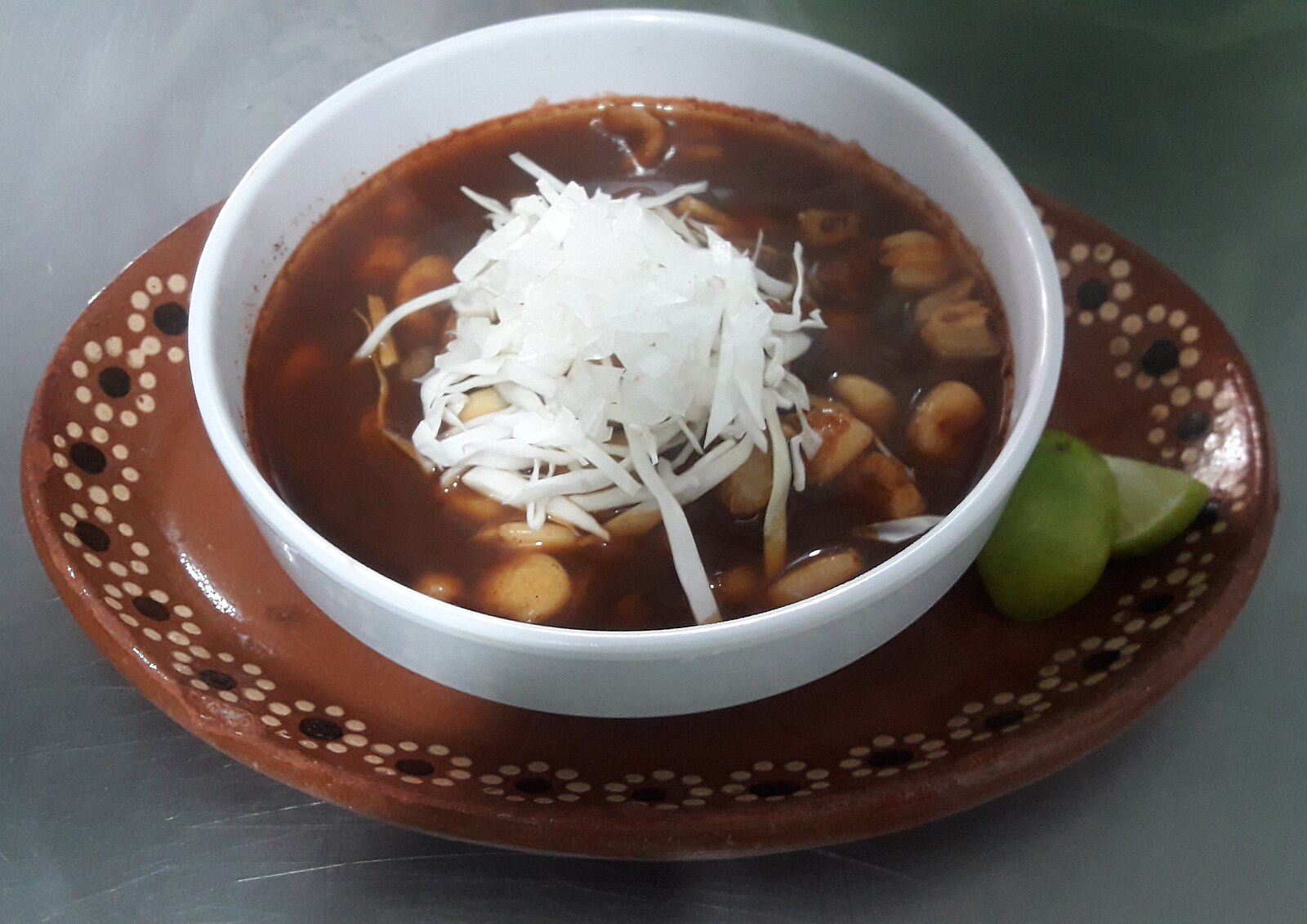
20. Pozole
Pozole is a broth of cacahuazintle corn, whose kernels open like flowers as they boil. The federal agriculture ministry says the name comes from the Nahuatl pozolli, foamy. White pozole is the base, red with ancho and guajillo chillies is linked to Jalisco, and green with pumpkin seed to Guerrero.
Guerrero keeps pozole Thursdays, when pozolerías serve white and green versions with tostadas and avocado. Garnish with lettuce, radish, onion, oregano and lime. For a seasonal take, see the Pulque and Pozole Fair in Toluca.
The North and the Pacific: Cabrito, Aguachile and Fish Tacos
21. Cabrito
Young goat roasted over charcoal is the emblem of Nuevo León. The state tourism ministry’s food routes list cabrito al pastor in Monterrey, Sabinas Hidalgo and San Nicolás de los Garza. They call carne asada an emblem of family gatherings.
In Monterrey, Michelin lists Casa El Hidalgo for northern home cooking. KOLI Cocina de Origen reworks cabrito on a tasting menu.
22. Machacado con Huevo
Dried, shredded beef is scrambled with egg for a northern breakfast. The Nuevo León food routes list it in Ciénega de Flores and Villaldama. It comes from the same ranching tradition as cabrito.
23. Aguachile
Raw shrimp is cured briefly in lime with chiltepín chilli, cucumber and red onion. The federal agriculture ministry traces it to Sinaloa’s highlands, where it began as dried meat in water with chiltepín. Sinaloa produces 45.5 percent of Mexico’s shrimp, the ministry adds.
Regional rule: the lime goes on just before serving, and the shrimp must never have been frozen. Order it with tostadas and a cold beer or tequila.
24. Fish Tacos
Battered fish goes into a corn tortilla with shredded cabbage and salsa bandera of tomato, onion and chilli. Ensenada’s daily El Vigía places their birth at the port’s old fish market in 1960 and 1961. The first versions used angel shark.
El Vigía names Tacos Fénix, on the corner of Juárez and Espinoza avenues, among the city’s long-running stands. Order two, with a squeeze of lime.
25. Seafood Tostadas
Crisp tortillas come piled with ceviche, octopus, clam or sea urchin. La Guerrerense, a seafood cart on Avenida López Mateos in Ensenada, was founded in 1960. Sabina, its sit-down offshoot across the street, holds a Michelin Bib Gourmand and serves the same tostadas.
What It Means for US Readers
For travellers, the calendar matters as much as the map. Chiles en nogada run from July to mid-September, while late October brings Day of the Dead tamales and mole negro.
Budgets stretch further than in US cities. A Guadalajara birria lunch averages MXN 170 (about US$9), and Michelin-listed counters sit beside fine dining. The best time to visit Mexico by region helps plan around heat and rain.
Carry pesos for markets and stands. Michelin notes that Tacos y Gorditas Elvira, a Bib Gourmand in Guadalajara’s Mercado Alcalde, does not take cards.
For food businesses and investors, regional names are becoming brands. Michoacán has registered Carnitas de Michoacán as a mark in the United States. In Puebla, the restaurant chamber has agreed to buy chile en nogada ingredients directly from Izta-Popo farmers.
For expats, the fish taco is a reminder of how close the two food cultures are. El Vigía noted in 2011 that Ensenada-style fish tacos were already sold in parts of the United States.
What Is Not Known
Many origin stories are contested. Mexico’s consumer agency says there is no concrete data on where pozole began, and Sinaloa offers more than one account of aguachile. Puebla families still disagree on who sold the first taco árabe.
Michelin distinctions change with each edition. Check the current guide before travelling for a specific star or Bib Gourmand.
Prices here are averages or official estimates, not menu quotes. The 4.45 million figure for 2026 chile en nogada sales is a state projection, not a final count.
Frequently Asked Questions
What are the essential Mexico food dishes to try?
Start with tacos al pastor in Mexico City, mole poblano and chiles en nogada in Puebla, mole negro and tlayudas in Oaxaca, and cochinita pibil in Yucatán. Add birria and tortas ahogadas in Guadalajara, pozole, and fish tacos in Ensenada.
What is the difference between tacos al pastor and tacos árabes?
Both use pork roasted on a vertical spit. Tacos árabes come from Puebla and are rolled in a thick wheat flatbread called pan árabe. Tacos al pastor, the Mexico City version, use corn tortillas and usually pineapple.
When can you eat chiles en nogada?
In summer. Puebla’s 2026 season ran from 1 July to 16 September, because the walnuts and pomegranates the dish needs ripen then. Plates cost MXN 250 to 600 (about US$14 to US$33).
Where does cochinita pibil come from?
From the Yucatán Peninsula. Pork is marinated in achiote and sour orange, wrapped in banana leaf and cooked slowly; pibil refers to the pib, a Maya earth oven.
How much does a meal cost in Mexico?
Street and market food is cheap by US standards. A Guadalajara birria counter averages MXN 170 a head (about US$9), at MXN 18.13 per US dollar on 5 October 2026.
Is Mexican food a UNESCO heritage?
Yes. UNESCO inscribed traditional Mexican cuisine on its Representative List of the Intangible Cultural Heritage of Humanity in 2010, using Michoacán as the model.
Sources: UNESCO, Traditional Mexican cuisine (2010); Banco de México, FIX exchange rate; Secretaría de Agricultura, pozole; Secretaría de Agricultura, aguachile; Profeco, pozole; Gobierno de Guerrero, pozole verde; Gobierno de Yucatán, gastronomía; Sefotur Yucatán, poc chuc and cochinita; Secretaría de Cultura, comida tradicional yucateca; Secretaría de Cultura, la cultura del antojito; Gobierno de Puebla, chile en nogada season; El Universal Puebla, 2026 season and prices; Conexión Puebla, tacos árabes; Identidad Puebla, tacos árabes; El Universal Oaxaca, seven moles; Gobierno de Michoacán, Carnitas de Michoacán; Gobierno de Guadalajara, Día de la Torta Ahogada; Turismo Nuevo León, gastronomy routes; Reforma, Jalisco in the Michelin Guide; Criterio Hidalgo, Actopan barbacoa; El Vigía, origin of the fish taco; Michelin Guide, El Vilsito; Michelin Guide, Taquería El Califa de León; Michelin Guide, Las Quince Letras; Michelin Guide, Casareyna; Michelin Guide, Birriería David; Excélsior, chile en nogada season; Indicio Michoacán, carnitas de Quiroga; Infobae, gob.mx on cochinita pibil; El Financiero, 19th-century quesadillas; Michelin Guide, Sabina; Michelin Guide, Los Cocuyos; Michelin Guide, Mural de los Poblanos; Michelin Guide, La Olla; Michelin Guide, Tacos y Gorditas Elvira; El Universal Hidalgo, Actopan barbacoa fair; Diario Oficial de Yucatán, 2013 gastronomy decree. All accessed 6 October 2026.