 By The War Zone | Created at 2026-07-24 19:45:38 | Updated at 2026-07-24 21:04:51
1 hour ago
By The War Zone | Created at 2026-07-24 19:45:38 | Updated at 2026-07-24 21:04:51
1 hour ago
The TWZ Newsletter
Weekly insights and analysis on the latest developments in military technology, strategy, and foreign policy.
When BAE Systems unveiled the first rendering of the United Kingdom’s Combat Air Flying Demonstrator last year, it finally gave us a look at the test aircraft that will spearhead development of the Global Combat Air Program (GCAP), at the center of which is the stealthy Tempest fighter. Now, new images, as well as a scale model, provide more details and a better idea of its scale.
The company has released its clearest official photograph yet of the demonstrator under construction. Seen at the top of this story, it shows the fuselage of the jet being built at the BAE Systems facility in Samlesbury. Meanwhile, the wings and fins are being built at Warton, from where the aircraft is due to fly before the end of 2027.
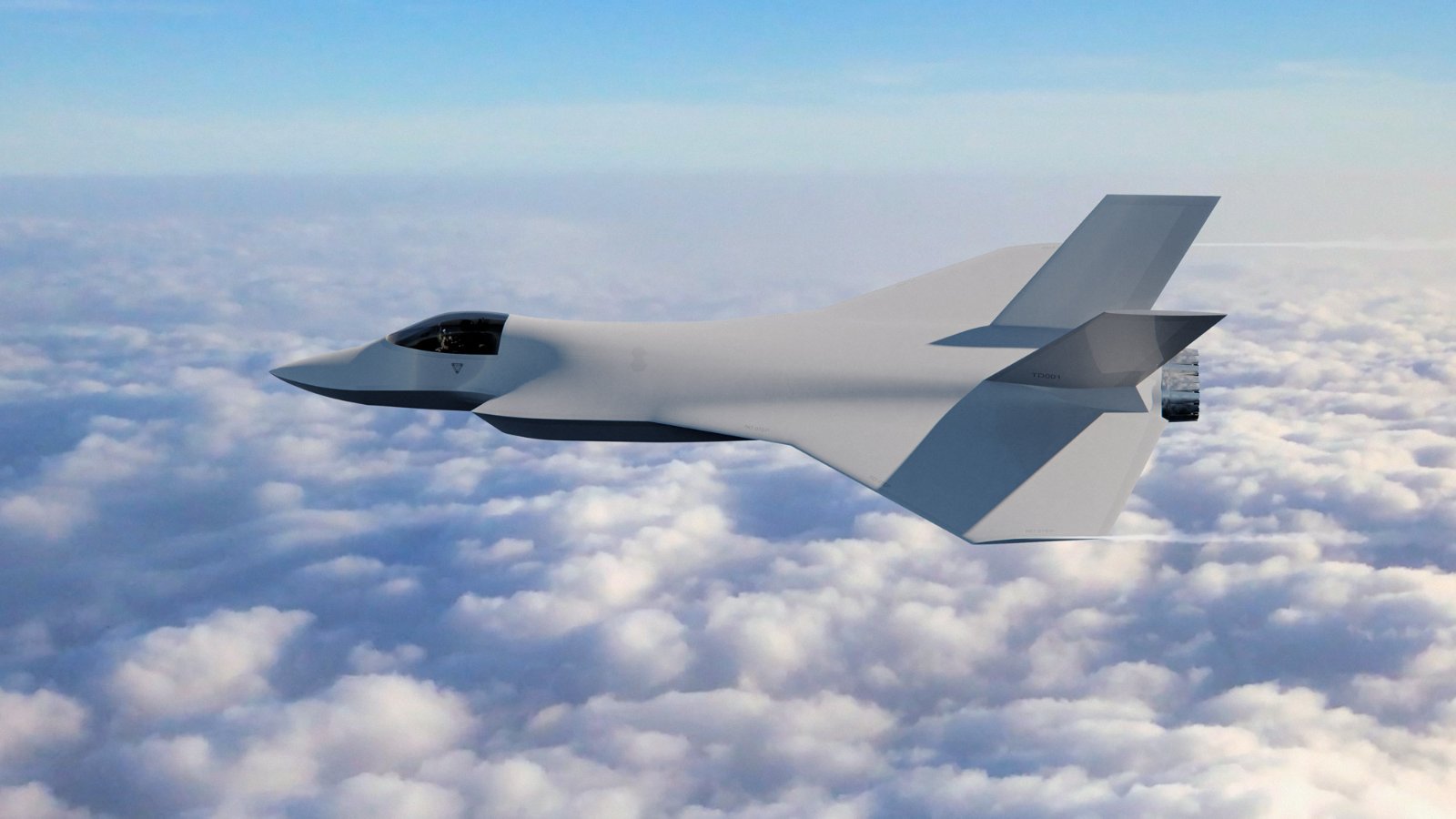 A company rendering of the Combat Air Flying Demonstrator. BAE Systems
 In aerospace, a demonstrator (or technology demonstrator) is an aircraft built primarily to prove technologies, manufacturing methods, aerodynamic concepts, and systems integration, rather than to become an operational weapon system. As a precursor to a prototype that would more closely represent a final configuration, they are nearly always smaller, simpler designs that leverage off-the-shelf components wherever possible to get them into the air faster and to prove core concepts and/or a package of concepts. The last such known fighter demonstrator in this class built in the United Kingdom was the British Aerospace EAP that first flew in 1986 and proved the concept for the Typhoon that followed it.
The Combat Air Flying Demonstrator will inform the sixth-generation Tempest fighter, which is being developed for the air forces of the United Kingdom, Italy, and Japan, for service in the 2040s and beyond. Canada also recently joined the program as an observer, and there are reports that Germany might also be considering coming on board.
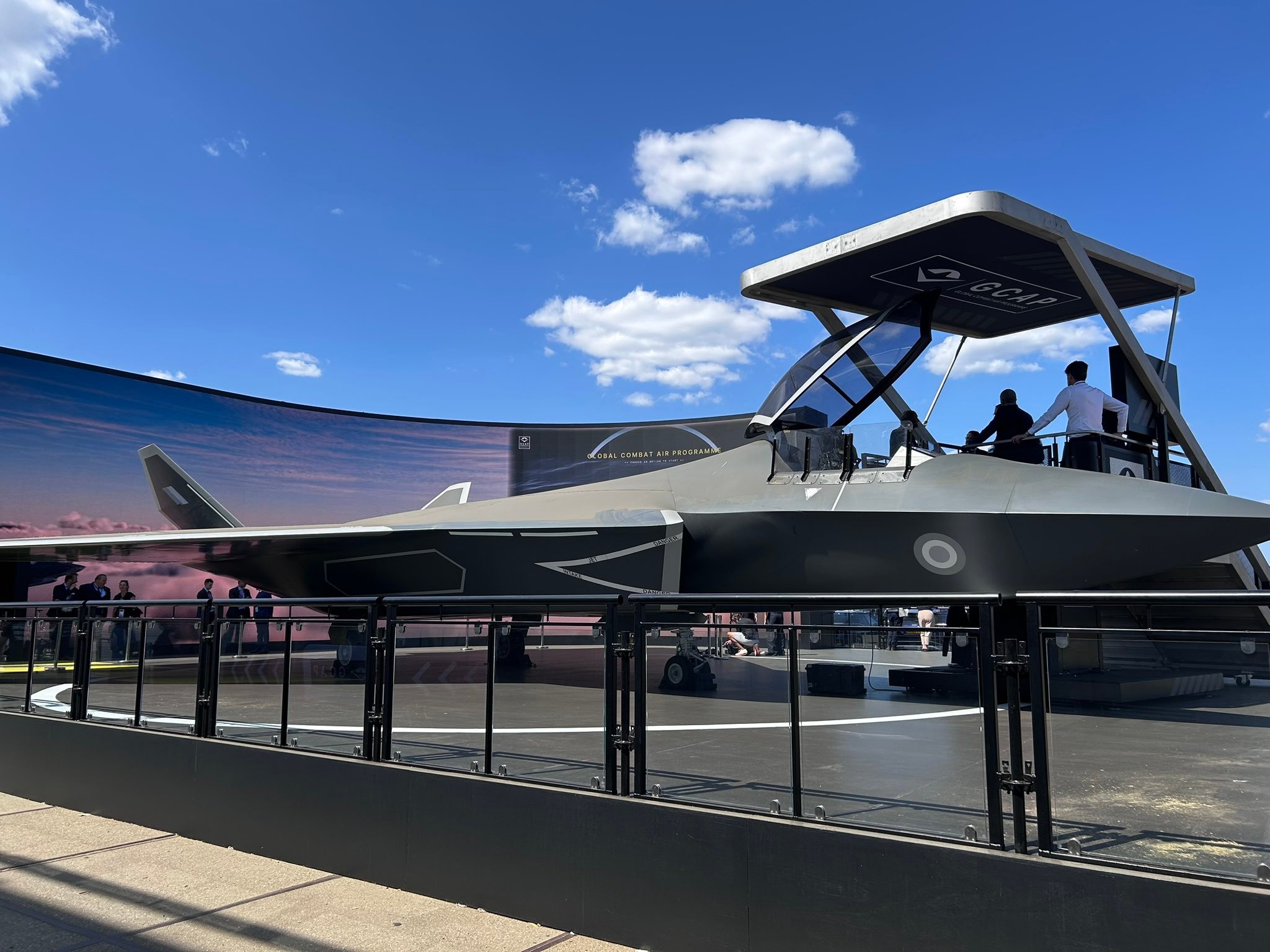
A model of the Combat Air Flying Demonstrator presented at the Farnborough International Airshow in England earlier this week:
The new scale model confirms that the twin-engine aircraft has outward-canted twin fins and no horizontal tails. Another major difference that we know about relates to the powerplant. The Combat Air Flying Demonstrator will use the same EJ200 turbofans as the Typhoon. The production Tempest will feature an all-new powerplant that is now under development. Nevertheless, officials have said that the demonstrator will have fighter-style handling, despite its size and lack of thrust compared to the Tempest.
Overall, the demonstrator aircraft has some similarities to the F-35 (except the horizontal tails), including forward-swept intakes that are a DSI design and a prominent ‘chine’ on the forward fuselage. The center fuselage section is notably long and broad, something carried over, but to a lesser degree, from Tempest renderings and models.
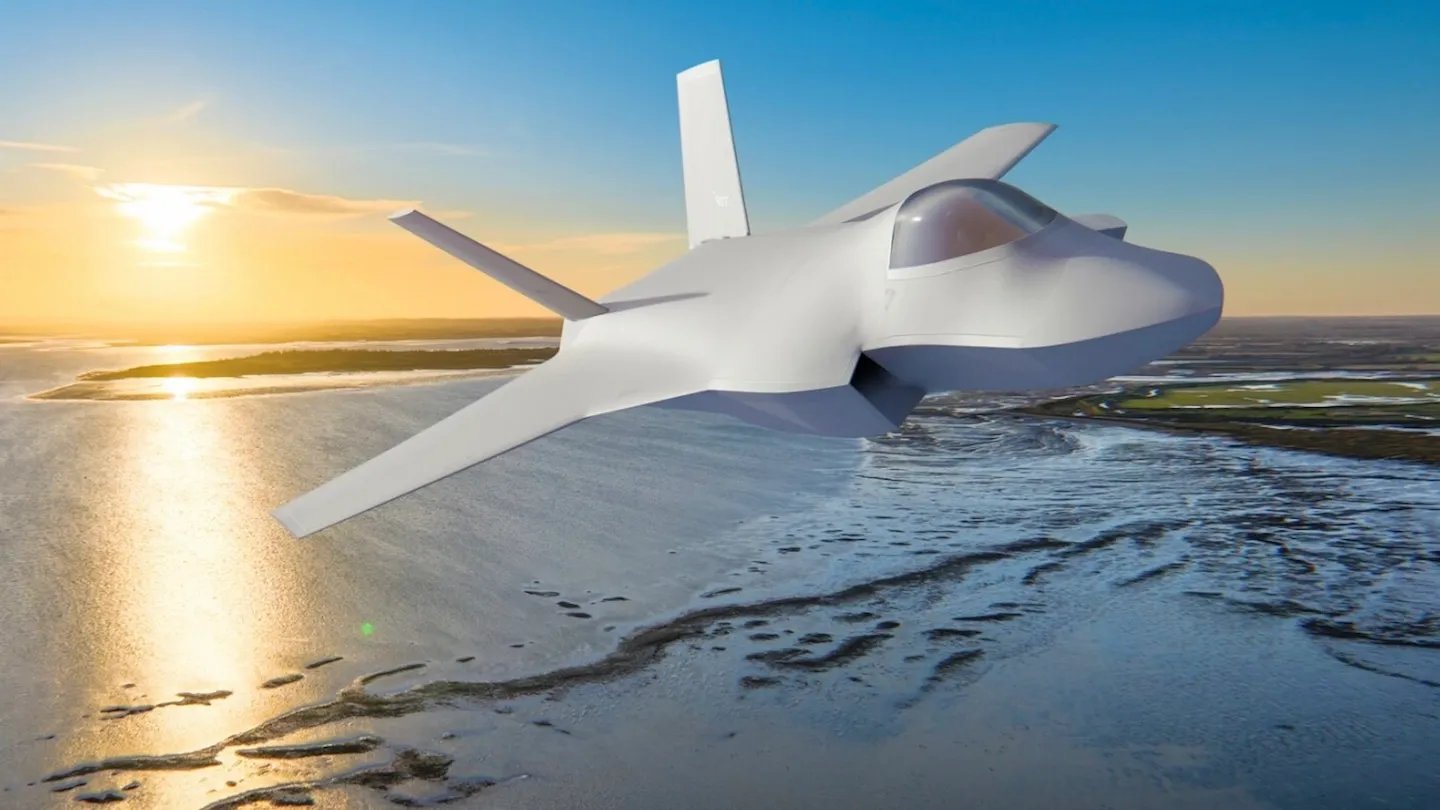 The very first official rendering of the Combat Air Flying Demonstrator. BAE Systems
 The inboard leading edge of the wing is slightly cranked, there is some forward sweep on the trailing edge, and the wingtips are severely cropped. The result is something of a modified cropped-delta wing, very different to the lambda wing that appeared on the very first Tempest concept and closer to the large-area delta that appears on later Tempest concepts. As for the demo jet’s tailfins, these are simpler than those on the latest Tempest mockup, being trapezoidal rather than having five ‘sides’.
The canopy also appears to offer limited rearward visibility. The underside of the fuselage almost has area-ruled, hour-glass-like contours.
The factory-floor photograph includes technicians, assembly tooling, work platforms, and production fixtures that immediately provide useful reference points. Even allowing for perspective effects, the demonstrator’s center fuselage appears broad and deep.
Looking down the spine of the aircraft, the width of the centerbody is especially striking. The absence of skin panels exposes a substantial internal space, which accommodates low-observable serpentine intakes, while the distance between the outer mold line on each side further hints at the generous internal volume available inside the aircraft.
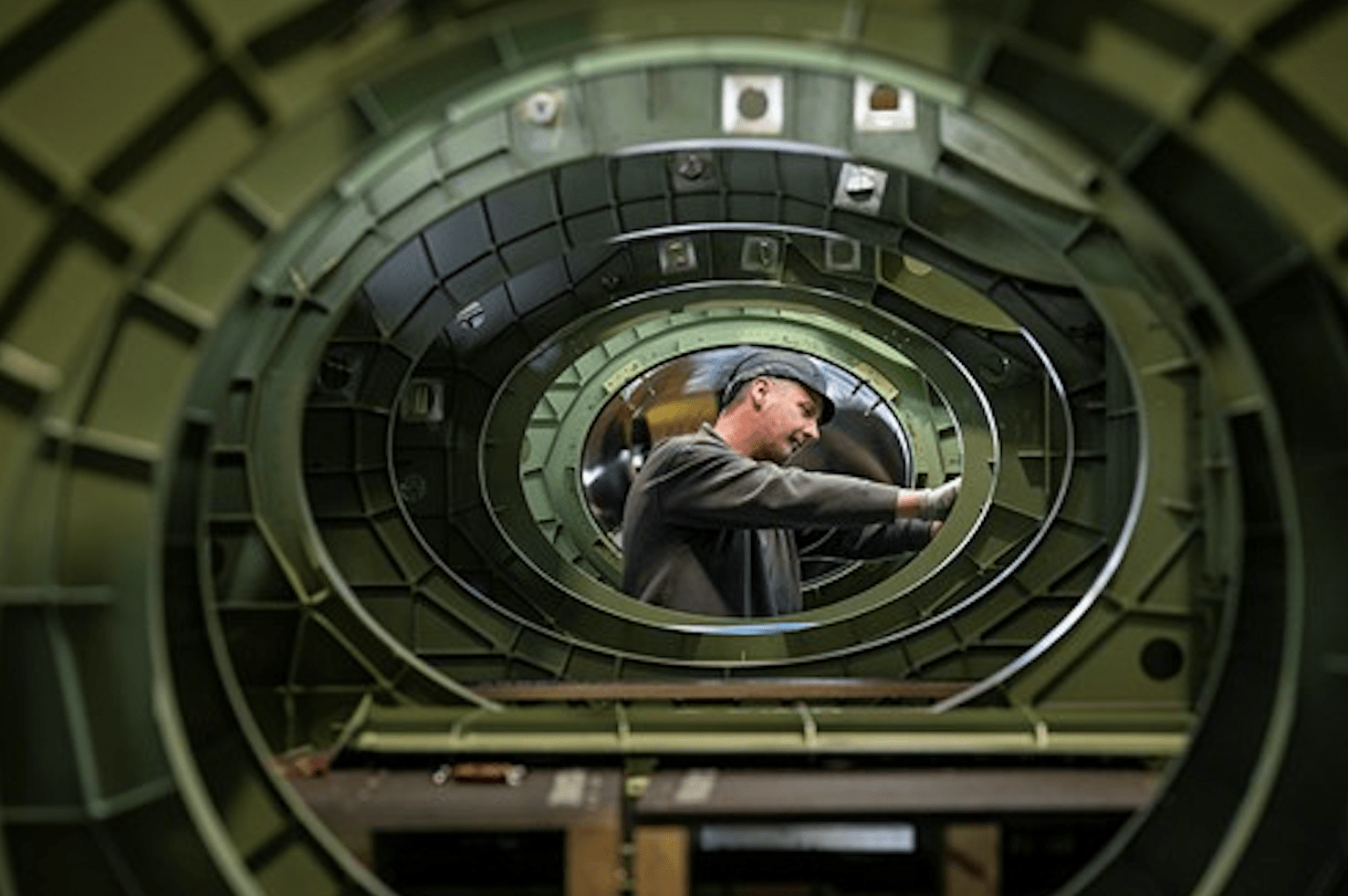 A view of the ducting inside the center fuselage section. BAE Systems
 Of course, perspective can exaggerate proportions, and this remains a technology demonstrator rather than the final operational GCAP fighter, let alone a Tempest prototype. The aircraft that eventually enters service in the mid-2030s will undoubtedly differ in various respects.
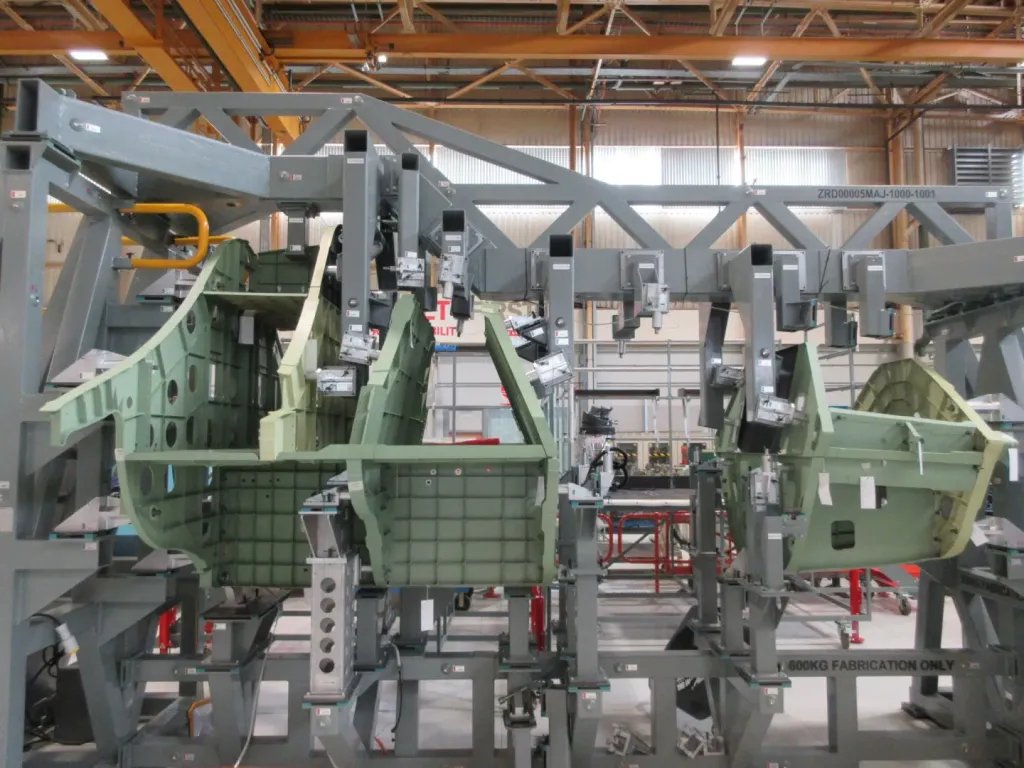 An earlier view of the Combat Air Flying Demonstrator taking shape on the production line. Team Tempest
 Air Commodore Martin Lowe, the Future Combat Air System (FCAS) program director at the U.K. Ministry of Defense, has stressed this exact reality. He highlights that the Combat Air Flying Demonstrator is not a Tempest prototype, particularly not “in terms of shape or size.” The final configuration of the Tempest has yet to be settled, but it will surely be bigger and more complex than the demonstrator. A new, full-size mockup of the Tempest was also presented at the Farnborough International Airshow in England this week.
 The latest full-size mockup of the Tempest. GCAP
 While the Combat Air Flying Demonstrator has a definite F-35 ‘look,’ the latest Tempest mockup owes more to the F-22 Raptor. In fact, in at least one recent render, seen below, it appears like a wider, squatter F-22, suggesting an even more generous internal capacity.
 @shinjirokoiz/via X
 As TWZ previously reported, the future combat aircraft is being designed around “really extreme range” and a payload approximately double that of the F-35A. Just in terms of internal and external ordnance, for the F-35A, this equates to more than 18,000 pounds, according to the manufacturer. This would suggest the Tempest’s internal payload will be around 10,000 pounds compared to the F-35A’s 5,000 pounds.
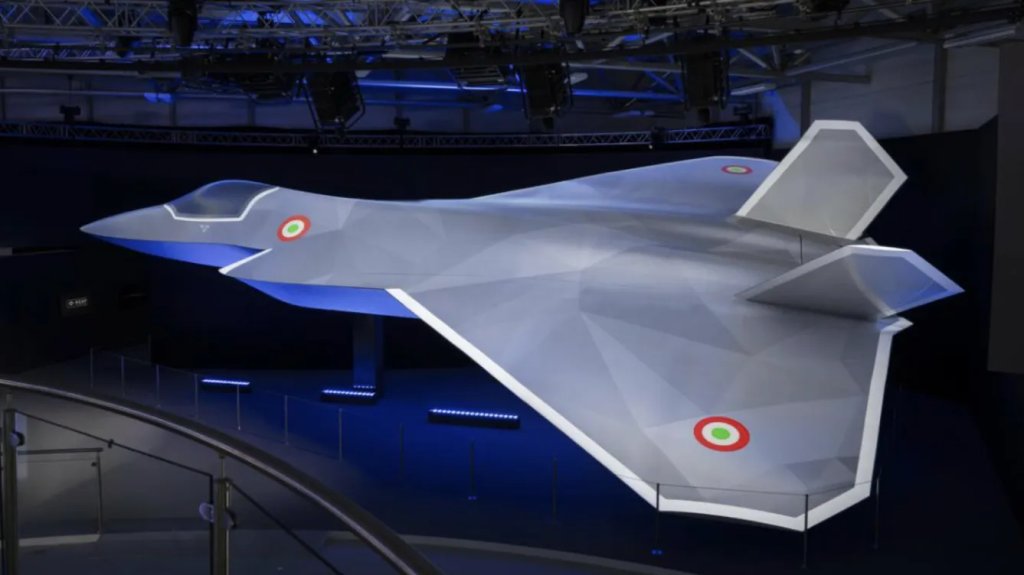 A 2024 mockup of the Tempest combat jet. Leonardo
 Those requirements point toward a substantially larger aircraft with dramatically greater internal volume than today’s fighters. They also reflect similar concerns that have driven the development of the U.S. Air Force’s Boeing F-47 under the Next Generation Air Dominance (NGAD) initiative.
Range is heavily dictated by fuel load, which the Tempest will carry internally to preserve its stealth qualities. At the same time, carrying significantly more — and larger — internal weapons than current fighters demands larger weapons bays. Sixth-generation aircraft are also expected to require unprecedented electrical power generation and cooling capacity to support advanced sensors, electronic warfare suites, communications systems, onboard computing, and potentially future capabilities such as directed-energy weapons.
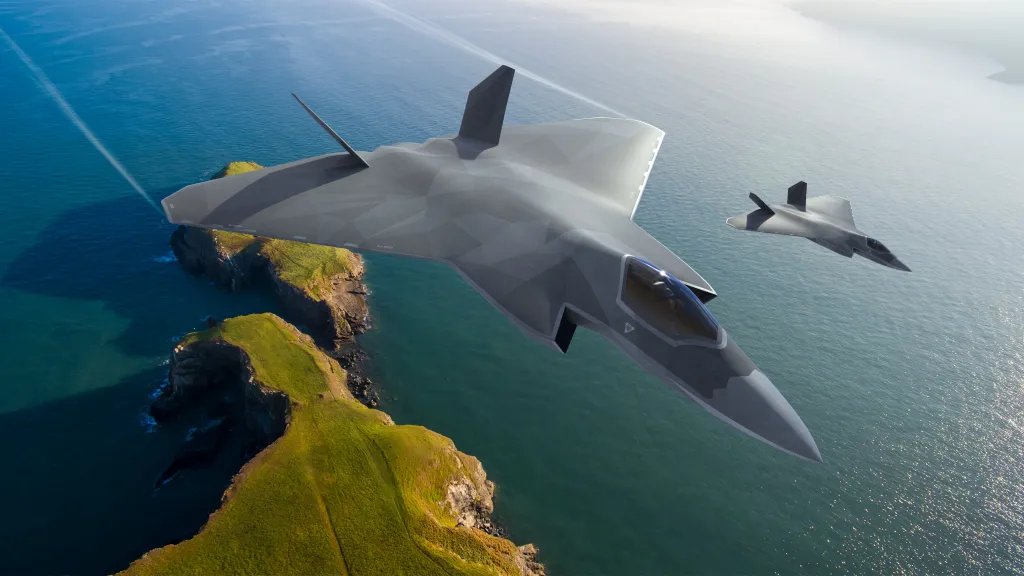 A rendering of a pair of Tempests overflying the U.K. coastline. BAE Systems
 Previous renderings gave us an idea of the shape of Britain’s future stealth fighter demonstrator. However, the new model and photos from the production line provide useful new detail of the Combat Air Flying Demonstrator, including a better appreciation of its scale. Ultimately, once the Tempest appears, it will likely be an even bigger and more impressive aircraft.
Contact the author: [email protected]