 By GB News (World News) | Created at 2026-10-06 00:40:58 | Updated at 2026-10-06 01:20:51
1 hour ago
By GB News (World News) | Created at 2026-10-06 00:40:58 | Updated at 2026-10-06 01:20:51
1 hour ago
Multiple people have been killed, with others suspected missing, after heavy rains and flooding in Spain's Catalonia region.
Catalan leader Salvador Illa confirmed the death of a man after a wall collapsed in Tordera, a town to the north of Barcelona, in a message on his social media account.
Another person died in Montornès del Vallès, firefighters said on Sunday, while emergency services were searching for a missing person in Pineda de Mar, a town 52 km (32 miles) to the north of Barcelona.
Catalan authorities issued a red alert warning and urged people to stay inside over the weekend due to reports of a "mini-hurricane", with more heavy rain forecast for the rest of the week.
Homes were flooded, and cars were left submerged in Bellvitge and Cornellà near Barcelona after torrential rain on Saturday, with Ducks spotted swimming in huge puddles that formed on motorways in Barcelona.
Sarai Sarroca, director of regional weather service Meteocat, said on Saturday that the core of an exceptional weather system was over the Mediterranean and a "mini-hurricane" could move over land in Catalonia.
Flights were cancelled or delayed at Barcelona airport, La Vanguardia newspaper reported on Saturday.
The deluge disrupted all local trains, with shops shutting early; football matches were called off, and a performance of Verdi's Aida at Barcelona's Liceu opera house was cancelled.
Much of Catalonia's roads remain flooded

REUTERS
Spain's meteorological agency AEMET issued a red alert for Catalonia, near Barcelona

REUTERS
Meteorologists say the storms are linked to a weather phenomenon known as a DANA, traditionally called a "gota fria," or "cold drop."
The phenomenon occurs when cold air high in the atmosphere meets warm, moisture-laden air rising from the Mediterranean, producing sudden and intense thunderstorms.
Spain's geography can also amplify the effect, as mountain ranges separating the coast from the country's elevated interior force moist Mediterranean air upward.
Catastrophic floods linked to a DANA killed 238 people in eastern Spain, mostly in Valencia, in October 2024, leaving communities devastated.
The outskirts of Barcelona flooded after the Besos river burst its banks

REUTERS
Prime Minister Pedro Sánchez said on Sunday the situation in Catalonia remained "very complicated".
The flooding follows the hottest summer on record in Spain, where almost 2,150 people are thought to have died from heat-related causes in August.
Aemet, the Spanish meteorological office, said the 10 hottest summers on record have all occurred in the 21st century, and seven of the eight warmest have taken place since 2015. The agency also warns that the meteorological summer keeps getting longer.
A spokesman said: "At the end of May, temperatures typical of July were recorded across large areas of the country.
"In September, already in the meteorological autumn, there was another heatwave which, provisionally, ran from the 2nd to the 7th, lasting six days and affecting 16 provinces."
Spanish Prime Minister Pedro Sanchez has said the situation remains complicated
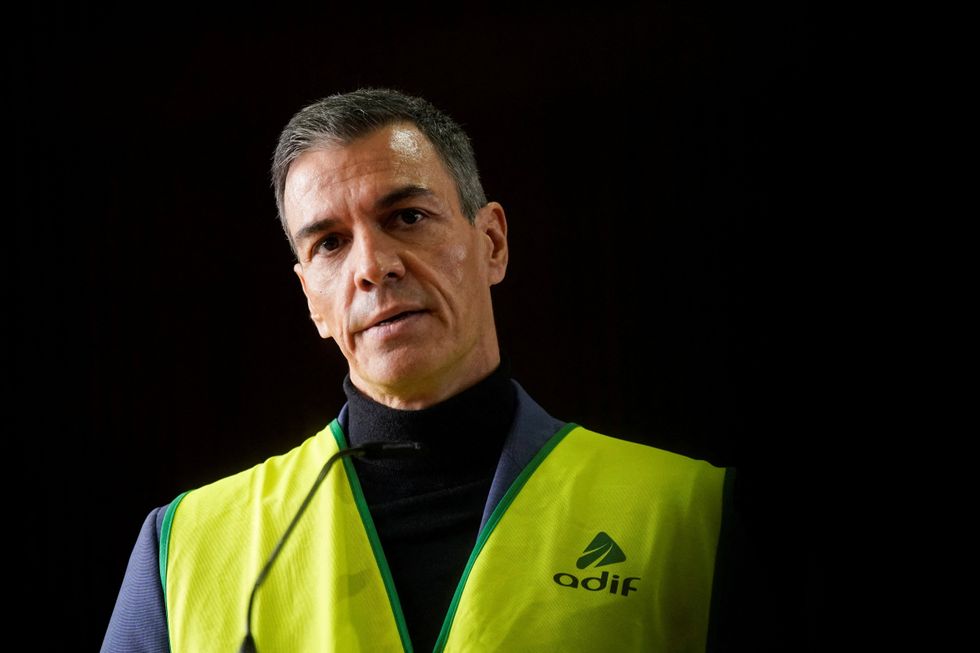
Prime Minister Sánchez revealed in May that the country would deploy its biggest-ever wildfire response this year.
However, the most recent spate of wildfires has meant road closures for residents and forced 1,000 people to evacuate from affected areas.
Spain experienced its highest daily average temperature since 1950 in June.
Last year, the southern European country endured wildfires, with a record 393,000 hectares of land burnt – six times the Spanish average between the years 2006 and 2024.
In 2025, the European Union had its worst wildfire season since records began in 2006.