 By The War Zone | Created at 2026-09-17 18:50:54 | Updated at 2026-09-17 19:39:18
52 minutes ago
By The War Zone | Created at 2026-09-17 18:50:54 | Updated at 2026-09-17 19:39:18
52 minutes ago
Lockheed Martin and the U.S. Air Force are once again discussing new-build F-16s. The development comes as the service grapples with a fighter fleet that is simultaneously aging, shrinking, ballooning in sustainment cost and being called upon to do more. This also comes at a time when the Air Force is now investing heavily in the F-15EX, another fourth-generation type it hadn’t bought for many years after committing to an all stealth future fighter fleet in the 2000s.
According to Aviation Week, the company has proposed an aircraft called the F-16G, an enhanced derivative of the F-16 Block 70. The proposed configuration reportedly incorporates conformal fuel tanks, 600-gallon wing tanks, an infrared search-and-track (IRST) system, a Sniper targeting pod, and a drag chute. All of these features have appeared on previous F-16s in one form or another. Lockheed is positioning the new version as a potential replacement for USAF F-16 units whose existing aircraft are approaching the end of their useful lives.
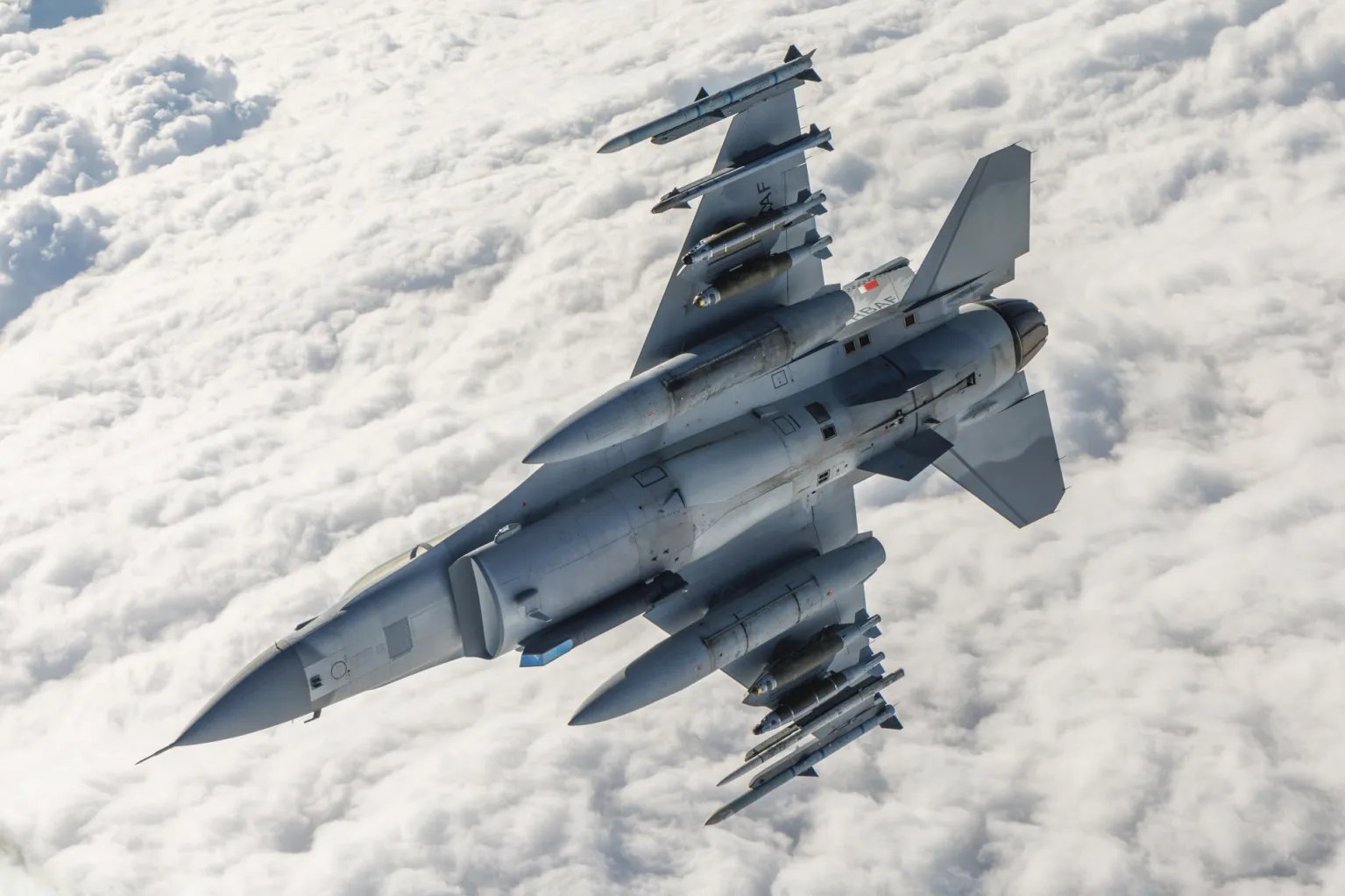 A Bahraini Block 70 F-16D flown by members of the 416th Flight Test Squadron pulls away after receiving fuel from a KC-135 tanker with a crew from the 370th Flight Test Squadron during a sortie out of Edwards Air Force Base in California on March 7, 2024. U.S. Air Force
 The Air Force, for its part, says that it has not yet settled on either the requirements or the options for addressing the problem. As it stands, the service has not committed to buying any new F-16s. The proposal is nevertheless notable because it follows an earlier round of discussions in which the Air Force was already examining whether a new-build F-16 could help address the growing fighter gap.
In December 2025, Inside Defense reported that the Air Force had reached out to Lockheed Martin about pricing for Block 70 F-16s — the current export standard. The conversations were described as exploratory, with no firm procurement plan, but the reporting established that the idea had moved beyond a purely theoretical discussion. One congressional aide told the publication that officials were looking at ways to “plug their holes” as part of their future force-structure planning.
A new Viper variant based on the Block 70 would be cheaper than replacing an aging F-16 with an F-35, while allowing the Air Force to retain much of the infrastructure, training, and experience associated with the existing aircraft. This is a major advantage as the F-35’s unique infrastructure and support requirements are a costly addition to the aircraft’s base price tag. An even bigger factor is unrelated to acquisition and bed-down costs: a Block 70 is far cheaper to sustain and operate over its service life than an F-35, a difference that compounds significantly across a fleet.
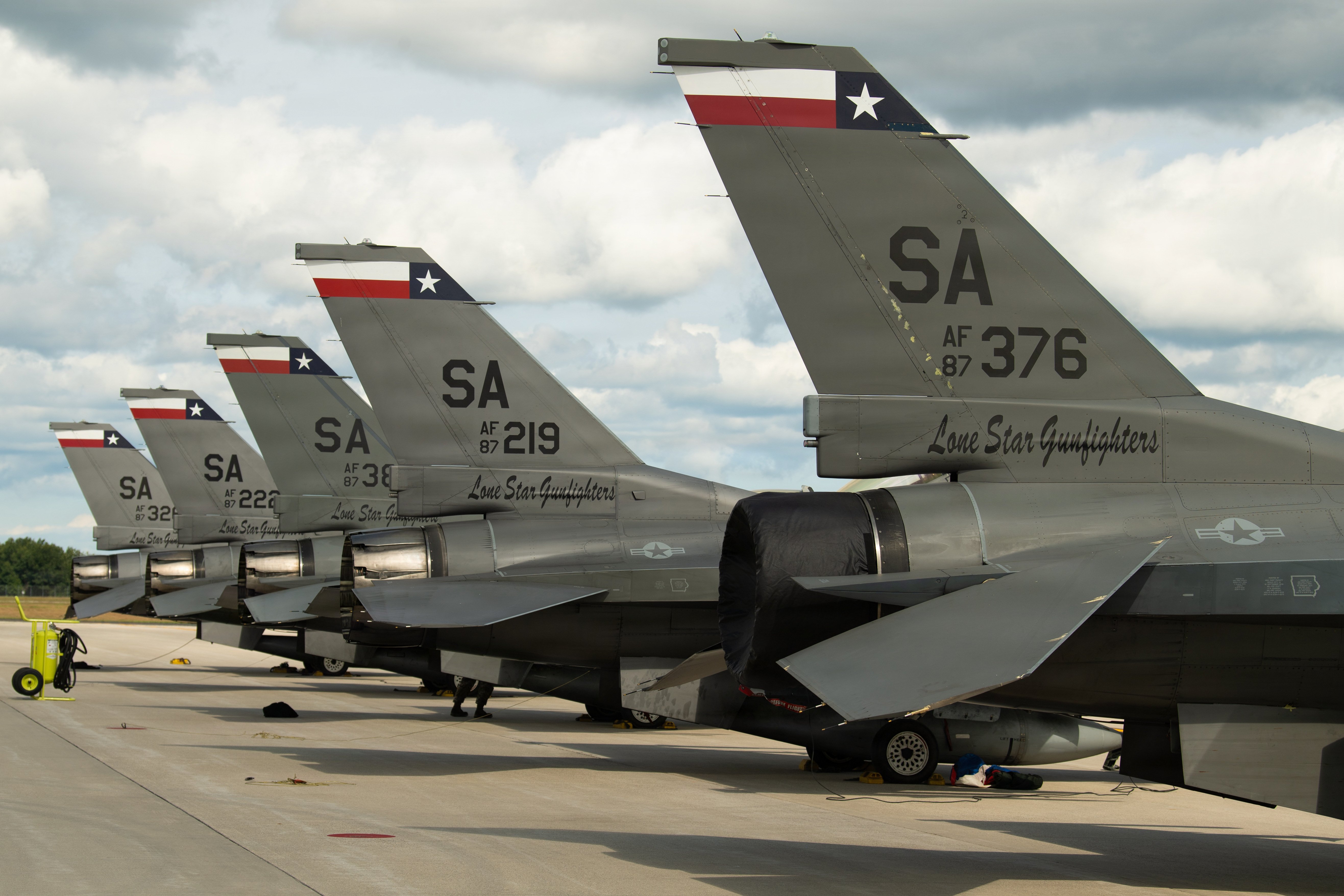 A line-up of F-16s assigned to the 149th Fighter Wing, a unit of the Texas Air National Guard. Air National Guard photo by Airman 1st Class Jonathan Rasco Airman 1st Class Jonathan Rasco
The idea of a new Viper buy had already reached the highest levels of Air Force leadership several months earlier.
In May 2025, Sen. Tom Cotton asked then-Air Force Chief of Staff Gen. David Allvin about the possibility of buying a U.S.-configured “Block 80” F-16 if Congress provided additional funding. Allvin did not endorse the proposal, but he did not dismiss it either, saying he needed to examine the time required to adapt the Block 70 design, where a U.S. aircraft could fit into Lockheed Martin’s production line, and what the industrial base could support. He also noted that the existing Block 70/72 line was already heavily occupied by foreign military sales.
At the same hearing, Allvin acknowledged the broader force-structure logic, saying the Air Force needed both the high-end capabilities required for an Indo-Pacific fight and other fighters that “may not need to be as sophisticated as our fifth-generation, sixth-generation.” He also emphasized that the first increment of Collaborative Combat Aircraft (CCA) was intended to augment rather than replace crewed fighters like the F-16.
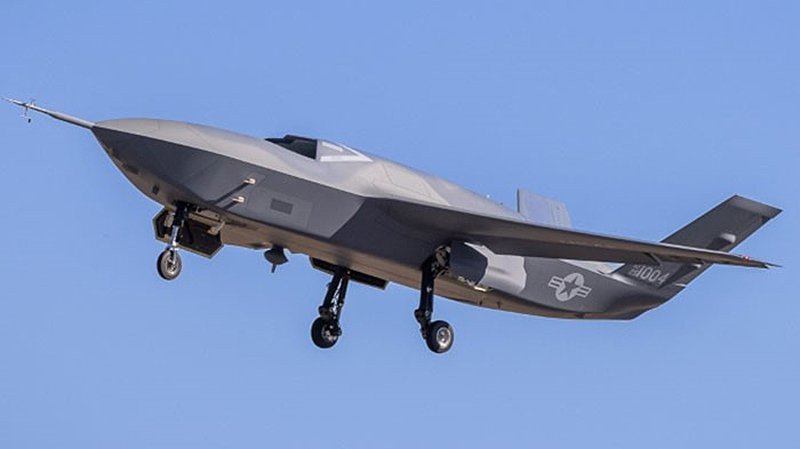 General Atomics’ YFQ-42 for the first increment of the Air Force’s Collaborative Combat Aircraft program, which has now received the official nickname Vengeance. General Atomics
 Taken together, the developments show that the concept has remained alive through the Air Force’s evolving force-structure debate.
The Numbers Game
At first glance, the idea of buying new F-16s for the Air Force in the late 2020s might seem puzzling. The F-16 entered U.S. service in the 1970s, the Air Force stopped buying new examples for itself more than 20 years ago. The established plan has been to replace the legacy F-16 fleet with the F-35A. For a long time, the service’s stated ambition was ultimately an all-stealth tactical fighter force — but that vision has already largely melted away as budget, operational and industrial-capacity realities have set in.
Today, the fighter fleet is still far older on average than it needs to be and legacy fourth generation types, minus a handful of new F-15EXs, are now well over 20-years old at the youngest. The oldest of these aircraft are increasingly challenging and costly to support. Meanwhile, the F-35 has had its fair share of successes and challenges, but replacing all of the USAF’s oldest fighters with JSFs in a timely and efficient manner, and operating those aircraft over future decades, looks increasingly problematic. The F-47 is also on the horizon, but that aircraft fits a different capability set more aligned with the F-22 than the F-16 and will come at a much higher cost than any fighter currently being procured.
Above all else, the problem is that the Air Force’s fighter challenge is one of numbers.
The service’s 2025 long-term fighter force-structure assessment concluded that it needed 1,558 combat-coded manned fighters by 2035 to reach what it considers a low-risk operational posture. The Air Force had only 1,098 fighters in its inventory as of May 2026, below the statutory minimum of 1,145.
At the same time, the service is trying to retire old aircraft, expand F-35A procurement, introduce the F-47, acquire additional F-15EXs, and field large numbers of CCAs. Those programs address different requirements, but they all compete for money, industrial capacity, personnel, and infrastructure.
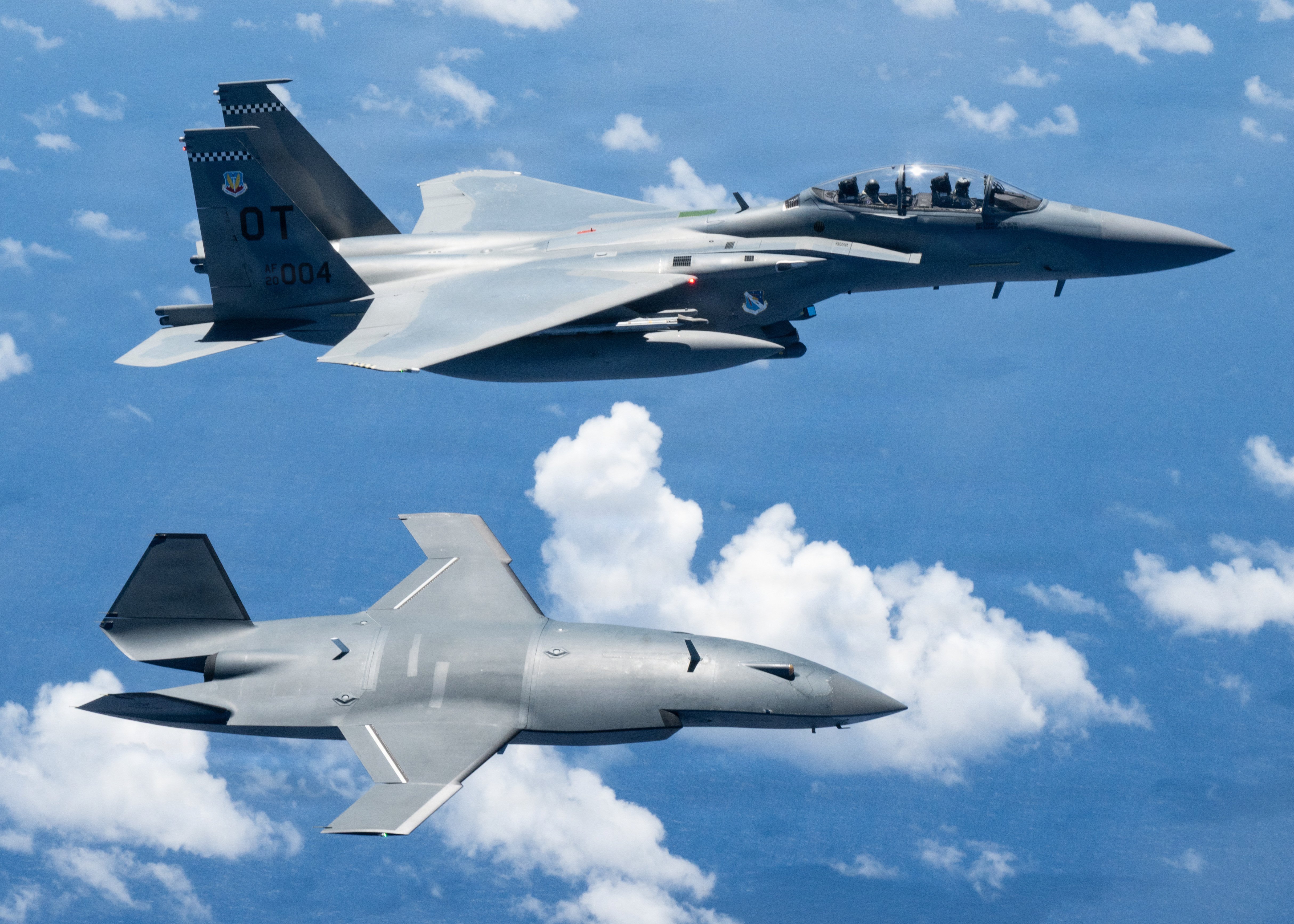 An MQ-28 Ghost Bat and a U.S. Air Force F-15EX participate in Valiant Shield 2026 over the Philippine Sea, June 27, 2026. U.S. Air Force photo by Tech Sgt. Thomas Barley Tech. Sgt. Thomas Barley
For the Air Force, the question has not simply been whether the F-16 remains militarily useful, but also whether the aircraft provides a possible answer to a capacity shortfall, while also dealing with delays in F-35 deliveries, and the retirement of the A-10, blowing another hole in the inventory. Meanwhile, some older F-16s that had been expected to leave the fleet are instead receiving upgrades, including a new radar and electronic warfare suite, to keep them flying longer.
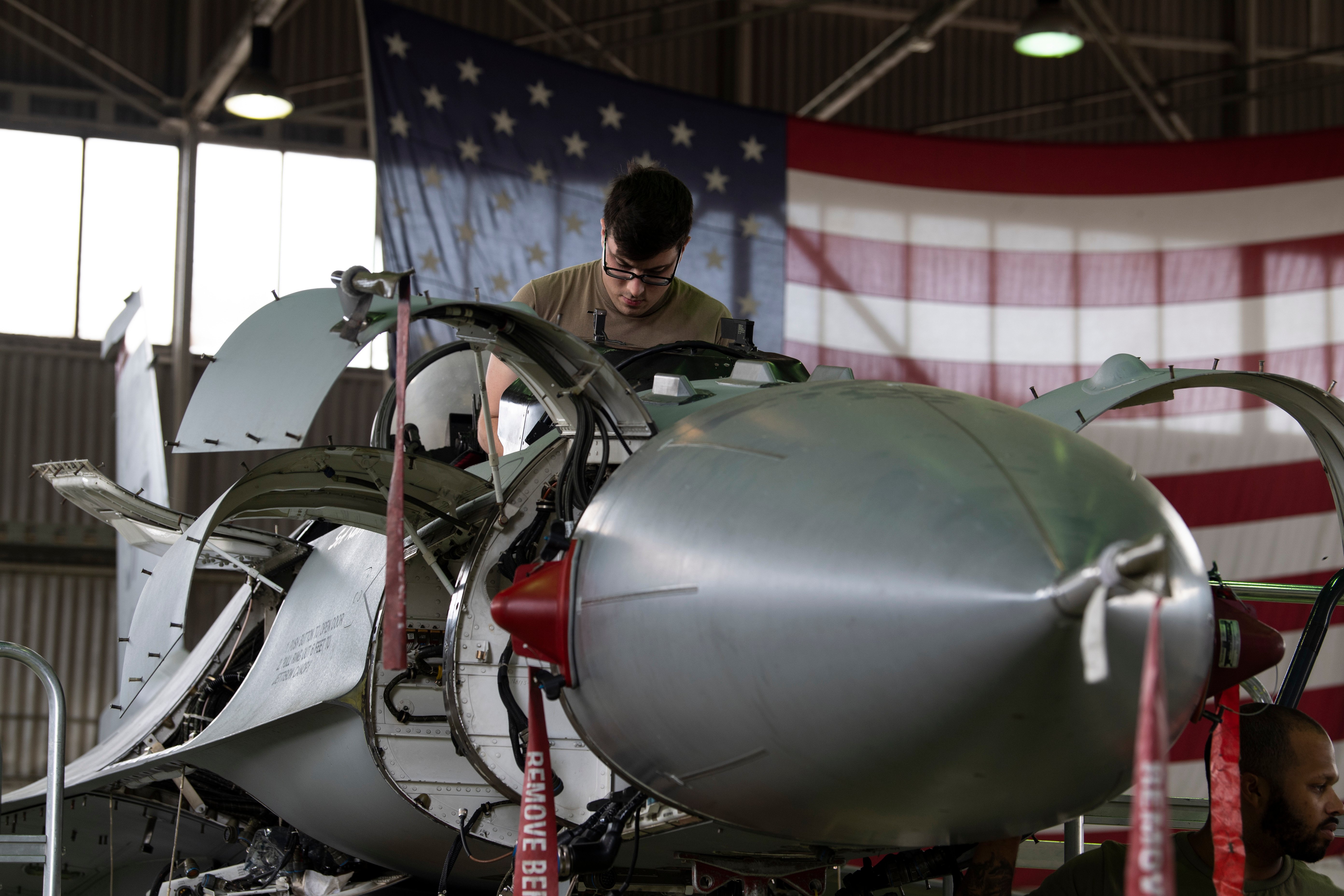 A U.S. Air Force airman works to install a new active electronically scanned array (AESA) radar system onto a 480th Fighter Squadron F-16C at Spangdahlem Air Base, Germany, May 23, 2022. U.S. Air Force photo by Tech. Sgt. Maeson L. Elleman 2nd Lt. Maeson Elleman
That creates a difficult transition period. The Air Force wants to retire aging fighters, but it also needs to keep enough aircraft available while their replacements arrive. The F-16 keeps reappearing because it offers a way of addressing at least part of that problem with a very well known commodity and without requiring every legacy fighter to be replaced by an F-35 or F-15EX.
The Production Line Matters
There is another reason the F-16 procurement idea refuses to disappear: Lockheed Martin already has an F-16 production line operating in the United States.
The Greenville, South Carolina, facility was established to produce Block 70/72 aircraft for foreign customers and is now the world’s only F-16 production facility. The Air Force helped establish the line as part of its broader effort to sustain the F-16 industrial base through foreign military sales. The line moved there after the massive Lockheed Martin plant at Fort Worth, Texas — where the F-16 had been built for decades — transitioned fully over to F-35 production.
So, buying new F-16s would not require reviving a dormant production line or spinning up an entirely new aircraft program. The basic manufacturing infrastructure already exists, and the additional work required for a U.S.-specific aircraft may end up being minimal — potentially amounting to little more than taking an existing Block 70 and tweaking it, rather than a large-scale new engineering, testing, and weapons-integration effort.
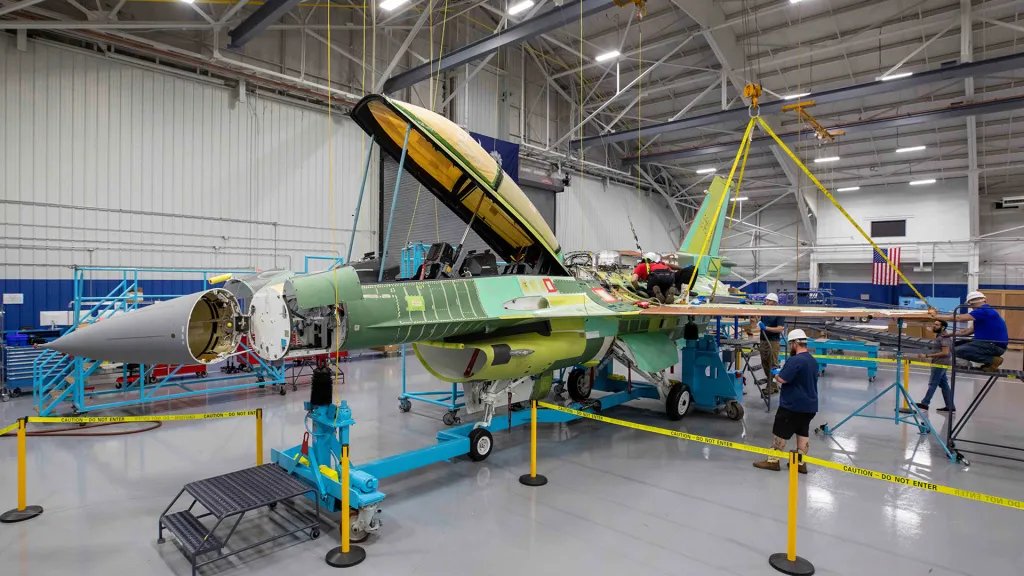 A two-seat F-16D Block 70 on the production line in Greenville. Lockheed Martin
 The Air Force has been aware of that possibility for years. In 2021, then-Air Force Assistant Secretary for Acquisition Will Roper argued that the service should consider the new F-16 production line as part of its capacity solution. Roper specifically pointed to the upgraded capabilities available from the South Carolina production line.
However, Greenville is not an empty production line waiting for a U.S. customer. Lockheed Martin’s F-16 facility already has a substantial Block 70/72 backlog for foreign operators, with the company reporting more than 100 aircraft in the queue and continued potential for additional international orders. It’s also unclear how much the facility could realistically be expanded, since it was designed around a relatively more modest foreign military sales production volume rather than the kind of surge a large U.S. order could require. Still, the USAF could step in and buy up open slots, which would also ensure the line stays open for the foreseeable future, which has major strategic and industrial protection benefits.
That brings us back to Gen. Allvin’s question in May 2025 about where a U.S. aircraft could fit on the production line. Even if the Air Force decided to buy the jets, it would have to compete for production capacity with an established international order book while developing whatever U.S.-specific configuration, testing, and integration work it requires.
This Is Not Your Dad’s F-16
The proposed F-16G is also significant because it is not simply another upgraded F-16C/D like the USAF already has.
Lockheed’s proposed configuration reportedly would add conformal fuel tanks and 600-gallon wing tanks, along with an IRST, and the latest Sniper targeting pod, as well as a drag chute. All of these systems are already fielded and available today rather than requiring new development.
Those additions point toward an aircraft intended to provide even more basing flexibility, range, persistence, weapons and sensing capability than the current F-16, which had already grown into a medium-weight fighter years ago. That is relevant to how such an aircraft might actually fit into the future Air Force.
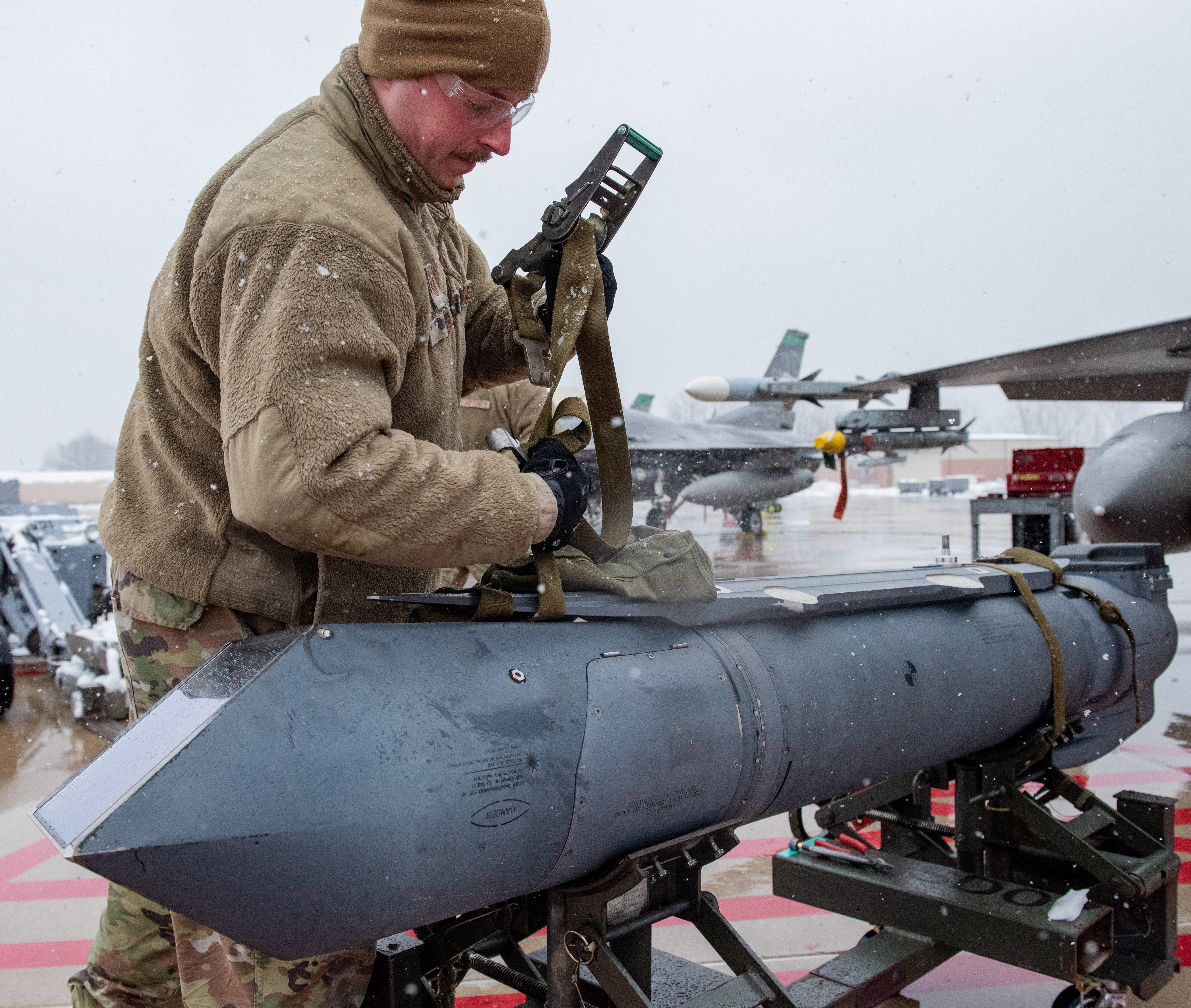 A U.S. Air Force avionics specialist prepares to install a Sniper Advanced Targeting Pod onto an F-16. U.S. Air National Guard photo by Airman 1st Class Sarah Stalder Lundgren Staff Sgt. Sarah Stalder Lundgren
A contemporary F-16 is already a very different proposition from the aircraft that entered U.S. service decades ago. Modern AESA radars, electronic warfare systems, digital architecture, datalinks, advanced cockpit interfaces and weapons have substantially expanded its capabilities. The proposed F-16G would push that evolution further, but, like the F-15EX, it would still occupy a different part of the spectrum from the F-35 and whatever eventually emerges from the F-47 program.
That distinction could be useful in a larger force. An F-35 provides capabilities, particularly its combination of stealth and advanced sensor fusion, that an F-16 can never reproduce. But the Air Force does not conduct every mission in the most heavily defended portion of an adversary’s airspace. Homeland defense, training, defensive counter-air, a range of strike missions, and operations in permissive or partially contested environments don’t necessarily require the same characteristics as a penetration mission against an integrated air defense network. In a major conflict, no fighter will fight alone, either. Far from it. Operation Midnight Hammer, the B-2 strikes against Iran’s nuclear program, provides a salient example here, with F-16s flying deep into the country along with F-22s and F-35s, to clear the way for the B-2 strike force. By now, the Air Force is well-versed in leveraging the total-force fourth-and-fifth-generation mix and it has discovered that they complement each other in unique ways that can be an advantage, not just compensation for lack of capability.
As far as the drag chute, that is a highly relevant addition to the USAF’s F-16 capability set. The chute would allow for the F-16 to better execute Agile Combat Employment (ACE), which includes operating from austere airfields within the enemy’s weapons engagement zone. The F-16 can get off the runway pretty quick, but landing is a different story. The chute can help greatly in this regard.
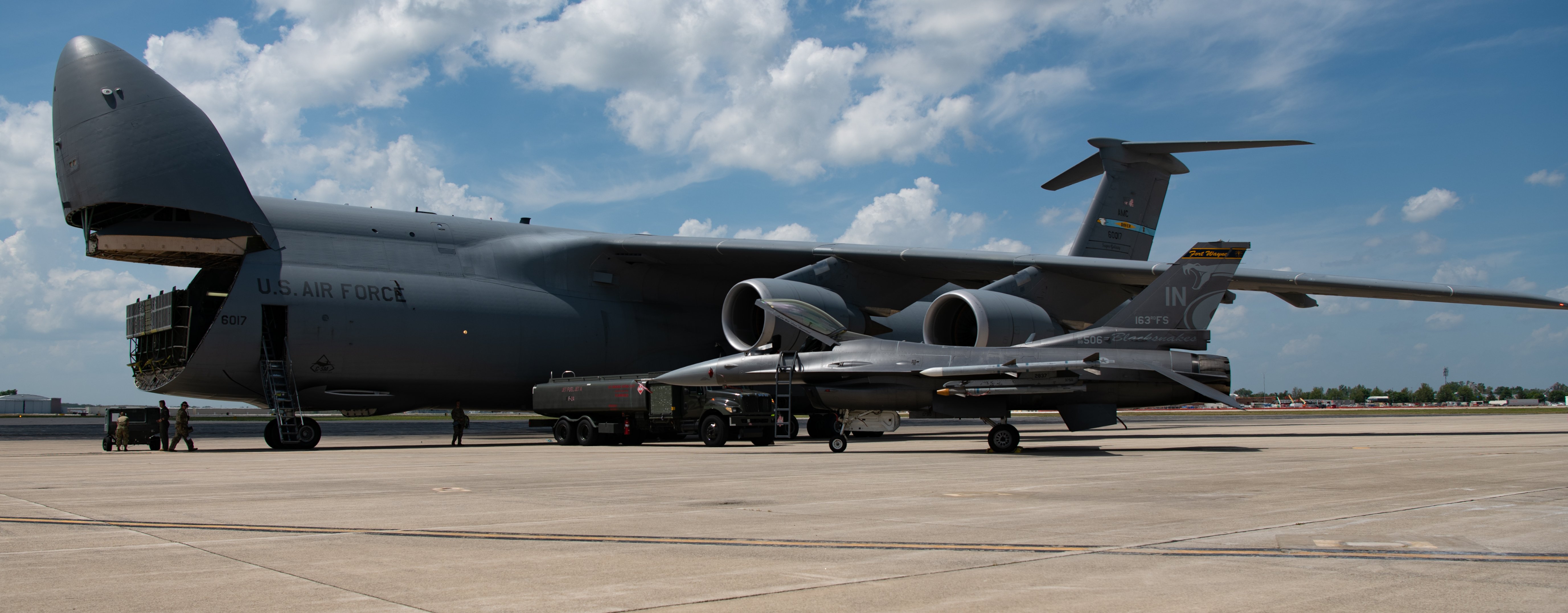 A U.S. Air Force C-5M Super Galaxy aircraft assigned to the 9th Airlift Squadron, Dover Air Force Base, left, sits beside an R-11 fuel truck and an F-16C Fighting Falcon aircraft assigned to the 122nd Fighter Wing on the flight line at the 122nd Fighter Wing, Fort Wayne, Indiana, July 24, 2025. The C-5 participated in an agile combat employment exercise that included wet wing defueling to the fuel truck which then provided fuel to the F-16. (U.S. Air National Guard photo by Tech. Sgt. David Sherman) Tech. Sgt. David Sherman
There is no question that an F-16 is not a replacement for an F-35. But it could help the Air Force better allocate its limited inventory of increasingly expensive fifth-generation and future sixth-generation aircraft while also maintaining a much larger overall fighter fleet.
CCA Changes the Calculus for Fourth-Gen Jets
One factor that is easy to overlook is Collaborative Combat Aircraft. CCAs are not just a complement to fifth- and sixth-generation fighters, they can also breathe new relevance into fourth-generation types like the F-16. Pairing stealthy, and even optionally expendable CCAs with a fighter like the F-16G could substantially boost its survivability and lethality by pushing sensing, shooting, and some of the risk forward onto uncrewed platforms, extending the F-16’s combat relevance even into higher-end scenarios where it would otherwise be at a disadvantage. In that sense, CCA may end up being arguably as relevant to fourth-generation aircraft as it is to fifth-generation ones.
In other words, CCAs are a positive factor in the F-16G’s business case.
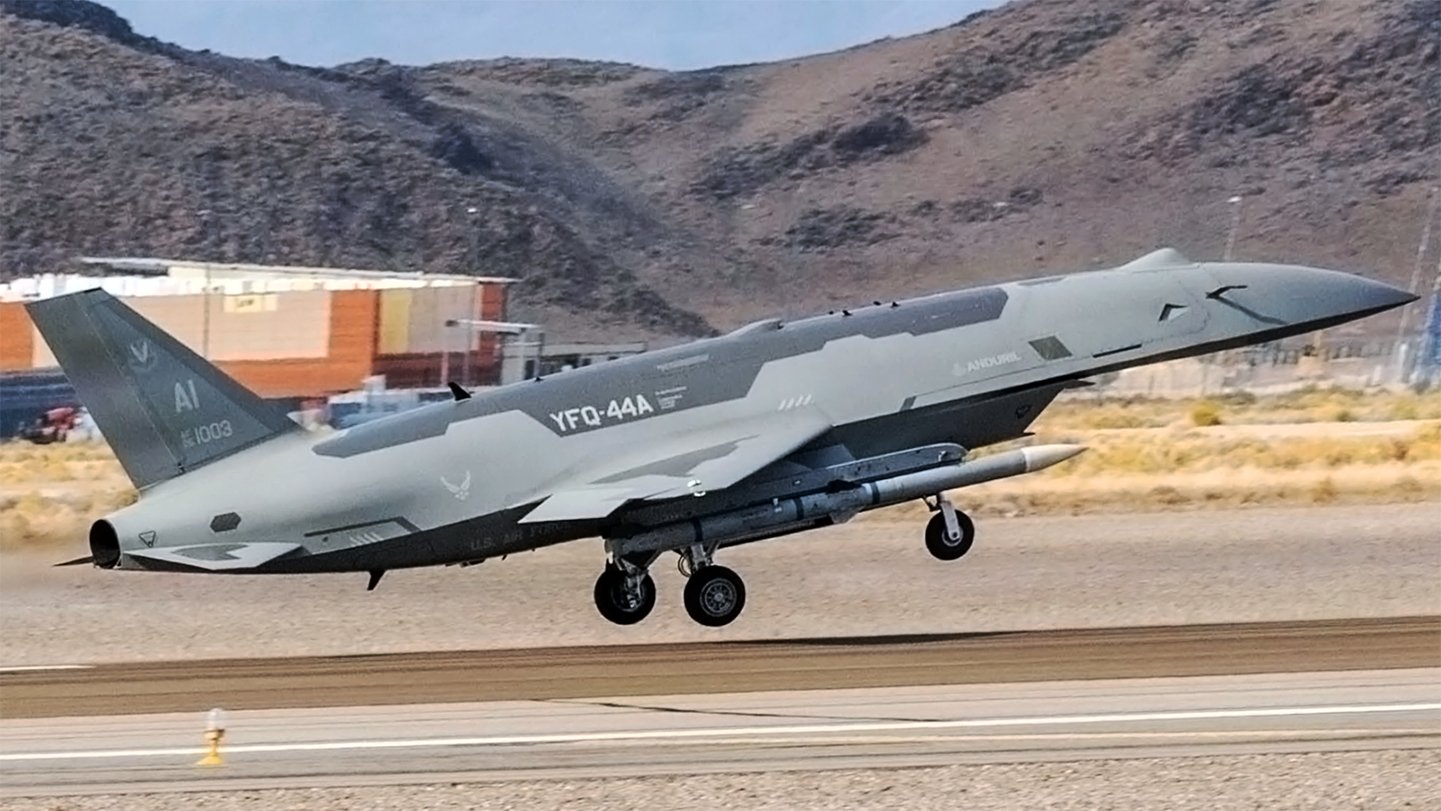 A U.S. Air Force YFQ-44A Fury aircraft, assigned to the Collaborative Combat Aircraft Experimental Operation Unit, takes off for a mission flight during an Agile Combat Employment exercise at Creech Air Force Base, Nevada, July 21, 2026. The flight was part of a broader ACE exercise designed to test the resilience, adaptability, and combat effectiveness of the semi-autonomous fleet. (U.S. Air Force photo by Staff Sgt. Kristal Munguia) Staff Sgt. Kristal Munguia
While the F-22 and F-35 are slated to get CCAs first, the F-16G can be built ready to interoperate with them, which could be a massive force multiplier to what would be the most affordable crewed tactical asset in the inventory. CCAs can eventually be used to also help augment F-16Gs operating in a homeland defense mission and other more mundane roles as well.
The Guard Argument
New Block 70s could make particular sense for the Air National Guard.
The Guard continues to operate F-16s in large numbers, meaning that its personnel, facilities, simulators, and maintenance infrastructure are already built around the aircraft. A new-build F-16 could therefore replace an aging F-16 without requiring the same organizational transition associated with converting a unit to an entirely different fighter, and especially a highly complex 5th generation type with all its unique support requirements.
That has financial implications beyond the aircraft itself. Replacing an existing F-16 squadron with Block 70s would reduce construction costs and training requirements because much of the existing infrastructure and expertise could be retained.
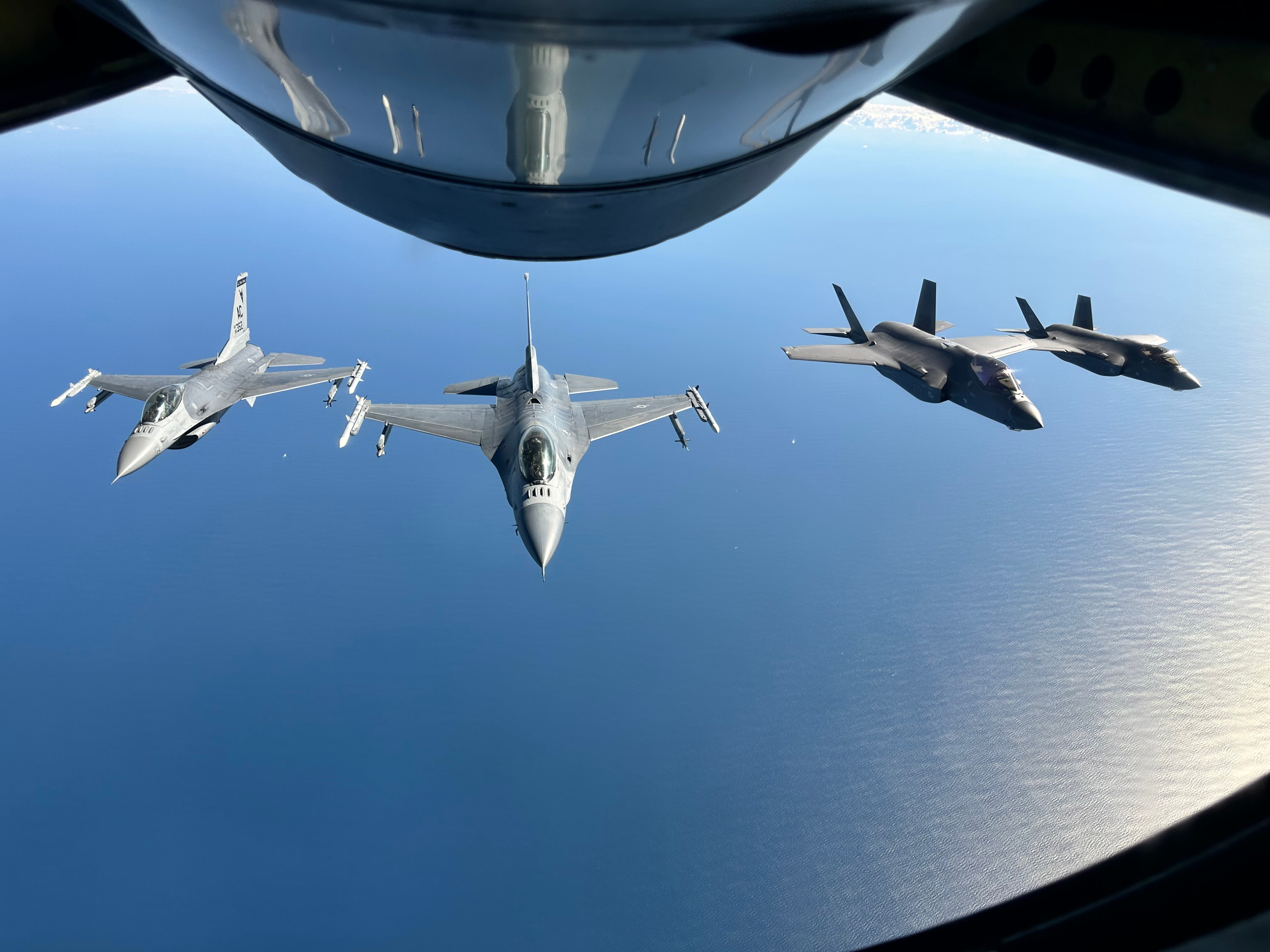 From left, two U.S. Air Force F-16Cs assigned to the 177th Fighter Wing, New Jersey Air National Guard, and two F-35As assigned to the 158th Fighter Wing, Vermont Air National Guard, follow a KC-135 Stratotanker off the coast of Atlantic City, New Jersey. U.S. Air National Guard courtesy photo by Tech. Sgt. James Norman Andrew J. Moseley
The Air Force would still have to pay for the aircraft and sustainment, but it would not be starting from scratch in terms of operating infrastructure, while the modernized fourth-generation capabilities of an F-16G would still mark a step forward for the Guard over its older F-16s.
It’s worth noting there has also been discussion of replacing more aging F-16s with additional F-15EXs instead. That path, however, is more expensive on both the acquisition and operating-cost side, and it would still require units to convert to a different airframe rather than simply recapitalizing in place.
Viper Refreshed
A new F-16 offers a fresh and highly mature airframe — one with a full service-life ahead of it, on the order of 12,000 flight hours without the need for structural upgrades — double that of the original F-16. This is compared to existing F-16s in the inventory with the decades of wear and fatigue already accumulated on them, with structural upgrades keeping them in the air. That difference in remaining structural life is arguably the single biggest advantage a new-build aircraft has compared with extending an existing one.
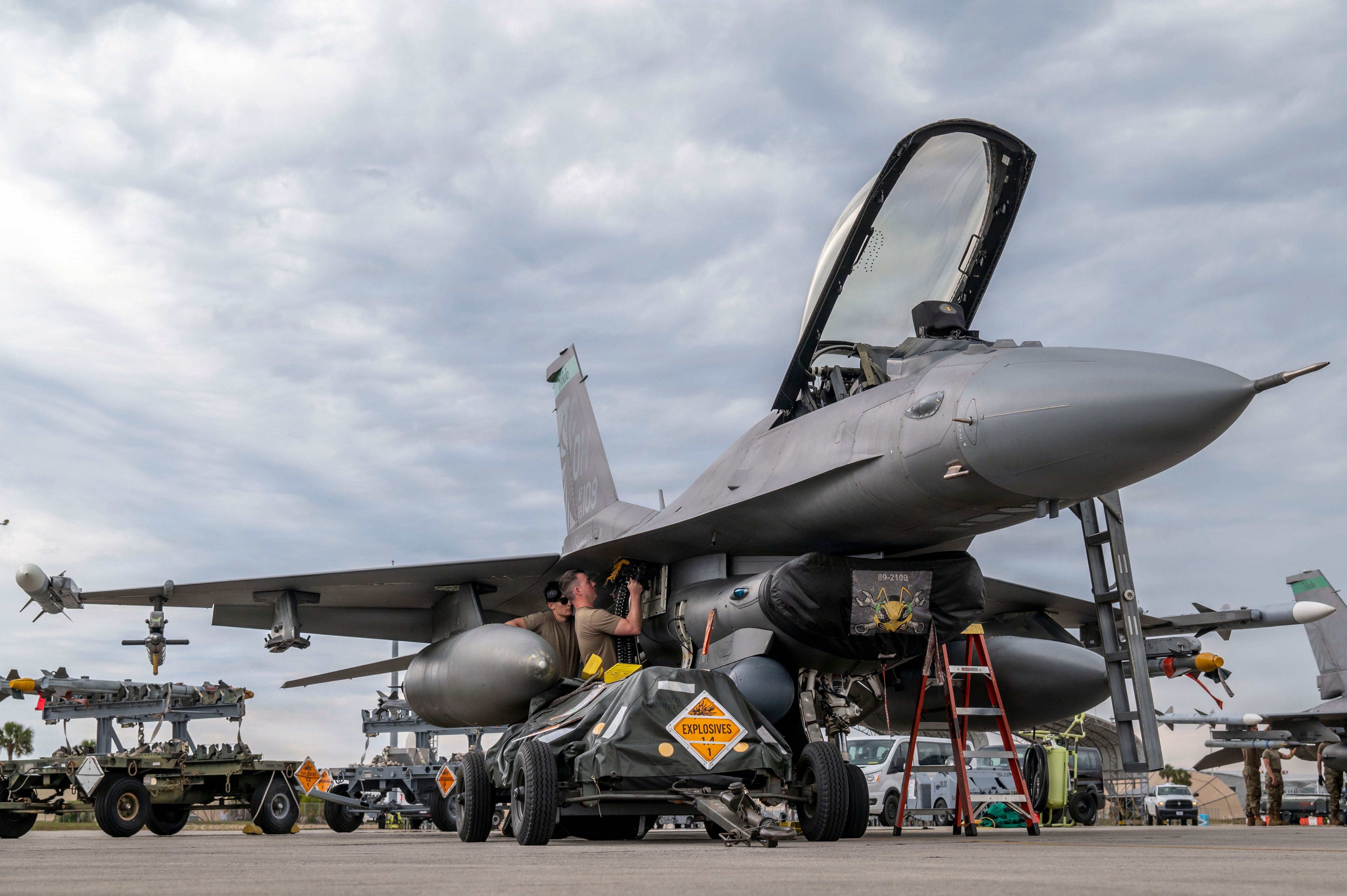 U.S. Air Force aircraft armament systems specialists assigned to the Ohio National Guard’s 180th Fighter Wing load 20mm ammunition into an F-16’s M61A1 Vulcan cannon. U.S. Air National Guard photo by Master Sgt. Kregg York Master Sgt. Kregg York
Dumping more money into existing F-16s is becoming questionable. Service life extensions and technical upgrades can only go so far and supporting these jets is becoming harder as parts dry up and suppliers who made them are long gone. A new airframe would give the guard many decades of highly efficient service and the piece of mind for future force planning that goes with it.
Also, just like F-15EX, the development of the Block 70 F-16 has already been paid for largely by foreign over many years. It is as off-the-shelf of a solution as it gets and that is a very attractive proposition to an air arm trying to balance its books.
Above all, F-16 sustainment and operating costs run far below the F-35’s — a gap that already holds true even with older F-16s, and one that would widen further with new-build jets.
The Argument Against Simply Buying More F-35s
One seemingly obvious alternative would be to accelerate F-35A procurement. But the F-35 is not simply another fighter that can be substituted one-for-one whenever an F-16 reaches the end of its service life. That would also be difficult to do in practice. F-35A production is effectively capped and there are dense order books, and the well-documented troubles with the Block 4 upgrade are a huge factor pushing the Air Force to look at alternatives like the F-16G in the first place.
The Air Force’s current force-structure plans call for significantly more fighters overall, while the service is simultaneously pursuing F-35As, F-15EXs, and the F-47.
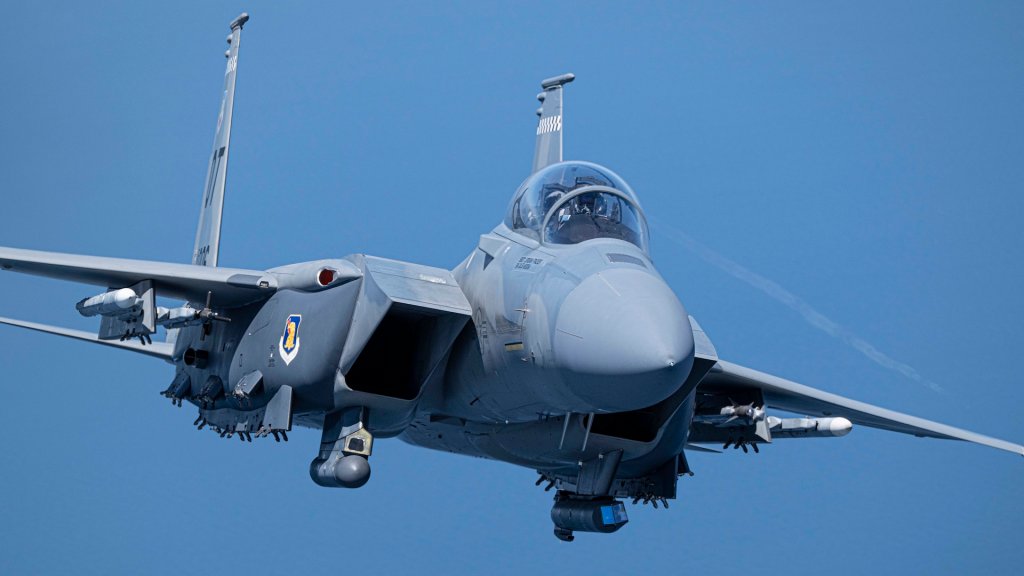 A U.S. Air Force F-15EX Eagle II. U.S. Air Force U.S. Air Force photo by Tech Sgt. Jacob Stephens
Among the reasons why a modernized F-16 might be considered alongside those programs are concerns not only about the cost of those aircraft, but also about the timing of F-35 deliveries, something that has been disrupted by well-publicized problems with Joint Strike Fighter upgrades. At the same time, keeping older F-16s active through upgrades is an increasingly unattractive way of managing the shortfall.
The issue is therefore less about choosing the F-16 instead of the F-35 than about deciding whether the Air Force should use both aircraft for different portions of the force structure.
The service is already doing something along these lines with the F-15EX. It has accepted that a modernized fourth-generation aircraft can have a role alongside the F-35 and the F-22, rather than requiring every new fighter to be stealthy.
A new F-16 would extend that logic to a lower-cost segment of the fleet, potentially allowing the Air Force to use F-35s where their particular capabilities are most valuable while maintaining additional capacity with a less expensive aircraft.
What Could Happen Next?
Even if Air Force leaders conclude that the F-16G makes operational sense, Congress would still have to decide whether it is worth funding.
The December 2025 reporting identified the central problem: lawmakers would want the service to demonstrate that buying new aircraft is preferable to continuing to upgrade the F-16s it already owns. They would also have to weigh the proposal against the F-35 and CCA programs.
If an existing F-16 can be kept operational with a relatively inexpensive upgrade, a new aircraft has to justify its acquisition cost and the additional long-term sustainment burden. But if maintaining an increasingly old F-16 fleet doesn’t save large sums of money over the long haul, the new Block 70 variant begins to look more compelling.
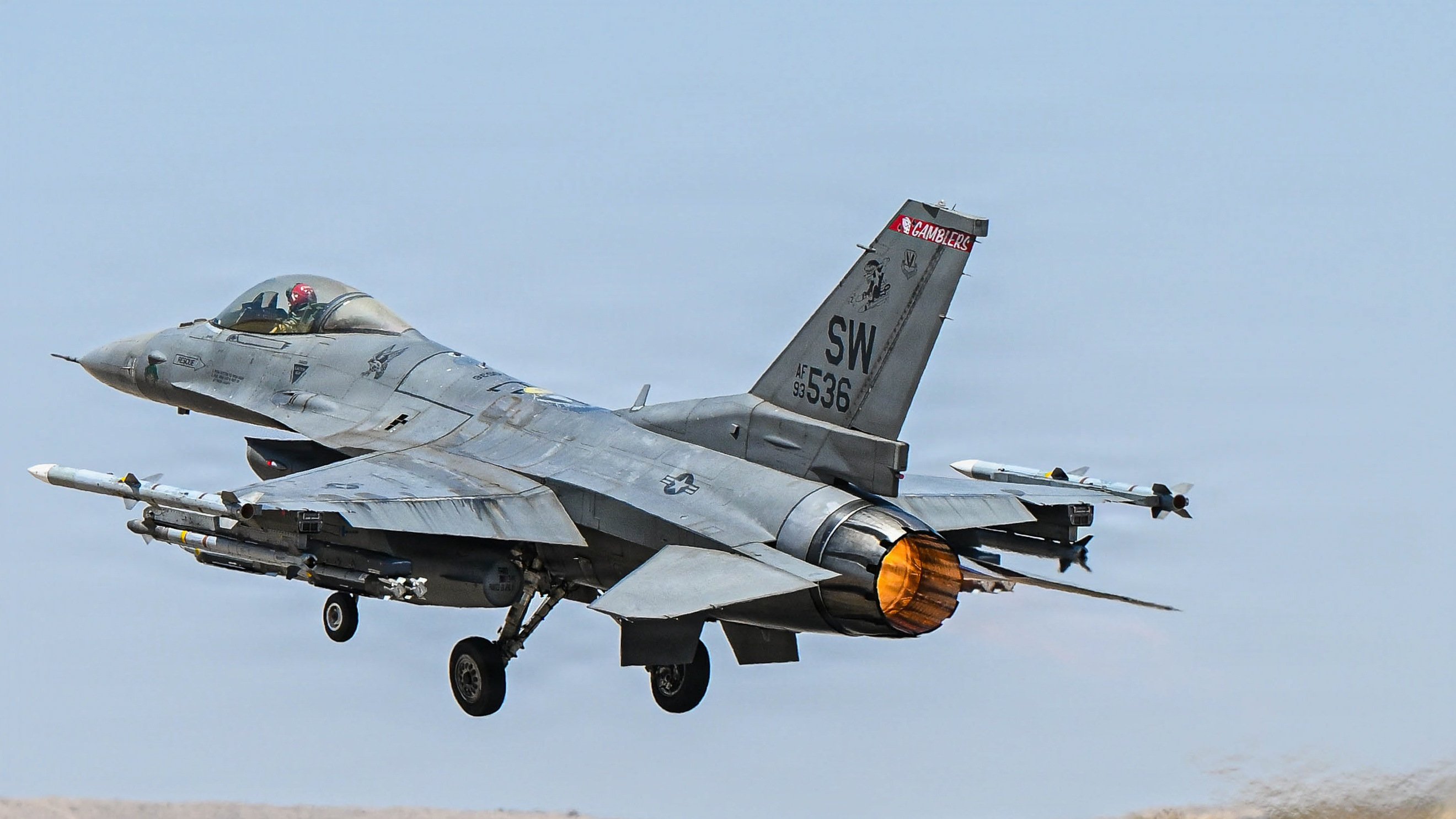 A U.S. Air Force F-16 takes off at a base in the U.S. Central Command area of responsibility on August 10, 2026. U.S. Air Force photo by Staff Sgt. Justin W. Moore Senior Airman Justin Moore
There remains a substantial gap between Lockheed Martin pitching the F-16G and the Air Force actually buying it. The service told TWZ that is “in the initial phases of analyzing options for the next Future Years Defense Program.” The Air Force spokesperson added: “At this stage, we have neither defined the precise mission requirements nor the spectrum of options that could fill it.”
That is consistent with the status described by Inside Defense nine months earlier. At the time, the Air Force had no plans to procure Block 70s, and the discussions with Lockheed were described as exploratory. Even if senior officials ultimately favored the aircraft, Inside Defense reported that the program could not appear in the Future Years Defense Program until at least fiscal 2028 because the FY2027 budget process was already too far along.
The F-16G therefore remains a proposal rather than a program. But the persistence of the idea is itself significant. It should be noted that the F-15EX buy emerged out of very similar machinations, with the benefits proving to be undeniable.
The new proposal would let some Guard and Reserve units swap their F-16s for vastly improved F-16s — the same logic that drove the F-15EX buy — while also keeping the Greenville line hot, which is a significant benefit in its own right. And it accomplishes both in the most efficient way possible: not just in acquisition cost, but in sustainment cost, which is really the more problematic burden of the two. In the end, this points to another glaring reality check for the all-stealth-force concept, a vision the Air Force has effectively already abandoned.
The Air Force has spent years describing the F-35 as the replacement for its F-16 fleet, yet it now has to contend with aging F-16s, delayed or constrained fighter production, a larger stated requirement for total fighter capacity, and the lengthy transition toward the F-47 and uncrewed combat aircraft. In that environment, a new-build F-16 provides an option that sits between extending legacy aircraft and buying the most sophisticated — and expensive — fighters available.
The F-16 was supposed to have left the U.S. fighter equation years ago. Instead, every time the Air Force looks closely at the gap between the force it has and the force it says it needs, the aircraft somehow finds a way back into the conversation.
Regardless, there are so many priorities facing the force right now, buying new F-16s will be a challenged at every turn, but that doesn’t mean it won’t become to compelling of a proposition to accept.
Contact the author: [email protected]