By The Straits Times | Created at 2026-07-24 21:01:34 | Updated at 2026-07-24 22:21:41
1 hour ago
By The Straits Times | Created at 2026-07-24 21:01:34 | Updated at 2026-07-24 22:21:41
1 hour ago
FUKUOKA – Kyushu, in Japan’s south-west, was once proudly dubbed “Silicon Island” during the country’s semiconductor golden age in the 1980s, when it produced about 10 per cent of the world’s chips.
But Japan eventually lost its crown to a bruising mix of trade friction with the US and an inability to scale and adapt, allowing more agile regional competitors such as South Korea and Taiwan to seize global market share.
Today, Japan is staging a comeback under the national “New Silicon Island Kyushu” vision, anchored by Taiwan Semiconductor Manufacturing Co’s fabrication plants in Kumamoto.
The whole of Kyushu is waking up to its potential, with its largest city, Fukuoka, at the forefront.
Through tech-friendly policies, pioneering visa schemes and leaning heavily on its status as a “Gateway to Asia” – with Fukuoka Airport under 15 minutes from the city centre – the city is overcoming the corporate gravity of Tokyo and Osaka to establish itself as a hub for global tech talent.
Hiroyuki Kano, director of new industry promotion at the Fukuoka City government, stresses that the city does not “actively go out and recruit or poach foreign IT engineers”.
Instead, it plays the long game.
“Our goal is to create an environment that is enticing for engineers, whether from Japan or abroad, and makes them want to live and work here,” he said.
“As a result, Japanese IT talent gathers here, while people from abroad also take notice and feel that Fukuoka is buzzing. If people feel that Fukuoka is somewhere they can thrive, talent will flow naturally.”
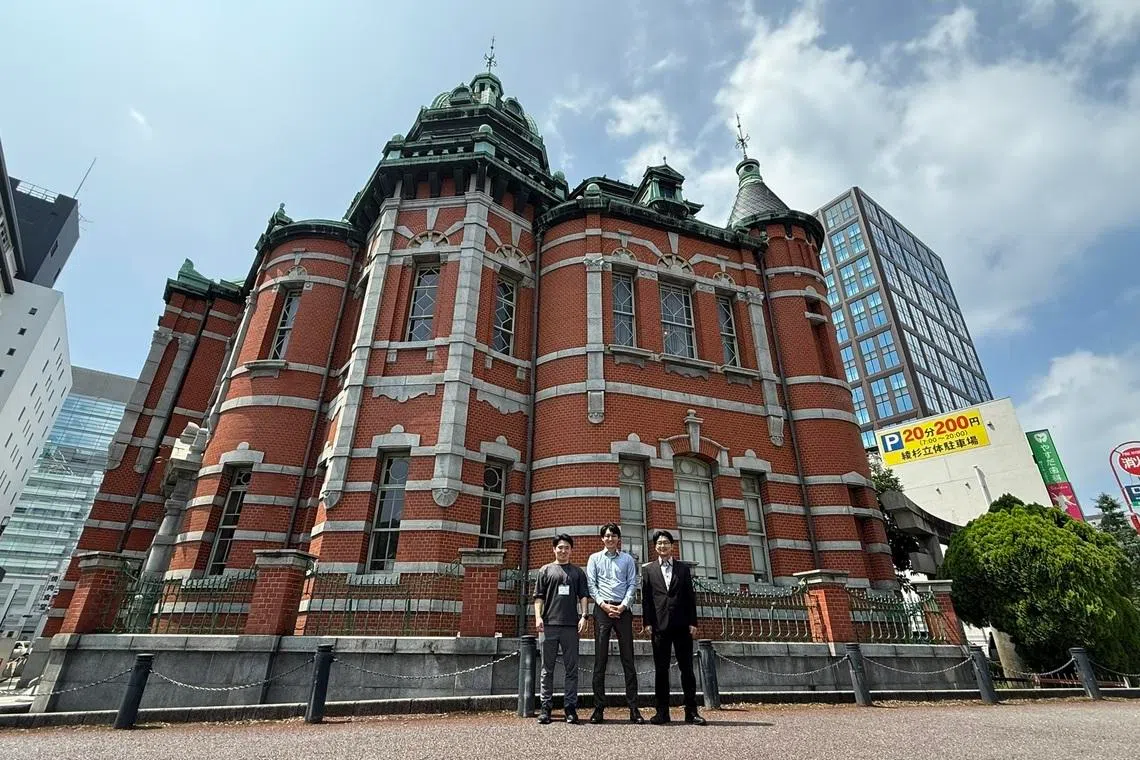
Fukuoka City government officials (from left) Yudai Iida, Kosuke Iseki and Hiroyuki Kano standing outside the Engineer Cafe, a public co-working hub inside a restored historic building.
ST PHOTO: WALTER SIM
With 1.67 million residents, Fukuoka City is Kyushu’s undisputed economic heart. It also bucks a nationwide trend of population decline.
A new wave of Japanese entrepreneurs is moving in, alongside an influx of foreigners who now make up 3.7 per cent of the population. As at June 30, there were 61,145 foreign residents, up 5,796 from a year earlier.
Fukuoka’s transformation into a highly diverse and cosmopolitan city was not by accident.
In 2012, it was the first Japanese city to formally declare its ambitions to become a start-up hub.
Two years later, it secured designation as a National Strategic Special Zone for Global Startups and Job Creation, allowing it to offer tax incentives and relax some rules. In 2015, it launched a pioneering Startup Visa programme to woo foreign entrepreneurs.
Then, in 2018, Fukuoka launched its “Engineer Friendly City” campaign to attract developers and information technology professionals.
Today, local and foreign developers can network, write code and collaborate over coffee at Engineer Cafe, a restored, century-old red-brick building turned public co-working hub.
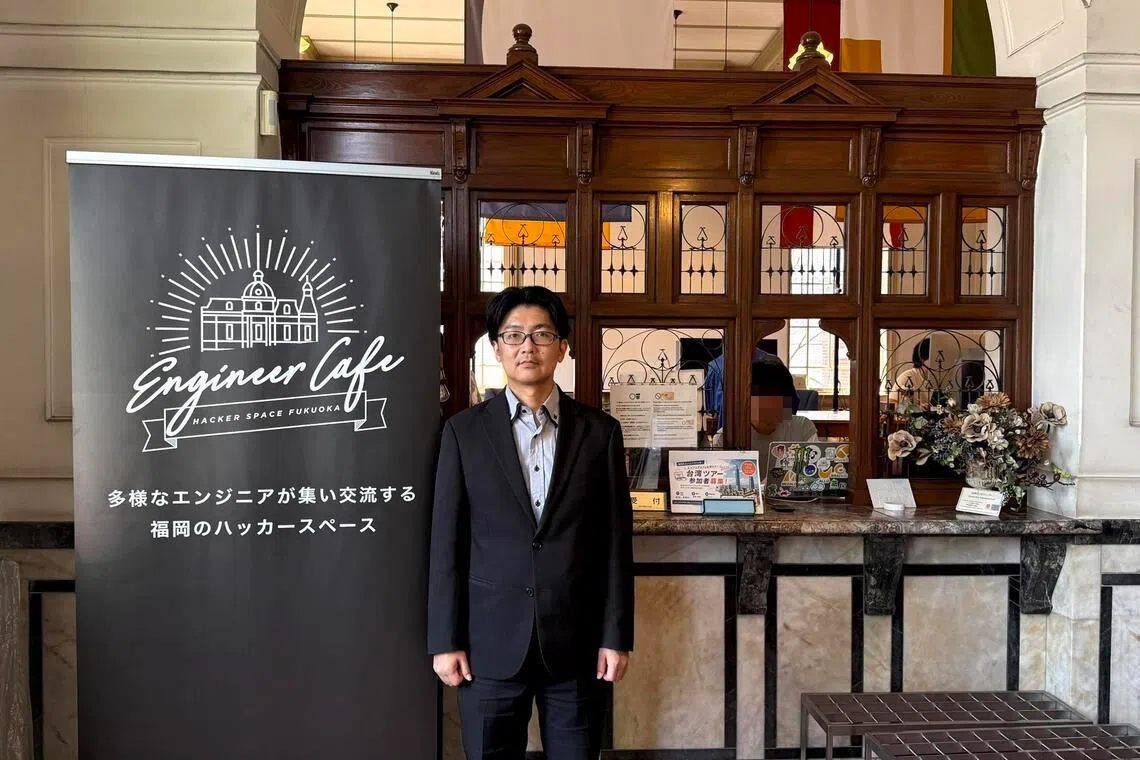
Kano, the director of new industry promotion at the Fukuoka City government, introducing the Engineer Cafe, which was born out of a campaign to make the city a place where engineers can gather, be active and grow.
ST PHOTO: WALTER SIM
To further catalyse this talent flow, in November 2023, Fukuoka City became Japan’s first municipality to launch an “Engineer Visa” fast-track programme. Eligible Fukuoka-based tech companies can expedite visa applications for foreign engineers, shortening review periods from up to three months to around 30 days.
By March 2026, 18 companies had used the system to onboard 41 highly skilled engineers, primarily from across Asia, Kano said.
The scheme has catalysed the entry of both Japanese and foreign companies such as Vietnam’s VTI Group, which bring in IT talent from their countries as they expand into Japan.
VTI, which offers one-stop digital solutions ranging from artificial intelligence to cybersecurity and business automation, sees immense growth potential in Fukuoka, where the company launched its fourth Japan outpost in April 2024.
The company now employs 30 Vietnamese IT engineers in Fukuoka, and Do Van Trieu, 35, who heads the Fukuoka office, expects to lead a team of at least 100 by 2030, with a long-term goal of 500 engineers.
Trieu also serves as vice-chairman of the Vietnam Information Technology Association in Kyushu, which was established in 2024 to support the several hundred Vietnamese IT engineers working on the island.
“IT jobs are incredibly popular among young Vietnamese professionals, and we work with the consul-general in Fukuoka to facilitate connections for those looking to build their careers in Japan,” Trieu said.

Many Vietnamese join the Vietnamese Youth and Student Association in Fukuoka, which caters to those aged 18 to 30. At this Hakata Dontaku Festival held in May 2026, members of the group promoted Vietnamese heritage and interacted with local residents and international visitors.
PHOTO: VIETNAMESE YOUTH AND STUDENT ASSOCIATION IN FUKUOKA
Meanwhile, the Fukuoka Institute of Technology (FIT) has expanded its international academic partnerships to 58 entities worldwide, including 16 tertiary institutions across ASEAN.
International affairs manager Tetsuya Otani said that the two-way exchange programmes not only help boost the global competencies of its Japanese undergraduates, but also position the campus as a top-tier graduate school option for foreign students.
As the semiconductor revival sweeps across Kyushu, the labour crunch has also affected local machining, metal and resin suppliers.
In October 2025, regional banking giant Fukuoka Financial Group (FFG) signed a landmark industrial-academic pact with five entities, including Japanese human resources consultancy World Intec and Indonesia’s Yayasan Mitra Industri Mandiri vocational high school.
Through the partnership, the bank leverages its deep network of local corporate clients to match labour-starved manufacturing and equipment suppliers directly with high-calibre graduates from Indonesian vocational technical high schools.
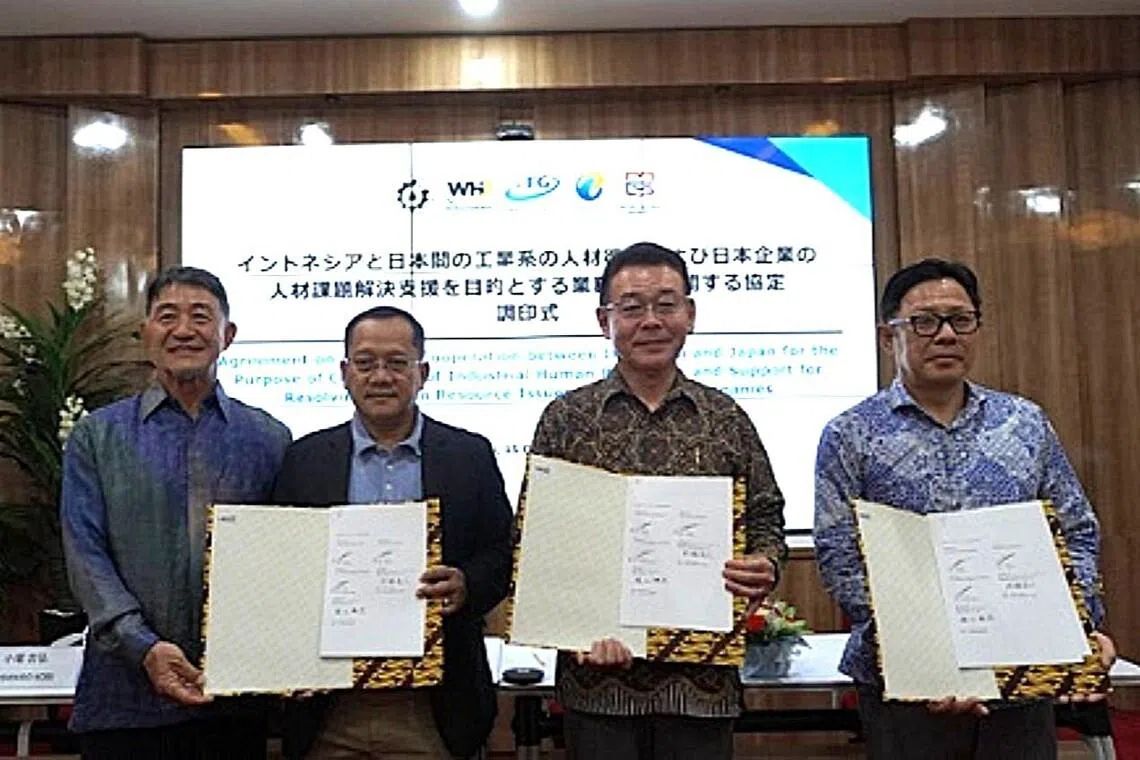
Signing ceremony of a memorandum of understanding between Fukuoka Financial Group and its partners, including Japanese human resources consultancy World Intec and Indonesia’s Yayasan Mitra Industri Mandiri vocational high school.
PHOTO: FUKUOKA FINANCIAL GROUP
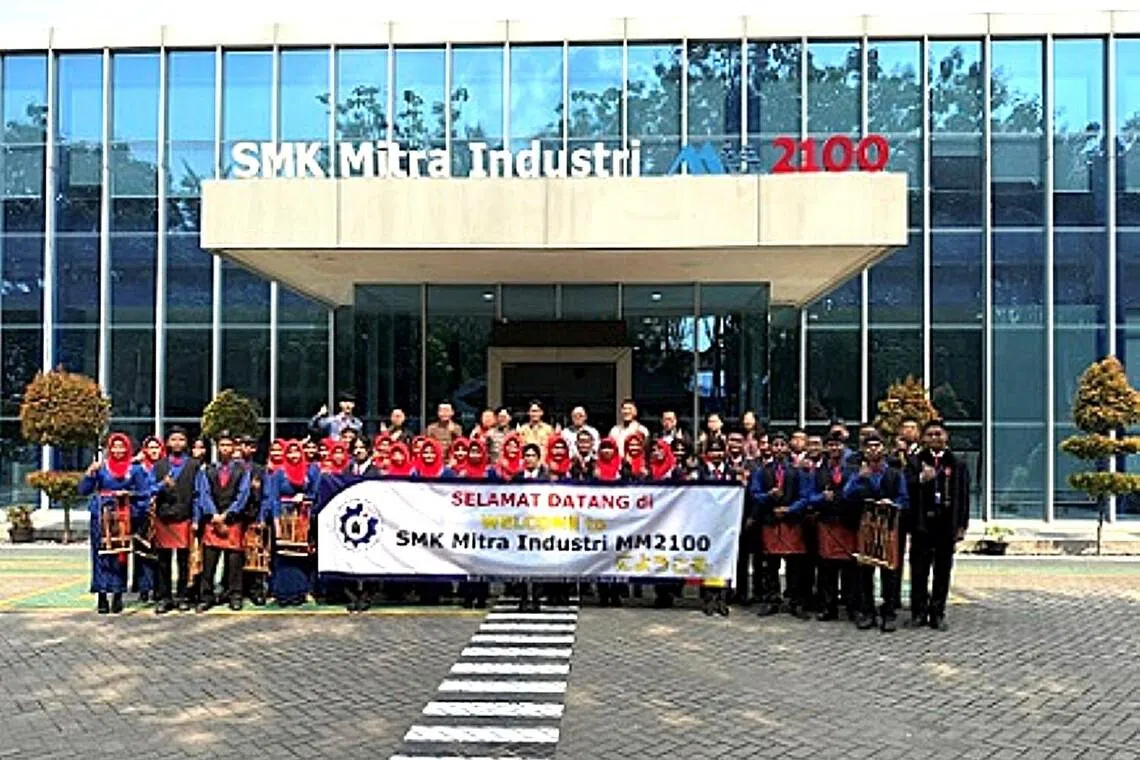
Students of SMK Mitra Industri MM2100 vocational school, located in Indonesia’s Cikarang industrial hub about 40km east of Jakarta, welcoming visitors.
PHOTO: FUKUOKA FINANCIAL GROUP
FFG plans to replicate this model for highly skilled IT talent, said Masaki Chijiwa, manager of the bank’s semiconductor business administration group.
“Manpower is crucial for business expansion. We have seen client companies unable to grow simply because they cannot find the people,” he told The Straits Times, adding that the agreement helps address Kyushu’s labour shortage while tackling Indonesia’s youth unemployment crisis, which stands at around 17 per cent.
The foreign talents have come with different aims and ambitions.
Voraphol Promwan, 24, who will begin graduate studies at FIT in September, hopes to build a professional career in Japan, while his compatriot Warithi Sakultap, 23, sees the city as a stepping stone before returning home and building Thailand’s domestic tech sector.
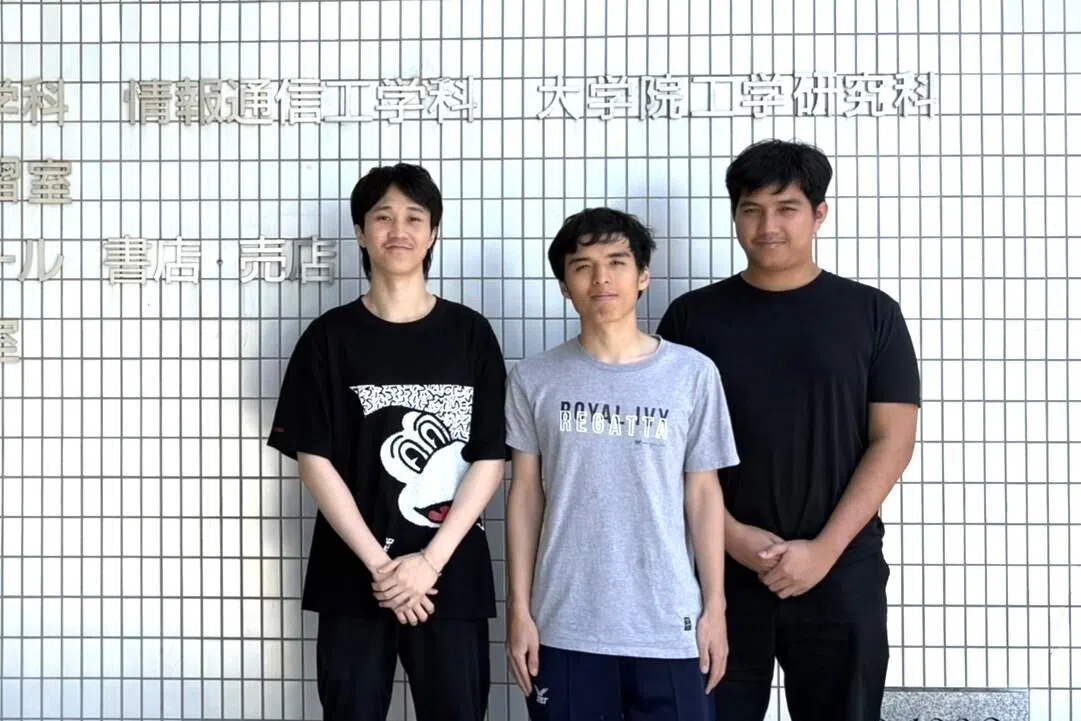
Living and studying in Japan was a dream come true for Thai nationals (from left) Jirapat Kampangkeaw, Voraphol Promwan and Warithi Sakultap.
ST PHOTO: WALTER SIM
Ho Thi Thuy, a 28-year-old systems engineer at VTI Fukuoka who has spent seven years working in Japan, does not plan to return home any time soon.
“Working directly with Japanese clients on their digital transformation has been an eye-opener and a valuable experience,” she said.
This story is part of our Asian Insider feature on East Asia’s tech talent chase. Read more about the situation in South Korea.