By The Rio Times | Created at 2026-08-26 07:51:52 | Updated at 2026-09-04 03:00:20
1 week ago
By The Rio Times | Created at 2026-08-26 07:51:52 | Updated at 2026-09-04 03:00:20
1 week ago
Region · MARKETS
Key Facts
- —Price move Brent fell about 2% to US$86.80 early Wednesday after both benchmarks lost over 3% on Tuesday
- —Diplomacy Iran and Oman discussed a temporary joint corridor and mine-clearing in the strait
- —Reversal Monday’s Operation Economic Outcast sanctions gave way within 48 hours to talk of reopening
- —LatAm FX the dollar closed 0.25% lower at R$5.1399 in São Paulo; Colombia’s TRM stood at 3,056.51
- —Risk a tanker was struck near the strait’s entrance on Tuesday, underscoring fragile security
A fast reversal from Monday’s sanctions escalation puts Latin America’s crude exporters and their currencies back at the center of the Hormuz story.
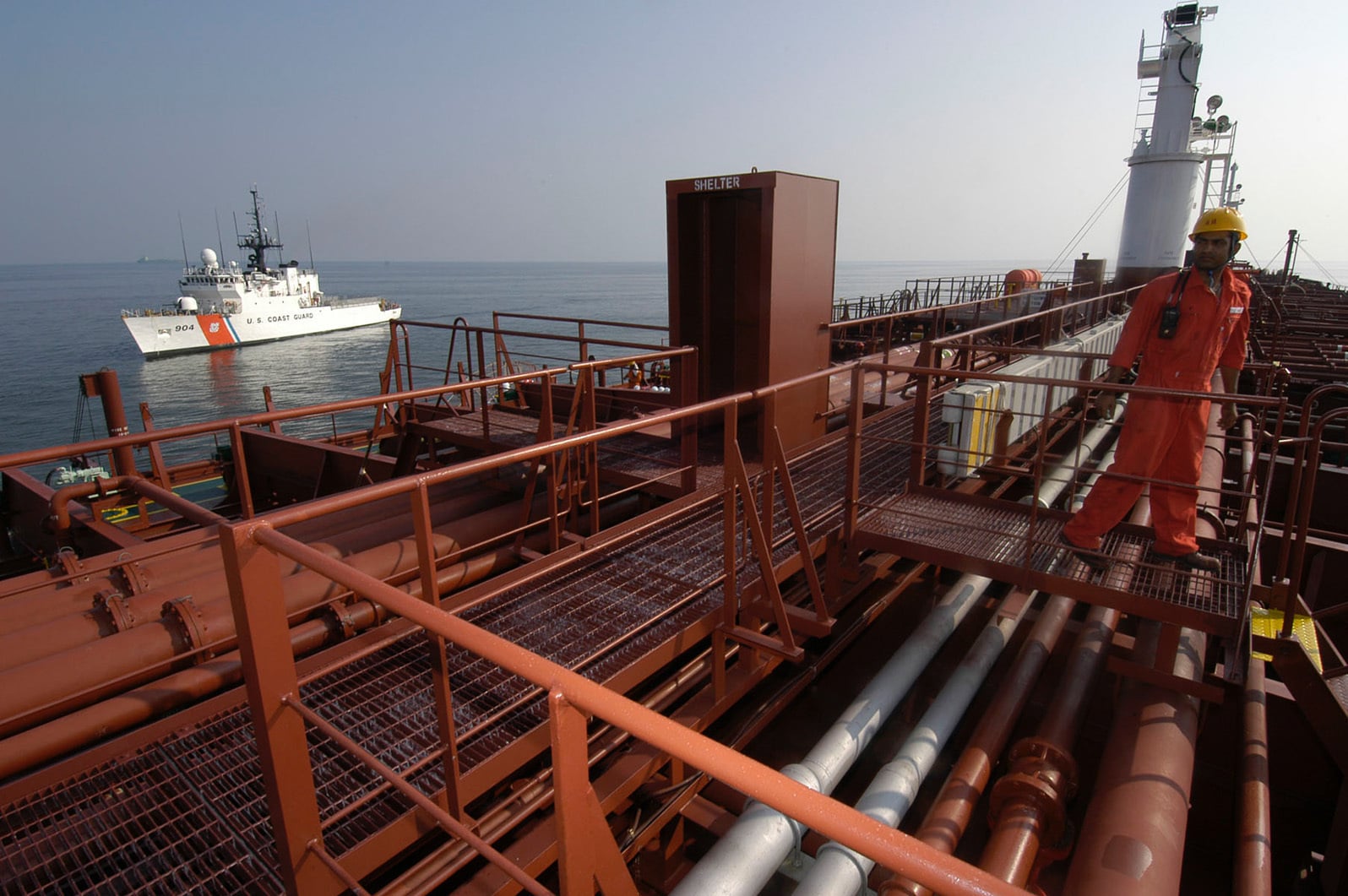
Oil prices fell for a second straight session on Wednesday 26 August 2026 as Iran and Oman confirmed talks on a temporary joint shipping corridor through the Strait of Hormuz, reviving expectations of a Strait of Hormuz reopening and, with it, the prospect of a broader settlement between Washington and Tehran. Brent crude slid about 2% to US$86.80 a barrel in early Asian trade, after both benchmarks lost more than 3% on Tuesday 25 August, while US West Texas Intermediate fell to US$80.87.
One-stop reference
Company Intelligence
Every listed company in Latin America — financials, ownership and structure for 1,450+ companies across 26 exchanges, in one place.
From Monday’s sanctions package to Wednesday’s sell-off
The speed of the reversal has been striking. On Monday 24 August, Washington expanded sanctions aimed at cutting off Iran’s economic lifeline, a package the Treasury calls Operation Economic Outcast, blacklisting around 60 entities, individuals and vessels linked to Iranian shipping, aviation, gold, technology and digital assets, and warning that countries continuing to do business with Tehran could face penalties, though none were imposed immediately. Brent had settled on Monday near US$92 a barrel as traders weighed the risk of retaliation.
By Tuesday afternoon the narrative had flipped. Iran’s foreign minister Abbas Araghchi and his Omani counterpart Badr bin Hamad Al Busaidi confirmed they had discussed a joint temporary navigational corridor through the strait and agreed in principle to clear it of mines. Al Busaidi described the talks as constructive and said he hoped a corridor and practical measures to restore navigation security would be announced soon. Brent settled 3.9% lower at US$88.58 a barrel; during the session the most-active contract traded down 3.6% at US$87.27 on the ICE exchange in London, after touching a low of US$86.81.
Selling resumed in Asia on Wednesday. The prospect of a Strait of Hormuz reopening has triggered profit-taking after weeks of war premium, said Mitsuru Muraishi, an analyst at Fujitomi Securities, though he noted that bargain hunting was limiting further losses and prices were likely to remain range-bound for now. Data from the American Petroleum Institute, showing a 4.2 million-barrel build in US crude stocks in the week to 21 August, added to the downward pressure.
What a Strait of Hormuz reopening means for Latin America’s oil exporters
For Latin America’s crude exporters, a Strait of Hormuz reopening is a double-edged sword. Brazil, whose pre-salt output makes it the region’s biggest producer, earns less per barrel when Brent falls, trimming export receipts and royalties that feed federal and state budgets. Colombia’s Ecopetrol, Ecuador and Venezuela face the same arithmetic, with Brent, which spiked to US$126 in April at the height of the war, now trading roughly a third below that peak.
Yet the peace dividend cuts the other way. The same diplomatic thaw that knocks US$5 off a barrel of crude also lowers the geopolitical risk premium across emerging markets, supporting the currencies, bonds and equities of the very countries whose oil revenue declines. For net importers such as Chile, Central America and the Caribbean, meanwhile, cheaper fuel is an unambiguous gain for inflation and trade balances.
Venezuela is the wildcard. Any lasting US-Iran détente could eventually reshape Washington’s sanctions posture toward other sanctioned producers, analysts say, though there is no sign so far that the Trump administration intends to ease pressure on Caracas as part of the Hormuz track.
Live Market IntelligenceBrazil — Live Market BoardInside: market breadth, the sector heatmap, currencies & rates, the Latin America scoreboard and the full instrument board.Rio Times · Live Market Intelligence
Brazil — Live Market Board
B3 · São Paulo
Aug 26, 2026 · 04:43
Ibovespa · benchmark
174,576.80
+1.55%
L 167,142day rangeH 168,310
+21.85% over 12 months
Market breadth · 15 names
47% advancing
7 ▲ advancing8 declining ▼
Currencies, rates & key inputs
Sector heatmap · average move today
Mining
+1.16%
VALE3, CSNA3, GGBR4
Industrials
+0.20%
WEGE3, RENT3
Financials
-0.10%
ITUB4, BBDC4, BBAS3, B3SA3
Energy
-0.12%
PETR4, PRIO3
Consumer Staples
-0.80%
ABEV3
Consumer Disc.
-2.63%
AZZA3
Latin America scoreboard
IndexLastTodayStrength
IbovespaBrazil
174,576.80
+1.55%
S&P/BMV IPCMexico
65,522.56
-0.38%
S&P IPSAChile
11,450.75
-0.76%
S&P MERVALArgentina
3,009,029
+0.46%
MSCI COLCAPColombia
2,508.47
-0.09%
BVL S&P PerúPeru
60,117.56
+0.55%
Full instrument board
| IBOV | 174,576.80 | +1.55% | +21.85% | 171,906.72 | 168,310 | 167,142 | — |
| USD/BRL | 5.16 | +0.01% | -5.13% | 5.16 | 5.18 | 5.14 | — |
| SELIC | 14.00% | — | — | — | — | — | |
| PETR4 | 41.64 | -0.05% | +35.19% | 41.66 | 41.97 | 41.15 | 41,499,400 |
| VALE3 | 72.97 | +0.83% | +30.75% | 72.37 | 73.54 | 72.66 | 17,658,000 |
| ITUB4 | 38.60 | -1.03% | +4.57% | 39.00 | 39.34 | 38.39 | 29,487,800 |
| BBDC4 | 16.85 | +0.36% | +3.50% | 16.79 | 16.90 | 16.67 | 19,416,900 |
| BBAS3 | 19.37 | +0.47% | +0.73% | 19.28 | 19.44 | 19.16 | 11,069,200 |
| B3SA3 | 14.26 | -0.21% | +12.73% | 14.29 | 14.47 | 14.11 | 33,037,800 |
| ABEV3 | 14.89 | -0.80% | +21.91% | 15.01 | 15.07 | 14.81 | 16,453,100 |
| WEGE3 | 47.59 | +0.49% | +29.99% | 47.36 | 48.08 | 47.36 | 3,364,600 |
| PRIO3 | 59.14 | -0.19% | +50.67% | 59.25 | 59.81 | 58.74 | 3,325,600 |
| SUZB3 | 41.33 | +2.35% | -23.55% | 40.38 | 41.48 | 40.35 | 3,914,900 |
| RENT3 | 34.68 | -0.09% | +0.84% | 34.71 | 34.96 | 34.35 | 7,979,100 |
| AZZA3 | 15.89 | -2.63% | -53.76% | 16.32 | 16.42 | 15.82 | 1,330,300 |
| CSNA3 | 4.30 | +0.47% | -42.65% | 4.28 | 4.41 | 4.26 | 10,076,100 |
| GGBR4 | 24.69 | +2.19% | +51.38% | 24.16 | 24.85 | 24.18 | 7,047,600 |
| ENEV3 | 24.21 | -1.38% | +70.49% | 24.55 | 24.64 | 23.99 | 9,297,000 |
Largest moves today
AZZA3
15.89
-2.63%
SUZB3
41.33
+2.35%
GGBR4
24.69
+2.19%
IBOV
174,576.80
+1.55%
ENEV3
24.21
-1.38%
ITUB4
38.60
-1.03%
VALE3
72.97
+0.83%
ABEV3
14.89
-0.80%
The session read
The Ibovespa rose 1.55%, with breadth negative — 7 of 15 names higher. Materials led, while Consumer Disc. lagged.
From The Rio Times
Related coverage · 26 Aug 2026
São Paulo Daily Brief — Wednesday, August 26, 2026
Read →
Real firms in São Paulo, Colombian peso consolidates
Latin American markets leaned into the risk-on move on Tuesday 25 August. In São Paulo, the dollar closed 0.25% lower at R$5.1399 against the real, while the Ibovespa stock index jumped 1.55%, with local desks citing the Hormuz corridor news and easing US Treasury yields as the session’s drivers.
In Bogotá, the official TRM rate for Tuesday was set at 3,056.51 pesos per dollar, leaving the Colombian peso among the fastest-appreciating emerging-market currencies in August after the dollar fell more than 2.9% in the previous week. The peso has gained about 3.2% since President Abelardo de La Espriella took office on 7 August, although it gave back about 1% in Tuesday’s spot session, with the dollar rebounding to around 3,090 pesos as oil’s slide weighed on exporter sentiment.
Why the peace trade remains fragile
The physical reality in the strait lags the diplomacy. A tanker was struck by an unidentified projectile and disabled about 9 nautical miles northeast of Oman’s Ash Shishah, at the entrance to the strait, on Tuesday, the United Kingdom Maritime Trade Operations agency reported. No casualties were registered, but the incident was a reminder that a durable Strait of Hormuz reopening requires security guarantees that do not yet exist.
Traffic data tell the same story. Ship-tracking monitors counted just three transits on 23 August against a pre-crisis baseline of about 85 a day, with several hundred tankers and cargo vessels holding position away from berth and war-risk insurance premiums still elevated. The strait carried about a fifth of global oil and liquefied natural gas shipments before the war began in February.
There are also precedents for disappointment. A June memorandum of understanding that offered a formal path to reopening the waterway lapsed on 17 August after Washington declined to renew it, and Tehran insists publicly that the strait will not fully reopen until the United States lifts its naval blockade and oil sanctions. In a cautiously positive signal, the United States has begun sending personnel back to some Middle East diplomatic missions that were evacuated during the fighting, two people familiar with the matter told Reuters, and the US Navy says all mines in the strait have been cleared, according to Al-Monitor.
What traders watch next
The immediate catalyst is the formal announcement Iran and Oman have hinted at: the coordinates and conditions of the temporary corridor, and any US endorsement of it. The timing of any Strait of Hormuz reopening announcement will set the tone for Brent’s next US$5 move in either direction.
Beyond diplomacy, traders are watching US inventory data, tanker insurance rates and this week’s Federal Reserve signals for the dollar’s direction. For Latin America, the balance is clear: a confirmed corridor would entrench the risk-on mood lifting the real and regional equities, while another failed round of talks would put the war premium, and the pressure on the region’s currencies, straight back into the price of oil.
Frequently Asked Questions
Why did oil prices fall on 25 and 26 August 2026?
Oil fell because Iran and Oman confirmed talks on a temporary joint shipping corridor through the Strait of Hormuz, including mine clearance, reviving hopes of a wider US-Iran understanding. Brent lost more than 3% on Tuesday 25 August and about 2% more on Wednesday, sliding toward US$86.80 a barrel, as traders unwound the war premium built up since February.
How does a Strait of Hormuz reopening affect Latin America?
A Strait of Hormuz reopening would lower crude prices, trimming export revenue for producers such as Brazil, Colombia, Ecuador and Venezuela. But it also cuts the global risk premium, which supports Latin American currencies and stock markets, and it reduces fuel costs for net importers like Chile, Central America and the Caribbean.
Could oil prices rebound if the Hormuz talks fail?
Yes. A tanker was struck near the strait on Tuesday, traffic remains at a fraction of pre-war levels and a previous reopening deal collapsed in June. Analysts say those risks keep a floor under prices, with Brent likely to stay range-bound until a corridor is formally announced and insured.
Sources
This article was produced by The Rio Times’ automated newsroom system. How we use AI · Report an error
The Rio Times · Power Map
See who really holds power in Latin America
Click to open the Power Map →