By The Daily Caller (Opinion) | Created at 2026-06-11 17:45:42 | Updated at 2026-06-13 15:42:00
1 day ago
By The Daily Caller (Opinion) | Created at 2026-06-11 17:45:42 | Updated at 2026-06-13 15:42:00
1 day ago
OpenAI admitted to spying on its own users during an investigation into whether some users were actually Chinese Communist Party sock puppets using the app to create anti-AI and anti-data center content to be reposted on U.S. social media platforms.
The AI giant published a report Wednesday outlining their suspicions that “clusters” of CCP-linked ChatGPT users were a part of an influence campaign to spread anti-AI propaganda. Earlier in June, House Republicans had called on the Trump administration to investigate alleged Chinese influence on the growing, bipartisan backlash to data centers across the U.S. (RELATED: Voters Oust Half Of Missouri City Council For Greenlighting $6,000,000,000 AI Data Center)
OpenAI said ChatGPT accounts tied to China sought to stir local opposition to US data centers, potentially to undermine the country’s AI competitiveness, echoing recent rhetoric in the tech industry https://t.co/XdBVSAn3se
— Bloomberg (@business) June 10, 2026
Of course, to draw these conclusions, OpenAI needed to surveil users flagged as suspicious and gain access to the prompts they were feeding ChatGPT. Here are the two key paragraphs from the company’s report:
The first cluster generated social media comments and images claiming that data center buildouts for AI were increasing electricity prices for average families. We named this cluster the “Data Center Bandwagon” campaign.
The second cluster generated comments and images criticizing US tariffs as attempts to dominate technological competition and specified in their prompts that the content should not include China’s leader Xi Jinping in the output and instead include only President Trump. This cluster was connected to a network of likely inauthentic social media accounts that were also likely targeting OpenAI by claiming ChatGPT user data had been compromised. These allegations were entirely false. We named this second cluster the “Tech and Tariffs” campaign.
Notably, OpenAI admitted that there is no evidence the alleged Chinese psyop meaningfully influenced public opinion in the U.S. One cannot help but think that concerns of foreign interference in the AI debate are possibly red herrings to distract from the widespread, grassroots opposition to data centers. (RELATED: Left’s Latest Pet Project Plays Right Into China’s Hands)
“The operation sought to exploit and amplify existing public concerns about energy prices and local impacts of data center development, but we found no evidence of meaningful breakout beyond its own activity,” the company said.
OpenAI does stipulate on its website that authorized personnel can access user data in certain instances. The company also warns users not to enter “sensitive information that you would not want reviewed or used.”
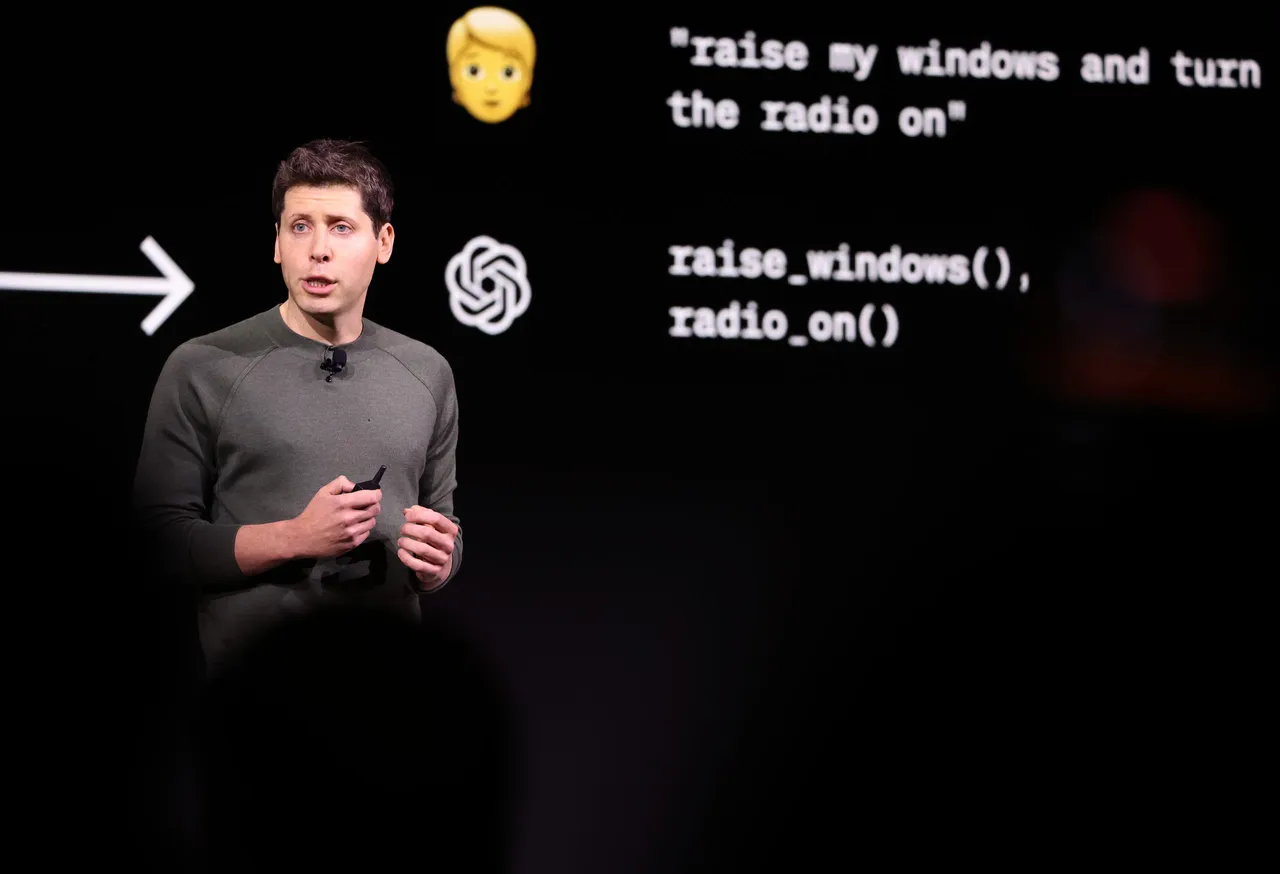
SAN FRANCISCO, CALIFORNIA – NOVEMBER 06: OpenAI CEO Sam Altman speaks during the OpenAI DevDay event on November 06, 2023 in San Francisco, California. Altman delivered the keynote address at the first-ever Open AI DevDay conference. (Photo by Justin Sullivan/Getty Images)
“A limited number of authorized OpenAI personnel, as well as trusted service providers that are subject to confidentiality and security obligations, may access user content only as needed for these reasons: (1) investigating abuse or a security incident; (2) to provide support to you if you reach out to us with questions about your account; (3) to handle legal matters; or (4) to improve model performance (unless you have opted out),” the company states.
This raises important questions regarding OpenAI’s investigation. Is it “abuse” or a “security incident” if a user asks a chatbot to help craft political talking points or content? Were any of the users spied on actual Americans who were concerned with a data center being built in their local community?
OpenAI faced scrutiny in August 2025 after admitting to flagging user chats and reporting them to police whenever a human moderator identified an exchange deemed a significant “imminent threat” to others.
“When we detect users who are planning to harm others, we route their conversations to specialized pipelines where they are reviewed by a small team trained on our usage policies and who are authorized to take action, including banning accounts,” the company wrote in a blog post. “If human reviewers determine that a case involves an imminent threat of serious physical harm to others, we may refer it to law enforcement.”
OpenAI said that the company had weighed whether to flag the account to law enforcement, but had determined at the time that it did not pose an imminent and credible risk of serious physical harm to others, failing to meet the threshold for referral. https://t.co/OBlLzlFHfE
— CBS Miami (@CBSMiami) April 25, 2026
In July 2025, OpenAI CEO Sam Altman warned that the AI industry hadn’t yet figured out the best way to protect users’ privacy. In the same breath, Altman called on privacy between a user and a chatbot to be something akin to a relationship with a human therapist.
“I think we should have the same concept of privacy for your conversations with AI that we do with a therapist or whatever — and no one had to think about that even a year ago,” he said.