By The Rio Times | Created at 2026-09-29 11:06:52 | Updated at 2026-09-29 12:01:53
1 hour ago
By The Rio Times | Created at 2026-09-29 11:06:52 | Updated at 2026-09-29 12:01:53
1 hour ago
PARAGUAY · ENERGY
Key Facts
- —The country Paraguay, a landlocked nation of 6.1 million, gets most of its electricity from Itaipú, a dam shared with Brazil.
- —Why it matters Itaipú’s price, US$19.28 per kilowatt of capacity a month, was fixed for 2024–2026 only, with no successor agreed.
- —How the talks stand Talks with Brazil on Annex C, the treaty’s financial rules, are on hold until after Brazil’s October election.
- —What happened ANDE, the state power utility, budgets US$614 million for physical investment in 2027, 22% less in guaraníes.
- —What it means for you Crypto miners drawn by cheap hydropower hold ANDE supply contracts that end in 2027, with renewal undecided.
- —Still open Paraguay wants a price that still funds social projects, Brazil a cost-based one; Paraguay hopes for a deal in November.
Paraguay’s power utility plans 22% less physical investment in 2027, in guaraní terms, while its main supplier’s 2027 price is unknown. ANDE, the state electricity company, put that investment at US$614 million in a budget bill now before Congress.
Free daily brief — no card needed
Get every Energy story in one morning email
We build you a personalized brief around the topics you follow — free for 7 days. Love it? Your first month after that is US$1.
Yes, email me my free daily brief — I can unsubscribe any time.
On 29 September the Asunción daily Última Hora tied the cut to the unsettled price of Itaipú, a dam shared with Brazil. ANDE’s own president has put the fall in the overall budget down mainly to the exchange rate.
One-stop reference
Company Intelligence
Every listed company in Latin America — financials, ownership and structure for 1,450+ companies across 26 exchanges, in one place.
What ANDE’s 2027 budget shows
Miguel Báez Reyes, ANDE’s president since July, presented the bill to Congress’s joint budget committee on Monday 21 September. It totals 15 trillion guaraníes (US$2.54 billion), 11% less than this year, La Nación reported.
ANDE’s own dollar total, US$2.34 billion, implies a budget rate of about 6,400 guaraníes to the dollar. At the market rate of 5,895 guaraníes to the dollar on 29 September, the same sum is about US$2.54 billion.
Báez said the 11% drop was due “mainly to the difference in the dollar exchange rate”, ABC Color reported. Measured in guaraníes, physical investment falls 22% and construction 28.3%, according to budget figures Última Hora published.
Power purchases take the largest share, US$956 million, of which Itaipú accounts for US$908 million, or 95%. Lenders including the Inter-American Development Bank supply US$339 million, a third less than this year, Última Hora reported.
Why Última Hora links the cut to Itaipú
The paper noted Itaipú’s socio-environmental donations to ANDE fall from 845.5 billion guaraníes (US$143 million) this year to zero in 2027. Dividend and compensation transfers from Itaipú and Yacyretá, a dam shared with Argentina, each fall 17%.
Fabián Cáceres, a former ANDE director, told Última Hora that “the tariff agreement with Itaipú expires this year”. “From 2027 it is still unknown what Itaipú’s tariff will be, and whether it will include any social spending,” he said.
Cáceres said the pending questions are the tariff and whether the operating agreement, which gives ANDE cheaper surplus energy, stays in force. Only then can ANDE plan how much guaranteed capacity to contract, he said.
Talks on Annex C are frozen until Brazil’s election is over, as Brazilian officials focus on the campaign, the paper reported. President Luiz Inácio Lula da Silva is seeking re-election.
Live Market IntelligenceCrypto — Live Market BoardInside: market breadth, the sector heatmap, currencies & rates, the Latin America scoreboard and the full instrument board.Rio Times · Live Market Intelligence
Crypto — Live Market Board
Digital assets
Sep 29, 2026 · 08:06
Bitcoin · benchmark
63,384
-0.26%
L 63,305day rangeH 64,346
-47.24% over 12 months
Market breadth · 17 names
35% advancing
6 ▲ advancing11 declining ▼
Currencies, rates & key inputs
Full instrument board
| BTC | 63,384 | -0.26% | -47.24% | 63,552 | 64,346 | 63,305 | 22,774,743,040 |
| ETH | 1,886 | +0.26% | -58.90% | 1,881 | 1,920 | 1,879 | 7,916,475,392 |
| SOL | 75.89 | -0.40% | -60.44% | 76.20 | 76.99 | 75.39 | 1,473,821,056 |
| XRP | 1.01 | -1.15% | -69.07% | 1.02 | 1.02 | 1.01 | 1,144,044,416 |
| BNB | 609.60 | -1.12% | -26.81% | 616.50 | 619.30 | 609.23 | 1,266,706,432 |
| ADA | 0.18 | -1.98% | -78.22% | 0.19 | 0.19 | 0.18 | 238,085,632 |
| DOGE | 0.07 | -1.56% | -70.00% | 0.07 | 0.07 | 0.07 | 553,256,192 |
| AVAX | 6.38 | +1.04% | -74.11% | 6.32 | 6.42 | 6.21 | 248,470,560 |
| LINK | 8.77 | -0.06% | -62.73% | 8.77 | 8.87 | 8.68 | 317,054,880 |
| DOT | 0.78 | -0.75% | -81.11% | 0.79 | 0.80 | 0.78 | 43,490,492 |
| LTC | 45.08 | -0.85% | -65.45% | 45.47 | 45.59 | 44.98 | 143,727,712 |
| BCH | 213.85 | +0.10% | -65.44% | 213.64 | 215.69 | 212.54 | 137,956,688 |
| TRX | 0.34 | +0.28% | -4.73% | 0.33 | 0.34 | 0.33 | 436,576,064 |
| XLM | 0.16 | -1.33% | -64.46% | 0.16 | 0.16 | 0.16 | 89,559,864 |
| HBAR | 0.07 | -0.53% | -74.67% | 0.07 | 0.07 | 0.07 | 22,546,186 |
| NEAR | 1.65 | +2.42% | -40.55% | 1.62 | 1.68 | 1.61 | 187,591,264 |
| ATOM | 1.40 | -2.36% | -70.15% | 1.44 | 1.44 | 1.40 | 18,626,964 |
| AAVE | 89.06 | +0.93% | -72.33% | 88.24 | 90.20 | 88.19 | 129,099,704 |
Largest moves today
NEAR
1.65
+2.42%
ATOM
1.40
-2.36%
ADA
0.18
-1.98%
DOGE
0.07
-1.56%
XLM
0.16
-1.33%
XRP
1.01
-1.15%
BNB
609.60
-1.12%
AVAX
6.38
+1.04%
The session read
The Bitcoin eased 0.26%, with breadth negative — 6 of 17 names higher. NEAR led, while ATOM lagged.
From The Rio Times
Related coverage · 29 Sep 2026
El Salvador Pension Reform Will Fix Finances, Not Raise Pensions, Ex-Central Banker Says
Read →
How Itaipú’s price is set
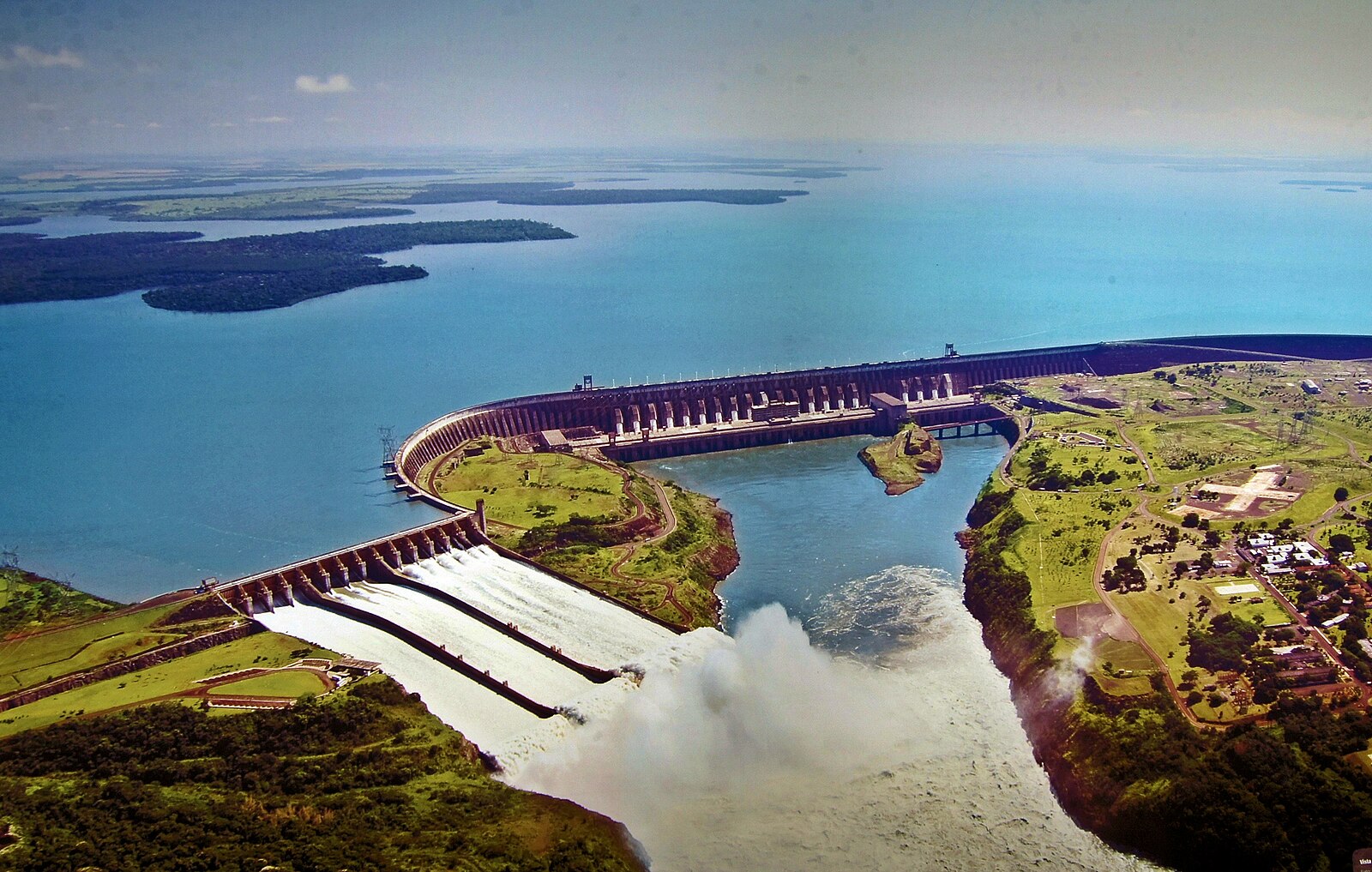
Itaipú has 20 generating units and 14,000 megawatts of capacity, and Brazil and Paraguay own it equally. Under the 1973 treaty each country is entitled to half the output, and unused power must be sold to the partner.
Annex C, the treaty’s financial chapter, sets how the price is calculated and was due for review after 50 years. The loans that built the dam were fully repaid in 2023, reopening the question of what the price should cover.
The price is charged per kilowatt of capacity each month, and in 2024 the two governments fixed it at US$19.28. That was up from US$16.71 in 2023 and held for 2024 to 2026, the Spanish news agency EFE reported.
They also agreed that from 2027 the price would reflect “only the strict operating cost” in Annex C, with no discretionary spending. Their own deadline for revising Annex C, 31 December 2024, passed without a deal, CNN Brasil reported.
Brazilian distributors pay US$17.66 in 2026, a rate approved by the regulator ANEEL, the left-leaning Revista Fórum reported. Itaipú covers the gap with an extra US$285 million, while officials put the dam’s operating cost at US$10–12, Agência Brasil reported.
Where the talks stand
Justo Zacarías Irún, Itaipú’s Paraguayan director, told a local radio station that formal talks would pick up after Brazil’s election. “I think immediately after the elections we will sit down and have decisions in three or four weeks,” he said.
He expects decisions around November and wants a price fixed for three to five years, as in 2024–2026, La Tribuna reported. “Paraguay’s idea is to have a somewhat high tariff” that keeps funding infrastructure and social programmes, he said.
President Santiago Peña, of the conservative Colorado Party, said in June that the Annex C talks have no deadline. “We want to dream big,” he said, looking 20 to 40 years ahead, according to La Nación.
In January Peña said Itaipú’s social budget “can be more restricted, but it cannot be zero”, Gazeta do Povo reported. Read more in Brazil’s Cheap-Power Hope Meets Paraguay’s Hard Line On Itaipu After 2026.
Left-wing senator Esperanza Martínez of the Frente Guasu coalition says Paraguayans are kept in the dark. “Does anyone know what is being negotiated in Itaipú?” she asked in July, ABC Color reported.
Brazil wants a cheaper price
Brazil buys the share of Itaipú power that Paraguay does not use, and wants it cheaper for its consumers. On 15 October 2025 Alexandre Silveira, Brazil’s energy minister, told a lower-house committee Brazil would seek to end Itaipú’s socio-environmental spending.
“Let us end, from January 2027, the socio-environmental spending to reduce the price of energy in Brazil,” Silveira said. A right-wing Liberal Party deputy backed him and one from Lula’s Workers’ Party defended the spending, the chamber’s news service reported.
Enio Verri, Itaipú’s Brazilian director-general, said in April the 2024 accord pointed to US$10–12 per kilowatt a month. “From next year we will be the lowest tariff in the country,” he said, according to Agência Brasil, the state news agency.
Verri also acknowledged that Paraguay wants a high price to finance its development. “Put yourself in the place of a country that wants to develop,” he said.
On 1 September CNN Brasil, citing unnamed Brazilian officials, reported that Brasília was working internally with about US$15 for 2027. Zacarías denied that Paraguay had received any formal Brazilian proposal at that level, Última Hora reported.
Data centres, crypto miners and cheap power
Firms drawn by cheap, renewable hydropower have asked ANDE for a combined 6,000 megawatts, Última Hora reported. That equals 43% of Itaipú’s total capacity of 14,000 megawatts.
Bitcoin mining alone uses close to 30% of the electricity ANDE bills, energy researcher Victorio Oxilia estimated in August. The miners’ supply contracts with ANDE expire in 2027, with no decision yet on renewal, ABC Color reported.
Cecilia Llamosas, an energy-policy specialist speaking for the mining side, said miners pay US$48–56 per megawatt-hour. She described their 900 megawatts as a “fuse” that switches off within minutes when the grid is stretched.
Atome, a British firm planning a green-fertiliser plant, wants a 15-year deal at US$30 per megawatt-hour, fixed for ten years. “We cannot sell below our tariff,” Báez told legislators, who questioned him about the dispute on 21 September.
Senator Dionisio Amarilla argued that Paraguay should still court big-data investors, as Argentina and Bolivia also offer favourable terms. Martínez objected that Atome’s contract lets it buy power “almost at cost price or below cost price”, ABC Color reported.
What it means for electricity prices
Paraguay’s power utility has not changed its electricity tariffs since 2017, according to La Nación. In May Félix Sosa, then ANDE’s president, said any rise should start with large industrial users, sparing 90% of customers.
Sosa said the final tariff “will be the direct result” of the Annex C negotiation, Última Hora reported. On 21 September Báez told legislators that ANDE “never respected the technical tariff” needed to cover its costs.
Báez said ANDE invests US$300–400 million a year when it needs about US$1 billion. “We live in a country of abundance, but that abundance is running out,” he said, ABC Color reported.
Demand keeps rising: consumption grew 12.5% in 2025, according to the figures ANDE presented to Congress. Peña projects that Paraguay will use its whole Itaipú share by 2031 or 2032, La Tribuna reported.
Pedro Ferreira, a former ANDE president, expects no revised Annex C in force by January 2027 and urged a “plan B”. Without a deal, he said, social spending and the operating agreement would lapse, though Itaipú’s general tariff would fall.
What comes next, and what it does not mean
Brazil and Paraguay both vote on Sunday 4 October, Paraguay in municipal elections, and any Brazilian presidential runoff follows on 25 October. Zacarías expects the Itaipú price to be settled around November, before the current deal lapses on 1 January.
Paraguay’s power utility still needs Congress to pass its budget, and Atome must agree new terms by Wednesday 30 September. Otherwise Atome must post a guarantee of about US$40 million or risk losing its contract, Báez said.
Any revised Annex C would also need approval from both countries’ congresses, Agência Brasil noted. Ferreira doubts Lula would push such a deal through Brazil’s Congress so close to an election.
The smaller investment line does not mean ANDE is abandoning its grid plans. Báez called a second 500-kilovolt circuit from Itaipú to Villa Hayes the final piece for bringing Paraguay’s full share home.
Nor does a missed deadline leave Itaipú without a price, because the earlier terms would apply, Ferreira said. What is not yet known is the 2027 price, and how much of any change reaches consumers in either country.
Frequently Asked Questions
What is the Itaipú dam?
A hydroelectric dam on the Paraná River between Paraguay and Brazil, owned equally by both countries. With 14,000 megawatts of capacity, it supplies most of Paraguay’s electricity and about 8% of Brazil’s.
What is Annex C of the Itaipú treaty?
It is the financial chapter of the 1973 treaty and sets how Itaipú’s price is calculated. It was due for review after 50 years, and Brazil and Paraguay are still negotiating the revision.
Will electricity in Paraguay get more expensive?
No increase has been decided, and Paraguay’s power utility has kept its tariffs unchanged since 2017. Its president, Miguel Báez, says the price of energy will be very different in the next decade.
Why does the Itaipú price matter to Brazil?
Brazil buys the Itaipú power Paraguay does not use, and the cost feeds into bills in its South, Southeast and Centre-West. Specialists cited by CNN Brasil estimate each extra dollar in the price costs consumers about US$150 million a year.
This article was produced by The Rio Times’ automated newsroom system. How we use AI · Report an error
The Rio Times · Power Map
See who really holds power in Latin America
Click to open the Power Map →