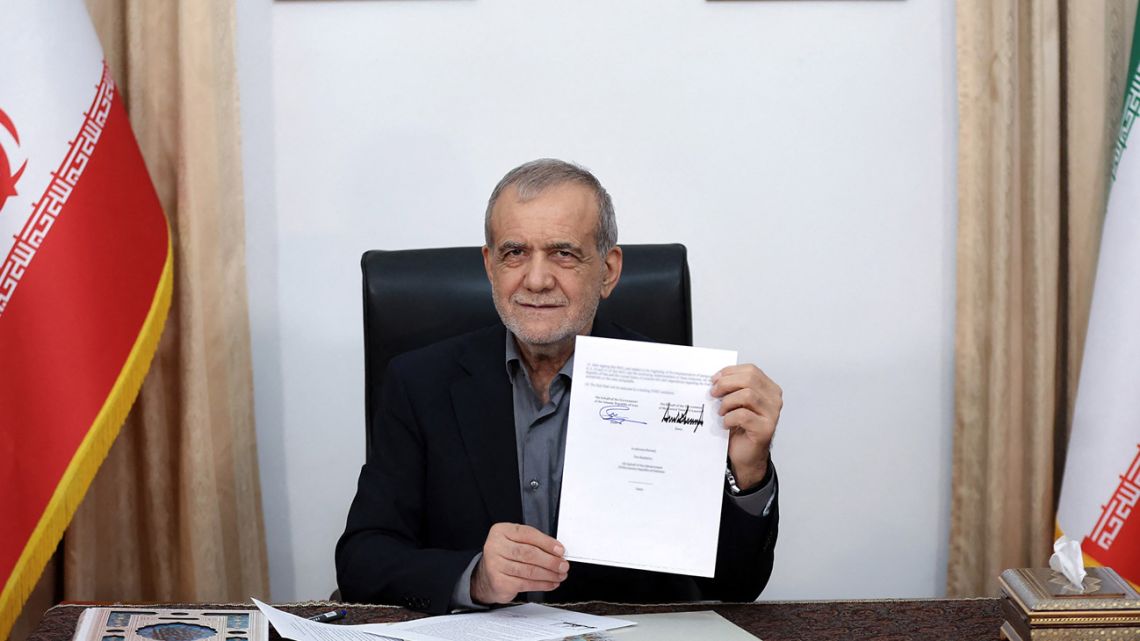
Peace talks between U.S. and Iran yield progress, but tensions remain high
- U.S.-Iran talks in Switzerland made encouraging progress and established a 60-day roadmap toward a final settlement.
- The agreement includes a 60-day sanctions waiver on Iranian oil sales and the release of $12 billion in frozen assets.
- Trump threatened to bomb Iran and take over the Strait of Hormuz if no deal is reached, nearly derailing negotiations.
- Lebanon remains a major sticking point as Israel refuses to withdraw and Hezbollah vows to respond to violations.
- The conflict has cost the U.S. roughly $40 billion and raised household energy costs by over $250.
The first round of direct U.S.-Iran negotiations in Switzerland has concluded with what mediators are calling "encouraging progress," yet the path toward a final peace deal remains fraught with tension, threats, and unresolved disputes over Lebanon and the strategic Strait of Hormuz.
The talks, held at the Qatari-owned Bürgenstock mountain resort, brought together Vice President J.D. Vance alongside envoys Steve Witkoff and Jared Kushner for the U.S. side, and Iranian Foreign Minister Abbas Araghchi with Parliament Speaker Mohammad Ghalibaf for Tehran. Mediators from Qatar and Pakistan facilitated the discussions, which ran Sunday into the early hours of Monday.
What emerged from the marathon session was not a joint statement between the two adversaries, but a roadmap. According to mediators, both sides agreed to a 60-day framework toward a final settlement, with working groups covering nuclear issues, sanctions, implementation, and dispute resolution.
"We laid a very good foundation for a successful final deal," Vance told reporters after the talks concluded.
Sanctions relief and frozen assets
The agreement includes several concrete steps. The U.S. Treasury announced a 60-day waiver on sanctions, allowing Iran to sell oil and petrochemical products and receive payment. Iranian Foreign Minister Araghchi confirmed via social media that sanctions on oil had been waived and some frozen assets had been released. Iran's top negotiator Ghalibaf separately said an agreement had been reached to release $12 billion in frozen Iranian assets.
Vance said the administration has devised a process, credited to White House envoy Jared Kushner, where the U.S. and Qatar would control Iranian funds when unfrozen, with the money designated for purchases of American corn, soy, and wheat. "So, the money that we lift is going to go to our farmers," Trump told reporters.
However, Iran's Central Bank Governor Abdolnaser Hemmati pushed back, telling Iran's Tasnim news agency there was no such obligation, and that at least some frozen funds could be used to buy other non-sanctioned goods.
A communication line for the Strait of Hormuz was also established to prevent naval incidents and miscommunication while broader talks continue.
Trump's threats disrupt diplomacy
The negotiations nearly unraveled before they began. Trump told Fox News that the U.S. could resume bombing Iran and "take over" the Strait of Hormuz if no deal is reached, and warned Iranian officials they "won't even make it back" to their country if they fail to negotiate. Sen. Lindsey Graham echoed the threats, saying the U.S. would "obliterate" Iran if it contests American control of the strait.
The remarks provoked a sharp response from Iran's chief negotiator. Ghalibaf called the threats a sign of Washington's "desperation," warning that "our armed forces are ready to give them a response in a different way." An Iranian source told CNN that talks stalled after Trump's remarks, with back-channel efforts underway to bring the parties back to the table. Negotiations ultimately resumed and continued into the early hours of Monday.
Lebanon remains the sticking point
The interim peace agreement calls for ending all hostilities, including in Lebanon, where Israel invaded in March after Hezbollah fired across the border. Israel was not party to the agreement and has refused to withdraw.
Israeli Prime Minister Benjamin Netanyahu told journalists that Israeli forces will remain in southern Lebanon "for as long as it takes," and that Israel will not allow Iran to "arm itself with nuclear weapons," regardless of "whatever the diplomatic developments may be." Hezbollah leader Naim Qassem vowed his forces would respond to any violations: "Israel will not stay in Lebanon, even if it increases its crimes."
Despite the rhetoric, Lebanese officials reported a sustained lull in fighting since Saturday night. Hassan Wazni, director of a hospital in the heavily bombarded city of Nabatieh, told Reuters it was "the longest a ceasefire has held" since the war began, although more than a million Lebanese remain displaced.
Technical teams remain in Switzerland to continue work through the week, with Iran maintaining that formal nuclear discussions have not yet begun despite U.S. claims of progress on IAEA inspections. The cost of the conflict to date is already staggering: a preliminary CSIS analysis puts the Defense Department's bill at roughly $40 billion, while American households have on average paid more than $250 extra in energy costs — a burden that falls hardest on working families already squeezed by the highest inflation in three years.
Sources for this article include: