 By GB News (Politics) | Created at 2026-06-20 08:38:17 | Updated at 2026-06-20 12:29:56
3 hours ago
By GB News (Politics) | Created at 2026-06-20 08:38:17 | Updated at 2026-06-20 12:29:56
3 hours ago
Chancellor Rachel Reeves has secured a £9.8billion windfall in the first two months of the current tax year after British taxpayers handed over £153.7billion in income tax and National Insurance contributions.
HM Revenue and Customs (HMRC) figures released yesterday showed tax receipts totalled £153.7billion in April and May, up from £143.9billion collected during the same period last year.
Income tax payments alone accounted for £54.6billion of the overall figure.
The increase in revenue has been driven in part by the continued freeze on income tax thresholds, which Ms Reeves extended at her most recent Budget despite Labour's manifesto pledge not to raise taxes on working people.
Sarah Coles, head of personal finance at investment platform AJ Bell, said: "The taxman carved himself a hefty slice of our cash in April and May, devouring £153.7billion in two months alone thanks to a combination of frozen thresholds and a hike in dividend tax.
"The impact of this horrible stealth tax becomes more evident with each passing year.
"Every pay rise has pushed millions of people into paying more tax and more at higher rates."
Ms Coles warned that the "tax pain is far from over" because income tax thresholds are due to remain frozen until 2031.
The process, commonly known as fiscal drag, moves workers into higher tax bands as wages increase even though headline tax rates remain unchanged.
Rachel Reeves secures £9.8billion tax windfall in two months as frozen thresholds boost Treasury coffers

GETTY
Critics have described the policy as a stealth tax because it increases Treasury revenues without ministers having to announce changes to tax rates.
Nimesh Shah, chief executive of accountancy firm Blick Rothenberg, said stealth taxes had become a "cash cow" for Governments.
He said: "Wage inflation has been pretty solid, dragging workers into higher tax bands without them even knowing. It's a horrible way to raise taxes, but is a clever move for the Government."
Mr Shah noted that total annual tax receipts from all duties are forecast to reach £1trillion during the course of this Parliament.
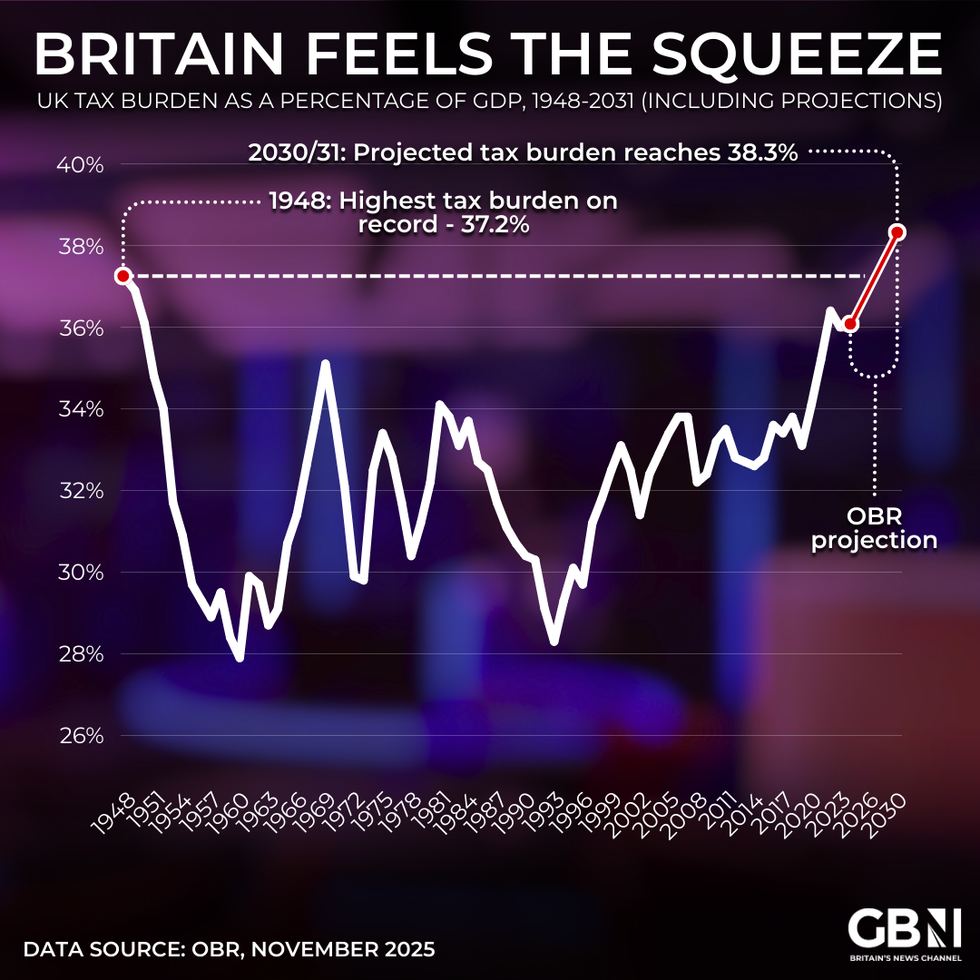
Mike Warburton, tax expert at The Telegraph, said: "When Gordon Brown froze personal allowances, he was rightly criticised for taxation by stealth. Sadly, both this and the last Government have copied him."
He also said the policy runs counter to the Rooker-Wise amendment, which requires annual inflation-linked increases to income tax bands.
The Treasury's income tax receipts have risen by 53 per cent over the past five years, increasing by £8.1billion.
The previous Conservative Government first introduced the freeze on income tax thresholds in 2021.
Lucy Rigby, chief secretary to the Treasury, said: "Inflation has held steady and unemployment has fallen this week, but the war in the Middle East has clearly had an impact on economies around the world."
She added that the Government has "the right economic plan to deal with these challenges protecting families and businesses from rising costs, while cutting borrowing at a faster rate than any other G7 economy".
Both of Labour's Budgets to date have introduced tax changes affecting businesses and workers.
In 2024, Ms Reeves announced plans to increase employers' National Insurance contributions from 13.8 per cent to 15 per cent from April 2025.
Her subsequent Budget also included a two percentage point rise in both ordinary and upper dividend tax rates.