By The Rio Times | Created at 2026-10-10 14:01:57 | Updated at 2026-10-10 15:19:51
1 hour ago
By The Rio Times | Created at 2026-10-10 14:01:57 | Updated at 2026-10-10 15:19:51
1 hour ago
PERU · RELIGION
Key Facts
- —The country Peru, a Pacific nation of 34.2 million people in its 2025 census, is mostly Catholic, with Andean traditions woven into its faith.
- —The faiths In the 2017 census, 76.0% of Peruvians aged 12 and over said they were Catholic, 14.1% evangelical and 5.1% had no religion.
- —The trend From 2007 to 2017 the Catholic share fell from 81.3% to 76.0%, while evangelical numbers grew 25.3%.
- —The state The 1993 constitution gives the Catholic Church a special place in Peru’s history and culture but guarantees freedom of religion for all.
- —The US link Chicago-born Pope Leo XIV was bishop of Chiclayo, became a Peruvian citizen in 2015 and visits Peru from 11 to 16 November 2026.
- —Main festival Lima’s Lord of Miracles processions fill October; the 2026 outings fall on 3, 18, 19 and 28 October and 1 November.
- —Still open Peru’s 2025 census did not ask about religion, so the 2017 census remains the latest official count, as of October 2026.
Religion in Peru matters to Americans because Chicago-born Pope Leo XIV was a bishop there and became a Peruvian citizen in 2015.
About three in four Peruvians told the 2017 census they were Catholic, while evangelical churches keep growing. This guide explains the main faiths, their political weight, the festivals and daily life, as of October 2026.
The Main Faiths in Peru by the Numbers
Peru’s latest official count of religion comes from the 2017 census, which asked everyone aged 12 and over about their faith. Of 23.2 million people counted, 76.0% said they were Catholic and 14.1% evangelical, according to INEI, the national statistics office.
Another 4.8% named a different religion, a group that includes Adventists, Jehovah’s Witnesses, Latter-day Saints, Israelites, Buddhists, Jews and Muslims. Some 5.1%, or 1.18 million people, said they had no religion at all.
The trend shows when the 2017 figures are set against the 2007 census. The Catholic share fell from 81.3% to 76.0%, while evangelical numbers rose 25.3% and those with no religion grew 94.0%.
Faith also splits by place. In rural areas 19.4% of people were evangelical in 2017, against 12.8% in towns and cities.
The Catholic share was highest in Piura (84.8%), Arequipa (83.4%) and Puno (82.0%). It was lowest in the Amazon region of Ucayali, at 58.0%, where 27.6% were evangelical.
Huánuco, Huancavelica, Loreto, Pasco, Amazonas, San Martín and Ayacucho also had evangelical shares above 20%. San Martín had the largest share of people with no religion, at 11.3%.
For the wider picture of who lives where, see the guide to Peru’s population and ethnic groups and the Peru country hub.
The Catholic Church and Its Leaders
Peru’s Catholic Church had 46 jurisdictions in August 2026, from archdioceses to Amazon missions, says the Peruvian Episcopal Conference. The conference, known as the CEP, is the national assembly of Catholic bishops.
As of September 2026 the CEP is led by Carlos García Camader, bishop of Lurín in southern Lima. Cardinal Carlos Castillo Mattasoglio, archbishop of Lima, holds the old title of primate of Peru, according to the CEP.
Santa Rosa de Lima (1586-1617), canonised in 1671, is regarded as the first saint of the Americas. She is patron of Lima, of Peru and of the national police, says Andina, the state news agency.
Santo Toribio de Mogrovejo, the second archbishop of Lima, is patron of Latin America’s bishops. The church marks the third centenary of his canonisation in 2026, according to the CEP.
How the church fits among the country’s other centres of power is covered in the explainer on who dominates Peru.
Evangelicals, Israelites and Other Churches
Evangelical Protestants are the second-largest faith group, with 3.26 million followers aged 12 and over in 2017. In the census, women were more likely than men to be evangelical, at 15.0% against 13.1%.
Two umbrella bodies organised the churches’ official thanksgiving service for Peru in July 2026. They are the National Evangelical Council of Peru (Conep) and the Union of Evangelical Christian Churches of Peru (Unicep).
The Church of Jesus Christ of Latter-day Saints, based in Utah, reports 667,836 members in Peru at the end of 2025. It counts 809 congregations, 15 missions and four temples, according to the church’s own figures.
A homegrown group with political ambitions is the Israelite movement. Its full name is the Evangelical Association of the Israelite Mission of the New Universal Covenant.
Ezequiel Ataucusi founded it in the 1960s and also created a political party, according to El Comercio, a Lima daily.
Religion and Political Power in Peru
Peru has no state religion, but the constitution gives the Catholic Church a special place. Article 50 of the 1993 constitution calls the church “an important element in the historical, cultural and moral formation of Peru”.
The same article says the state respects other faiths and may cooperate with them. Article 2 protects freedom of religion and lets all faiths worship in public, as long as they respect morals and public order.
Keiko Fujimori, a conservative and the first woman elected president of Peru, took office on 28 July 2026. Her oath pledged to recognise “the importance of the Catholic Church in the cultural and moral formation of Peru”, says ACI Prensa.
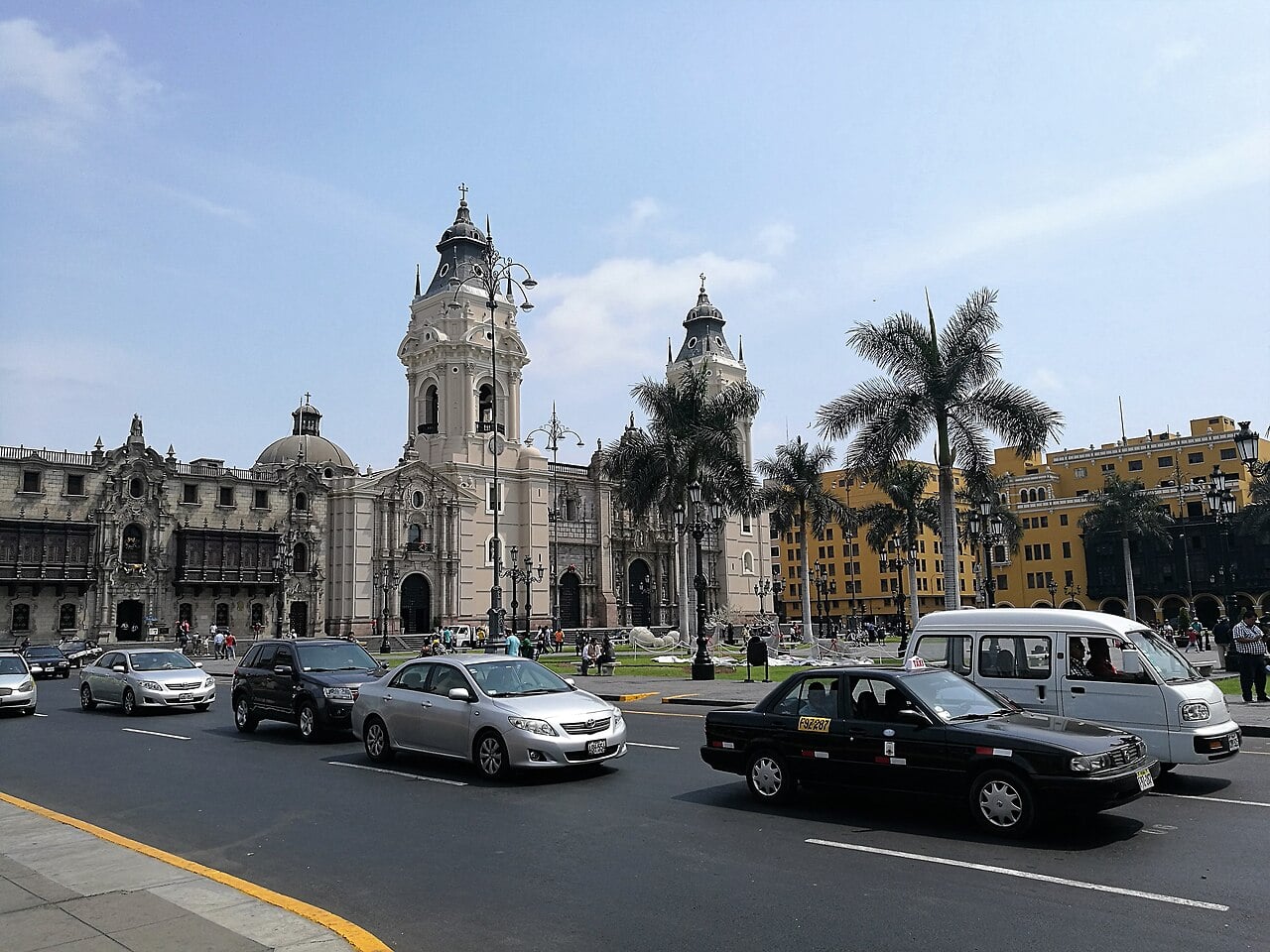
Hours before the swearing-in, Cardinal Castillo led the traditional Te Deum Mass in Lima Cathedral for the 205th anniversary of independence. He called for a reconciliation that does justice and repairs harm.
Two days later Fujimori attended the evangelical churches’ thanksgiving service for Peru in Lima’s Lince district. A 2018 supreme decree made the service part of the official independence programme, Spain’s EFE agency reported.
Pastor Miguel Bardales told her at the service that “power is a delegation from God”. She left with a Bible presented at the end of the ceremony.
Religious parties have tested the ballot box too. In January 2020 the Israelite party, Frepap, won 15 of Congress’s 130 seats, according to Andina.
The Sodalicio Scandal and Its Dissolution
The Sodalicio de Vida Cristiana was a Catholic society founded in 1971 by Luis Fernando Figari, who was born in Lima. The Vatican approved it in 1997.
Figari was accused of physical, psychological and sexual abuse. Pope Francis expelled him from the society in 2024 and ordered its dissolution in January 2025, according to Infobae.
The decree of suppression was signed on 14 April 2025 at the Vatican office for religious communities. In its final statement, the group asked forgiveness “of the whole Church and of society for the pain caused”.
Its final reparations report said 93 victims had received financial compensation, worth more than US$5 million in total, Infobae reported.
In May 2026 Cardinal Castillo and other bishops were due to say a Mass of reparation in Catacaos, Piura. It was for farming communities who say companies linked to the Sodalicio took their land, Vatican News reported.
Jordi Bertomeu, then the Vatican commissioner for the Sodalicio’s liquidation, called the gesture “symbolic compensation that comes very late and is insufficient”. He said the step came “by the will of Francis, confirmed by Leo XIV”.
Festivals, From the Lord of Miracles to the Andes
Peru’s festivals show how Catholic ritual and older Andean beliefs have blended since the Spanish conquest. Two seasons stand out: October in Lima and the first half of the year in the southern Andes.
The Lord of Miracles in Lima
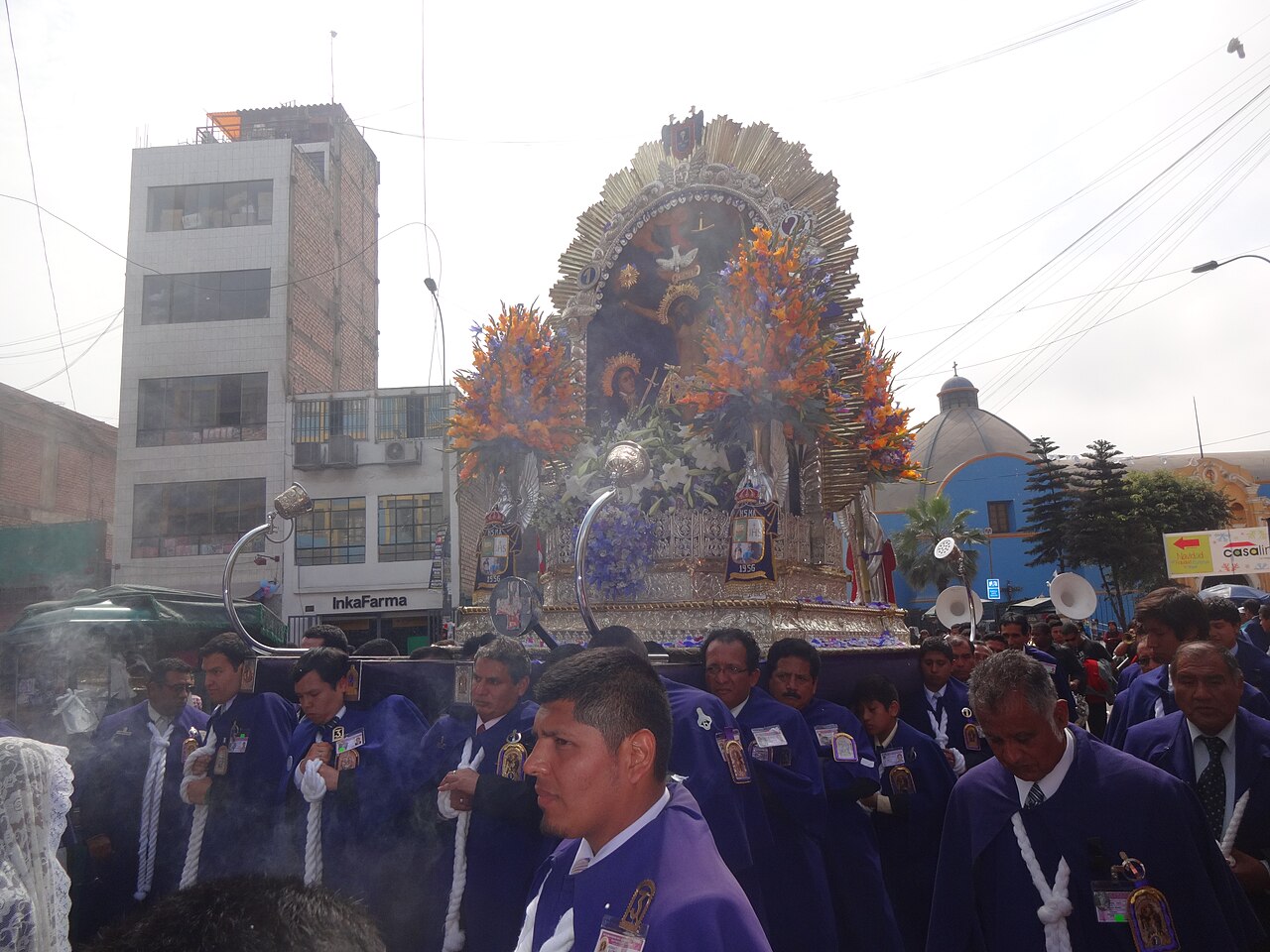
Lima’s Lord of Miracles, the Señor de los Milagros, is a mural of Christ painted around 1651 by an enslaved Angolan man. Its adobe wall survived earthquakes in 1655, 1687 and 1746, which deepened faith in the image, says Infobae Perú.
A brotherhood, the Hermandad del Señor de los Milagros de Nazarenas, carries a copy of the image through the city. The 2026 processions began on Saturday 3 October at noon, according to Andina.
Later outings start at 6:00 a.m. on 18, 19 and 28 October, with the last at noon on Sunday 1 November. A practical guide to the closures is in the Lord of Miracles route explainer.
Inti Raymi and the Sun Festival
In Cusco, the Inti Raymi, or Festival of the Sun, is staged every 24 June. The Inca held it at the winter solstice to honour the sun god, according to Andina.
Spanish viceroy Francisco de Toledo banned it in 1572, and the modern version dates from 1944. Some 750 to 800 actors now take part.
It moves from the Qoricancha, the Inca sun temple under Cusco’s Santo Domingo church, through the main square to the Saqsaywaman ruins. Offerings of coca leaves and chicha de jora, a fermented maize drink, remain part of the ritual.
Pilgrimages That Blend Two Worlds
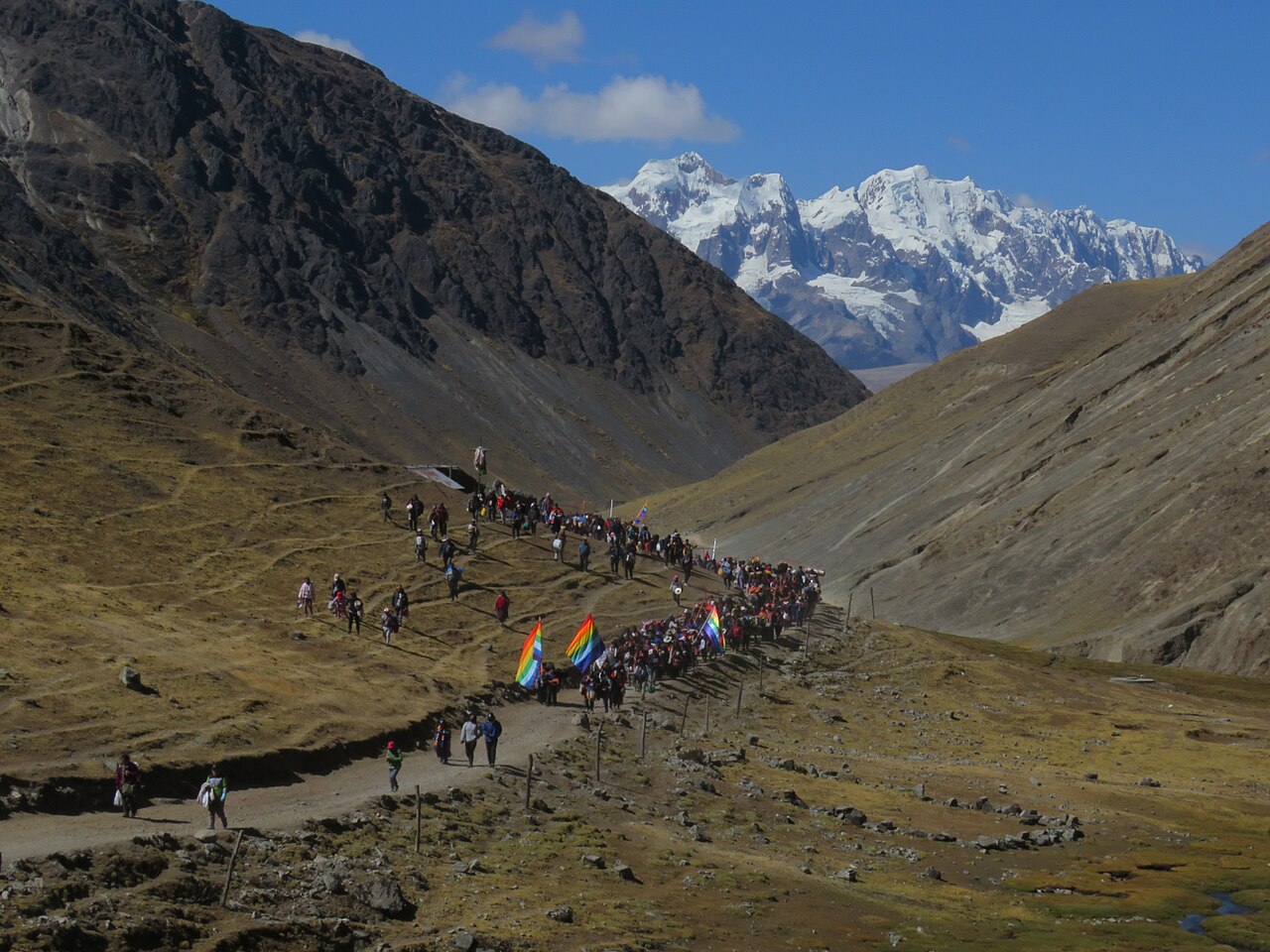
UNESCO added the Qoyllur Rit’i pilgrimage, which begins 58 days after Easter Sunday near Cusco, to its heritage list in 2011. Its UNESCO listing counts about 90,000 pilgrims and says the rite “combines elements from Catholicism and worship of pre-Hispanic nature deities”.
In Puno, on Lake Titicaca, the Virgen de la Candelaria festival fills February with thousands of Quechua and Aymara dancers and musicians. UNESCO listed it in 2014 as a mix of Catholic tradition and the Andean world view.
How Faith Shapes Daily Life
Belief also varies by age. In 2017, 79.1% of Peruvians aged 50 and over were Catholic, while 8.1% of 18-to-29-year-olds had no religion.
Men were more likely than women to report no religion, at 6.4% against 3.8%. Young people aged 12 to 17 had an evangelical share of 15.2%, above the national average.
October turns Lima purple, the colour of the Lord of Miracles, which stands for penance and spiritual preparation. The Archdiocese of Lima holds night meditations during this “purple month”, according to El Peruano, the state daily.
For the artists, writers and musicians who draw on this heritage, see the guide to Peru’s cultural figures.
Religion sets much of Peru’s calendar. Seven of the 16 national holidays in 2026 are religious feasts, according to the list published by Gestión, a Lima business daily.
These holidays apply to public and private sector workers, according to Andina. Under Legislative Decree 713, private-sector staff keep their normal pay on them.
- Holy Thursday and Good Friday (2 and 3 April in 2026)
- Saints Peter and Paul (29 June)
- Santa Rosa de Lima (30 August)
- All Saints’ Day (1 November)
- Immaculate Conception (8 December)
- Christmas Day (25 December)
Pope Leo XIV and His Peruvian Years
Pope Leo XIV was born Robert Francis Prevost in Chicago on 14 September 1955, according to his Vatican biography. In 1985 he joined the Augustinian mission in Chulucanas, in Peru’s northern Piura region.
Pope Francis made him apostolic administrator of Chiclayo, a northern coastal city, in November 2014 and its bishop in September 2015. He became a Peruvian citizen by naturalisation on 24 August 2015.
In 2018 Peru’s bishops elected him second vice-president of their conference. In January 2023 Francis called him to Rome to head the Vatican office that selects bishops.
The cardinals elected him pope on 8 May 2025, and he took the name Leo XIV.
He returns from 11 to 16 November 2026, on a trip that starts in Uruguay and Argentina, according to the Vatican programme. Stops include Lima, Chiclayo, Cusco and Amazonian Pucallpa, with a closing Mass at Lima’s Las Palmas air base on 16 November.
In Cusco he meets representatives of popular devotion at Saqsaywaman, the Inca site that hosts the main Inti Raymi ceremony. In Zaña, near Chiclayo, he leads a prayer at the shrine of Santo Toribio to close its jubilee year.
Pope Francis drew about 1.3 million people to the same Las Palmas base in January 2018, according to ACI Prensa. Full visit details are in the guide to the papal visit in Lima and Cusco.
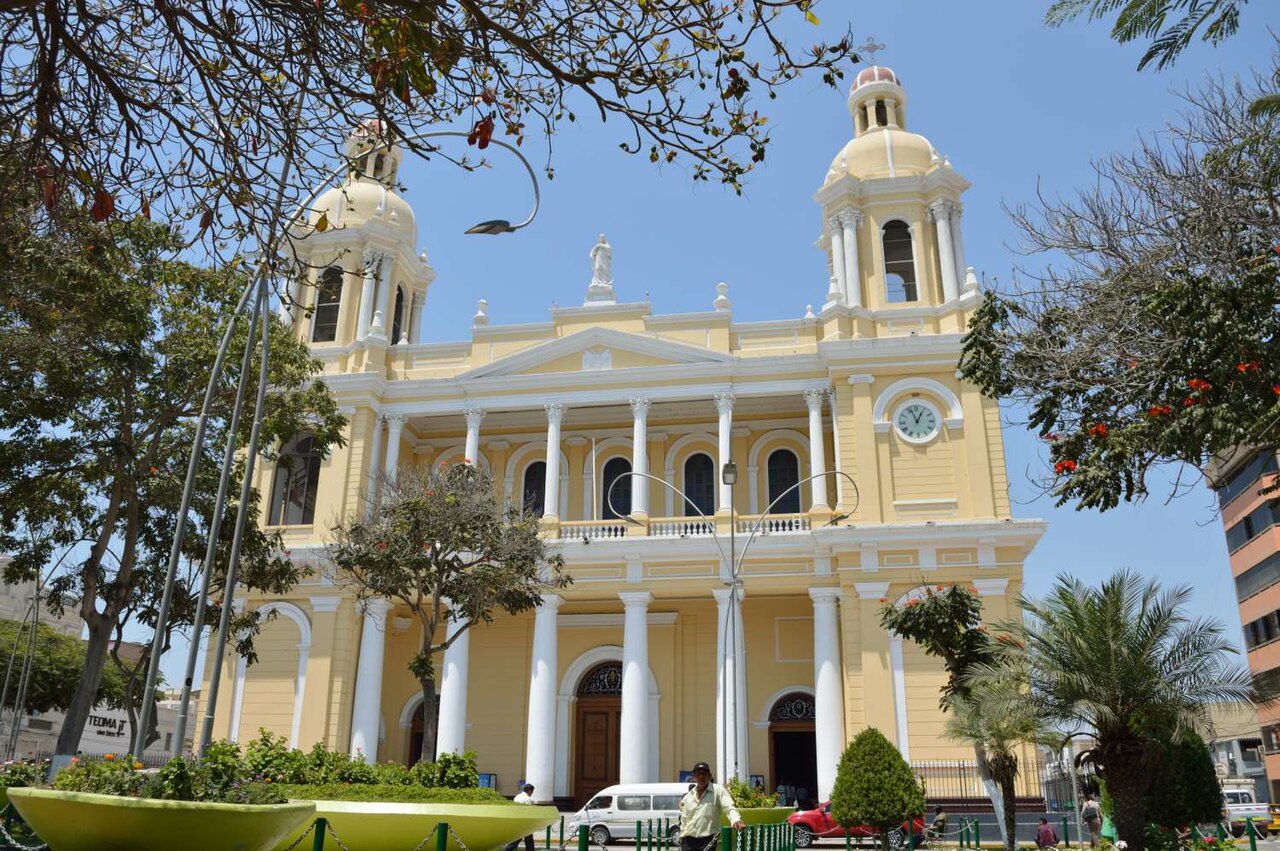
What It Means for US Readers
For Americans, the most direct link is personal: the pope from Chicago is also a Peruvian citizen and was bishop of Chiclayo. Anyone in Lima, Chiclayo or Cusco from 11 to 16 November 2026 should plan for crowds and closed roads around papal events.
In October, the Lord of Miracles processions fill the streets of Lima’s historic centre on each procession day. Visitors who want to watch should check the published start times and routes.
Religious ties also run the other way. Peru’s first Latter-day Saint temple opened in Lima in 1986, and the Utah-based church now runs four temples in the country.
For visitors to Cusco, the Inti Raymi on 24 June is the easiest way to see Andean ritual on a grand scale. Peru religion is also a practical matter for travellers, since seven national holidays are religious feasts with paid days off.
What Is Not Known
The biggest gap is current numbers. Peru’s 2025 census left out the question on religion, according to columns in La República and Diario El Pueblo.
Without new data, nobody can say whether the Peru religion map has shifted since 2017, or whether evangelical growth has continued. INEI’s first 2025 results, published in May 2026, put the total population at 34,157,732, according to El Peruano.
The Sodalicio’s legacy is not settled either. Its liquidation by a Vatican commissioner was still under way in May 2026, and Piura farming communities were still seeking redress.
Nor is it known what Pope Leo XIV will say in Peru. As of October 2026, the Vatican had published only the programme of his visit.
Frequently Asked Questions
What is the main religion in Peru?
Catholicism. In the 2017 census, 76.0% of Peruvians aged 12 and over said they were Catholic, 14.1% evangelical, 4.8% another religion and 5.1% none, according to INEI.
Does Peru have an official state religion?
No. Article 50 of the 1993 constitution recognises the Catholic Church as an important element in Peru’s historical, cultural and moral formation, but it also says the state respects other faiths. Article 2 guarantees freedom of religion.
How many evangelicals are there in Peru?
The 2017 census counted 3.26 million evangelicals aged 12 and over, or 14.1%. Their number grew 25.3% between 2007 and 2017, and the share is highest in Amazon and central Andean regions such as Ucayali and Huánuco.
Why is Pope Leo XIV linked to Peru?
The Chicago-born pope joined an Augustinian mission in Piura in 1985, was bishop of Chiclayo from 2015 and became a Peruvian citizen in 2015. He visits Peru from 11 to 16 November 2026.
When is the Lord of Miracles procession in 2026?
The Lord of Miracles processions in Lima take place on 3, 18, 19 and 28 October and 1 November 2026. They are the main dates in the Peru religion calendar for visitors to the capital.
What happened to the Sodalicio de Vida Cristiana?
Pope Francis ordered the Catholic society dissolved in January 2025 after years of abuse allegations. The decree of suppression was signed at the Vatican on 14 April 2025.
Which religious holidays are public holidays in Peru?
Seven: Holy Thursday, Good Friday, Saints Peter and Paul on 29 June, Santa Rosa de Lima on 30 August, All Saints on 1 November, the Immaculate Conception on 8 December and Christmas.
Sources: INEI, Perú: Perfil Sociodemográfico, Censos Nacionales 2017 (religion chapter 2.5), 2018; Constitución Política del Perú 1993 (Arts. 2 and 50), 1993; Holy See, Biography of the Holy Father Leo XIV, 2025; Holy See, programme of the Apostolic Journey to Uruguay, Argentina and Peru, 2026-09-21; Conferencia Episcopal Peruana, avances de la visita del papa León XIV, 2026-09-29; Conferencia Episcopal Peruana, reelección de autoridades (46 jurisdicciones), 2026-08-20; Conferencia Episcopal Peruana, León XIV y santo Toribio, 2026-09-20; Andina, fechas y rutas del Señor de los Milagros 2026, 2026-10-02; El Peruano, Señor de los Milagros 2026, 2026-09-30; Infobae Perú, historia del Señor de los Milagros, 2025-10-28; Andina, Inti Raymi, 2026-06-24; UNESCO, Pilgrimage to the sanctuary of the Lord of Qoyllurit’i, 2011; UNESCO, Festivity of Virgen de la Candelaria of Puno, 2014; Gestión, feriados 2026, 2026-09-19; Andina, Santa Rosa de Lima feriado, 2026-08-27; ACI Prensa, Keiko Fujimori asume la presidencia, 2026-07-28; EFE via Infobae, ceremonia evangélica de acción de gracias, 2026-07-30; Infobae Perú, el Sodalicio dejó de existir, 2025-04-14; Vatican News, misa de reparación en Catacaos, 2026-05-23; Church of Jesus Christ of Latter-day Saints, Peru facts and statistics, 2025-12-31; El Comercio, Frepap en el Congreso, 2020-01-27; La República, la religión en el censo (opinión), 2025-08-03; ACI Prensa, Señor de los Milagros y el papa León, 2026-10-05; Andina, los hechos políticos más importantes de 2020 (bancadas del Congreso), 2020-12-30; El Peruano, INEI: población de 34 millones 157 mil 732 (Censos Nacionales 2025), 2026-05-29; Diario El Pueblo, el censo 2025 y la pregunta sobre religión (opinión), 2025-08-01.
This article was produced by The Rio Times’ automated newsroom system. How we use AI · Report an error · Editorial responsibility: Matthias Camenzind, Editor-in-Chief
The Rio Times · Power Map
See who really holds power in Latin America
Click to open the Power Map →