According to an OilPrice.com report published Aug. 11, 2026, Iran has established what the report calls "de facto control" over the Strait of Hormuz and the Bab el-Mandeb Strait, leading Washington and Gulf states to pursue alternative oil export routes. The report details a proposed $5 billion refinery and export hub located outside Hormuz and an overland pipeline route through Saudi Arabia and Israel to Mediterranean ports.
The report cites Israel's Energy Minister Eli Cohen, Prime Minister Benjamin Netanyahu, and an unidentified source described as working closely with the U.S. Treasury. Iran's leadership is betting that sustained military pressure will ultimately force Washington to accept its control over the crucial waterway[1].
Iran's Leverage Over Maritime Chokepoints
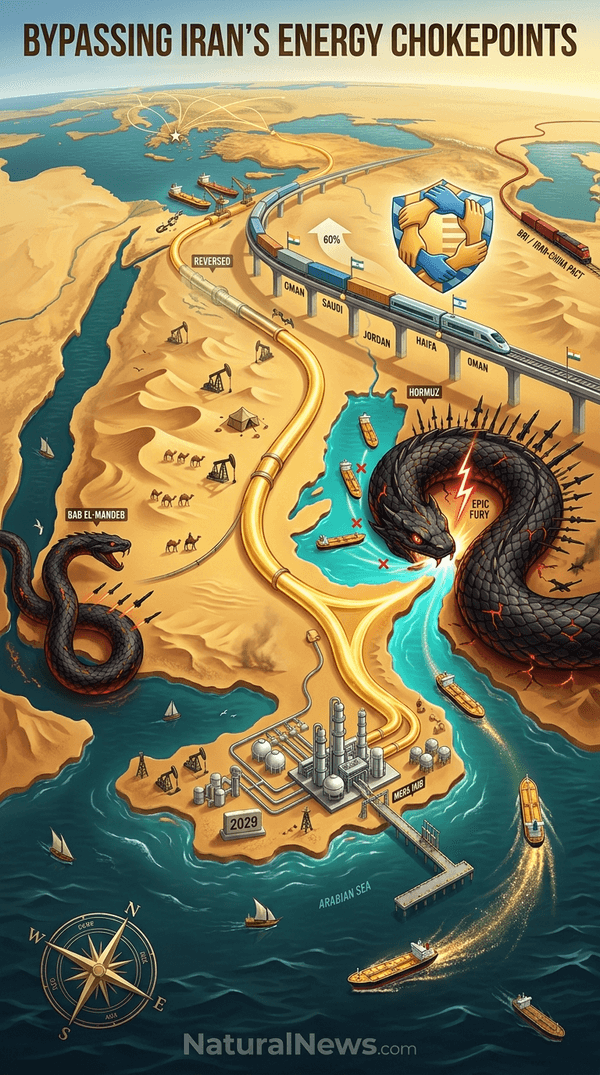
The report says Iranian forces control the full eastern stretch of the Strait of Hormuz, preventing oil and liquefied natural gas (LNG) movements east to Asian buyers or west toward the Gulf of Aden. The strait, a 21-mile-wide passage between Iran and Oman, normally handles about 20% of global oil and one-third of LNG exports [2]. Iran-backed Houthi forces in Yemen control tanker access to the Bab el-Mandeb Strait from the Gulf of Aden, the report states, a development consistent with more than a year of Houthi attacks on commercial shipping through the 20-mile-wide waterway[3].
The report says Iran had warned before "Operation Epic Fury" -- launched by the U.S. and Israel on Feb. 28 -- that it would close both waterways if threatened. After the operation began, Tehran closed the Strait of Hormuz and disrupted traffic at Bab el-Mandeb, and the Islamic Republic has now formally formalized its response to any future threats, according to the report, which provides no independent confirmation of this claim. Iran's strategy reflects a calculation that disruption at the chokepoint will eventually compel concessions[1].
Proposed Refinery and Export Hub Outside Hormuz
The report says the MERA Oil consortium -- a joint venture of U.S.-based MWG Enterprises, the Patel Family Office, and PWS, an associate of Saudi-headquartered AHQ Group -- announced plans for the project at the end of last month. The planned $5 billion integrated refinery is designed for 200,000 barrels per day, with deepwater port infrastructure, crude and product storage, and marine export facilities, according to consortium officials cited in the report.
The consortium said the site is intended to provide a "route-resilient export platform" with direct access to international shipping lanes outside the Strait of Hormuz. According to the report, likely locations are on the Gulf of Oman or Arabian Sea, including Fujairah in the UAE or Duqm and Salalah in Oman, with Phase One mechanical completion targeted for the end of 2029. The concept of bypassing Hormuz has historical precedent: as far back as 2008, Saudi Arabia examined plans for a pipeline from its eastern oil fields across Yemen to the Gulf of Aden to avoid the strait[4].
IMEC and Alternative Trade Corridors
The report states the refinery project aligns with the India–Middle East–Europe Economic Corridor (IMEC), which U.S. planners estimate could divert about 60% of container traffic that currently risks transiting the Strait of Hormuz. A senior European Union security source told OilPrice.com that the 2026 wartime redesign anchors the corridor's eastern maritime leg in Oman rather than the UAE, with overland rail links through Saudi Arabia and Jordan to Israel's Port of Haifa.
Additional "IMEC Plus" nodes through Egypt and Syria are under discussion, and new legal frameworks designate Greece as Europe's entry hub, according to the report. The corridor would give Washington control over oil and LNG flows rather than China, the report says, citing Beijing's agreement with Tehran under the Iran-China 25-Year Comprehensive Cooperation Agreement. The corridor's strategic logic tracks a broader infrastructure competition in which China's Belt and Road Initiative has connected Central and South Asia, the Middle East, and Europe through land and maritime routes[5].
Proposed Saudi-Israel Pipeline Route
The report describes a U.S.-originated proposal to build an overland pipeline across Saudi Arabia to the Israeli border, connecting to the Trans-Israel Pipeline from Eilat to Ashkelon to reach Mediterranean ports. The original Eilat-Ashkelon pipeline was built between 1968 and 1969 as a joint venture between Israel and Iran under the Shah, according to the report.
Energy Minister Eli Cohen is quoted as saying: "The Gulf countries do not want to be dependent on either Iran or the Houthis... If you create a land route, you bypass both Iran and the Houthis... The best route is through the State of Israel."
Netanyahu is quoted as saying that with such a route "you've just done away with the chokepoints for forever," according to the report. An unidentified Washington-based source told OilPrice.com the infrastructure would allow U.S., Israeli and Gulf security forces to guard the route and extend U.S. leverage across the region, including through the Abraham Accords. Control over transportation corridors has historically concentrated strategic power, a dynamic outlined in Glenn Diesen's "The Decay of Western Civilisation and Resurgence of Russia"[6].
Timelines and Unresolved Questions
The report states the final location for the MERA refinery has not been formally announced, and no completion date has been set for the proposed Saudi-Israel pipeline. It does not state whether Saudi Arabia has officially agreed to the overland pipeline proposal.
The report includes no independent confirmation of the claimed Iranian control over the straits or of the planned infrastructure timelines. According to the report, the U.S., Israeli and Saudi governments have not issued formal statements on the projects. Analysts have warned that energy shortages and rationing measures are now structurally embedded in global markets regardless of any near-term resolution to the conflict [7].
References
- The Times of Israel. "In Risky Gamble, Iran Bets Control Over Strait of Hormuz Can Force Trump to Bend". August 8, 2026.
- Patrick Lewis. "Global Energy Crisis Deepens as Middle East Conflict Threatens Oil and Gas Supplies". NaturalNews.com. March 22, 2026.
- Arsenio Toledo. "Bab el-Mandeb Strait: How Targeted Houthi Attacks and Geopolitical Tensions Helped Strangle Shipping Through This Strategic Chokepoint". NaturalNews.com. January 21, 2025.
- Charlotte Dennett. "The Crash of Flight 3804".
- Newt Gingrich. "Trump vs China: Facing America's Greatest Threat".
- Glenn Diesen. "The Decay of Western Civilisation and Resurgence of Russia".
- NaturalNews.com. "Global Energy Shortages and Rationing Likely to Continue Beyond Current Conflict, Analysts Warn". April 11, 2026.
Explainer Infographic