By Fox Sports | Created at 2026-09-30 13:05:25 | Updated at 2026-09-30 14:31:25
2 hours ago
By Fox Sports | Created at 2026-09-30 13:05:25 | Updated at 2026-09-30 14:31:25
2 hours ago
Six postseason teams from last season already have a losing record. The Las Vegas Raiders, meanwhile, are just the fourth team in the Common Draft Era to start 3-0 after having the No. 1 overall pick.
Each week, I dive into the All-22 coaches' film before offering a few insights to watch. Here are four developments that could be long-term storylines, from the Raiders' fast start to a trio of 2025 contenders trying to get back on track.
The Green Bay Packers have been a perennial contender in the Matt LaFleur era, largely because of an efficient, explosive offense that has routinely lit up scoreboards around the league with Jordan Love (and previously Aaron Rodgers) under center. After stumbling out of the gate to a 1-2 record that has the Titletown natives growing restless, the Packers’ struggling offense is under fire. Observers accustomed to seeing high-arcing spirals flying over the top of opposing defenses and hard-charging runners bursting through massive lanes between the tackles cannot recognize the sputtering offense that ranks dead last in rushing yards and 22nd in points per game (18.7).
Although the passing game ranks fourth in pass yards per game (266.7), Love’s accuracy woes and inconsistency from the pocket have prevented the offense from getting into the rhythm needed to produce fireworks. Moreover, the offense hasn’t found its identity, and that uncertainty has led to a lot of bad football from Green Bay.
"Right now, I don't know what we're doing well offensively," LaFleur said recently.
Looking at the tape, it is as ugly as the aforementioned numbers suggest. The Packers are getting dominated at the line of scrimmage, and the offensive line’s woes are killing the unit’s chances to move the ball. To be fair, the patchwork frontline lost a key member in right tackle Zach Bako-Bewele to a season-ending injury in Week 1, while left guard Aaron Banks has missed two games due to injury. With the backups struggling (Donovan Jennings and Jager Burton) and right guard Jacob Monk also underperforming, the Packers are attempting to shore up the OL with veteran fill-ins with significant experience. Laken Tomlinson and Mekhi Becton were recently added to the 53-man roster and practice squads, respectively, to upgrade the middle of the offensive line.
Most importantly, the veteran additions should help the running game get going despite the lack of blue-chip talent in the backfield. The absence of Josh Jacobs, in particular, has robbed the Packers of a workhorse runner with home run potential. Without the three-time Pro Bowler, the Packers have relied on a trio of young players (Marshawn Lloyd, Kaleb Johnson, and Chris Brooks) who haven’t done the job. The Packers are averaging just 48.7 rushing yards per game and have produced the fewest rushing yards (146) in the NFL through three games since 2019.
With defenses completely disrespecting the running game, Love has struggled as a passer. The sixth-year pro is completing just 52.3% of his passes, the lowest percentage in the NFL among quarterbacks with 100-plus pass attempts since Sam Bradford in 2011, per ESPN. Love also ranks 23rd with an 83.5 passer rating, highlighting the Packers’ passing inefficiency.
While Packers fans want LaFleur to rearrange the Xs and Os to help the offense break out of its slump, the unit’s "Jimmys" and "Joes" must play better for the results to change on the scoreboard and in the win column. From sustaining and finishing their blocks better to the running backs running through holes with more aggression to the receivers creating more separation at the catch point, the Packers’ protectors and playmakers must raise their respective games for the team to turn things around and reemerge as a contender.
If LaFleur remains consistent with his instruction, schematics and messaging, the Packers can bounce back and play to their potential as a high-powered offense. How they fare against the battered Tampa Bay Buccaneers in Week 4 will be telling.
It is rare for an MVP runner-up quarterback to look like a QB2 less than a year after earning rave reviews for his performance, but Drake Maye looks nothing like the playmaking gunslinger who carved up the league in 2025.
The third-year pro is off to a horrendous start with a 58.6 passer rating and seven turnovers in three games. He has tossed just one touchdown pass in 80 attempts after totaling 31 touchdowns a season ago. The massive drop-off in performance and production has coaches, scouts and executives wondering how long it will take for the 24-year-old Pro Bowler to regain his mojo.
Gronk & Julian Edelman React to Drake Maye’s Meltdown Against The Jaguars
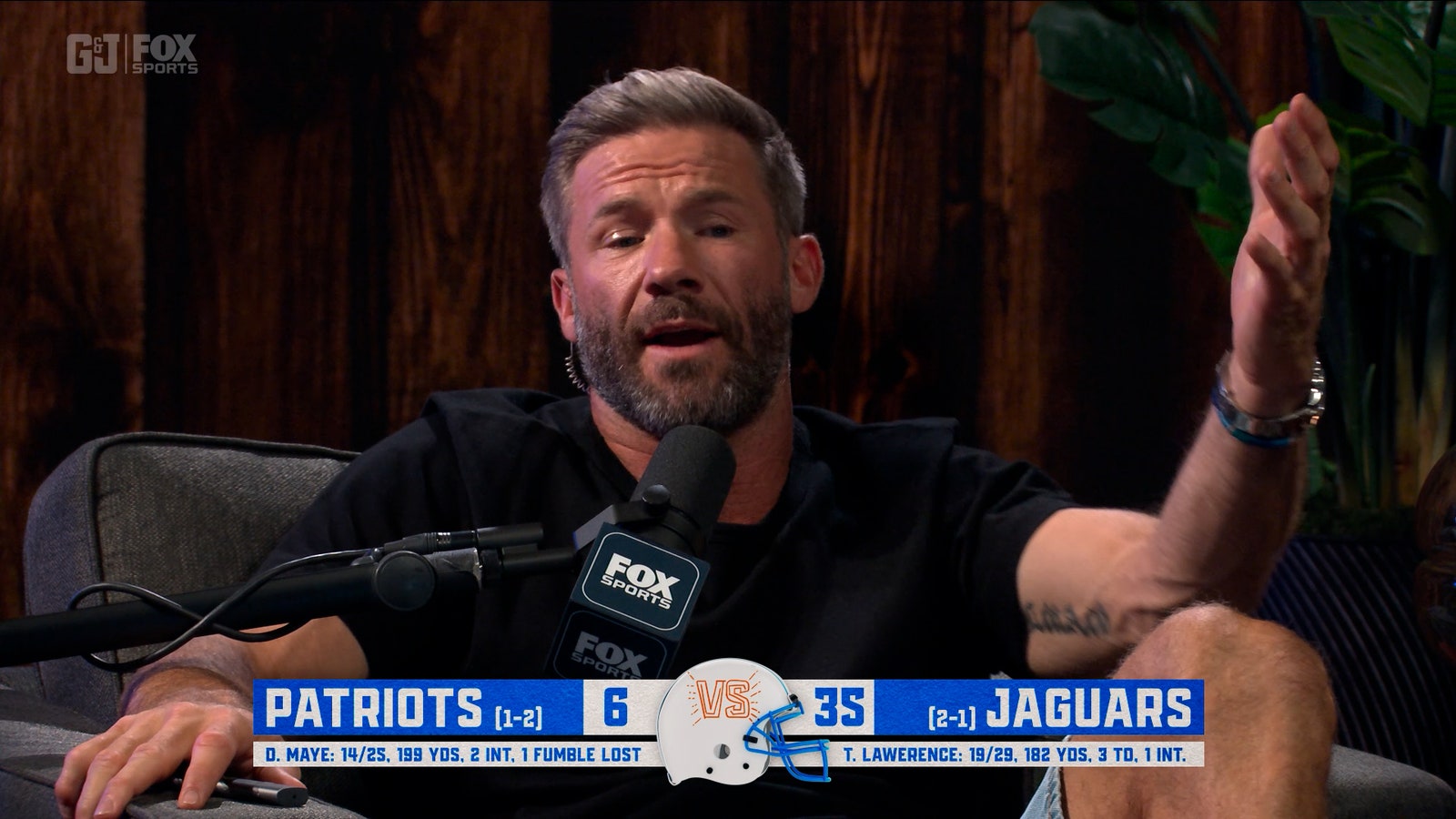
After digging into the All-22 coaches’ tape, Maye has completely lost his confidence as a playmaker. Despite the occasional splash plays that show off his exceptional talent, he is hesitant and uncertain in the pocket. While some of his jitters may stem from the Patriots’ leaky offensive line, he isn’t playing with the poise and composure that helped him carve up opponents with surgical precision a season ago.
After leading the NFL with a 113.5 passer rating thanks to efficient play from the pocket, Maye is bailing out early on his progressions and playing "hero ball" on the run. Although his athleticism and mobility are a huge asset, he is making poor decisions on the move, leading to momentum-swinging turnovers. From his game-ending interception against the Seattle Seahawks in Week 1 to his costly pick to Travis Hunter against the Jacksonville Jaguars this past Sunday, the 6-foot-4, 225-pound Maye has repeatedly made egregious errors while throwing on the run during the Pats' 1-2 start.
Given those issues, Maye needs to prioritize ball security instead of explosive plays when things break down. Whether he tucks it and runs when the pocket collapses or throws it away, he must ensure his team retains possession at the end of each play.
Granted, it is easier to prioritize ball security when he can play on schedule with a WR1 on the perimeter; A.J. Brown's Week 1 injury has made the Patriots’ passing game easier to defend without a pass-catcher who can dominate one-on-one matchups.
The three-time Pro Bowler is a natural "X" with the size, strength and playmaking ability to win against any defensive tactic. Even if teams roll coverage his way, the 6-foot-1, 225-pound Brown will bully smaller defenders and snatch 50-50 balls on the boundary. With a proven "go-to guy" on the outside to target, Maye could slowly build confidence by repeatedly throwing the ball to a ball winner.
While Patriots offensive coordinator Josh McDaniels must scale back the playbook to let Maye play faster and with less clutter, the team must increasingly rely on the running game to ease some of the pressure to carry the offense. If the offensive line can get back on track with Rhamondre Stevenson and TreVeyon Henderson playing better behind them, the "less is more" approach could help the Patriots’ young franchise quarterback temporarily settle into a managerial role until he rediscovers his magical playmaking skills.
When the Rams added Myles Garrett to a super squad that would eventually lure Aaron Donald out of retirement, Hollywood’s favorite football team was expected to make a Super Bowl run behind a disruptive defense that perfectly complemented the high-powered offense led by Matthew Stafford. While the reigning MVP hasn't always been sharp leading a Puka Nacua-less offense, it's the Rams’ defense that has disappointed most through three games.
While Garrett’s injury has naturally hurt the unit's performance, the defensive line's overall lack of pressure and sack production is alarming for a frontline with the individual and collective talent to destroy opponents with simple schemes.
The 35-year-old Donald, who's still knocking off the rust from his two-year hiatus, hasn't provided the inside rush presence that commands double-team attention that would afford Kobie Turner and Byron Young more playmaking opportunities. Additionally, the lack of high-end depth on the defensive front has enabled opposing quarterbacks to comfortably target their preferred receivers at short and intermediate range behind overmatched linebackers unable to jump into the passing lanes.
Although a pair of top-notch cover corners with superb man-to-man skills were acquired to reduce the friendly skies behind the Rams' vaunted D-line, defensive coordinator Chris Shula’s preference for zone-based concepts has robbed the duo of its superpowers. Trent McDuffie and Jaylen Watson were expected to throttle receivers on the perimeter with their nose-to-nose playing style and aggressive downfield tactics.
After just three weeks, and with a Week 4 showdown against the Eagles looming, it's time for Shula to go back to the drawing board.
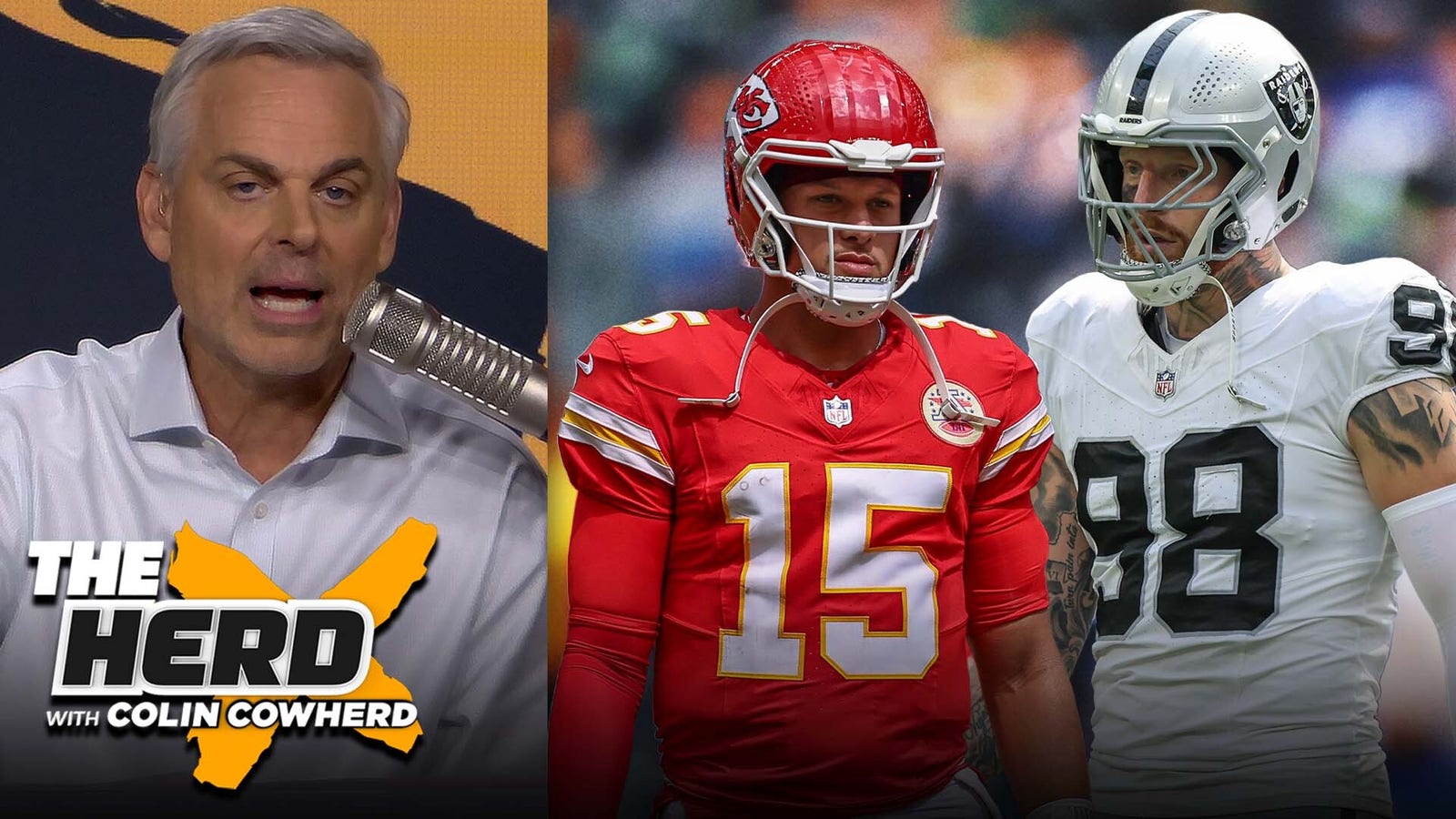
Herd Hierarchy for Week 4: Raiders ‘legit’, Chiefs stay put, Who will be on top? | The Herd
With their restrictive bump-and-run style eliminating "free access" routes, the Rams’ cornerback tandem will snuff out elite receivers and force playcallers to go to the back pages of their play sheets. By taking away layups and deep perimeter shots, the Rams can force opponents to drive the length of the field and rely on turnovers or faulty execution to end drives before points hit the scoreboard. If McDuffie and Watson can get more comfortable within a scheme that needs some tweaking to showcase their talents, the Rams' pass rush will also improve as stickier coverage would create more time to harass the passer.
Should Garrett return by midseason to a defensive scheme modified to help the stars and role players shine, the Rams should have no trouble overcoming this rocky start and reemerging as the title contenders everyone feared heading into the season.
It is no surprise that the return of an All-Pro pass-catcher ignited an offense in desperate need of a No. 1 threat. But tight end Brock Bowers’ stellar 2026 debut in Week 3 reminded everyone of his impact as a perimeter playmaker.
The 6-foot-4, 235-pounder caught 10 of 13 targets for 116 yards and a touchdown versus the New Orleans Saints. Most impressively, the third-year pro is doing so as a quasi-receiver, aligning anywhere from the slot to out wide to create and exploit mismatches in space. The Raiders moved Bowers around the formation in their "11" (RB, TE and 3 WR), "12" (RB, 2 TE and 2 WR), "13" (RB, 3 TEs and 1 WR) and "22" (2 RB, 2 TE and 1 WR) packages to take advantage of his dynamic route-running skills and pass-catching ability against overmatched linebackers and defensive backs.
New head coach Klint Kubiak’s creative deployment of his star tight end continues a trend that has helped Bowers dominate the league since he entered the league as the No. 13 overall pick in the 2024 draft. During his first two seasons with the Raiders, Bowers aligned detached from the formation on 55.8% of his snaps, as he aligned in the slot (38.1%) and out wide (17.7%) per Next Gen Stats. He amassed 1,284 of his 1,874 receiving yards from detached formations, which was the second-most during that span among tight ends from those alignments.
With Kubiak featuring Bowers like a WR1 because of his versatility, the Raiders have found a way to create more problems for defensive coordinators already struggling to neutralize their All-Pro tight end. The schedule is about to get markedly tougher for the 3-0 Raiders in the coming weeks, beginning with this weekend's tilt against the Kansas City Chiefs. But the return of Bowers gives their offense room to grow as well.