By The Rio Times | Created at 2026-08-20 06:46:42 | Updated at 2026-08-20 06:56:24
13 minutes ago
By The Rio Times | Created at 2026-08-20 06:46:42 | Updated at 2026-08-20 06:56:24
13 minutes ago
Brazil · LOGISTICS
Key Facts
- Seller Cosan, the Brazilian energy and logistics group.
- Target Rumo, Brazil’s largest rail freight operator.
- Named interested parties Grupo México, Inpasa, Bunge and Cofco.
- Deadline binding proposals pushed from August to September 2026.
- Status no signed agreement and no confirmed price.
Brazil’s biggest railway is changing hands in part, and the buyers on the list are not railway companies.
Cosan has confirmed it is selling part of its holding in Rumo, the largest rail freight operator in Brazil. The deadline for binding offers has moved from August to September.
What Cosan has actually said
On its second-quarter earnings call, Cosan management was direct about the Rumo sale. It said it had announced to the market that it would sell some of its stake.
The company added that it is talking to potential buyers and that the process is going according to plan. It then said it had no further news to share.
That is a confirmation of intent, not of a transaction. There is no signed deal and no disclosed price.
Reuters-sourced coverage the same week carried the same quote. The wording did not change between outlets.
Live Company IntelligenceRumo S.A — the full investor dossierInside: live share price, market cap, three-year financials, valuation, ESG and peer benchmarks — plus the latest Rio Times coverage.R
◆ Live Company Intelligence
Rumo
SA: RAIL3RAIL3IndustrialsRailroads8,255 employees
Valuation & profitability
Market capR$24.61B
Revenue (TTM)R$14.39B
P / E ratio20.1
Profit margin8.5%
Return on equity8.8%
Price & risk
52-wk low
$12.1652-wk high
$17.33
Beta (volatility)-0.09
200-day average$15.03
Revenue trend · 6y
20202025
Latest R$13.85B
Ownership
Institutions59.9%
Shares outstanding1.86B
Dividend
Yield0.8%
Payout ratio9.5%
Fwd. annual$0.11
What Rumo does. Rumo S.A., through its subsidiaries, engages in the rail logistics operation. The company operates through North Operations, South Operations, and Container Operations segments. The North Operations segment is involved in the railway, highway, and transshipment operations. The South Operations segment comprises of rail and transhipment operations in the area of Rumo Malha…
Who is reportedly interested
A Brazilian market column reported that the Rumo sale had entered its final phase. It named Grupo México as the party seen as the favourite.
It also listed Inpasa, Bunge and Cofco as involved in the negotiations. Ultrapar had been pointed to earlier as the main candidate.
None of these names has confirmed a bid publicly. This is press and sell-side reporting, not a company filing.
The report came alongside a JPMorgan note that cut its price target on Rumo. The bank framed a Cosan exit as a possible catalyst for the shares.
Why the buyers are not railways
Grupo México owns Ferromex, one of Mexico’s two large freight railways. It is the one name on the list with rail operating experience.
Bunge and Cofco are agricultural trading houses. Inpasa is an ethanol producer with plants in Paraguay and Brazil.
For a grain trader, owning rail capacity is not a diversification. It is control of the bottleneck between the farm and the ship.
Cofco is owned by the Chinese state. Bunge is one of the four large global grain traders.
A Rumo sale to any of them would change who sets loading priorities on the corridor. That is the part regulators tend to look at.
The stake figures do not agree
One report describing Cosan’s second-quarter results puts its holding in Rumo at 30 percent. Another says Cosan is evaluating the sale of a 20.3 percent stake.
That second report values the stake at about 5.3 billion reais. That is roughly US$1.02 billion at the Banco Central PTAX rate of 5.1714 on 19 August 2026.
We are publishing that figure with a warning attached. The two stake percentages cannot both describe the same block, and no filing confirms either the size or the value.
There is a plausible explanation for the gap. The 30 percent figure may describe Cosan’s total economic interest, and 20.3 percent the specific block on offer.
We cannot confirm that reading from any document we have seen. So we are reporting both numbers and the conflict between them.
Why the deadline moved
The deadline for binding proposals was originally set for August. It has been pushed to September 2026.
Deadline slippage in a competitive auction is normal and usually means one of two things. Either a bidder asked for more time, or the seller wants more bidders in the room.
It is not, on its own, a sign that the Rumo sale is in trouble. It does mean nothing will be signed this month.
The Rumo sale has been public since Cosan flagged it earlier in the year. A month of slippage in that context is ordinary.
What Rumo is worth to Brazil
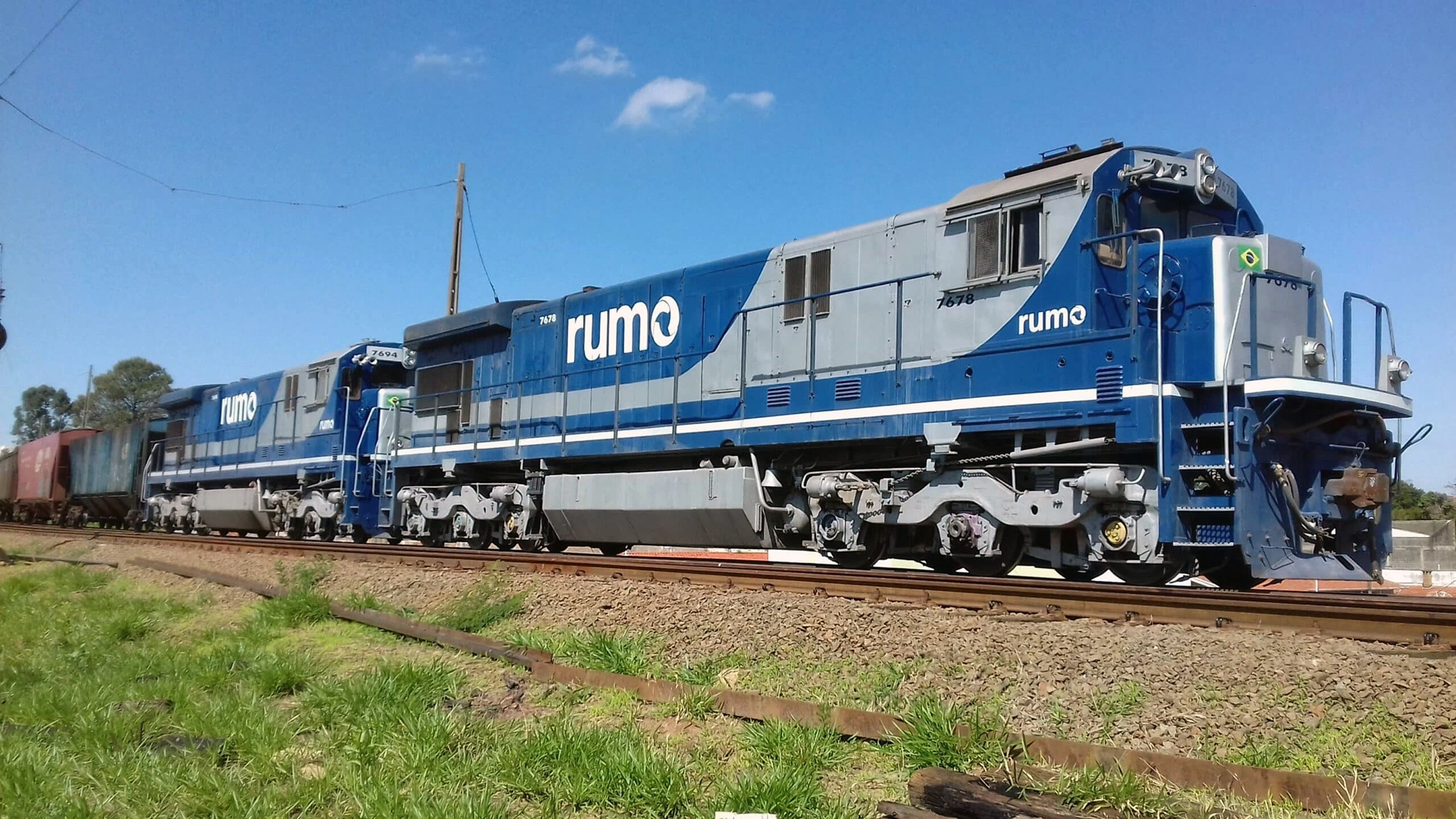
Rumo operates the rail corridors that move soybeans and maize from Mato Grosso towards the port of Santos. Roughly speaking, it is the spine of Brazilian grain exports.
Whoever controls part of it has a say in how Brazilian crops reach world markets. That is why an agricultural trader would pay for a minority position.
It is also why any deal will attract attention from CADE, the competition authority. A trader owning the track its rivals use is a familiar regulatory problem.
Rumo also reported record grain volumes in its second quarter. The asset is being sold into strength, not weakness.
What this says about Cosan
Cosan has been selling assets steadily through 2026. It has put its São Luís port terminal up for sale and spun off its farmland arm.
The pattern is a group reducing debt by selling minority and non-core positions. Rumo is the largest of them.
Investors reading the Rumo sale as a distress signal should note the sequencing. Cosan has been shedding assets from a position of choice, not of default.
The group also delisted from the New York Stock Exchange this month. That is a company simplifying itself in several directions at once.
What to watch
The next hard date is the September deadline for binding proposals. A signed agreement, if it comes, would be disclosed to the market.
Until then, treat the named bidders as reported rather than confirmed. Treat the stake size and the value as disputed.
We will update this piece when Cosan or Rumo files something. A market column is not a filing.
The Rumo sale is one of the largest logistics processes running in Brazil this year. It is worth following even if you do not own the shares.
A change of owner at the top of the grain corridor eventually reaches freight rates. Those reach food prices.
Frequently Asked Questions
Is Cosan selling all of Rumo?
No. Management said it is selling some of its stake, not the whole holding, and no agreement has been signed.
Who wants to buy it?
Press reporting names Grupo México, Inpasa, Bunge and Cofco as involved in negotiations, with Grupo México described as the favourite. None has confirmed a bid.
How big is the stake?
Reports disagree. One puts Cosan’s holding at 30 percent; another describes a 20.3 percent block valued at about 5.3 billion reais. Neither figure is confirmed by a filing.
When will we know?
The deadline for binding proposals was moved from August to September 2026. A signed deal would have to be disclosed to the market.
Why would a grain trader buy a railway?
Rumo carries Brazilian grain from Mato Grosso to the port of Santos. Owning part of it means influence over the main export bottleneck.
Sources
This article was produced by The Rio Times’ automated newsroom system. How we use AI · Report an error