By The Rio Times | Created at 2026-08-20 06:46:42 | Updated at 2026-08-20 06:55:30
15 minutes ago
By The Rio Times | Created at 2026-08-20 06:46:42 | Updated at 2026-08-20 06:55:30
15 minutes ago
Brazil · MINING
Key Facts
- Signed 11 August 2026, between Vale and ABB.
- Starting point the Conceição II plant at Itabira, Minas Gerais.
- Reported gains productivity up 25 percent at that plant.
- Next site Brucutu, expected to run the new systems in early 2027.
- Contract value not disclosed by either company.
A single upgraded plant in Minas Gerais produced numbers good enough to justify copying it everywhere.
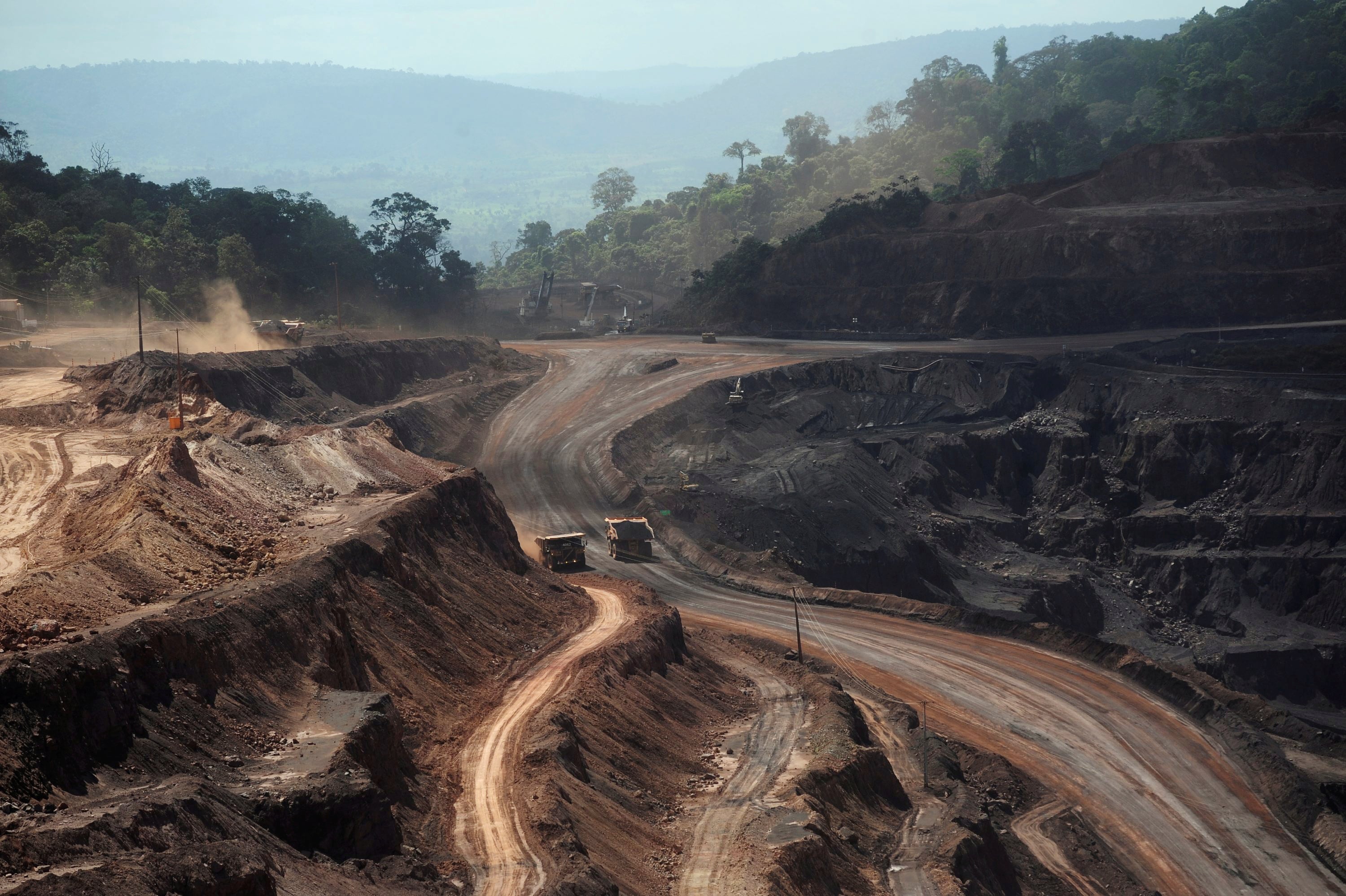
Vale and ABB have widened a partnership to put automation and artificial intelligence into iron ore processing plants across Brazil. The agreement was formalised on 11 August 2026.
What the two companies agreed
Vale and ABB have expanded a strategic cooperation that already existed. The new agreement covers automation, artificial intelligence and digitalisation across Vale’s iron ore operations in Brazil.
ABB describes it as a partnership to accelerate digital transformation in iron ore. The wording is deliberately broad.
The agreement was formalised on 11 August 2026. Both companies published announcements in the days that followed.
Neither disclosed a contract value. That figure is not on the record.
The relationship is not new. Vale and ABB have worked together on control systems for years.
Live Company IntelligenceVale SA ADR — the full investor dossierInside: live share price, market cap, three-year financials, valuation, ESG and peer benchmarks — plus the latest Rio Times coverage.V
◆ Live Company Intelligence
Vale
NYSE: VALEVALE3Basic MaterialsOther Industrial Metals & Mining65,805 employees
$58.22B
Market cap
Analyst target $16.82
Wall Street view
3.9Moderate Buy/ 5
14 Buy12 Hold0 Sell
Avg. price target $16.82 · +12% vs 200-day
Valuation & profitability
Market cap$58.22B
Revenue (TTM)$218.07B
P / E ratio27.4
Profit margin4.8%
Return on equity4.1%
Price & risk
52-wk low
$8.9352-wk high
$17.44
Beta (volatility)0.75
200-day average$14.99
Revenue trend · 6y
20202025
Latest $38.23B
Ownership
Institutions20.8%
Shares outstanding4.26B
Top holderCapital World Investors
Institutional holders5+ funds
Dividend
Yield39.8%
Payout ratio2.0%
Fwd. annual$1.20
What Vale does. Vale S.A., together with its subsidiaries, produces iron ore and nickel in Brazil, Asia, the Middle East, North Africa, Europe, the Americas, and Oceania. The company operates in two segments, Iron Ore Solutions and Vale Base Metals. It extracts, produces, and distributes iron ore, iron ore pellets, briquettes, nickel, copper, other ferrous…
Where it started
The template is the Conceição II plant at Itabira, in Minas Gerais. Vale calls it a model plant.
The site received 200 million reais of investment, and it can process 11.2 million tonnes of ore a year. That investment is about US$38.7 million at the Banco Central PTAX rate of 5.1714 on 19 August 2026.
We should be careful with that investment figure, because it is far below what a new plant of that size would cost. It most likely covers the upgrade rather than the whole facility.
Neither company has published a breakdown that settles the question.
Itabira is the town where Vale began mining in the 1940s. Using it as the model site is a deliberate choice of symbol as well as of geology.
The numbers that justified the rollout
Since the digital systems went in at Conceição II, the site reports productivity up 25 percent. Production of premium ore for direct reduction rose 40 percent.
Iron losses in the tailings fell 26 percent. That last number is the one with an environmental as well as a financial effect.
These are relative changes against the plant’s earlier performance, not absolute output figures. One article dates the baseline to 2024.
They come from company communications rather than from an audited operational report.
A 26 percent cut in iron lost to tailings means more saleable product from the same rock. It also means less material in the dams.
After Mariana and Brumadinho, anything that reduces tailings volume carries weight in Brazil beyond its cost saving.
What happens to the other plants
The agreement sets up a framework for gradually transferring the systems to Vale’s other processing plants. Brucutu is already in the implementation phase.
Brucutu is expected to start operating under the new systems in early 2027. Other sites follow without a published schedule.
This is a rollout, not a single installation. That is the part that makes the deal commercially significant for ABB.
It is also why no total value has been announced. The scope grows plant by plant.
Vale operates processing plants across Minas Gerais and Pará. The northern system at Carajas already uses autonomous haul trucks.
Plant automation is a different problem from truck automation. It involves controlling a chemical and mechanical process rather than a vehicle.
Why premium ore matters
Direct reduction ore is used to make steel without a blast furnace. It commands a premium because it enables lower-carbon steelmaking.
A 40 percent rise in premium ore output at one plant is worth more than the same rise in ordinary ore. The product sells for more per tonne.
European steelmakers switching to direct reduction need that grade. Supply of it is limited worldwide.
So the automation story is also a product mix story. Vale is not just making more ore; it is making better ore.
Vale has said for years that it wants to sell higher grades rather than more tonnes. This is one of the few concrete steps in that direction.
What Vale and ABB each get
ABB gets a reference customer at scale in a country where mining automation is still uneven. Vale is the largest possible name to put on that list.
Vale gets a way to lift output without opening new mines. In a permitting environment as slow as Brazil’s, that is the cheaper route.
It also reduces the number of people who need to be physically present in a processing plant. That has a safety argument attached to it.
Neither company has said whether headcount changes as a result.
ABB is a Swiss-Swedish engineering group with a large process automation division. Mining is one of its core end markets, and Vale and ABB have history there.
How this sits with Vale’s other technology deals
We reported on 18 August that Vale had signed a separate agreement with Accenture around its 2035 mining agenda. That is a consulting arrangement, not an equipment one.
The ABB deal is about control systems and plant hardware. The two are complementary rather than overlapping.
Read together, they show a company buying outside expertise rather than building it internally. Vale and ABB is the deeper of the two relationships.
It is also a fairly reliable indicator that the company expects to hold iron ore volumes flat and improve margins instead.
The company is also in a consortium bidding for the Porto Sudeste export terminal. Logistics and plant efficiency are the two levers left when new mines are hard to permit.
What is missing from the record
There is no contract value, no headcount figure, and no schedule beyond Brucutu in early 2027. Those gaps are in the companies’ own announcements.
The performance gains are reported by the parties to the deal. They have an interest in the numbers looking good.
None of that makes them wrong. It does mean an independent operational figure would be worth more.
We will update this piece if Vale publishes plant-level data in its quarterly reporting.
One more caution is worth stating plainly. Vale and ABB are the sources for the improvement figures at the plant they jointly upgraded.
Frequently Asked Questions
What did Vale and ABB actually sign?
An expanded partnership formalised on 11 August 2026 to roll out automation, AI and digitalisation across Vale’s Brazilian iron ore processing plants.
How much is the contract worth?
Neither company has disclosed a value. The only monetary figure in the public record is 200 million reais of investment at the Conceição II plant.
What improvements were reported?
At Conceição II, productivity rose 25 percent and premium ore output rose 40 percent. Iron losses in tailings fell 26 percent, according to company communications.
Which plant is next?
Brucutu, in Minas Gerais, is already in implementation and is expected to operate under the new systems in early 2027.
Does this cost jobs?
Neither company has published a headcount effect. Automation of this kind usually shifts roles from the plant floor to control rooms rather than removing them outright.
Sources
This article was produced by The Rio Times’ automated newsroom system. How we use AI · Report an error